There’s a category of lawn problem that’s genuinely hard to find — not because it requires exotic equipment or rare expertise, but because it doesn’t show up in the places most contractors look. It shows up in the places most contractors don’t look at all.
This story is about one of those problems. A property in Val Caron. Three years of contractors treating what they could see. Nobody finding what they couldn’t.
I’m Ryan Lingenfelter, owner of Cutting Edge Lawn & Landscaping in Garson, Ontario. Here’s exactly what I found — and why it had stayed hidden for three seasons before I got there.
The Property and the Pattern
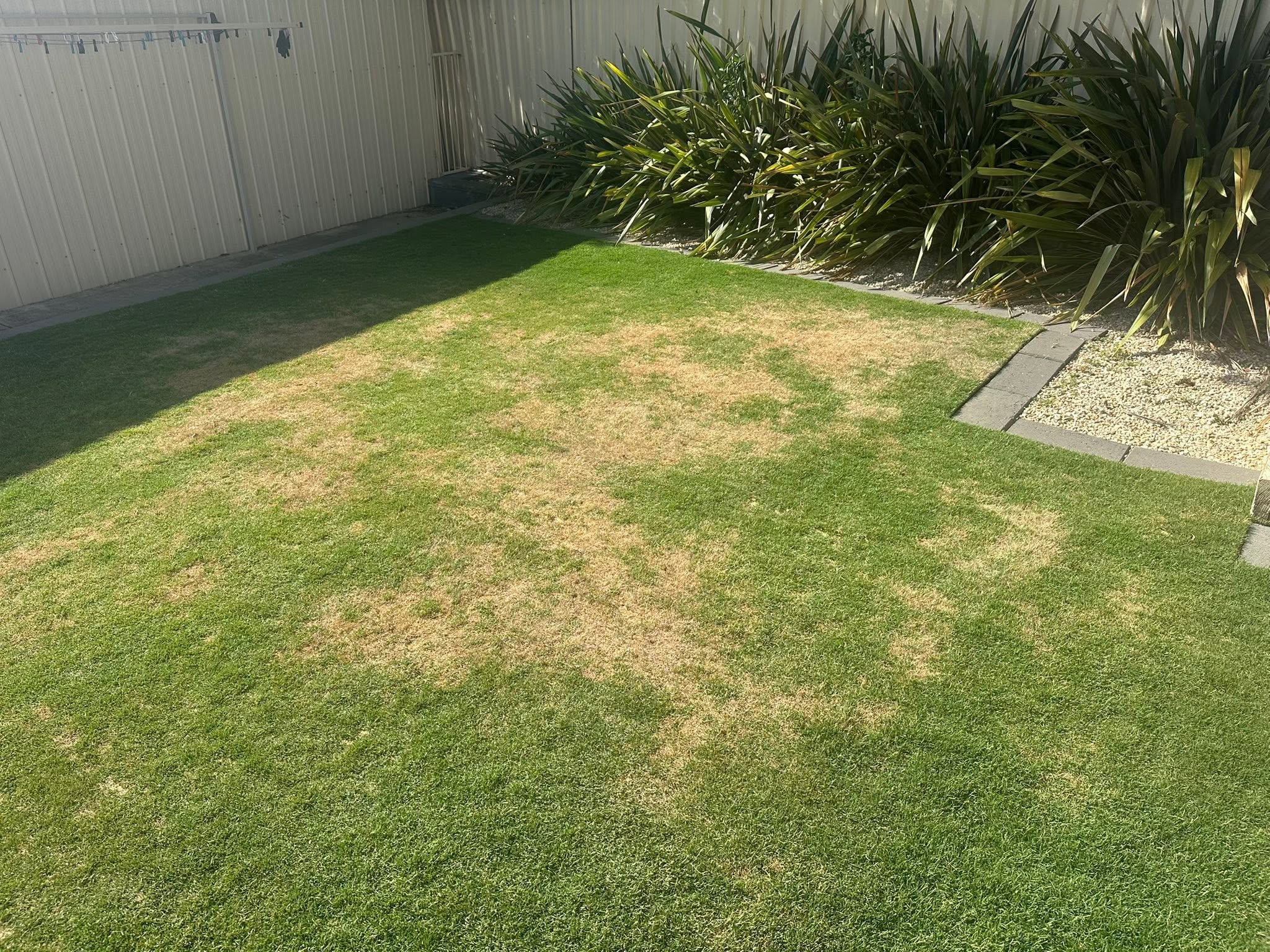
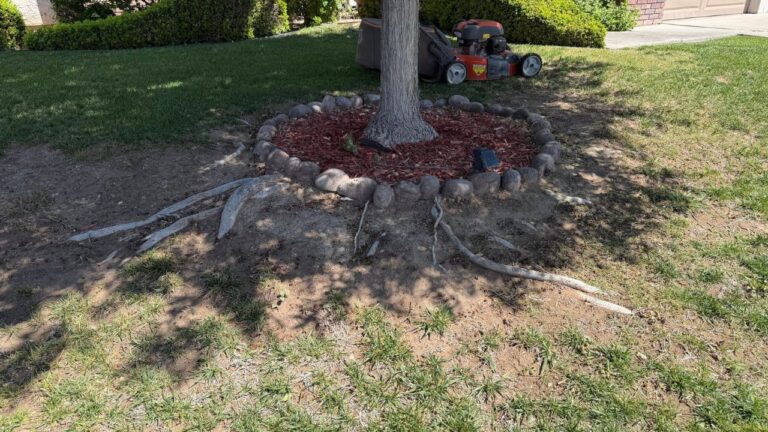
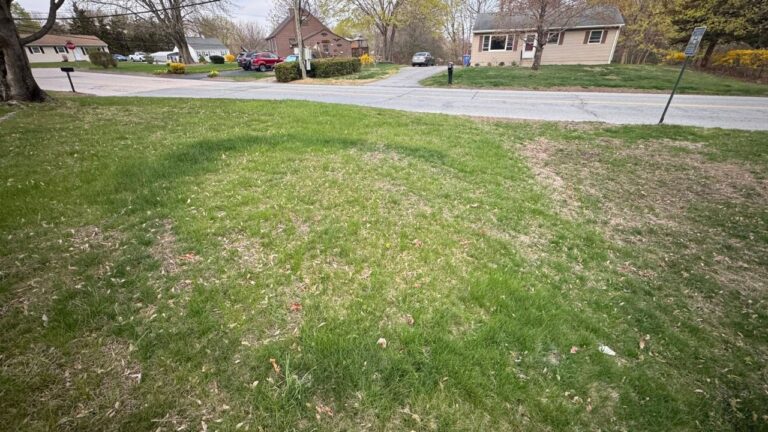
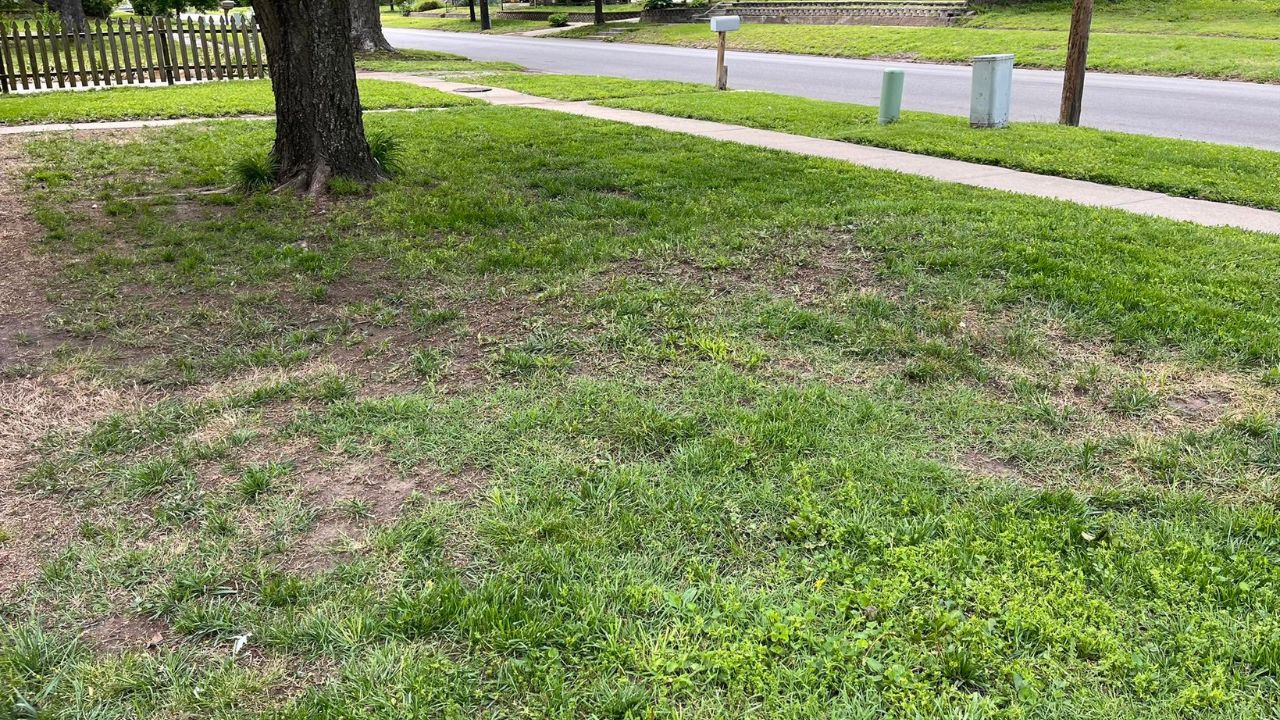
The homeowner’s name was Kevin. He’d bought the house in Val Caron four years earlier, and from his first summer there, one section of his backyard had been a persistent problem. Not the whole lawn — most of it was fine, or fine enough. Just a roughly rectangular section, about 15 by 8 feet, along the back right fence line.
That section went thin every year, no matter what was done to it. The grass would establish in spring, look reasonable by June, then thin out through July and August and end the season visibly worse than it started. Every spring, the same section needed the most attention. Every fall, it looked like the most neglected part of the property.
Three different contractors had worked on that section over three seasons. Two had overseeded it. One had also aerated it specifically. All three had applied fertilizer. None of them had identified a cause beyond the generic explanation that some spots are just harder — maybe the soil there, maybe some shade from the fence, maybe the previous owners had done something to it.
Kevin called me in late April of his fourth year at the property, specifically asking whether I could figure out what was actually wrong with that section rather than just treating it again the same way.
I told him I’d try. And I told him I was going to approach the assessment differently than what he’d described the previous contractors doing — starting not with what was visible on the surface but with what the surface was telling me about what was underneath.
What Three Years of Contractors Had All Missed
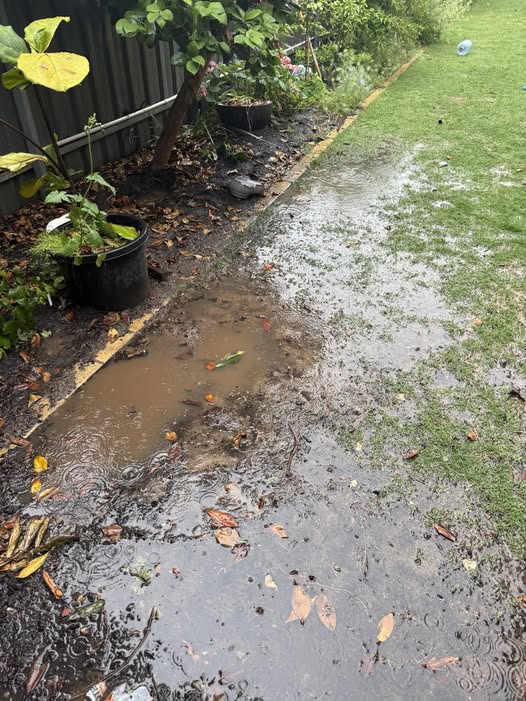
I did the standard assessment sequence first — screwdriver test, thatch check, drainage observation. The compaction in the problem section wasn’t dramatically worse than the rest of the lawn. Thatch was similar. From a normal standing position, looking at the surface and doing the standard checks, the section didn’t obviously tell a different story than the rest of the property.
Then I did something I do specifically when a section fails repeatedly in the same location without a clear surface explanation: I walked it slowly, pressing my foot down at intervals, feeling for variations in the firmness of the ground beneath the surface.
About two thirds of the way along the problem section — roughly eight feet from the fence — there was a subtle but distinct difference in how the ground felt underfoot. Slightly firmer. Not dramatic, but consistent across a line about three feet wide running the width of the section.
I dug down six inches at that point.
What I found was a decommissioned drainage tile — an old clay agricultural tile, about four inches in diameter, running horizontally through the soil at a depth of roughly five to six inches. It wasn’t on any property records Kevin had. The previous owners hadn’t mentioned it. None of the previous contractors, none of whom had dug down in that specific location, had found it.
The tile itself wasn’t draining anymore — it had been decommissioned at some point, either when the property was developed or shortly after, and sealed at both visible ends. But it wasn’t completely impermeable either. Water was getting in through cracks and joins in the old clay tile and staying there, creating a zone of chronically elevated soil moisture directly above and around the tile line.
Above the tile, the soil was alternating between waterlogged — when rainfall was heavy or sustained — and unusually dry — when weather was dry, because the tile zone was drawing moisture down and away from the root zone above. The grass roots in that section were living in a boom-and-bust moisture environment that no amount of overseeding or fertilizing was going to fix, because the problem wasn’t the grass or the soil fertility. It was what was sitting five inches below the surface creating unstable moisture conditions that the roots couldn’t tolerate consistently.
Why It Was So Easy to Miss — And So Important to Find
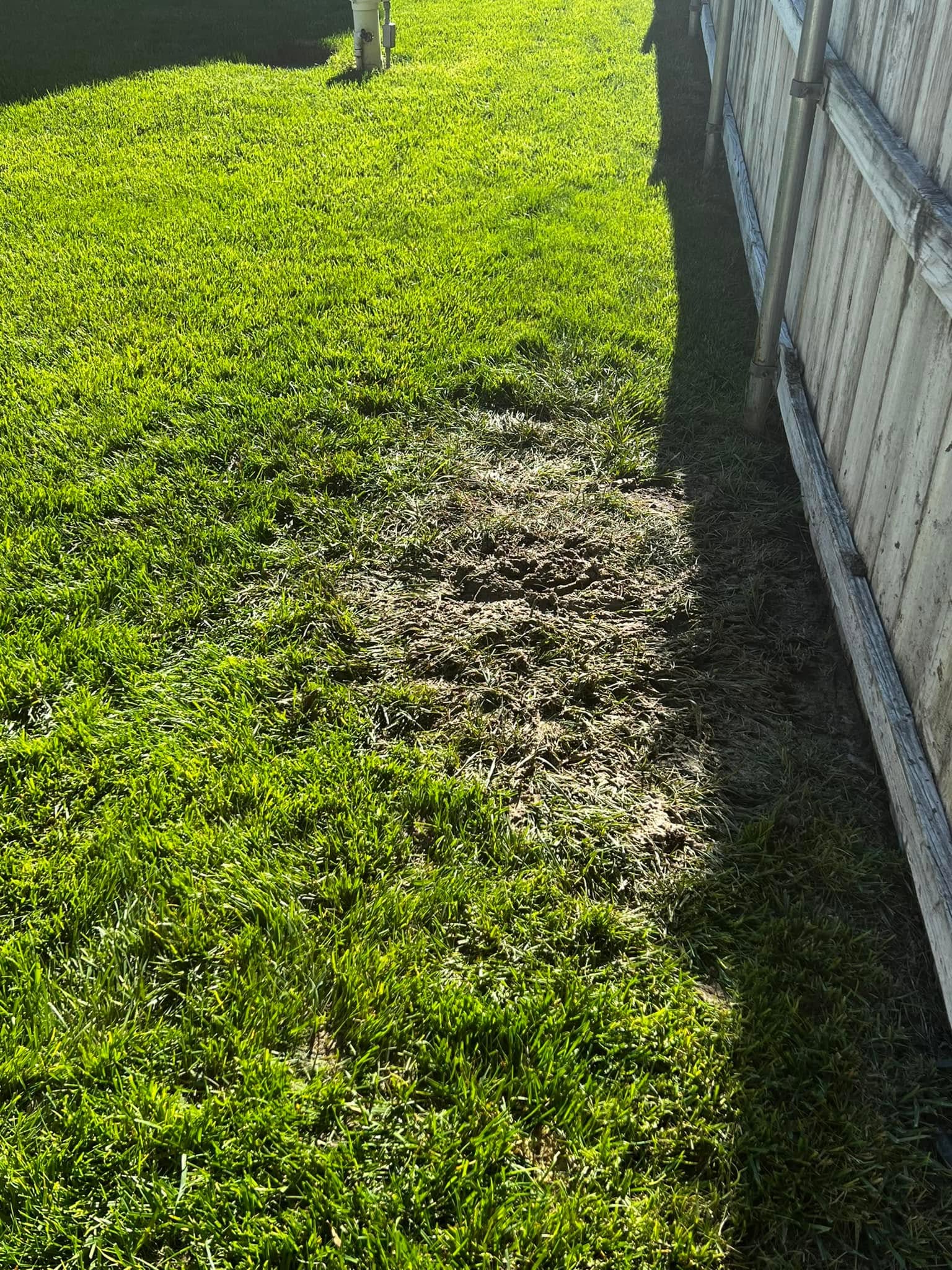
I want to explain why three qualified contractors had missed this for three years, because I don’t think they were careless or incompetent. They were doing what most assessments do: looking at what’s visible and checkable at the surface level.
The screwdriver test doesn’t find a buried tile at six inches — it checks compaction in the top few inches. Drainage observation after rain shows pooling patterns but not the underground cause of those patterns. Thatch measurement tells you about the surface organic layer. None of the standard assessment tools that most contractors use — including tools I use on every job — are specifically designed to identify buried infrastructure.
What made this findable was the foot-pressure test in a section that had given no clear explanation through standard assessment — which is a step I’ve added to my protocol specifically for cases where standard tools don’t produce a satisfying answer. It’s not something I do on every property. It’s something I do when the normal checklist doesn’t explain what I’m seeing.
The deeper point is that there’s a category of lawn problem where the right diagnostic question isn’t “what’s wrong with the grass” or “what’s wrong with the soil” but “what’s the ground actually doing below where I can see.” Old agricultural tiles, buried debris like concrete or rubble from construction, abandoned infrastructure that predates the current house — these things don’t appear in property records, they’re not visible from the surface, and they produce lawn symptoms that look like soil or grass problems but aren’t.
I described a different version of this — buried concrete rubble that was blocking root penetration in one section of a Chelmsford backyard — in the Chelmsford homeowner who asked why the grass never grew in that one spot. That finding came from the same instinct: when standard assessment doesn’t explain a localized, persistent failure, look below the surface rather than at it.
What Changed Once We Found It
Once the tile was identified, the remediation was straightforward — more so than the discovery itself had been.
We excavated a trench along the tile line, exposed and fully removed the section of tile running through the problem area, and backfilled with quality, well-draining material compacted properly in layers. The goal was to eliminate the moisture sink that had been creating the boom-and-bust conditions above it — replacing the old clay tile and its cracked joints with inert, stable fill that would behave consistently regardless of rainfall patterns.
The excavation work meant we had a disturbed strip across that section of the lawn that needed to be properly restored afterward. We graded the fill carefully to match the surrounding grade, incorporated quality topsoil throughout, and laid fresh sod over the disturbed area rather than overseeding — given that this section had been reseeded three times already without lasting success, sod was the right call for getting immediate, established coverage.
The watering and aftercare instructions I gave Kevin for the new sod followed the same protocol I always use — which I’ve detailed in what happens if you don’t water new sod in Sudbury’s first two weeks. He followed it carefully.
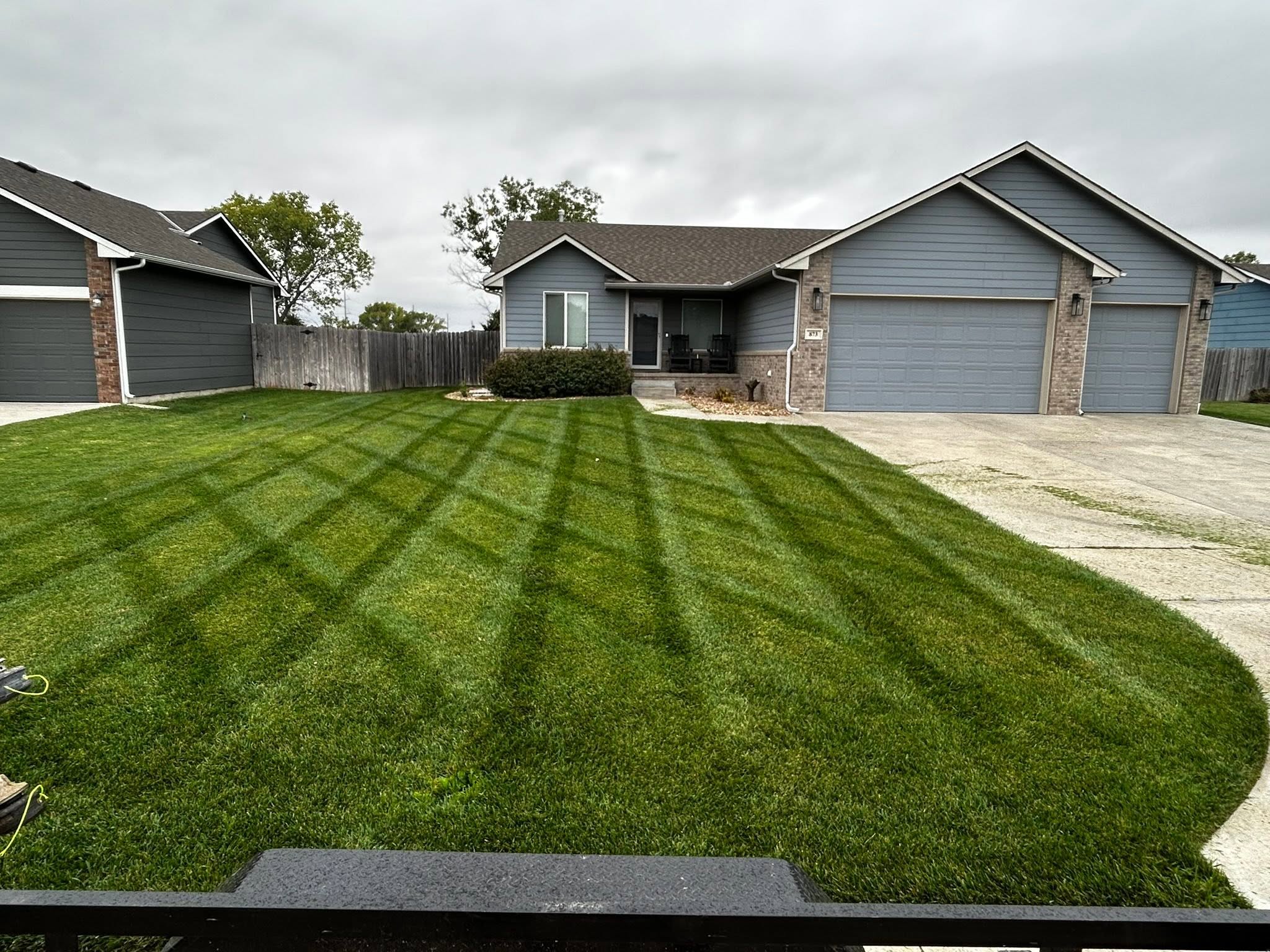
By August — the month that section had historically been at its worst — it was indistinguishable from the rest of the backyard. Same density, same colour, same response to summer heat. The section that had been the most problematic part of his property for four summers was, by the following spring, simply part of the lawn.
Kevin sent me a message after the first winter: “I walked out in April and I actually had to think about which section it was. I couldn’t tell.”
That’s what finding the actual cause produces, rather than treating the symptom. Not just improvement — resolution.
The Broader Lesson for Sudbury Properties Specifically
Val Caron, Hanmer, Garson, Chelmsford — much of Greater Sudbury’s residential development happened on land that had previous agricultural or industrial use, sometimes decades before the houses were built. Agricultural drainage tiles, buried debris from construction and grading, abandoned infrastructure of various kinds — these are more common in our region than in newer developments built on completely clear land.
This doesn’t mean every struggling lawn has buried infrastructure underneath it. Most don’t. But it does mean that for properties in Greater Sudbury with a persistent, localized lawn failure that hasn’t responded to standard treatments — the question of what’s happening below the surface is worth asking explicitly, not assumed to be nothing.
I’ve written about the patterns I’ve observed across hundreds of Sudbury properties in why I keep notes on every lawn I work on — buried infrastructure and subsurface anomalies are now explicitly part of what I look for on properties with unexplained, localized, persistent failure. They’re not the most common cause, but they’re common enough — and specific enough to our region’s development history — that they belong in the checklist.
Do You Have a Section That Fails Every Year in the Same Spot?
If you have a section of your lawn that fails persistently, in the same location, despite multiple treatment attempts — and nobody has given you a satisfying explanation for why — reach out. A proper assessment that goes beyond standard surface checks is worth doing before you treat it the same way a fourth time.
📞 Call or text me: 705-507-6787
Or fill out the free quote form here — I get back to everyone same day.
— Ryan Lingenfelter
Owner, Cutting Edge Lawn & Landscaping
Garson, Ontario
Related Articles
- A Chelmsford Homeowner Asked Me Why His Grass Never Grows in That One Spot
- Why I Keep Notes on Every Sudbury Lawn I Work On — And What 5 Years Has Taught Me
- What Happens If You Don’t Water New Sod in Sudbury’s First Two Weeks
- The Sudbury Property That Made Me Call My Supplier and Ask Questions I’d Never Asked Before
- Two Sudbury Neighbours Did the Exact Same Lawn Routine — Only One Lawn Thrived