
By Ryan Lingenfelter · Cutting Edge Lawn & Landscaping, Garson, Ontario · June 2026
I think about lawn care services the way I’d think about any spending decision — what does this cost, and what does it return. Most lawn care spending in Greater Sudbury produces a result that’s roughly proportional to the cost, once, for that season. You pay for a cut, you get a cut. You pay for a cleanup, you get a cleanup. The value is real but it’s transactional — this payment for this result.
There’s one service that doesn’t work that way. It’s the only thing I recommend to homeowners across Greater Sudbury that produces a return that compounds — where the value of doing it this year is partly determined by whether you did it last year, and where the cumulative value after five consecutive years is dramatically higher than five times the value of doing it once. I want to walk through exactly why, because understanding the compounding mechanism changes how you should think about budgeting for lawn care.
What this investment actually is — and why I’m calling it that instead of a service
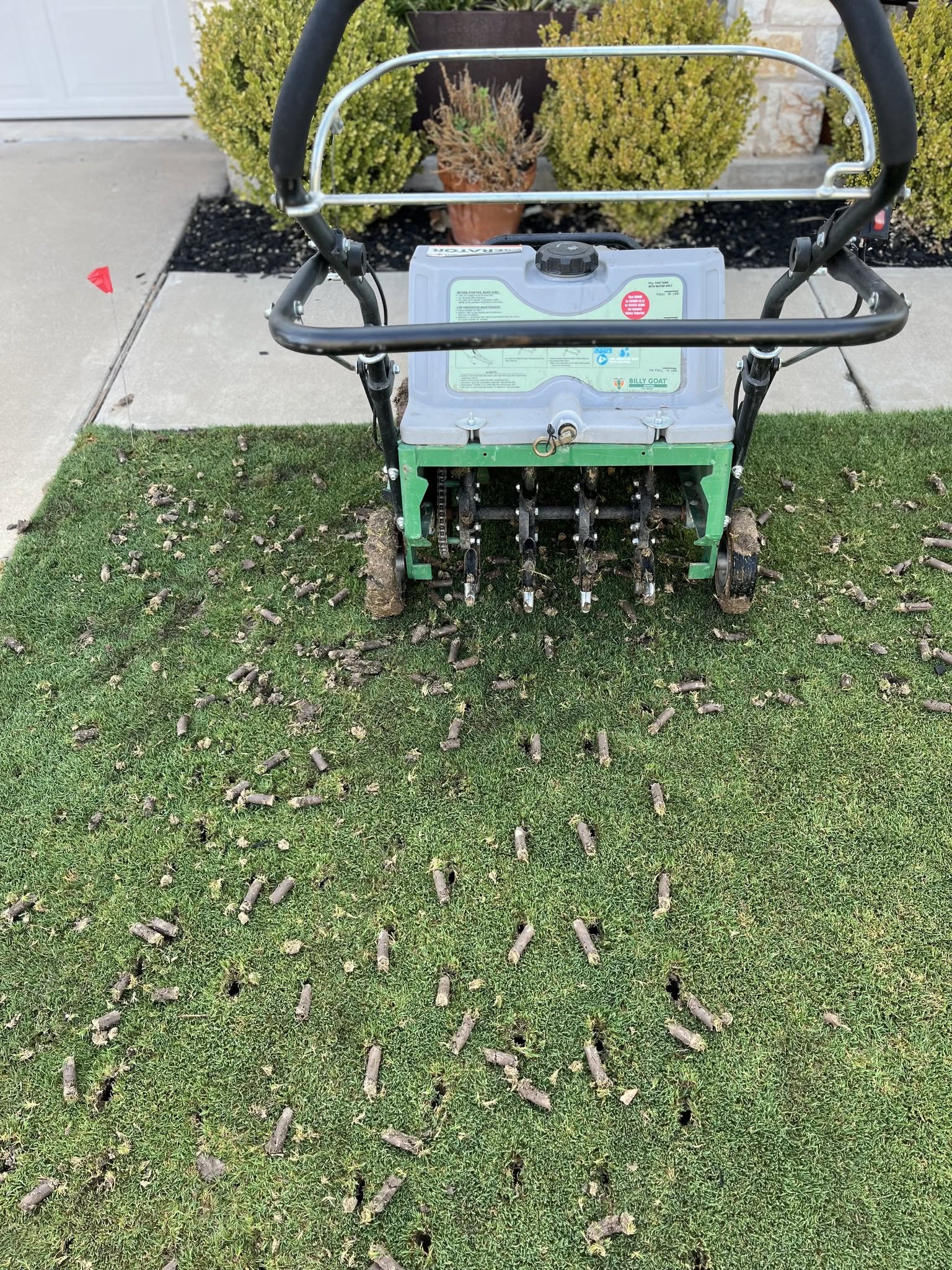
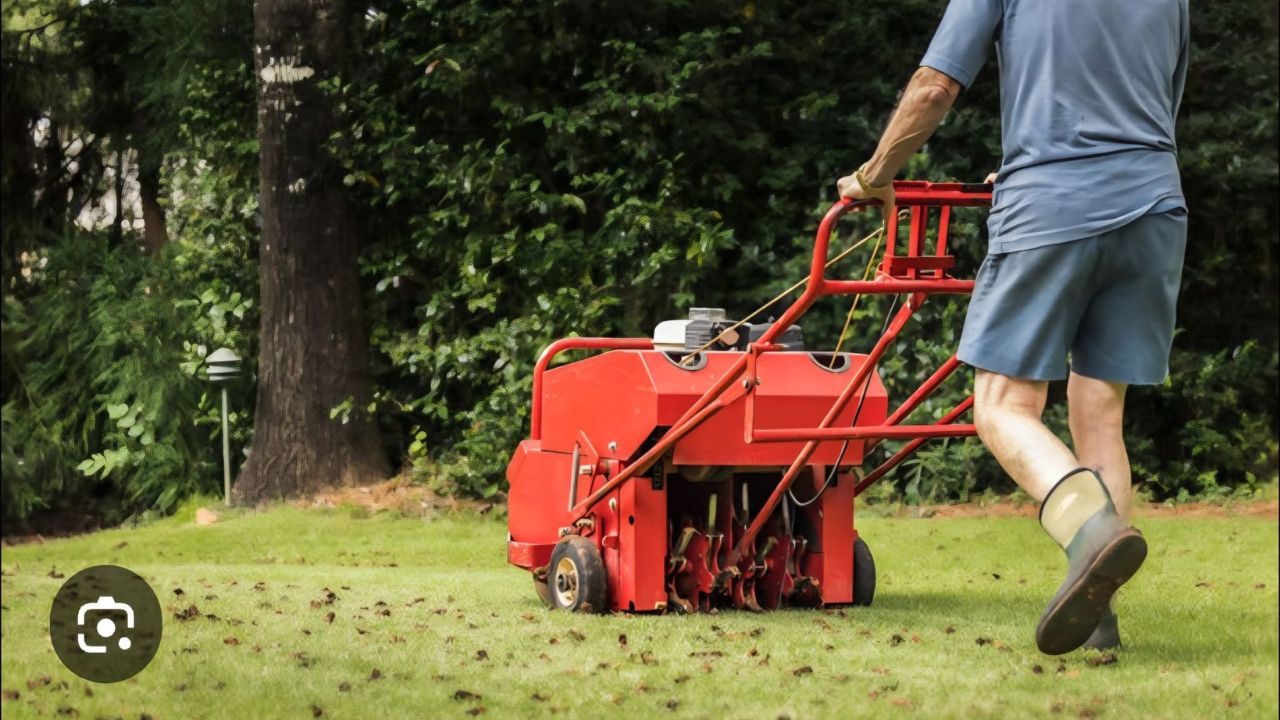
The investment is annual core aeration, done in the late May to mid-June window every single year without exception.
I’m deliberately using investment language rather than service language because the financial framing is the right one. A service is something you pay for and consume — the value exists during and shortly after the visit, then it’s gone. An investment is something you pay for that produces a return over time, and where the return depends on continuity — stopping partway through reduces or eliminates the value of what you’ve already put in.
Annual aeration fits the investment definition specifically because of what it does to soil structure over multiple seasons. A single aeration produces a meaningful but temporary benefit — the compaction relief from one treatment closes back up over twelve to eighteen months on Greater Sudbury’s clay-influenced soil as new compaction accumulates from foot traffic, equipment, and the freeze-thaw cycle. If you aerate once and never again, you get one season of improved performance and then the soil drifts back toward its pre-aeration condition over the following one to two years.
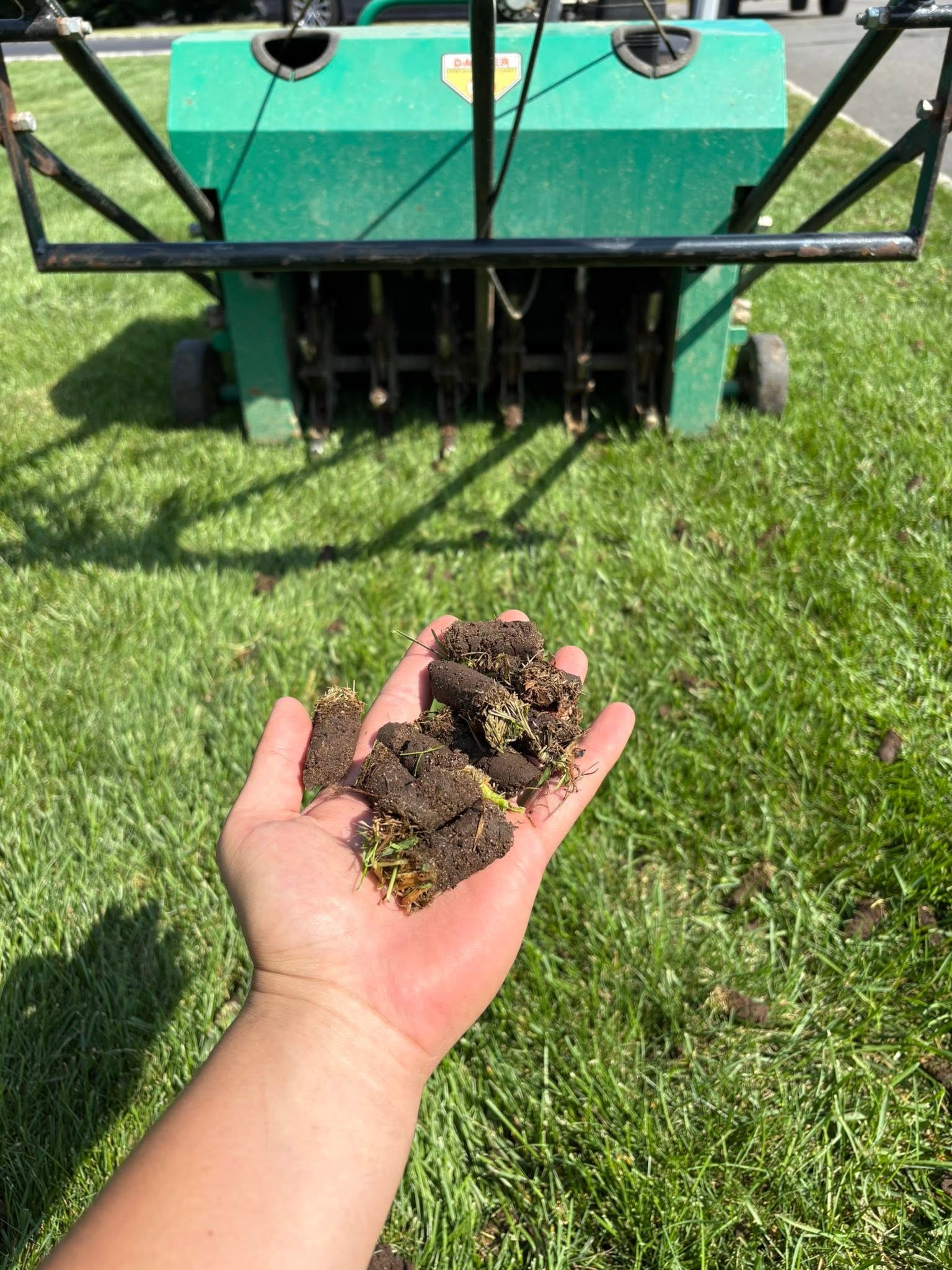
But if you aerate every single year, something different happens. Each year’s treatment doesn’t just relieve that year’s compaction — it builds on the soil structure improvement from the previous years’ treatments. The organic matter that decomposes from the plugs each year accumulates in the soil profile. The root channels from previous years, even after they’ve partially closed, leave the soil more permeable than completely unaerated soil would be. The cumulative effect after three, four, five consecutive years is a soil structure that’s meaningfully different — more open, more biologically active, holding more organic matter — than soil that’s been aerated only once or treated inconsistently.
This is the compounding mechanism. Year two’s aeration is working on soil that’s already been improved by year one. Year three’s aeration is working on soil improved by years one and two. The marginal benefit of each successive year’s treatment, applied to progressively better starting soil, produces results that exceed what the same number of treatments would produce if applied inconsistently with gaps between them.
The year-by-year return — what compounds and why it gets better, not worse, over time
Here’s what I’ve observed across properties in Greater Sudbury that have received consistent annual aeration for multiple consecutive years, broken down by what changes year over year.
Year one. The baseline treatment on a property that hasn’t been aerated recently — or ever — produces the most dramatic single-season visible improvement, because it’s addressing whatever compaction has accumulated over the longest period. Root depth typically improves from whatever the starting point was — often one to two inches on an unaerated Sudbury lawn — to two and a half to three inches by season end. The visible lawn improvement is significant: better colour, better density, improved summer heat tolerance compared to the previous unaerated condition. This is the year that produces the most obvious “wow” result, which sometimes leads homeowners to think the job is done.
It isn’t. Year one establishes the foundation. It doesn’t complete the soil structure improvement that consistent aeration eventually produces.
Year two. The soil entering year two’s aeration is already in better condition than it was entering year one. Some compaction has rebuilt over the intervening twelve months, but not back to the original baseline — the soil retains some of the structural improvement and organic matter from year one. Year two’s aeration, applied to this partially-improved soil, pushes root depth further — typically to three to three and a half inches by the end of year two. The visible improvement over year one is real but less dramatic than the year-zero-to-year-one jump, because the starting point was already better. This is sometimes misread as diminishing returns. It’s actually the compounding mechanism working correctly — the soil is improving each year, even though the visible jump gets smaller because each year’s starting point is closer to optimal.
Year three. By year three, the soil structure has typically reached a meaningfully different state than the original unaerated condition. Root depth in the four to four and a half inch range is achievable on most Greater Sudbury residential properties by this point, assuming consistent annual treatment and appropriate cutting height and watering practices alongside the aeration. The thatch management benefit compounds as well — three consecutive years of aeration-introduced soil microbes have had three full seasons to process accumulated organic matter, and thatch depth on a property that started with management-level thatch typically stabilizes well below the half-inch threshold by this point.
Years four and five and beyond. The lawn at this stage is operating in what I’d describe as a maintenance-of-excellence mode rather than an improvement mode. Root depth typically plateaus in the four to six inch range — the practical maximum for most residential turf grass varieties in Greater Sudbury’s soil conditions, sometimes limited by topsoil depth over bedrock as I described in the article on what Sudbury soil actually looks like and why it matters. Annual aeration at this stage isn’t producing dramatic year-over-year improvement anymore because the soil has reached a stable, healthy state. What it’s doing is maintaining that state — preventing the regression that would occur if treatment stopped.
This is the critical thing to understand about the compounding value: the investment doesn’t stop paying once the lawn looks great. It continues paying by preventing the decline that would otherwise occur. A property at year five of consistent aeration that skips year six doesn’t stay at the year-five level — it begins regressing back toward the unaerated baseline, just as I documented in the article on what happens to a Sudbury lawn when you skip one year of aeration. The investment has to continue to keep paying. That’s the nature of compounding maintenance — it’s not a one-time purchase that locks in a permanent state.
What you’re actually buying when you pay for this — the five things it produces simultaneously
Annual aeration’s value as an investment comes from the fact that a single service addresses five distinct problems simultaneously, each of which would otherwise require separate intervention.
Compaction relief. The most obvious benefit — opening the soil structure that foot traffic, equipment, and Greater Sudbury’s freeze-thaw cycle compress every season. This alone justifies the service on clay-influenced soil.
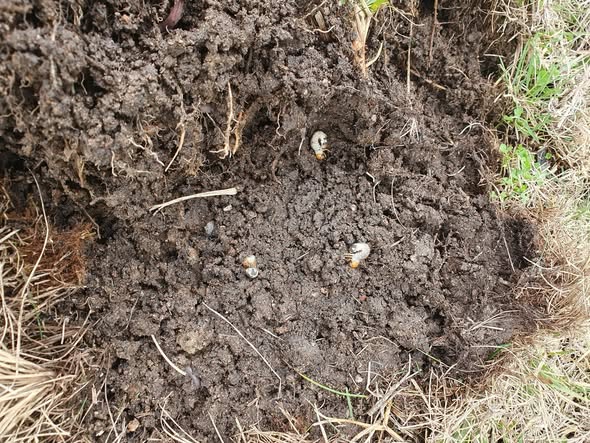
Thatch management. The soil microbes introduced through the aeration process accelerate thatch decomposition, keeping the organic layer between soil and grass at a beneficial thickness rather than letting it accumulate into the hydrophobic barrier that causes summer browning. Without aeration, thatch management requires separate dethatching service — which costs more and is more disruptive to the lawn than the gradual management that annual aeration provides.
Improved water and nutrient efficiency. Every other input you apply to your lawn — fertilizer, water, overseeding — works more effectively on aerated soil because the channels created allow those inputs to reach the root zone rather than sitting on a compacted surface. I covered this connection specifically in the article on what I tell Sudbury homeowners about fertilizing — fertilizer applied to unaerated soil performs at a fraction of its potential. This means annual aeration isn’t just valuable on its own terms — it increases the value of every other dollar you spend on lawn care.
Root depth and drought resilience. Deeper roots access moisture reserves further down the soil profile, which translates directly into better performance during Greater Sudbury’s July heat stretches and better compliance with the watering bylaw’s restricted schedule, since a deep-rooted lawn handles the every-other-day watering limit far better than a shallow-rooted one.
Weed suppression through turf density. A lawn with healthy root development and good soil structure produces denser turf, which closes the gaps that weed seeds need to establish. This reduces the need for herbicide treatment over time — another cost that consistent aeration indirectly reduces.
Five distinct benefits from one annual service, each of which compounds the others. The thatch management improves water efficiency. The improved water efficiency improves root depth. The improved root depth improves drought resilience and weed suppression. None of these operate independently — they reinforce each other, which is part of why the cumulative effect over multiple years is greater than the sum of the individual annual treatments would suggest.
Why most homeowners underestimate this investment — and what changes when they don’t
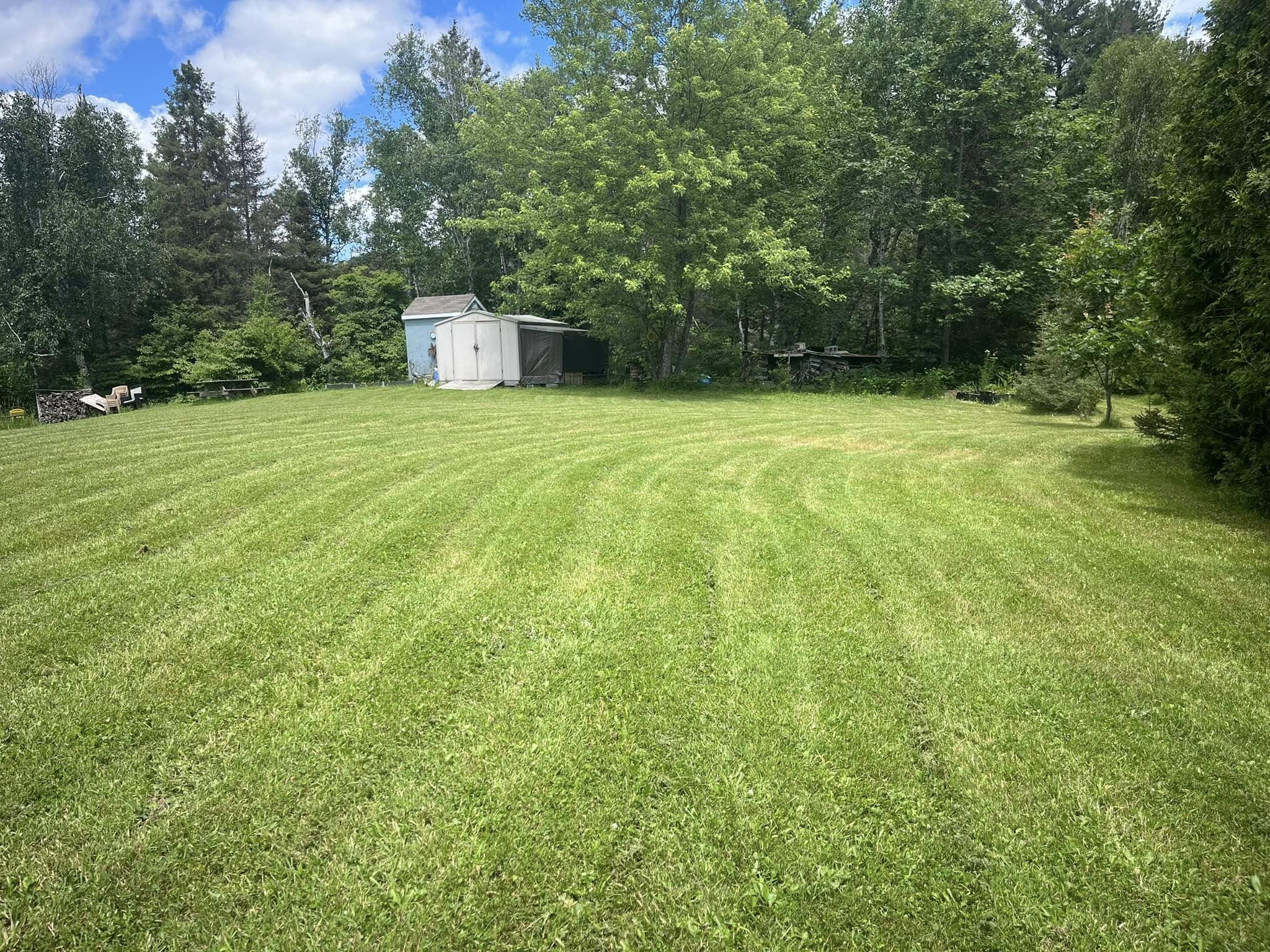
The reason annual aeration gets skipped or treated as optional more than almost any other lawn care decision is that its value is invisible in the moment and cumulative over time — exactly the kind of investment that’s easy to deprioritize when the immediate need isn’t pressing.
When a homeowner is deciding whether to spend $150 to $200 on aeration this spring, the comparison in their mind is often against something with more immediate, visible payoff — a fertilizer application that produces visible greening within weeks, a mulch refresh that immediately improves curb appeal, or simply not spending the money at all because the lawn “looks fine right now.” Aeration’s payoff is partly invisible — the soil structure improvement isn’t something you can see directly — and partly deferred, showing its full value over the following weeks and months as everything else you do to the lawn works better.
This is exactly backwards from how the investment should be prioritized. I described the comprehensive case for this in the article on the 5 things every great Sudbury lawn has in common — annual aeration was the first and most consistent factor across every excellent lawn I’ve assessed in six years of working across Greater Sudbury. Not occasional aeration. Annual, without exception.
What changes when a homeowner commits to it as a genuine annual investment rather than a discretionary seasonal extra: the budgeting shifts. Instead of deciding each spring whether aeration is worth it this particular year, it becomes a fixed line item — the same way you might budget for a furnace filter change or a vehicle oil change. Not optional maintenance you evaluate annually. Scheduled maintenance that happens because skipping it costs more than doing it, as I documented with actual measurements in the article on what happens when you skip one year.
Homeowners who make this shift — treating annual aeration as a non-negotiable line item rather than an annual decision — consistently end up with the best-performing lawns I see across Greater Sudbury. Not because they’re spending more in total than homeowners who aerate occasionally. Often they’re spending less, because they’re not paying the catch-up premium that an inconsistent schedule produces. They’re just spending consistently, on the one thing that compounds, every single year.
If you want to start that investment cycle on your property this season — or if you want me to assess where your soil currently stands so we can plan the right starting point — give me a call. The late May to mid-June window is when this conversation matters most.
📞 705-507-6787 | Get a free quote online
— Ryan Lingenfelter
Owner, Cutting Edge Lawn & Landscaping
Garson, Ontario · 705-507-6787
