
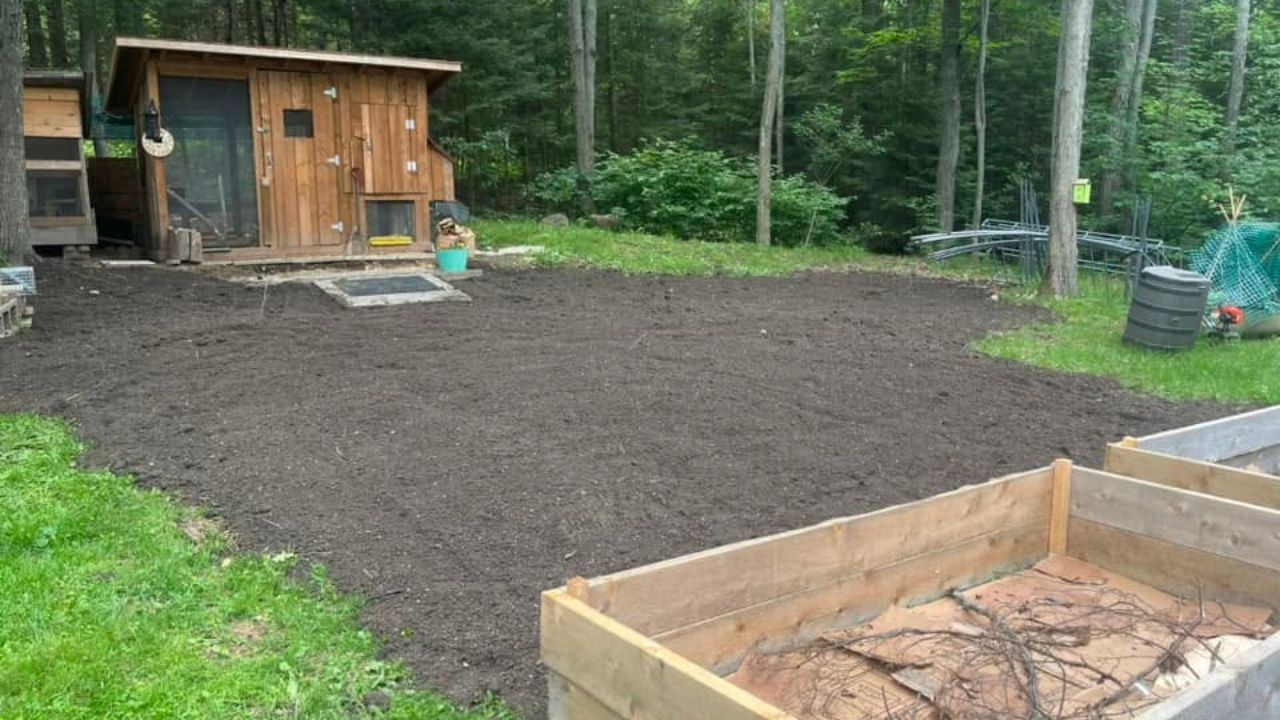
I try to be honest in every assessment I do, which means sometimes I tell people things they don’t want to hear. Most of the time, that honesty is appreciated even when it’s disappointing. Occasionally, someone hears my honest assessment, disagrees with it, and does something about it anyway.
This is the story of one of those times — and what I learned from being wrong, or at least more wrong than I expected to be.
The homeowner’s name is Dale. His property is in Hanmer. He called me in early spring about a backyard that had been declining for years, hoping I could tell him it was an easy fix.
It wasn’t an easy fix. And when I gave him my honest assessment of just how difficult a fix it would actually be, he didn’t take it the way most people do.
I’m Ryan Lingenfelter, owner of Cutting Edge Lawn & Landscaping in Garson, Ontario. Here’s what happened.
What I Told Him — And Why I Believed It
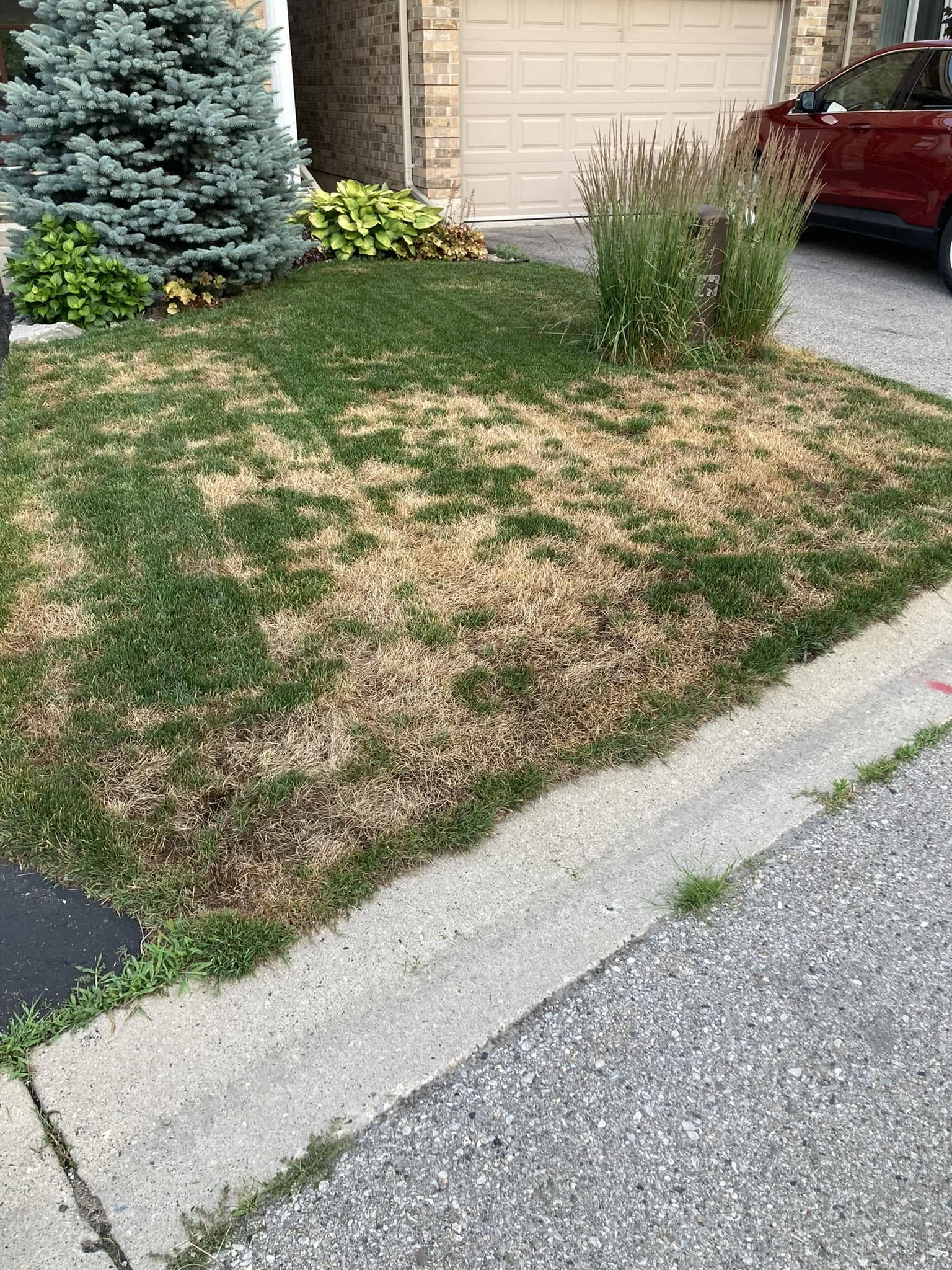
When I walked Dale’s backyard, the picture was about as discouraging as I’d seen on a property that wasn’t being fully replaced with sod. The compaction was severe — the screwdriver wouldn’t go in past half an inch in most spots. The drainage had two distinct problem areas rather than one. The grass coverage was down to maybe 30 percent, with the rest split between bare soil and aggressive weed growth, mostly creeping charlie and a particularly stubborn patch of quack grass that had established itself along one side.
Dale’s budget for the project was limited. He’d told me upfront he couldn’t do a full restoration with sod — he wanted to know if there was a path to improving the lawn through aeration, overseeding, and his own ongoing effort instead.
I gave him my honest read. Given the severity of the compaction, the extent of the bare coverage, the drainage issues in two separate areas, and the established weed population — particularly the quack grass, which is notoriously difficult to eliminate through overseeding alone since it spreads aggressively through rhizomes and tends to outcompete new grass seedlings rather than the reverse — I told him that aeration and overseeding alone would likely produce modest improvement at best. I estimated maybe a 15 to 20 percent improvement in coverage over a season, with the quack grass likely to remain a persistent problem regardless of what else we did.
I told him the honest path to a genuinely good result was full restoration — strip, address the drainage properly, till, topsoil, sod. I quoted him that option too, knowing it was likely outside what he’d told me his budget allowed.
Dale thanked me for the honesty and said he wanted to think about it.
A week later, he called and said he was going to try the aeration and overseeding route himself, doing much of the follow-up work personally to keep costs down, and he wanted me to do the aeration and provide the seed and initial guidance.
I told him I was happy to do that, but I repeated my honest expectation: meaningful but limited improvement, likely with the quack grass remaining a real problem. I didn’t want him going into it expecting something I didn’t think was realistic.
He said he understood, and he wanted to try anyway.
He Did It Anyway — What He Actually Did Differently
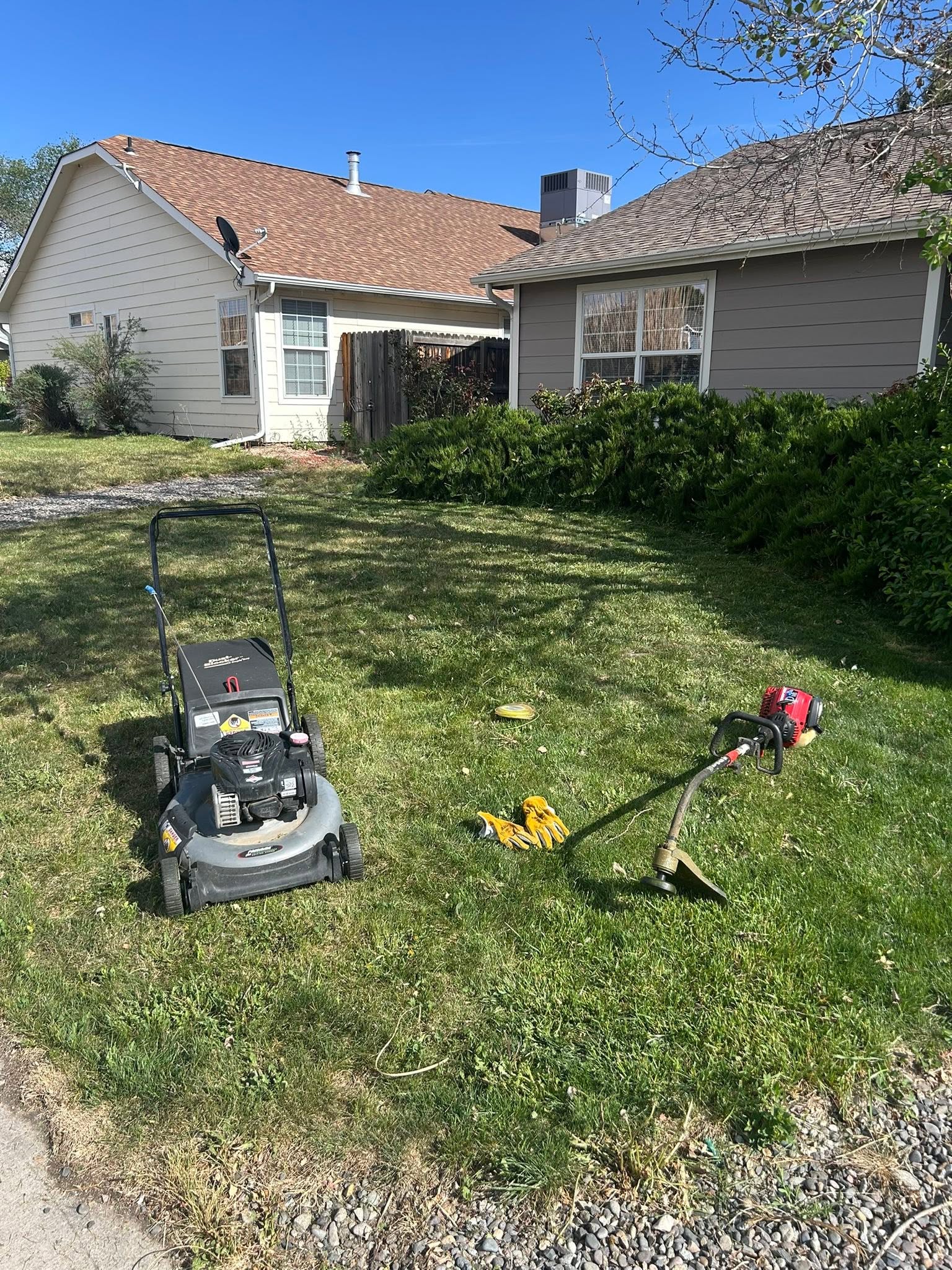
I did the core aeration in May — two passes, as thorough as the severe compaction allowed. I provided overseeding guidance and a quality seed blend, and I addressed what I could of the drainage issues within the scope Dale had budgeted, though not as completely as a full restoration would have allowed.
What happened after that is where Dale’s effort went beyond what I typically see from homeowners managing their own follow-up work — and it’s the reason the outcome ended up better than I’d predicted.
He watered with a precision that exceeded what I generally see even among diligent clients. He’d researched proper watering depth and frequency extensively, and he followed it exactly — deep, infrequent sessions, checking soil moisture with a probe rather than guessing, adjusting based on actual rainfall rather than running on a fixed schedule regardless of weather.
On the quack grass specifically — the part I’d been most pessimistic about — Dale took an approach I hadn’t fully anticipated. Rather than just overseeding and hoping new grass would outcompete it, he spent significant time through the early season manually removing quack grass rhizomes by hand in the worst-affected sections before overseeding those specific areas, understanding that the rhizome network needed to be physically disrupted rather than simply out-competed. This is genuinely tedious work — quack grass rhizomes can run surprisingly deep and far, and removing them by hand across even a modest area takes many hours spread over weeks.
He also did a second overseeding pass in early September, on top of the spring work, specifically targeting any areas that hadn’t fully filled in — essentially giving the lawn two attempts at establishment within the same year rather than the single attempt I’d factored into my original estimate.
What I Saw When He Called Me Back

Dale called me back the following spring, almost exactly a year after the original assessment, and asked me to come take a look at how things had progressed.
I want to be honest about what I found, because the story is more interesting if I don’t round it up or down. The lawn was not at the level a full sod restoration would have produced — there was still some unevenness in density, and a small section where the quack grass had partially returned, though dramatically reduced from where it had started. But the overall coverage had gone from roughly 30 percent to somewhere around 75 to 80 percent. That’s well beyond the 15 to 20 percent improvement I’d estimated as the realistic ceiling for the approach he was taking.
The compaction had also improved more than I’d expected, in part because Dale had paid for a second aeration pass himself in the fall, which I hadn’t included in my original estimate of what he was likely to do given his stated budget constraints.
Standing in that backyard, looking at a result that exceeded what I’d predicted by a meaningful margin, I told Dale directly: “You proved me wrong. I didn’t think this would get here without the full restoration.”
He laughed and said he’d actually been a little offended by my original assessment — not at the honesty of it, which he appreciated, but at the implicit message that the outcome was largely out of his hands. He said he’d specifically wanted to see how far his own effort and attention could move the needle on a problem I’d characterized as having a low ceiling without more investment.
What I Got Wrong — And What I Still Think I Got Right

I want to be precise about what this experience actually changed in how I think about giving advice, because I don’t think the lesson is simply “homeowners can always beat the odds if they try hard enough.” That wouldn’t be honest either.
What I got wrong was treating my estimate as if it accounted for the maximum possible homeowner effort, when in reality it was based on the level of effort and follow-through I typically observe — which is usually good but rarely at the level Dale brought to it. My estimate wasn’t wrong about what aeration and overseeding alone would typically produce. It was wrong about the ceiling, because the ceiling depends heavily on execution, and Dale’s execution was well outside the normal range I was implicitly assuming.
What I still think I got right is the underlying diagnosis and the realistic range of outcomes for a typical level of follow-through. If Dale had done the standard version of aeration, overseeding, and reasonable watering — what most diligent homeowners actually do — I believe the outcome would have landed close to my original estimate. The variable that changed the result wasn’t the lawn or the soil. It was the amount and precision of the work Dale was personally willing to put in, including the genuinely unusual step of hand-removing quack grass rhizomes over weeks of tedious effort.
I’ve talked before about the gap between technical work and realistic expectations in the story of a Lively homeowner whose lawn improved significantly but didn’t match what she’d unconsciously been picturing — that story was about a gap between a good result and an unrealistic comparison point. Dale’s story is almost the opposite: a result that exceeded a realistic estimate because of exceptional personal effort. Both stories point toward the same underlying truth, which is that the final outcome on any given lawn depends on the combination of the underlying conditions and the quality of execution applied to them — and that execution variable has a wider range than I sometimes account for when giving an initial estimate.
Since this experience, I’ve adjusted how I frame estimates involving significant homeowner follow-up work. I now explicitly describe what I consider a typical outcome versus what’s possible with exceptional, sustained effort — rather than presenting a single number that implicitly assumes average execution. It’s a more honest way to set expectations, because it acknowledges that the homeowner’s own effort is a real variable in the equation, not just the soil and the work I personally do.
What This Means If You’re Considering a DIY-Heavy Approach
If you’re weighing a lower-cost path involving significant ongoing effort on your part — aeration and overseeding rather than full restoration, for example — Dale’s story is genuinely encouraging, but it comes with an honest caveat. The result he got required an extraordinary, sustained level of attention over an entire season, including physically demanding work most people wouldn’t choose to do.
If you’re willing to bring that level of effort, the realistic ceiling is genuinely higher than a standard estimate might suggest. If you’re hoping for that outcome without the corresponding effort, the original, more modest estimate is probably the more honest expectation to plan around.
Either way, I’d rather give you both numbers — the typical outcome and the outcome with exceptional effort — than just one. If you want an honest assessment of what’s realistic for your specific property under either scenario, reach out.
📞 Call or text me: 705-507-6787
Or fill out the free quote form here — I get back to everyone same day.
— Ryan Lingenfelter
Owner, Cutting Edge Lawn & Landscaping
Garson, Ontario
Related Articles
- The Sudbury Customer Who Did Everything I Said — And Still Wasn’t Happy
- A Hanmer Customer Left Me a Note on Her Door — Here’s What It Said
- Lawn Aeration Near Me in Sudbury — Cost, What to Expect, and What to Ask
- A Sudbury Homeowner Asked Me to Watch Her Water the Lawn — Here’s What I Saw
- I Can Spot a Failing Sudbury Lawn in 10 Seconds — Here’s Exactly What I Look For
