
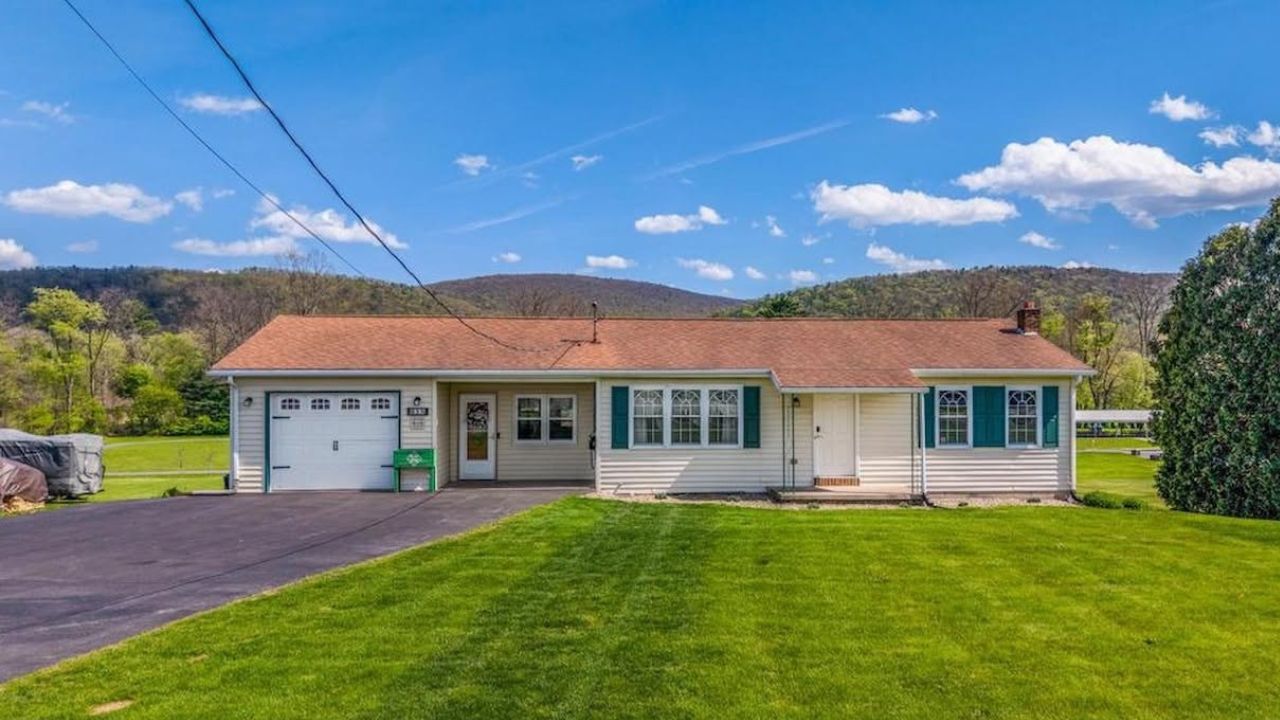
I want to be upfront about something: ten seconds isn’t enough to actually diagnose a lawn. I still do the full assessment on every property — the screwdriver test, the drainage check, the thatch measurement, all of it. Nothing in this article replaces that.
But after five years of driving up to hundreds of properties across Greater Sudbury, something has developed that I didn’t have in year one: a fast, instinctive read on a lawn before I’ve even parked the truck. It’s not magic. It’s pattern recognition built from seeing the same handful of warning signs repeat across enough properties that they’ve become automatic to notice.
I want to break that down into something explicit, because I think it’s useful for any homeowner trying to understand their own lawn — or sizing up a property before buying a house. Here’s exactly what’s running through my head in those first ten seconds.
I’m Ryan Lingenfelter, owner of Cutting Edge Lawn & Landscaping in Garson, Ontario.
Second 1 to 3 — The Colour and Texture From the Street

The very first thing I register, often while I’m still in the truck, is colour consistency across the whole lawn. A healthy lawn — even one that needs some maintenance — tends to have a relatively uniform green tone, with normal variation from sun exposure but no jarring contrasts.
A struggling lawn shows patchwork colour from a distance. Sections of deeper green next to sections of yellow-green or tan, with edges between them that are often too distinct to be explained by natural shading. That patchwork pattern, visible even from the street, is usually the first signal that something underneath isn’t uniform — compaction in some areas and not others, drainage issues creating wet and dry zones, or thatch buildup that varies in thickness across the property.
The second thing I notice in this same window is texture. A healthy lawn has a relatively even surface when you look at it from an angle — light catches it consistently. A struggling lawn often has a lumpy, uneven texture even before you walk on it, which usually indicates uneven thatch buildup, inconsistent mowing height over time, or settling issues in the soil underneath.
I’ve written about how thatch and compaction interact in detail in the most common thing I find under dead Sudbury lawns — what I’m doing in these first few seconds is essentially looking for the visual symptoms of exactly that underlying cause, before I’ve confirmed anything with the screwdriver test.
Second 4 to 6 — Where the Problems Are Concentrated
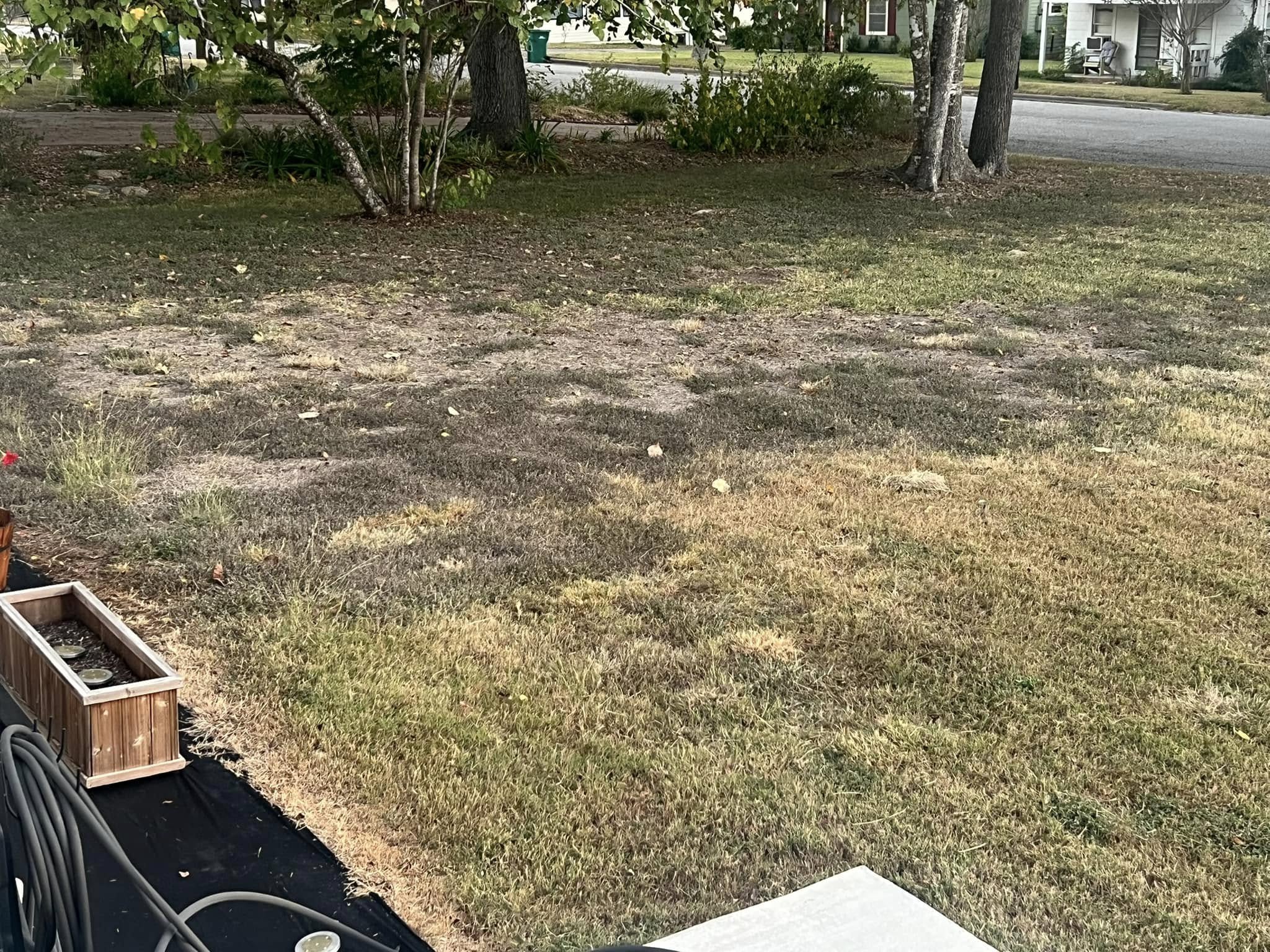
Once I’ve registered that something’s off, I’m immediately looking at where the problems are concentrated, because location tells me a lot about likely cause before I’ve set foot on the property.
If the worst sections are near the foundation of the house, I’m thinking about grading and downspout discharge — water moving toward the house rather than away from it, creating chronically wet or chronically dry conditions depending on the season. If the worst sections are along a fence line shared with a neighbour, I’m thinking about runoff coming from the adjacent property, a pattern I’ve encountered often enough across Greater Sudbury that it’s become an automatic consideration.
If the problem is concentrated in a low-lying area in the middle of the yard, that’s a classic drainage pooling signature — water collecting at the lowest point and creating the alternating waterlogged-then-dry conditions that I’ve described in detail when discussing why repeated sod failure happens in the same spots. If the thin areas are near a driveway or walkway, heat radiating off the hardscape combined with compacted soil from foot traffic is usually part of the story.
And if the problem seems to be everywhere, evenly, rather than concentrated anywhere specific — that often points toward something more systemic, like cutting height that’s been too low for an extended period, or a soil-wide compaction issue rather than a localized one. I’ve covered how mowing height affects the entire lawn uniformly, rather than in specific zones, in what you’re really paying for across the $30 to $80 price range — cutting height problems tend to show up as a general thinning across the whole property rather than concentrated trouble spots.
Second 7 to 9 — The Edges, the Low Spots, and the Shade Lines

By this point I’m starting to walk toward the property, and I’m looking at three more specific details that round out the quick read.
First, the edges — where the lawn meets the driveway, the walkway, the garden beds. Clean, defined edges versus a ragged, overgrown transition tells me something about how consistently the property has been maintained. This isn’t usually a sign of a deep soil problem on its own, but it’s often correlated with other maintenance gaps — a lawn with neglected edges has frequently also missed aeration, fertilizing, or proper cutting height over an extended period.
Second, I’m looking for low spots holding water or showing different vegetation than the rest of the lawn — sometimes a slightly different shade of green, sometimes moss starting to establish, sometimes visible standing water if it’s recently rained. These spots almost always correspond to drainage problems that will need addressing before any cosmetic fix holds.
Third, I’m checking the shade lines — where trees or structures cast consistent shadow. Cool-season turf in Sudbury can handle moderate shade reasonably well if the soil underneath is healthy, but a lawn already struggling with compaction or thatch will show its worst symptoms in the shaded areas first, because shade reduces the margin for error on everything else. If the shaded sections look dramatically worse than the sunny sections, that tells me the lawn doesn’t have much of a buffer against stress generally — which usually points back to root depth and soil condition rather than the shade itself being the primary cause.
Second 10 — Putting It Together Before I Even Get Out of the Truck

By the tenth second, I usually have a working theory. Not a diagnosis — that still requires the screwdriver test, checking drainage after I understand the property’s history, and a proper walk of the whole lawn. But a working theory that tells me what to check first and what questions to ask the homeowner.
If I’m seeing patchwork colour concentrated near the house with no obvious shade explanation, I’m asking about downspouts and grading before I’ve even said hello. If I’m seeing uniform thinning across the whole property with no concentrated trouble spots, I’m asking what cutting height the previous provider used. If I’m seeing a low spot with different vegetation, I’m asking whether that area has ever held standing water after rain.
This fast read isn’t a substitute for the full assessment — it’s a head start on it. It means that by the time I’m doing the screwdriver test and checking the soil properly, I already have a hypothesis to confirm or rule out, rather than starting from a completely blank slate. I’ve described what the full assessment process looks like once I’m actually on the ground in what almost every struggling Sudbury property has in common — the ten-second read is essentially the fast version of the same pattern recognition, applied before I’ve touched the soil.
What This Means for Looking at Your Own Lawn
You don’t need five years of professional experience to apply a version of this. Step back from your lawn — literally walk to the street or the far end of your driveway — and look at it the way I described above.
Is the colour uniform or patchy? Where specifically are the worst sections — near the house, along a fence, in a low spot, near hardscape? Are the edges clean or ragged? Is there a section that holds water or looks visibly different after rain?
The answers to those questions, even without a soil test, point you toward likely categories of cause. Patchiness near the house points toward drainage and grading. Uniform thinning everywhere points toward cutting height or general compaction. A low spot with different vegetation points toward water pooling.
None of this replaces an actual professional assessment if you want a definitive answer and a real plan. But it’s a useful first step in understanding what you’re looking at before you call anyone — and it means you’ll be able to describe the problem more specifically when you do.
Want a Proper Assessment, Not Just a Ten-Second Read?
If you’ve looked at your lawn using the framework above and you want an actual diagnosis — soil testing, drainage assessment, a real plan rather than a guess from the street — reach out. I’ll come out and do the full walk-through, not just the quick read.
📞 Call or text me: 705-507-6787
Or fill out the free quote form here — I get back to everyone same day.
— Ryan Lingenfelter
Owner, Cutting Edge Lawn & Landscaping
Garson, Ontario
Related Articles
- The One Thing I Always Find Under a Dead Sudbury Lawn
- 1,000 Lawn Jobs in Greater Sudbury — What Almost Every Property Has in Common
- Lawn Cutting in Sudbury: What $30 vs $80 Per Cut Actually Gets You
- A Sudbury Homeowner Asked Me to Watch Her Water the Lawn — Here’s What I Saw
- A Homeowner in Val Caron Showed Me a Competitor’s Quote — I Had to Tell Her the Truth
- A New Sudbury Homeowner Called Me Panicking in May — Here’s What I Told Her First
