
Most of the stories I tell are about lawns that turned out well and homeowners who were thrilled with the result. This one isn’t that story. I want to tell it anyway, because I think it taught me something important that the success stories don’t.
Her name is Heather. She lives in a subdivision in Lively, and she called me in early spring 2025 wanting to fix a lawn that had been thin and inconsistent for a few years. I did the assessment — moderate compaction, some thatch, a couple of thin patches but nothing dramatic. A solid, achievable recovery job. Not a full restoration. Aeration, overseeding, a season of correct maintenance.
I gave her a plan. She followed it more precisely than almost any client I’ve worked with. And at the end of the season, she called me sounding disappointed.
I’m Ryan Lingenfelter, owner of Cutting Edge Lawn & Landscaping in Garson, Ontario. This is the story of what happened, what I found when I asked her to explain exactly what was wrong, and what it taught me about a part of this job that has nothing to do with soil or grass.
The Plan I Gave Her — And How Closely She Followed It
The plan for Heather’s lawn was the standard recovery sequence I use on properties with moderate compaction and thin coverage — the same approach I’ve documented in detail in what to expect from lawn aeration in Sudbury.
Core aeration in May, two passes. Overseeding immediately after with a quality cool-season blend, into the holes for maximum soil contact. Starter fertilizer. A watering schedule for the overseeded areas — keeping them consistently moist for the first two weeks, matching the principles in what new sod and seed need to establish properly. Mowing at 3 inches for the rest of the season, never shorter. A second, lighter overseeding in early September to fill in anything that hadn’t fully established from spring.
Heather did all of it. Not approximately — precisely. She set phone reminders for watering. She bought a mower with adjustable height settings specifically so she could maintain 3 inches consistently rather than relying on whatever setting her old mower happened to have. She texted me photos throughout the season asking if specific things looked normal. She was, without question, one of the most diligent clients I’ve worked with in five years.
By July, the lawn looked noticeably better. The thin patches from spring had filled in. The overall density was visibly improved. I did a follow-up visit in August and the screwdriver test showed the compaction had improved significantly from where it had been in May — exactly what proper aeration and a season of correct maintenance should produce.
By any objective measure I use to assess a lawn — coverage, compaction, colour, density — Heather’s lawn had improved substantially over one season. This was a successful recovery job by every metric I track.
She called me in September and said she wasn’t happy with it.
What the Lawn Actually Looked Like — By the Numbers
I want to be specific about the actual improvement, because this is important to the story.
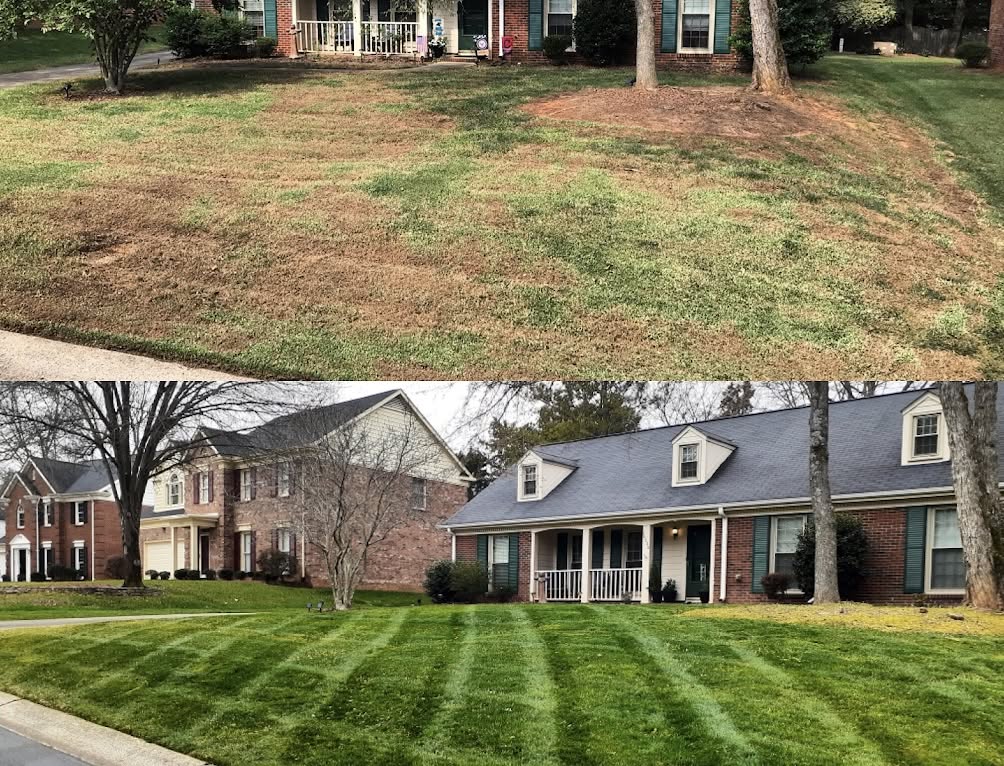
In May, before any work: coverage was approximately 65 to 70 percent across the lawn, with two distinct thin patches making up most of the remaining bare ground. Screwdriver test stopped at about an inch and a half in most spots.
By September, after the season’s work: coverage was approximately 90 to 95 percent. The thin patches had filled in substantially — not perfectly, but dramatically improved. Screwdriver test was going in three inches with normal pressure across most of the lawn.
This is a genuinely strong result for one season of recovery work on a moderately compacted Sudbury lawn. I’ve documented the typical recovery timeline in what five years of notes on Sudbury lawns has taught me — a 20 to 25 percentage point improvement in coverage over one season, combined with a meaningful improvement in compaction, is on the strong end of what I’d expect from this type of intervention.
So when Heather told me she wasn’t happy, my first instinct was confusion. By the metrics I use to evaluate a lawn professionally, this was a clear success.
I asked her directly: “Can you tell me specifically what you’re seeing that’s disappointing you?”
Her answer is what made this story worth telling.
What She Was Actually Comparing It To
Heather explained that she’d been picturing what her lawn would look like at the end of the season, and the picture in her head was a lawn that looked like the “after” photos in the lawn care content she’d been watching online all spring and summer.
She mentioned specific videos — quick transformation clips, the kind that are common in lawn care content online, showing a property going from patchy and brown to deep, uniform, golf-course green in what’s presented as a single season, sometimes implied to happen even faster.
What she had pictured, without fully realizing it, was a lawn with the kind of saturated, uniform colour and density you see in heavily edited or professionally staged content — often shot with specific lighting, sometimes featuring turf varieties or climates completely different from ours, and frequently representing multiple seasons of work compressed into a few minutes of video.
Her actual lawn — 90 to 95 percent coverage, healthy green, properly established — looked like a real, healthy, well-maintained Sudbury residential lawn. It did not look like a heavily produced video of a different property in a different climate with different turf and different lighting.
This is the gap that was actually causing her disappointment. Not the lawn itself. The comparison she was unconsciously making between her real result and an unrealistic visual standard she’d absorbed without examining where it came from.
I walked through this with her directly and gently. I asked her to compare her lawn now to photos of her lawn from May — not to any external standard, but to her own starting point. When she did that comparison, her tone changed noticeably. “Okay,” she said. “It is a lot better than it was.”
It was. By every measure that matters for an actual cool-season lawn in Sudbury’s actual climate, the result was strong. The problem wasn’t the work. It was the yardstick.
What I Changed About How I Set Expectations
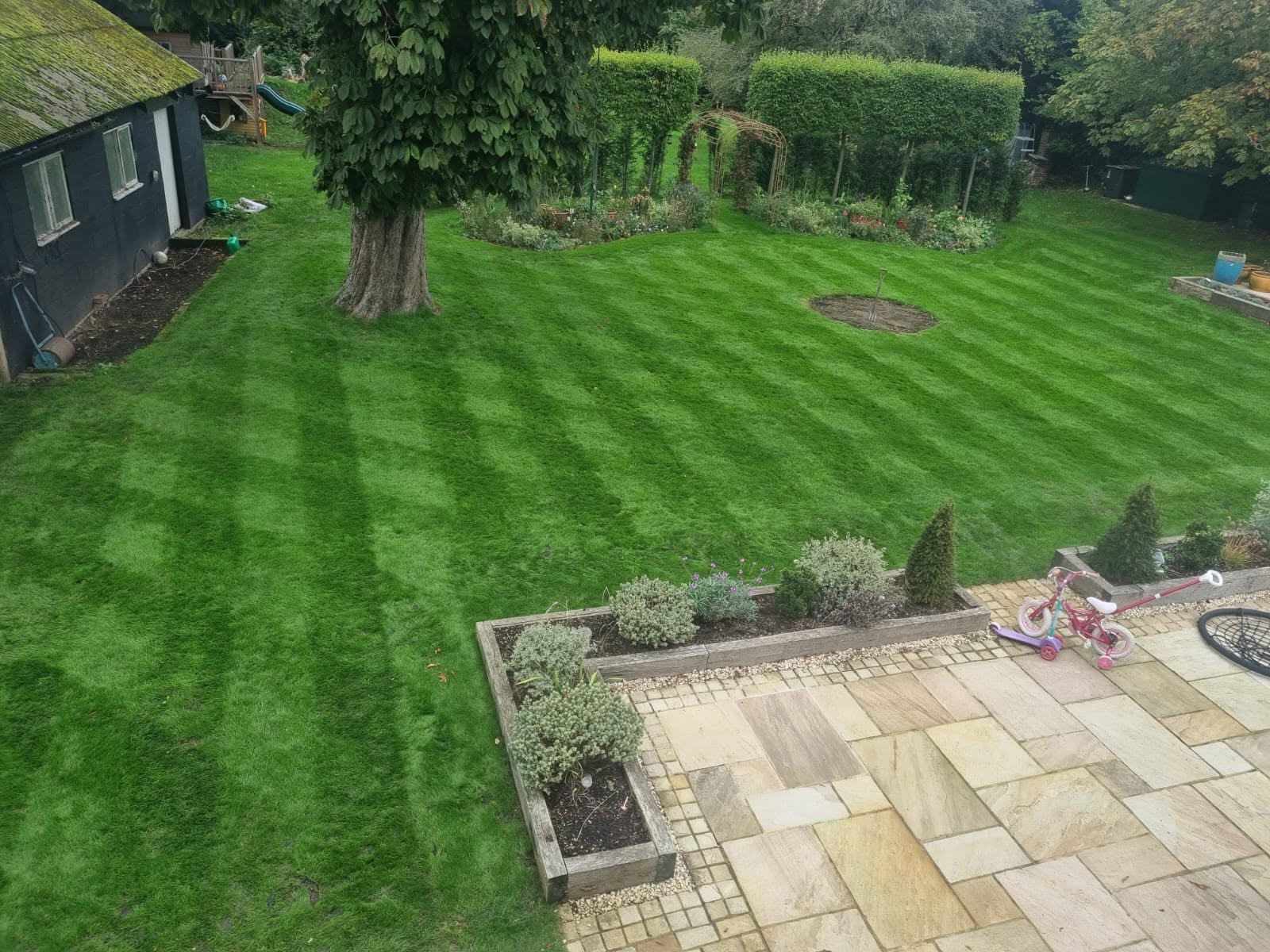
Heather’s situation made me realize there was a piece of the process I’d been underweighting. I’m thorough about explaining the technical plan — what we’re doing, why, what timeline to expect. I had not been spending enough time explaining what realistic success actually looks like, visually, compared to what people might have absorbed from elsewhere.
Here’s what I do differently now on every job where I expect a significant visible transformation.
I Take Reference Photos and Talk About Them Honestly
At the start of every recovery or restoration job, I now take clear photos and walk through with the homeowner what realistic improvement looks like over the relevant timeframe — not vague reassurance, but a specific description: “By August, I’d expect this thin patch to be substantially filled in but probably not perfectly uniform in colour yet. By next spring, after a second season of maintenance, it should be close to fully established.”
Setting a realistic timeline upfront, with specific markers, gives homeowners something concrete to measure against other than an unconscious mental image they may not have examined.
I Talk About What Real Sudbury Lawns Actually Look Like
I’m now more direct about the fact that a real, healthy Sudbury lawn — even a very well-maintained one — has natural variation in colour and density that comes from our climate, our soil, and the actual cool-season grass varieties that work here. It’s not going to look like a heavily filtered video or a warm-climate turf variety that doesn’t survive our winters. That’s not a flaw in the work. It’s what a real, living lawn in this climate actually looks like.
I’ve covered some of what realistic expectations look like seasonally in why Sudbury lawns go brown in July and in the week most Sudbury lawns start struggling — a healthy lawn in our climate has a seasonal rhythm to it, and that rhythm is normal, not a problem.
I Frame Success as Comparison to Starting Point, Not to an External Standard
The most useful reframe in Heather’s case was simply comparing her actual lawn to her own actual starting point rather than to an abstract ideal. I now build this comparison into how I report progress throughout a job — showing the actual before photo alongside the actual current state at each check-in, rather than letting the comparison happen only in the homeowner’s head against whatever standard they’ve absorbed.
I’m More Direct About Multi-Season Timelines
Some lawns need more than one season to reach their full potential — particularly ones recovering from years of compaction or thin coverage. I’m now clearer upfront that a strong first-season result, like Heather’s, is often a foundation for a second season of continued improvement rather than a final destination. Setting that expectation early avoids the letdown of treating year one’s strong progress as a disappointing final result.
What Happened With Heather’s Lawn
Once we recalibrated what she was comparing her lawn to, Heather’s perspective shifted considerably. She booked fall aeration — building on the spring work, following the same annual rhythm I recommend for Sudbury clay that I’ve detailed in how to prepare your Sudbury lawn for winter.
The following spring, she texted me a photo of the lawn — fully established now, even density, strong green coming out of winter dormancy. “This is what I was picturing,” she said. “I just didn’t realize it would take a year and a half to get there, or that what I was picturing wasn’t quite real to begin with.”
That’s an honest and useful thing for a client to say. And it’s part of why I tell this story — not because the work was different from any other job, but because the conversation about expectations turned out to matter as much as the technical work itself.
What This Means If You’re Planning Lawn Work This Season
If you’re about to start a lawn restoration or recovery project in Greater Sudbury, here’s the honest framing I’d give you directly:
A single season of proper work — aeration, overseeding, correct mowing height, consistent watering — produces real, measurable improvement on most Sudbury lawns. Coverage improves. Compaction improves. Colour and density improve. That’s a genuine, valuable result.
It may not look like a heavily produced video or a warm-climate lawn in a single season. It will look like a real, healthy, properly maintained cool-season lawn in our climate — which has its own natural variation and its own seasonal rhythm.
Multi-year compaction or significant bare coverage sometimes needs more than one season to fully resolve, even with everything done correctly. That’s not a failure of the work. It’s the realistic timeline for biological processes that take the time they take.
If you want an honest assessment of what’s realistic for your specific property and your specific timeline — not an inflated promise, not a discouraging dismissal — reach out.
📞 Call or text me: 705-507-6787
Or fill out the free quote form here — I get back to everyone same day.
— Ryan Lingenfelter
Owner, Cutting Edge Lawn & Landscaping
Garson, Ontario
Related Articles
- Why I Keep Notes on Every Sudbury Lawn I Work On — And What 5 Years of Data Has Taught Me
- Lawn Aeration Near Me in Sudbury — Cost, What to Expect, and What to Ask
- Why Your Sudbury Lawn Goes Brown in July — And When to Actually Worry
- What Happens If You Don’t Water New Sod in Sudbury’s First Two Weeks
- What Professional Lawn Care Actually Means in Sudbury
- How to Prepare Your Sudbury Lawn for Winter — October Checklist
- This Is the Week Most Sudbury Lawns Start Struggling — Here’s How to Get Ahead
