

When I pull up to a property in Greater Sudbury for the first time — whether it’s a quote visit, a new customer, or a property I’ve been referred to — I’m reading the lawn before I get out of the truck.
By the time I’ve walked from my vehicle to the front door, I’ve already formed a working picture of what’s going on. Not a complete diagnosis — that takes longer, requires walking the full property, asking questions about history. But a working picture. The kind of picture that tells me what questions to ask and where to look first.
I’ve been doing this across Garson, Hanmer, Val Caron, Chelmsford, Lively, Azilda, and the rest of Greater Sudbury since 2020. After enough properties, the first sixty seconds become a trained read. Here’s exactly what I’m looking at — and what each thing tells me.
The Colour — What Shade of Green Is It?
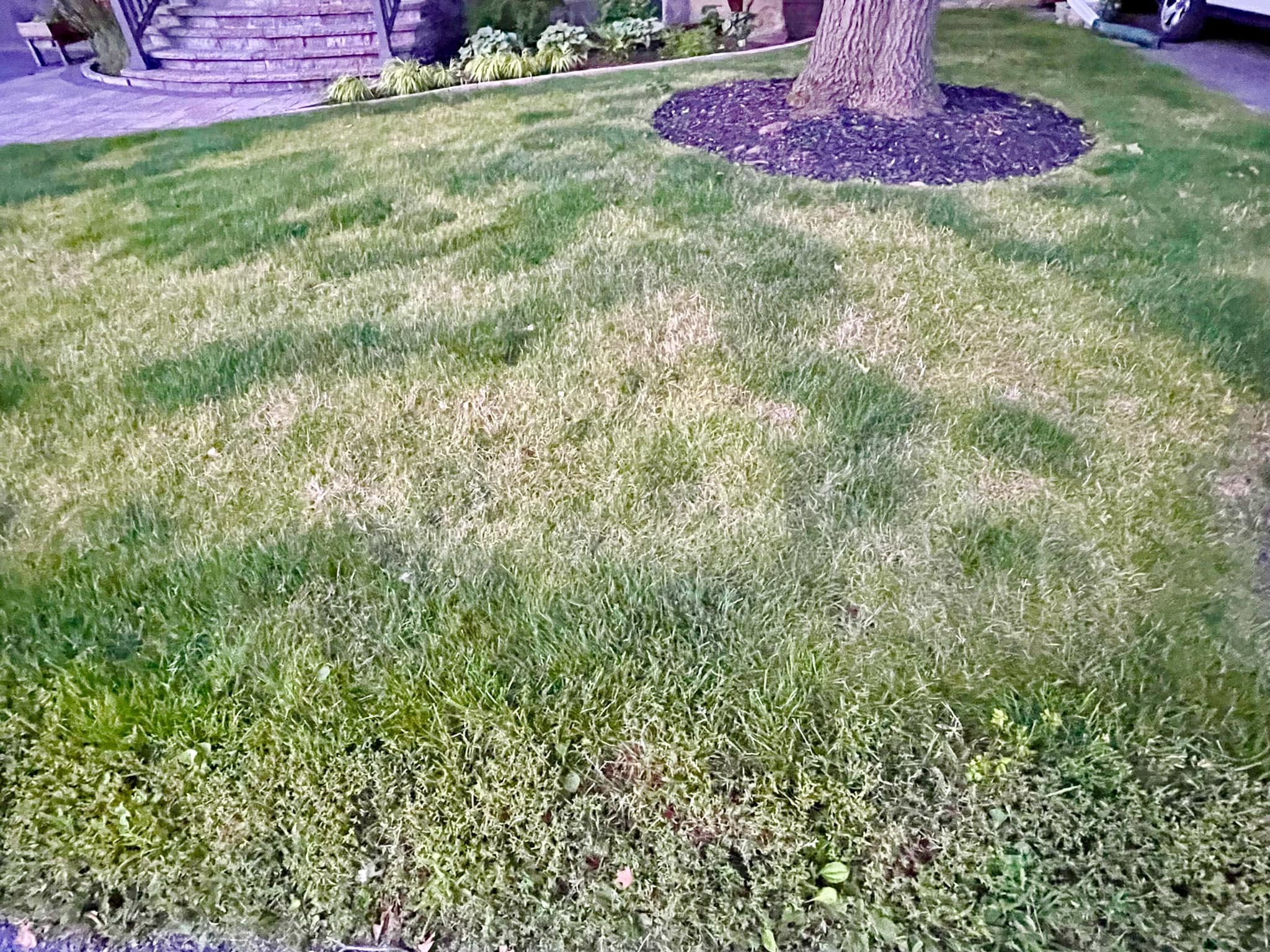
The first thing I notice is colour. Not whether it’s green — whether it’s the right shade of green, and whether that colour is consistent across the property or varies by section.
A healthy Sudbury lawn in good condition has a rich, consistent medium-to-deep green through the growing season. That colour comes from adequate nutrition, proper moisture, and roots that are functioning well. It’s a specific shade you learn to recognize after seeing enough lawns.
Pale yellow-green tells me something is limiting the grass — usually one of three things: soil pH is too acidic and nutrients aren’t available even if they’re present, the lawn is under-fertilized, or the grass is struggling with compaction that’s limiting root function. In Sudbury, pH is often the first culprit I check because our Canadian Shield soil and smelter history make acidic conditions common across Greater Sudbury.
Blue-green or grey-green means the lawn is drought-stressed — it’s about to go dormant or already heading that way. The blue cast is the grass’s stress response, a visible sign it’s conserving water. In July and August this is often normal in Sudbury, but seeing it in May or June tells me the watering approach isn’t working or there’s a drainage issue somewhere.
Patchy colour — some sections healthy green, others pale or yellow — points to uneven conditions across the property. Different soil depth in different areas, drainage that varies, compaction concentrated in certain spots, or sections that were treated differently in previous seasons. Patchy colour is usually the most interesting situation because the contrast between sections tells you a lot about what’s driving the problem.
Colour variation along a pattern — stripes, lines, circles — tells me about mowing. Alternating light and dark stripes usually mean inconsistent cut height or a scalping pattern from a mower that’s not level. Circles of pale or dead grass point to a specific cause: grub damage, fungal issues, a chemical spill, or occasionally something under the soil like decomposing material affecting soil chemistry.
The Texture and Density — What Does It Look Like Up Close?

From the street I can get a read on colour and broad patterns. As I walk closer — crossing the driveway, coming up the front walk — I’m getting a better look at texture and density.
Thickness and coverage — is this a dense, full lawn or is there visible soil between grass plants? A healthy established lawn shouldn’t show much bare soil through the canopy when you look down at it. If I can see a lot of soil, the lawn is thin. That tells me either establishment has failed repeatedly, the soil conditions are limiting growth, or there’s been cutting damage — scalping, drought stress, something that’s knocked back the stand repeatedly.
Grass type and mix — in Sudbury, a healthy lawn usually has a mix of species rather than pure stands of one grass. Fescues, bluegrass, some ryegrass. The proportions tell me about what was seeded, what survived, and what conditions favour. A lawn that’s almost entirely fine fescue tells me the conditions are tough — shady, acidic, or stressful enough that only the hardiest species held on. A lawn with a lot of clover tells me nitrogen is low. Moss tells me shade, moisture, and acidic conditions. I’ve written specifically about what to do with shaded mossy corners in Sudbury yards.
Thatch visibility — if I can see a brown mat of dead material between the green tops and the soil, that’s thatch. A thin layer is normal and actually beneficial. A thick layer — half an inch or more — is a problem. It prevents water and nutrients from reaching the soil, harbours disease, and creates a barrier that makes overseeding largely ineffective. Significant thatch tells me a proper spring cleanup and likely power raking is needed before anything else will work properly.
Weed pressure — what weeds are present and how much of the lawn do they represent? Dandelions in an otherwise healthy lawn are cosmetic. Significant broadleaf weed coverage in a thin lawn tells me the grass isn’t competing well — the weeds are winning the space that grass isn’t filling. That’s a symptom of underlying conditions, not a primary problem to be solved by herbicide alone.
The Ground Feel — What Does It Tell Me When I Walk It?
The first time I actually step onto the lawn — usually as I walk toward the backyard gate or across the front to check a specific section — I’m paying attention to what the ground feels like underfoot.
This is one of the most informative things you can do on a Sudbury property, and it takes about three seconds.
Hard with no give — the ground feels almost like walking on pavement, maybe a slight cushion from the thatch but nothing below that. This is significant compaction. In Sudbury, this is common because of our freeze-thaw cycles working on already-shallow Shield soil. Compacted soil is the number one limiting factor on most Sudbury lawns — it prevents root penetration, reduces water infiltration, and makes every other thing you do less effective. This tells me core aeration is the first priority before anything else happens.
Spongy or soft in sections — if one part of the lawn has a notably softer, springier feel than the rest, I’m thinking about two things. Either there’s a very thick thatch layer giving that cushioned feel, or there’s something going on underneath — grub damage loosening the root zone, or drainage issues keeping that section wetter than the rest. I’ll press down with my heel deliberately in those sections and see what comes up. Pulling away easily means root damage. Staying together means thatch.
Wet or waterlogged sections — if my footprint leaves water or the ground squishes, that section has a drainage issue. In Sudbury, drainage problems are more common than in areas with deeper soil because the shallow topsoil over Shield rock has limited capacity to hold and move water. A section that stays wet tells me the grade may be directing water there, or the soil in that area is so compacted it’s essentially sealed. Neither problem is solved by overseeding alone — the real cause has to be identified before any money is spent on grass work.
Crunchy or dry even after recent rain — if the surface layer feels dry when it should be moist, the soil isn’t retaining water the way it should. Usually compaction again, or a thatch layer acting as a barrier that’s shedding water rather than letting it through. This is a particularly telling sign in Sudbury where the thin topsoil should hold moisture reasonably well if it’s not compacted.
The History Clues — What Has This Lawn Been Through?
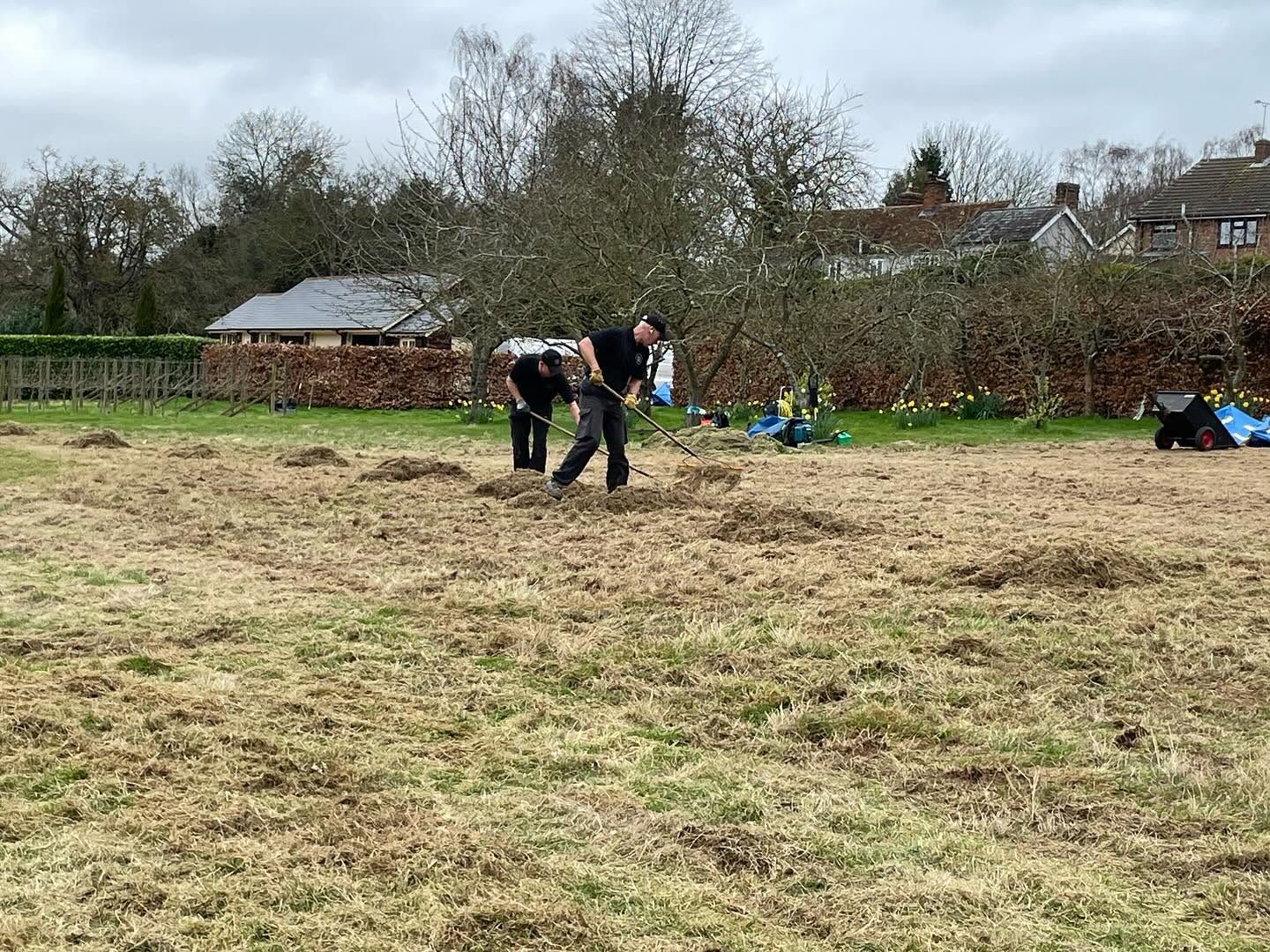
By the time I’ve taken in the colour from the street, looked at texture and density up close, and felt the ground, I’ve got sixty seconds of observation under my belt. The picture is already forming.
The last thing I’m reading in those first minutes isn’t the lawn directly — it’s the history the lawn is showing me. Lawns carry evidence of what’s been done to them, often for years.
Scalp lines — thin, lighter-coloured stripes that run in the mowing direction, especially on slightly uneven terrain or near edges. This tells me the previous cutting has been too low, or the mower deck isn’t level, or the operator has been rushing. Cut height is one of the highest-leverage things in Sudbury lawn care, and evidence of repeated scalping tells me why the lawn looks the way it does even if everything else has been done reasonably well.
Uneven establishment — areas of thick, healthy-looking grass next to areas that are persistently thin or bare, with no obvious explanation like shade or drainage. This pattern usually means overseeding has been done without proper soil prep first — seed went down on compacted or thatch-covered soil, germinated poorly, and the new grass never properly filled in. New build properties in Sudbury show this pattern frequently.
Edge condition — the edges along driveways, walkways, and garden beds tell me about the level of care and attention the lawn has received. Clean, defined edges suggest consistent maintenance. Ragged, overgrown edges tell me the service was doing the minimum. Salt damage along the driveway edge — common in Sudbury winters — shows up as brown or dead strips that tell me to ask about winter salt use and whether a salt-tolerant treatment approach is needed.
All of this — colour, texture, ground feel, history clues — happens in the first sixty seconds. It shapes every question I ask after that, every recommendation I make, and every decision about what order to address things in. It’s the reason I always walk a property before I quote it and why a quote from the driveway tells you almost nothing useful about what the lawn actually needs.
If you want someone to come walk your property in Greater Sudbury and actually read what’s going on — rather than quote from the driveway and show up with the same plan as every other property — reach out. That first walkthrough is always free.
— Ryan Lingenfelter
Cutting Edge Lawn & Landscaping, Garson, Ontario
📞 705-507-6787
Serving all of Greater Sudbury — Garson, Hanmer, Val Caron, Lively, Chelmsford, Azilda, Capreol, and Sudbury proper. We offer core aeration, grass cutting, property cleanup, sod installation, and full lawn maintenance. Free quotes, no pressure.
Get a Free Quote |
Call 705-507-6787
