
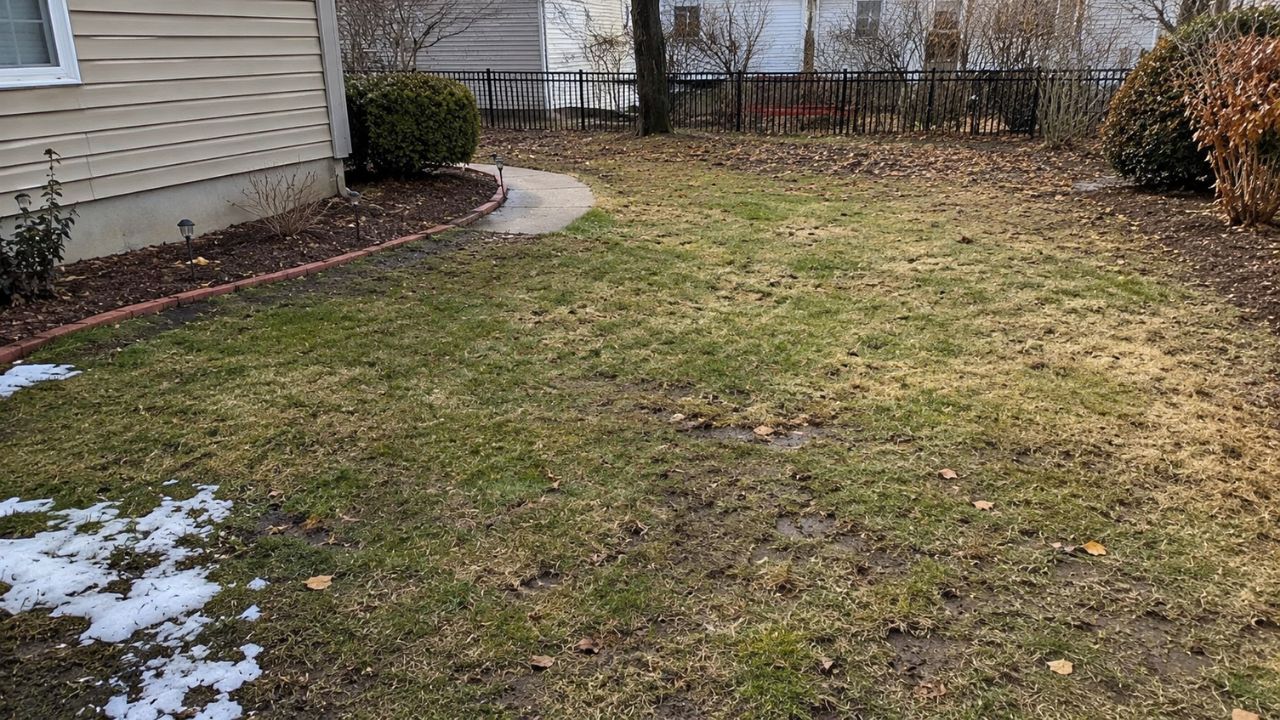
Every spring I do a lot of quote walks across Greater Sudbury. Homeowners call after the snow pulls back, see what winter left behind, and want to know what they’re dealing with.
Within the first two minutes on most of those properties, I can tell whether they did a fall cleanup or skipped it. Not because I’m looking for signs of it. Because the signs are impossible to miss.
I’m Ryan Lingenfelter, owner of Cutting Edge Lawn & Landscaping in Garson, Ontario. Since 2020, I’ve walked properties across Greater Sudbury every spring — Garson, Val Caron, Hanmer, Lively, Chelmsford, Azilda, Capreol. The damage from skipping fall cleanup is one of the most consistent things I see. Same problems, same patterns, every year without fail.
Here’s exactly what happens to a Sudbury lawn that skips fall cleanup — and what it means for the season ahead.
What “Fall Cleanup” Actually Means — And What It Doesn’t
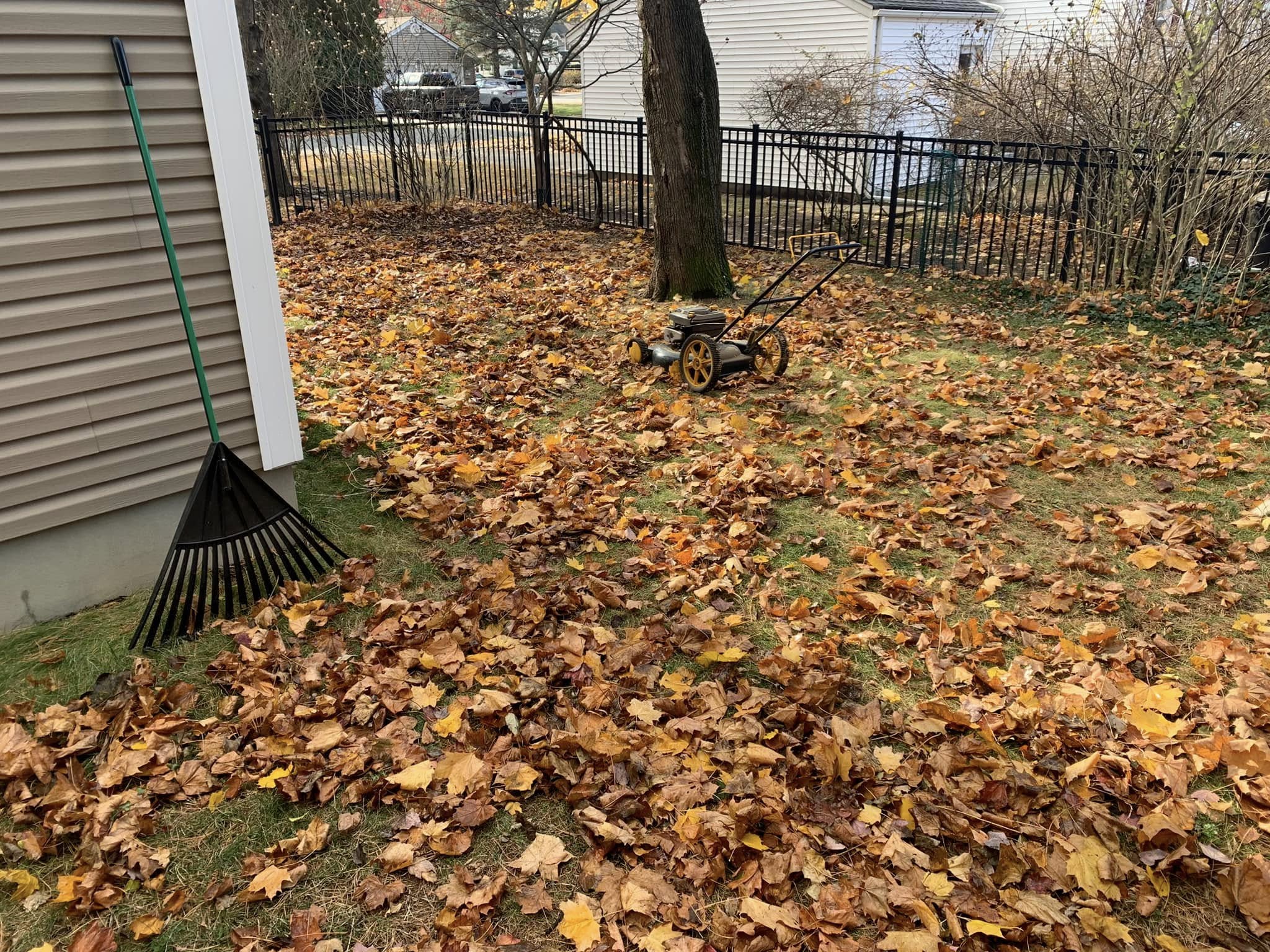
Before I get into the damage, I want to be clear about what fall cleanup actually involves — because some homeowners think they’ve done it when they haven’t.
Fall cleanup is not raking a few leaves off the driveway. It’s not giving the lawn one last mow in late September and calling it done. It’s a specific set of tasks done in the right order before the first hard snowfall that sets the lawn up to survive a Sudbury winter in good shape.
The core of it is this: leaves and debris fully cleared from the lawn surface, grass at the right height going into winter — 2 to 2.5 inches — and edges cleaned up so nothing is left matting against hard surfaces. On properties with tree coverage, that leaf volume matters more than most homeowners realize. A single mature maple can drop enough leaves to completely cover a standard Sudbury residential lawn. Left on the grass through winter, that coverage creates problems that show up clearly in April.
Some homeowners do part of it. They rake the front but not the back. They do one leaf pass but don’t follow up when more come down in November. They mow in late September but don’t do the final cut at the right height. Partial cleanup produces partial results — not no damage, but less than a lawn that was ignored completely.
The lawns I walk in spring that show the most damage are the ones where nothing happened in fall. Long grass, full leaf coverage, gone into winter exactly as they were in late September. Here’s what those lawns look like in April.
Problem 1 — Snow Mould
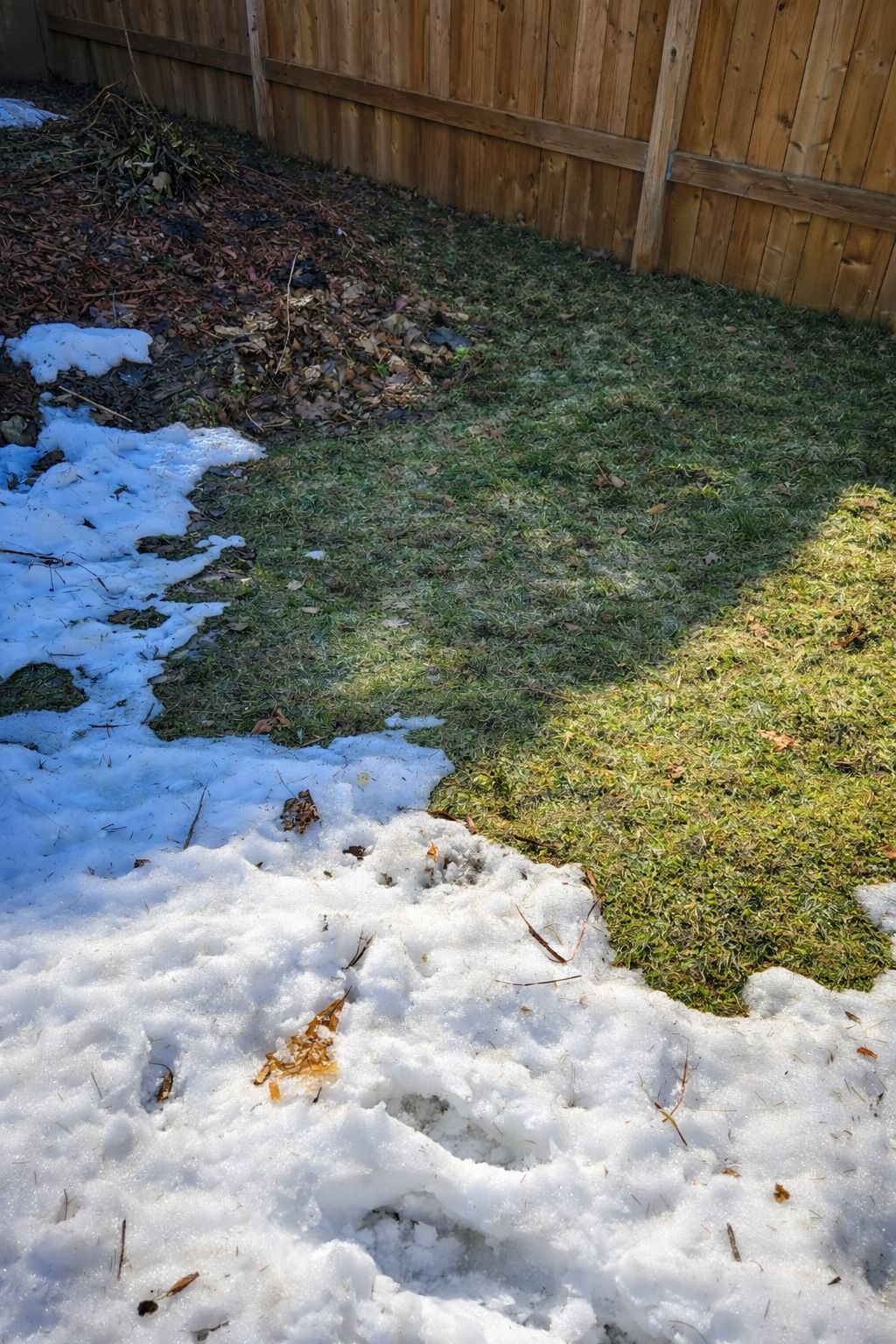
Snow mould is the first thing I look for on a spring property walk, and it’s the most direct consequence of skipping fall cleanup on a Sudbury lawn.
It’s a fungal disease — actually two different fungi that produce similar results. Grey snow mould and pink snow mould both develop under the snowpack during winter. They don’t need much: damp conditions, low oxygen, and matted grass to spread through. Long grass that gets compressed under months of Sudbury snowpack creates exactly those conditions. The fungus spreads through the matted layer all winter long while you’re not looking, and the first time you see it is in April when the snow pulls back.
What it looks like: circular patches, 6 inches to 2 feet across, where the grass is grey, matted, and dead. Sometimes with a faint pink tinge at the edge of active patches. The patches can be scattered or merged into large affected areas on badly impacted lawns. The grass in those patches is dead — not dormant, dead. It won’t green up when the weather warms.
How bad it gets depends directly on how long the grass was going into winter and how heavy the leaf coverage was. A lawn that went in at 4 or 5 inches with a full layer of maple leaves on top — that’s the worst case. I’ve walked Sudbury properties in April where snow mould had affected 30 to 40 percent of the lawn surface. Circular dead patches wall to wall.
The fix: rake out the affected areas to break up the matted grass and improve airflow. The living grass around the patches will fill in over time, but heavily affected spots need overseeding to recover properly within the season. On a bad snow mould year, that’s a significant amount of overseeding across the property.
Prevention is completely straightforward: final cut at 2 to 2.5 inches and leaves cleared before the snow comes. That’s it. Snow mould on a properly prepared Sudbury lawn is rare. On a lawn that skipped fall cleanup, it’s almost guaranteed in most years.
Problem 2 — Vole Damage
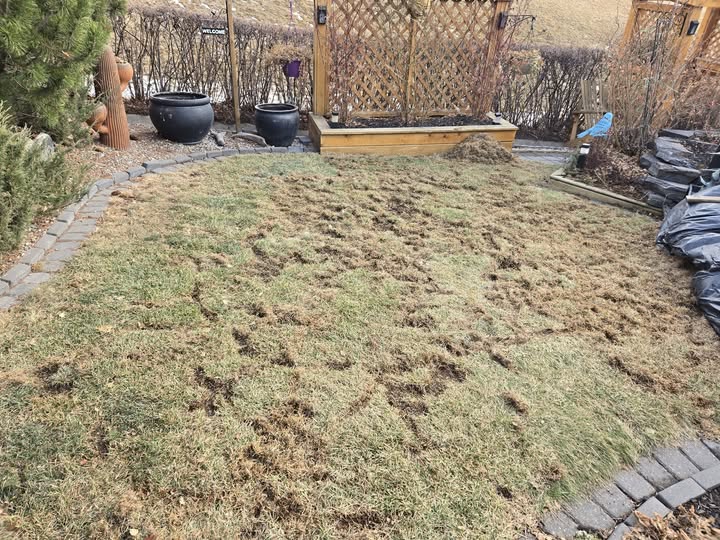
Voles are small rodents — similar to mice, stockier, shorter tail — that are common across Greater Sudbury. They’re active all winter under the snow, and they use long grass as both cover and food source.
A lawn that goes into winter with long grass is a five-star vole habitat. They build runway systems through the grass — shallow tunnels at the soil surface, completely hidden under the snow — and use them all winter. They eat grass roots and stems as they go. By spring when the snow pulls back, you can see exactly where they’ve been: narrow winding channels, an inch or two wide, running in irregular lines across the lawn. The grass along those channels is dead where they’ve been feeding.
On properties near tree lines or wooded areas — which describes a lot of Hanmer and some Val Caron properties I work on — vole pressure is higher because the population is larger at those margins. But voles are present across all of Greater Sudbury. Any property with long grass going into winter is at risk.
The damage looks alarming in April when it’s fresh. The runway lines running across the lawn in every direction can make a property look like it’s been seriously damaged. The good news is that vole damage is usually shallower than it looks — the grass is dead in the channels but the soil underneath is intact. Raking out the dead material and overseeding the channels usually produces full recovery within one season.
Prevention: keep the grass short going into winter — that 2 to 2.5 inch final cut height — and clear debris and thatch that also provides cover. Voles strongly prefer long grass. A lawn at 2 inches gives them significantly less reason to set up in your yard.
Problem 3 — Matting and Thatch Buildup
This one is less dramatic than snow mould or vole damage but it affects more properties and has a longer tail on the season.
Long grass compressed under months of Sudbury snowpack mats down into the thatch layer. When the snow melts, that matted layer doesn’t spring back up — it sits compressed against the soil, blocking light and airflow to the crowns of the grass plants underneath. New spring growth has to push through that mat to reach light, which slows the whole recovery process.
The result: a lawn that’s slow to green up in spring even in areas with no snow mould or vole activity. The first cut of the season is also harder — the mower is fighting through matted dead material on top of the new growth trying to come through. It takes two or three cuts before the lawn starts looking normal.
Add leaf coverage to the matted grass and it’s worse. Leaves that have spent the winter compressed against the lawn surface decompose into a thin layer of organic paste. This smothers new growth and creates ideal conditions for additional fungal activity beyond snow mould.
A proper spring cleanup — raking out the matted material, dethatching if it’s severe — addresses this before the first mow. But it takes time and it sets the first cut back by a week or two while you deal with the cleanup. That lost time at the start of May matters on a Sudbury season where the growing window is already compressed.
What It Actually Costs — Time and Money in Spring

Homeowners who skip fall cleanup don’t avoid the work. They defer it — and it arrives in April compounded.
A fall cleanup on a typical Greater Sudbury residential property takes two to three hours and deals with dry leaves and debris before they’ve had a winter to compact and decompose. The same property in spring, after the leaves have spent five months under snow, is a harder job. The material is heavier, it’s matted into the turf, and if there’s snow mould or vole damage on top of it, you’re also dealing with those repairs at the same time.
A spring cleanup after a skipped fall typically takes 50 to 100 percent longer than a fall cleanup would have. If you’re hiring someone to do it, that time difference is directly reflected in the cost. If you’re doing it yourself, it’s a full Saturday instead of a manageable weekend afternoon.
And if there’s significant snow mould or vole damage — overseeding affected areas, waiting for germination, watering consistently through establishment — you’re looking at four to six weeks of active recovery work before the lawn is back to normal. Some of that recovery extends into June or July on badly affected properties.
A fall cleanup in October costs a fraction of what spring recovery costs. That math is straightforward. I’ve quoted both sides of it on enough properties to know exactly what the difference looks like.
If you want to know what a professional fall or spring cleanup costs on your property, I’m happy to walk it and give you a straight number.
If You’re Looking at This Damage Right Now
If you’re reading this in spring and recognizing your lawn in the description above — here’s what to actually do.
Rake out the matted and dead material first, before anything else. Break up snow mould patches to improve airflow. Clear the vole channels. Get the surface to where a mower can actually cut the live grass without fighting through dead material. That first cleanup pass is the foundation for everything else.
Once the surface is cleared, assess what’s dead versus dormant. Snow mould patches and vole channels are dead — they need overseeding. Areas that are slow to green up but have intact grass underneath are likely just dormant and will come back with warmth and a couple of mows. Don’t overseed dormant grass — wait two weeks and see what greens up on its own first.
Overseed the bare and dead areas, keep them moist for two to three weeks through germination, and get the lawn on a proper mowing schedule at 3 inches. Most spring damage from a skipped fall cleanup is fully recovered by mid-June if you start the process in early May.
If the damage is extensive and you want professional help — give me a call. I’ll walk the property, tell you what I see, and give you a straight number for the cleanup and any repair work before anything gets scheduled.
📞 705-507-6787
🔗 Get a Free Quote
📍 Serving Greater Sudbury — Garson, Val Caron, Hanmer, Lively, Chelmsford, Azilda, Capreol
— Ryan
Frequently Asked Questions
What happens if you don’t do fall cleanup on your lawn in Sudbury?
Three things consistently happen on Sudbury lawns that skip fall cleanup: snow mould develops under the snowpack in matted long grass, voles use the long grass as cover and create runway damage through winter, and the lawn is slow to recover in spring because of the matted thatch layer that forms under compressed leaves and grass. All three are preventable with a proper fall cleanup — final cut at 2 to 2.5 inches and leaves fully cleared before snowfall. Skipping it doesn’t save work, it defers it to spring compounded.
What does snow mould look like on a Sudbury lawn in spring?
Circular patches of grey or matted dead grass, typically 6 inches to 2 feet across, scattered across the lawn where the snow has melted. Sometimes with a faint pink tinge at the edge of active patches. The grass in the patches is dead — not dormant — and won’t recover without overseeding. Snow mould develops under the snowpack during winter, spreading through long matted grass. It’s one of the most common spring lawn problems across Greater Sudbury and is almost entirely preventable with a proper fall cleanup and final cut at the right height.
How do I fix snow mould on my Sudbury lawn?
Rake out the affected patches firmly to break up the matted dead grass and improve airflow to the soil. Many patches will fill in from surrounding healthy grass over several weeks — wait and see how much recovers on its own before overseeding. Patches that haven’t filled in after three to four weeks of spring growth need to be overseeded: scratch the surface lightly, apply grass seed, keep moist through germination. Most snow mould damage on Sudbury lawns recovers fully by June if addressed early in May.
Do voles damage lawns in Sudbury Ontario?
Yes — vole runway damage is common on Sudbury properties, especially those near tree lines or wooded areas. Voles create shallow tunnel channels through long grass under the snow, eating grass roots and stems as they go. The damage shows up in spring as narrow winding channels of dead grass running across the lawn. It looks alarming but is usually shallower than it appears — raking out the dead material and overseeding the channels produces full recovery within one season. Prevention is keeping the grass at 2 to 2.5 inches going into winter.
Is it too late to do a fall cleanup in November in Sudbury?
It depends on snow cover. If the ground is still clear and the grass hasn’t frozen, a November cleanup in Sudbury is better than nothing — clear the leaves and do a final cut if the grass is still long. Once snow has fallen and settled, there’s not much that can be done until spring. The window for effective fall cleanup in Greater Sudbury is typically mid-October through early November in most years, before the first significant snowfall that stays.
How much does a spring cleanup cost after a skipped fall cleanup in Sudbury?
More than a fall cleanup would have cost. Spring cleanup on a property that skipped fall — with compacted leaves, matted grass, and potentially snow mould or vole damage to address — typically takes 50 to 100 percent longer than a standard fall cleanup on the same property. Pricing varies by property size and condition. For a straight number before anything is scheduled, call 705-507-6787 or fill out the free quote form — I’ll walk the property and tell you exactly what it needs.
Ryan Lingenfelter is the owner of Cutting Edge Lawn & Landscaping in Garson, Ontario. Since 2020, his crew has provided full lawn care services across Greater Sudbury — Garson, Val Caron, Hanmer, Lively, Chelmsford, Azilda, and Capreol. Cutting Edge is licensed, insured, BBB A+ rated, and ThreeBest Rated for lawn care services in Sudbury.
📞 Phone: 705-507-6787
📍 Service Area: Greater Sudbury, Ontario
🔗 Free Quote: cuttingedgelawn.ca/quote
Helpful Lawn Care Services in Sudbury
- Property Cleanup Services
- Grass Cutting Services in Sudbury
- Core Aeration for Healthy Lawns
- Sod Installation in Sudbury
- Mulch & Decorative Stone
- Hedge Trimming Services
Continue Reading
- What Does a Yard Cleanup Actually Cost in Sudbury?
- My Sudbury Lawn Has Weeds Everywhere — Here’s What I Actually Do About It
- The May Mistake That’s Killing Sudbury Lawns by July
