I’m Ryan Lingenfelter — owner of Cutting Edge Lawn & Landscaping in Garson, Ontario.
A homeowner in Garson called me last July.
He wasn’t calling because his lawn was dead. He was calling because he was frustrated. His lawn was mediocre — thin in spots, browning out through the dry stretch, not what he wanted. His neighbour’s lawn, three houses down, was thick and green in the same July heat. Same street. Same soil. Same Sudbury summer.
He’d been watching it for two years. He’d asked the neighbour once what he did differently. The neighbour said “not much, just mow it and water it.” That answer didn’t satisfy him. He was convinced there was something he wasn’t being told — a product, a service, a trick.
He called me to find out what it was.
I told him I’d walk both properties if the neighbour was willing. The neighbour was — happy to, actually. We arranged it for a Saturday morning.
What I found wasn’t a secret product. It wasn’t an expensive service. It wasn’t a trick.
It was three small decisions the neighbour had made four years ago that had compounded quietly into a dramatically better lawn. And it was three habits the Garson homeowner had that were working directly against him — none of which he knew were a problem.
Here’s exactly what I found on both properties.
What I Found on the Neighbour’s Property

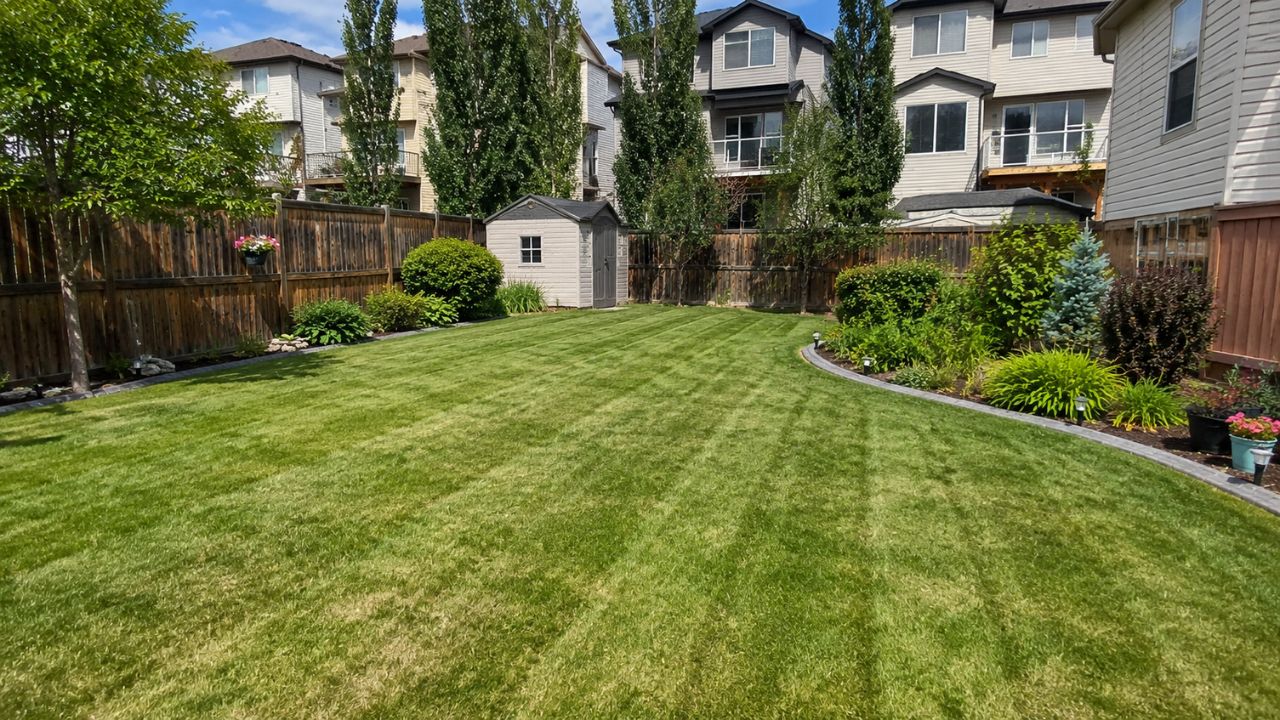
The neighbour’s lawn was exactly what the Garson homeowner had described. Dense, even, green in July when most of the street had at least some browning. I pushed the screwdriver in across four or five spots. Five to six inches with minimal resistance every time. Good soil structure — the kind you get after consistent annual aeration on Sudbury clay.
I asked the neighbour when he’d last aerated. He said every spring, since the first year he owned the house. Eight years.
I asked what he cut at. He said he’d read somewhere that 3 inches was the right height for his grass type and he’d never changed it.
I asked about watering. He said twice a week, long sessions, always before 8am.
That was it. That was the complete answer.
No special fertilizer. No premium lawn service. No secret product. Eight years of annual aeration, consistent mowing at the correct height, and proper watering timing. Three habits, maintained consistently, that had built the soil structure and root system underneath that lawn into something that performs well in July when neighbouring lawns don’t.
The neighbour wasn’t even sure why his lawn looked better than the others on the street. He’d just been doing what he read was right and hadn’t deviated from it.
What made the difference: Annual aeration from year one. Correct mowing height maintained consistently. Proper watering timing and frequency.
What I Found on the Garson Homeowner’s Property

Three houses down, same soil, same age of construction. I pushed the screwdriver into the Garson homeowner’s lawn in six spots. It stopped between one and two inches in four of them. One spot went in at about three inches. One wouldn’t go past an inch.
Severe compaction. The kind that builds up when Sudbury clay goes through multiple freeze-thaw cycles without aeration.
I asked when he’d last aerated. He thought about it and said he didn’t think the property had been aerated since he’d moved in six years ago. Maybe not ever.
Then I asked to see his mower.
He pulled it out of the garage. The deck was set at just under 2 inches. He said he liked the lawn to look neat and trimmed, so he kept it low.
Then I asked about watering. He said he watered every evening after work — a light session, maybe fifteen minutes, to keep things from drying out.
Three problems. All of them working against him simultaneously.
The compaction meant that whatever fertilizer he was applying — and he had been applying it, faithfully, every spring — was sitting on the surface of the clay without reaching the roots. The shallow cutting height meant the grass had shallow roots that couldn’t access moisture below the top inch of soil during July’s dry stretches. And the evening watering left the surface wet overnight, which on Sudbury clay — which doesn’t drain as quickly as lighter soil — was creating the fungal pressure that was contributing to the thin patches.
None of these were dramatic mistakes. None of them were things he would have known were wrong without someone walking the property and looking for them. But together, over six years, they had produced a lawn that was consistently underperforming the neighbour’s lawn three houses down.
What was working against him: Six years without aeration on compacted Sudbury clay. Mowing too short, producing shallow roots. Evening watering on clay soil creating fungal conditions.
The Three-Part Fix I Recommended

I told him the good news first: his lawn wasn’t damaged beyond recovery. The compaction was severe but the grass was still alive. The root system was shallow but intact. Six years of the wrong habits had held the lawn back — but the lawn had the potential to be what the neighbour’s was.
Here’s what I recommended, in order.
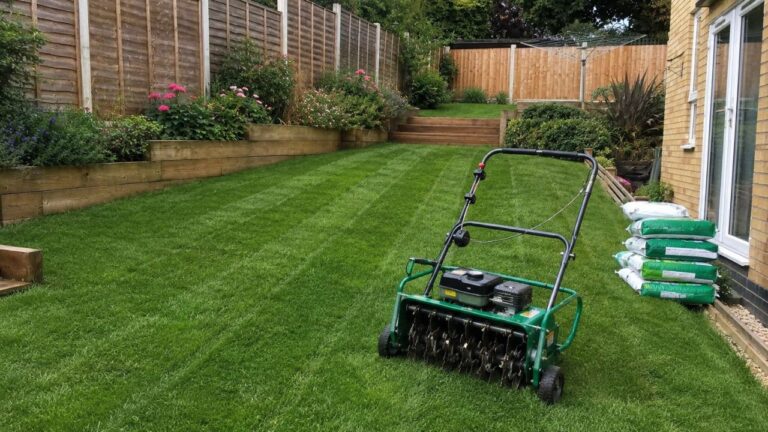
Fix one — Core aeration immediately. Even though we were in July, I recommended aeration right then. Mid-season aeration on Sudbury clay isn’t ideal — late May is better — but it was better than waiting another ten months. Opening the soil in July would allow the remaining summer rain and watering to penetrate properly rather than running off the compacted surface. It would also set up the overseeding I was going to recommend for late August.
I explained that one aeration wasn’t going to reverse six years of compaction overnight. But it would produce visible improvement within one season and the compaction would continue to reverse with annual aerations going forward. By year three of consistent aeration, his soil would look more like the neighbour’s. I covered the timing rationale in more detail in my core aeration timing guide here if you want the full explanation.
Fix two — Raise the mowing height to 3 inches immediately and leave it there.
I walked him to his mower and moved the deck adjustment from just under 2 inches to 3 inches while we were standing there. This is free. It takes thirty seconds. And the impact on the lawn’s drought resistance over the following six weeks would be visible.
The explanation I gave him: at 3 inches, the grass blade has enough surface area to photosynthesize and produce energy for root development. At 2 inches or below, the plant is diverting all its energy into regrowing the blade that keeps getting cut off — the roots stay shallow. Deep roots reach moisture in the soil during dry periods. Shallow roots dry out when the top inch of soil dries out, which is what was causing his July browning. Raising the deck was the cheapest and most immediately impactful change he could make. I covered the full science of this in my $35 lawn fix article here.
Fix three — Change watering to morning and increase the session length.
Evening watering on Sudbury clay leaves surface moisture overnight. The clay doesn’t drain as quickly as loamy soil, so the surface stays wet through the cool night temperatures — exactly the conditions that fungal diseases need to establish. Morning watering before 8am means the grass blades dry out during the day, dramatically reducing fungal pressure.
I also recommended switching from short daily sessions to two longer sessions per week. Clay soil absorbs water slowly — a short daily session produces surface moisture that evaporates before it reaches the root zone. Two longer sessions with the cycle-and-soak approach I describe in my Sudbury watering guide — two shorter bursts with an hour between them — gets moisture to the roots more effectively.
What His Lawn Looked Like at the End of the Season

We aerated his property in late July. He raised the deck immediately and kept it there. He changed his watering to mornings and moved to the longer twice-weekly schedule.
By mid-August — about six weeks later — he sent me a photo. The thin spots had started filling in. The browning that had been happening every July was not as severe as previous years despite similar weather conditions. The lawn looked noticeably better than it had in June.
It wasn’t the neighbour’s lawn yet. One season doesn’t reverse six years of compaction. But it was measurably better — and the trajectory had changed. He overseeded in late August after the aeration, and the germination rate was significantly better than his previous overseeding attempts because the aeration holes gave the seed direct soil contact.
He called me in the spring the following year. He wanted to schedule the annual aeration before the season started. He’d seen enough to understand that this was maintenance now — not a one-time fix.
That’s the right mindset. The neighbour’s lawn didn’t look that way because of one good decision. It looked that way because of consistent good decisions over eight years. The Garson homeowner now understood that he was at the beginning of that same process — not behind his neighbour, just a few years behind.
The Actual Secret — Which Isn’t a Secret at All
I told him the same thing I’ll tell you.
The neighbour wasn’t hiding anything. There’s no product that produces that result. There’s no service he was getting that wasn’t available to everyone on the street.
The difference between a lawn that looks good in July and one that doesn’t in Sudbury almost always comes down to a small number of foundational decisions that get made — or not made — in the first few years of ownership and then compound quietly over time.
Annual aeration on Sudbury’s clay soil. Correct mowing height that builds root depth. Proper watering timing and frequency that gets moisture to the roots rather than keeping the surface wet overnight.
None of this is complicated. None of it is expensive. And none of it is a secret — it’s just not what the fertilizer bag, the lawn app, or the YouTube video usually leads with, because none of those things are what actually produces the result.
If your lawn is consistently underperforming and you’ve been watching a neighbour’s lawn look better year after year — the answer is probably something like what I found in Garson. Not a product. Three habits. Applied consistently. Starting now.
📞 Call or text me directly: 705-507-6787
Or fill out the free quote form here and I’ll get back to you same day.
We service Garson, Val Caron, Hanmer, Lively, Chelmsford, Azilda, Capreol, and all of Greater Sudbury.
— Ryan Lingenfelter
Owner, Cutting Edge Lawn & Landscaping
Garson, Ontario
Frequently Asked Questions
Why does my neighbour’s lawn look better than mine in Sudbury?
The most common reasons are foundational habits rather than products or expensive services. Annual core aeration on Sudbury’s clay-heavy soil makes a significant cumulative difference over multiple seasons — lawns that have been aerated annually for several years have better soil structure, deeper roots, and stronger drought resistance than ones that haven’t. Mowing height is the second major factor — lawns cut consistently at 3 inches develop deeper roots that access moisture during July dry periods, while lawns cut too short have shallow roots that dry out. Watering timing — morning rather than evening — reduces fungal pressure on Sudbury clay. Together these three habits produce dramatically different results over three to five years.
What is the single most impactful change I can make to my Sudbury lawn right now?
If you haven’t aerated in the last year, core aeration is the highest-return service you can do on a Sudbury property. If your mower deck is below 2.5 inches, raising it to 3 inches costs nothing and produces visible results within four to six weeks. If you’re watering in the evening, switching to morning watering immediately reduces the fungal pressure that’s contributing to thin and patchy areas. Any of these three changes produces meaningful improvement on a Sudbury lawn that’s been struggling — all three together produce the most significant improvement possible without any additional investment in products or services.
How long does it take for a neglected Sudbury lawn to match a well-maintained one?
Realistically, two to three seasons of consistent proper care — annual aeration, correct mowing height, proper watering — produces significant improvement, and three to five years of consistency closes most of the gap between a neglected lawn and a well-maintained one. The compaction that builds up from multiple years without aeration reverses gradually as annual aeration opens the soil and the biological activity improves. You won’t match an eight-year well-maintained lawn in one season, but you’ll see meaningful improvement in the first season and continued improvement each year after that.
Does mowing height really make that much difference on a Sudbury lawn?
Yes — cutting height is one of the most impactful variables in lawn performance and one of the most commonly wrong on Sudbury properties. The relationship is direct: longer blades mean deeper roots, shorter blades mean shallower roots, because the grass plant proportions its root development to the leaf area available for photosynthesis. A lawn cut at 1.5 to 2 inches develops roots in the top inch or two of soil. When Sudbury’s July heat dries out that surface layer, those roots have nothing to pull from and the lawn goes brown. A lawn cut at 3 inches develops roots deep enough to access moisture through dry periods. The difference shows up clearly in July and August.
Is evening watering bad for a Sudbury lawn?
Yes, particularly on Sudbury’s clay-heavy soil. Clay soil drains more slowly than loamy soil, so evening watering leaves surface moisture overnight rather than draining away quickly. Overnight surface moisture combined with cool nighttime temperatures creates ideal conditions for fungal diseases — the most visible of which are the circular brown patches that appear in late summer on many Sudbury lawns. Morning watering before 8am allows the grass blades to dry during the day and eliminates that overnight moisture. On Sudbury clay specifically, switching from evening to morning watering often produces visible improvement in fungal pressure within two to three weeks.
Should I talk to my neighbour about their lawn care routine?
Absolutely — and most homeowners with well-maintained lawns are happy to share what they do. The honest answer you’ll usually get, as the Garson homeowner found, is that there isn’t a secret product or exclusive service. It’s consistent basic practices done right over multiple years. The frustrating part of that answer is that it means the result takes time to replicate — but the encouraging part is that the practices themselves are accessible to any homeowner who knows what they are.
Ryan Lingenfelter is the owner of Cutting Edge Lawn & Landscaping in Garson, Ontario. Since 2020, his crew has provided full lawn care and landscaping services across Greater Sudbury — Garson, Val Caron, Hanmer, Lively, Chelmsford, Azilda, and Capreol. Licensed, insured, BBB A+ rated, and ThreeBest Rated for lawn care services in Sudbury.
📞 Phone: 705-507-6787
📍 Service Area: Greater Sudbury, Ontario
🔗 Free Quote: cuttingedgelawn.ca/quote
Related Services
Continue Reading
- Three Sudbury Neighbours. Three Different Lawns. Here’s Why.
- The $35 Fix That Saved a Sudbury Lawn
- When Should You Actually Aerate Your Sudbury Lawn?
- How to Water Your Sudbury Lawn the Right Way