
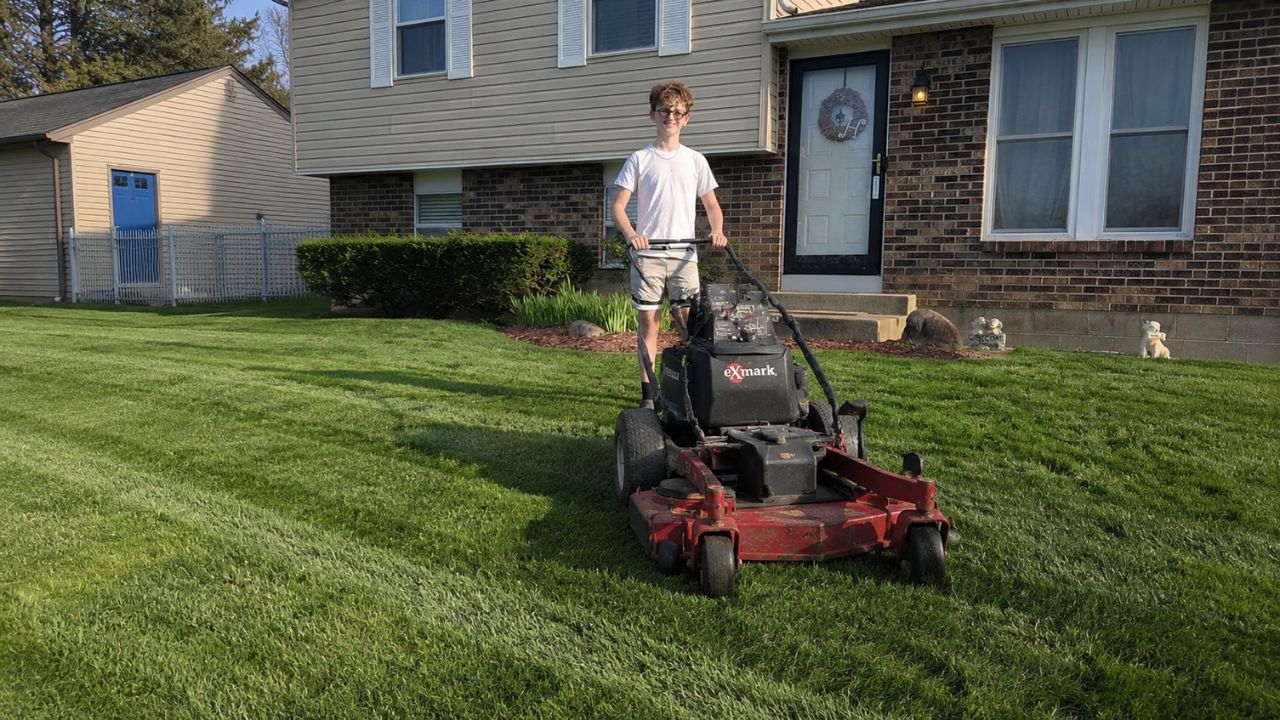
I’m Ryan Lingenfelter — owner of Cutting Edge Lawn & Landscaping in Garson, Ontario.
I want to tell you about a call I got in June from a homeowner in Chelmsford.
She’d been fighting her lawn for three years. Thin grass. Browning out every July. Bare patches that kept coming back no matter what she tried. She’d spent money on fertilizer programs. She’d overseeded twice. She’d bought weed killer. She’d watered on a schedule. Nothing was working.
She was calling me to ask about sod. She’d decided the lawn was beyond saving and wanted a price to start over.
I asked her a few questions before I went out. Property age, soil history, any known drainage issues. Nothing unusual came up. Then I asked the question I always ask when someone describes a lawn that browns out in July and stays thin despite fertilizer and watering.
“What height are you cutting at?”
She said she wasn’t sure — she’d just left the mower on whatever setting it came with from the previous owner.
I drove out the next day. Walked the property. Pushed the screwdriver into the soil — it went in four inches without much resistance. Soil wasn’t the problem. I looked at the grass in the thin sections closely. The root system was there, it was just shallow. The grass wasn’t dead. It was stressed.
I walked over to her mower sitting in the garage. The deck was set to the second-lowest notch. She’d been cutting her lawn at about 1.5 inches all three years.
That was it. That was the whole problem.
I adjusted the deck to the third-from-top notch — about 3 inches. The adjustment took thirty seconds. Then I told her to get the blade sharpened. The local small engine shop charged her $35 for a blade sharpen and a quick tune.
By August — six weeks later — her lawn was the best it had looked since she’d owned the house. No sod. No overseeding. No fertilizer program. A deck adjustment and a sharp blade.
Here’s why that works, why it’s more common than you’d think on Sudbury properties, and what to check on your own mower before you spend another dollar on lawn products.
Why Cutting Height Is the Single Most Important Variable in Lawn Health
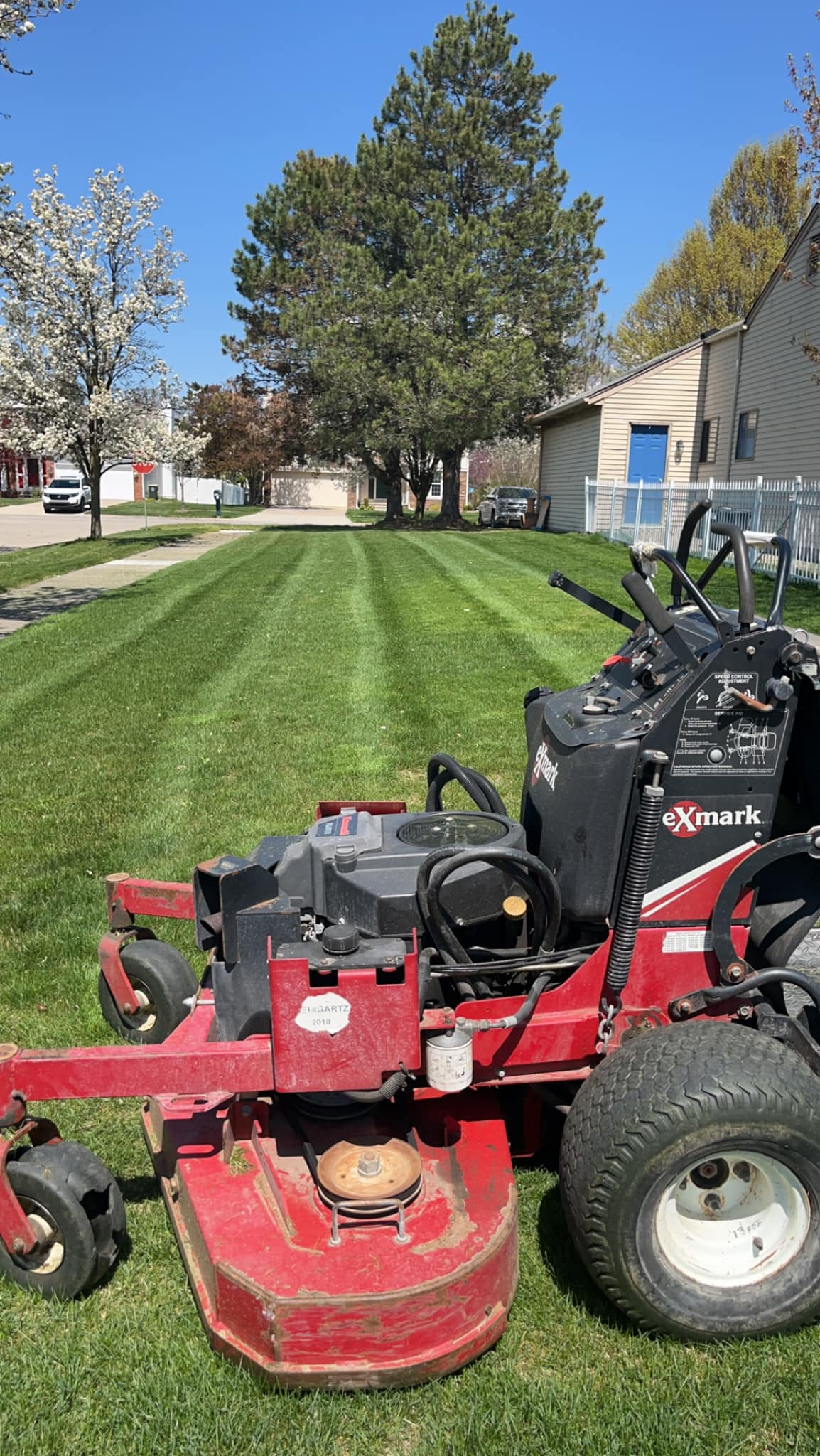
I want to explain why cutting height matters so much — not just tell you to set it to 3 inches and move on.
Grass is a plant. The blade of grass is where photosynthesis happens — it’s how the plant produces energy. The root system is where the plant stores that energy and pulls water from the soil. The relationship between blade length and root depth is direct and consistent: longer blades mean deeper roots, and shorter blades mean shallower roots.
When you cut grass to 1.5 inches, you’re removing most of the photosynthetic surface area. The plant responds by producing more blade quickly — that’s the fast green growth people associate with a low cut. But it’s doing that at the expense of the root system. The roots stay shallow because the plant is diverting all its energy into regrowing blade rather than extending roots.
Shallow roots are fine in spring and early summer when moisture is available near the surface. In Sudbury’s July and August, when the top two inches of soil dry out during a dry stretch, those shallow roots have nothing to pull from. The grass goes dormant. In mild cases it recovers when rain comes back. In severe cases — especially on Sudbury’s clay soil where the dry-out can be sudden and complete — sections die entirely.
This is why lawns cut at 1.5 to 2 inches almost always brown out in July on Sudbury properties, regardless of how much fertilizer or water you throw at them. You’re not solving the problem. You’re making it worse — fertilizer and water both encourage fast blade growth at the expense of root depth when the cutting height is too low.
Cut at 3 inches and the root system has the energy it needs to grow deep. Deep roots reach moisture in the soil during dry periods. The lawn stays green in July when everything else on the street is going dormant. It’s not fertilizer or irrigation that makes a lawn drought-tolerant — it’s root depth. And root depth comes from cutting height.
Why a Dull Blade Makes the Problem Worse
The second half of the $35 fix was the blade sharpen. This matters more than most people realize, and it’s almost never talked about in the general lawn care advice you find online.
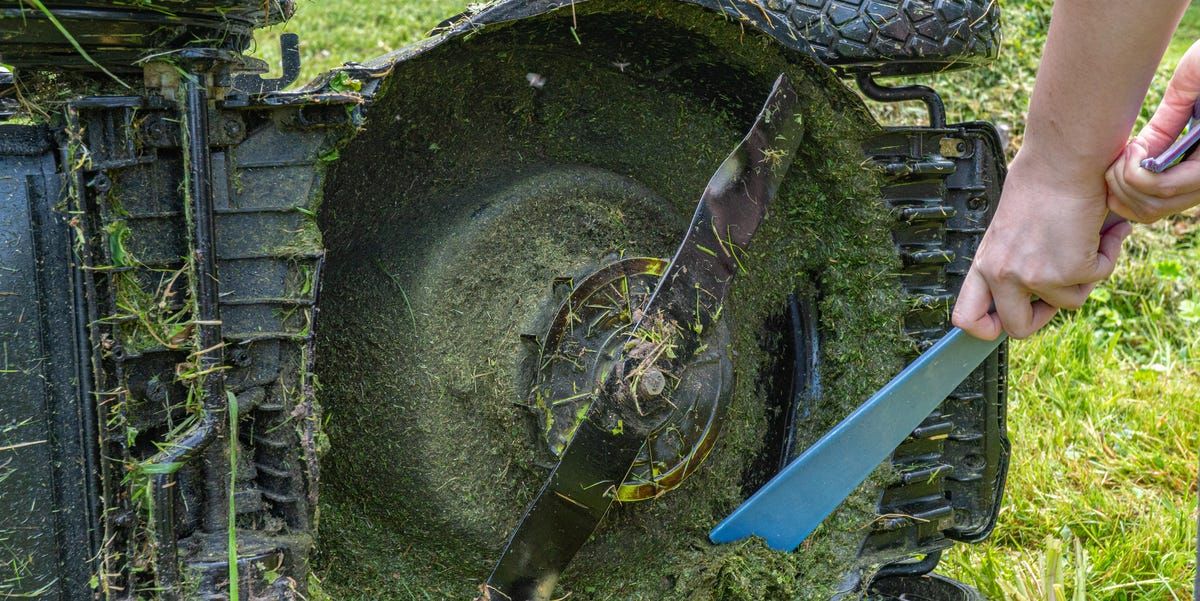
A sharp mower blade cuts the grass blade cleanly — like scissors through paper. The cut surface is small, clean, and heals quickly. The grass plant experiences minimal stress and resumes normal growth within a day.
A dull mower blade doesn’t cut — it tears. The grass blade gets ripped rather than sliced. The torn surface is ragged, large, and takes significantly longer to heal. During that healing period, the plant is stressed and the torn tips turn brown. On a lawn mowed weekly with a dull blade, you’re essentially stressing every grass plant on the property every single week. The lawn never fully recovers between cuts.
The visual symptom of a dull blade is a lawn that looks grey or brown-tipped a day or two after mowing. People usually blame heat or drought. The actual cause is the torn grass tips oxidizing and dying back. A freshly sharpened blade produces a clean, green appearance the day after mowing. The difference is visible.
How often should you sharpen? On a standard residential lot in Sudbury, sharpening once per season is the minimum. If you’re hitting rocks or the driveway edge regularly, sharpen twice. The $35 cost at a small engine shop is the cheapest per-impact maintenance you can do on your lawn.
What Happened to the Chelmsford Lawn by August
I want to be specific about what changed on this property and how fast it happened, because I think it helps illustrate how immediate the impact of cutting height can be.
Week 1 after the adjustment: the lawn looked shaggier than she was used to. That’s normal — going from 1.5 inches to 3 inches means the grass that was there suddenly looks longer. She texted me to ask if it was supposed to look like that. I told her yes, give it a month.
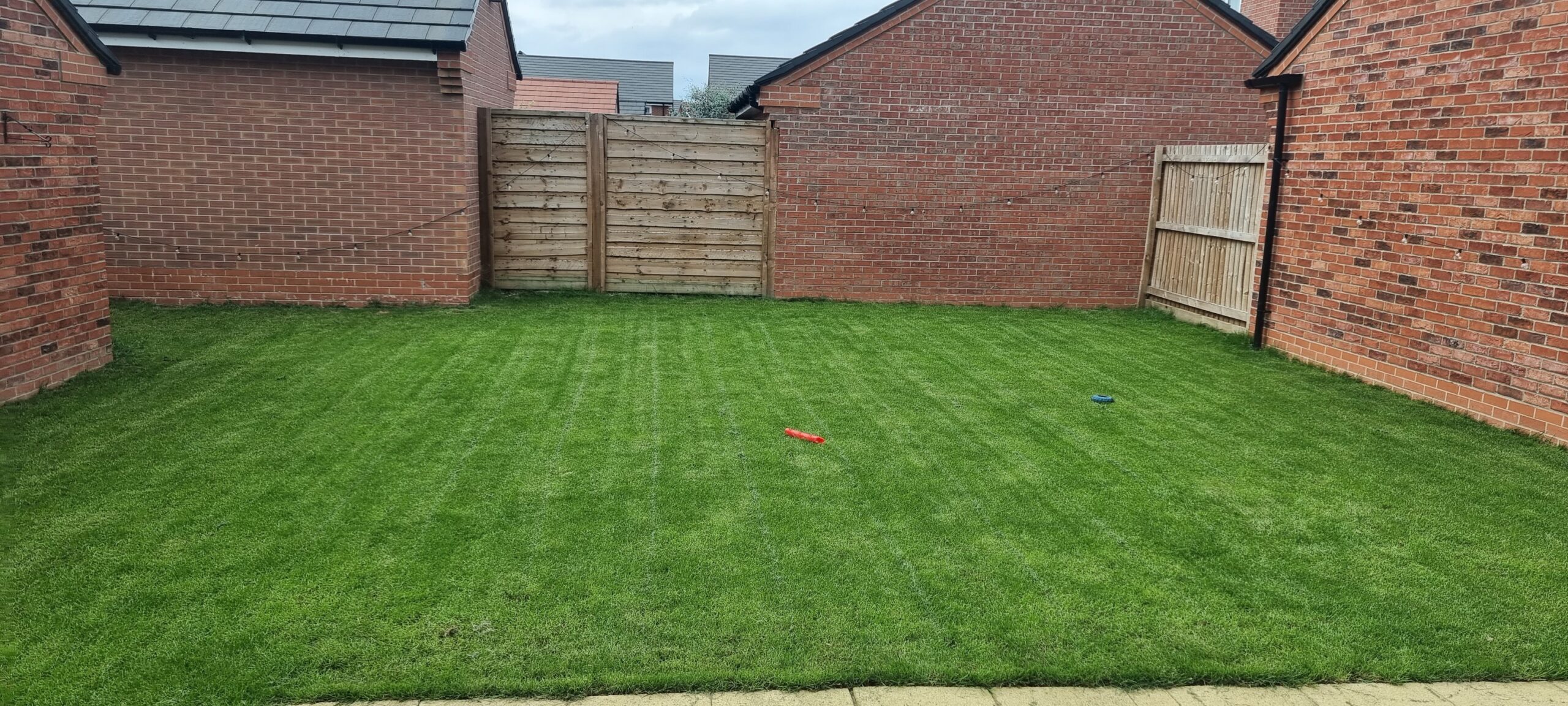
Week 2 and 3: the thin sections started filling in noticeably. The grass that was there — which had a viable root system even though it was shallow — started responding to the reduced stress by thickening laterally. Grass spreads by tillering, which is horizontal growth that fills in gaps. Tillering is suppressed when cutting height is too low because the plant is too stressed to do anything but regrow what’s been cut. At proper height, tillering resumes.
Week 4 through 6: the sections that had been thin for three years were substantially filled in. The July dry stretch came and went. The lawn stayed green. Not perfectly uniform — there were still a few thin spots that would benefit from overseeding in late August. But the dramatic browning and bare patches that had been the problem for three years were gone.
She sent me a photo in August. I could barely believe it was the same property from the photo she’d sent me in May.
Three years of struggling. Hundreds of dollars spent on products that didn’t work. Fixed in six weeks by adjusting a lever on the mower deck and spending $35 on a blade sharpen.
How to Check Your Own Mower Right Now
If you’re reading this and thinking your situation might be similar — here’s exactly what to check.
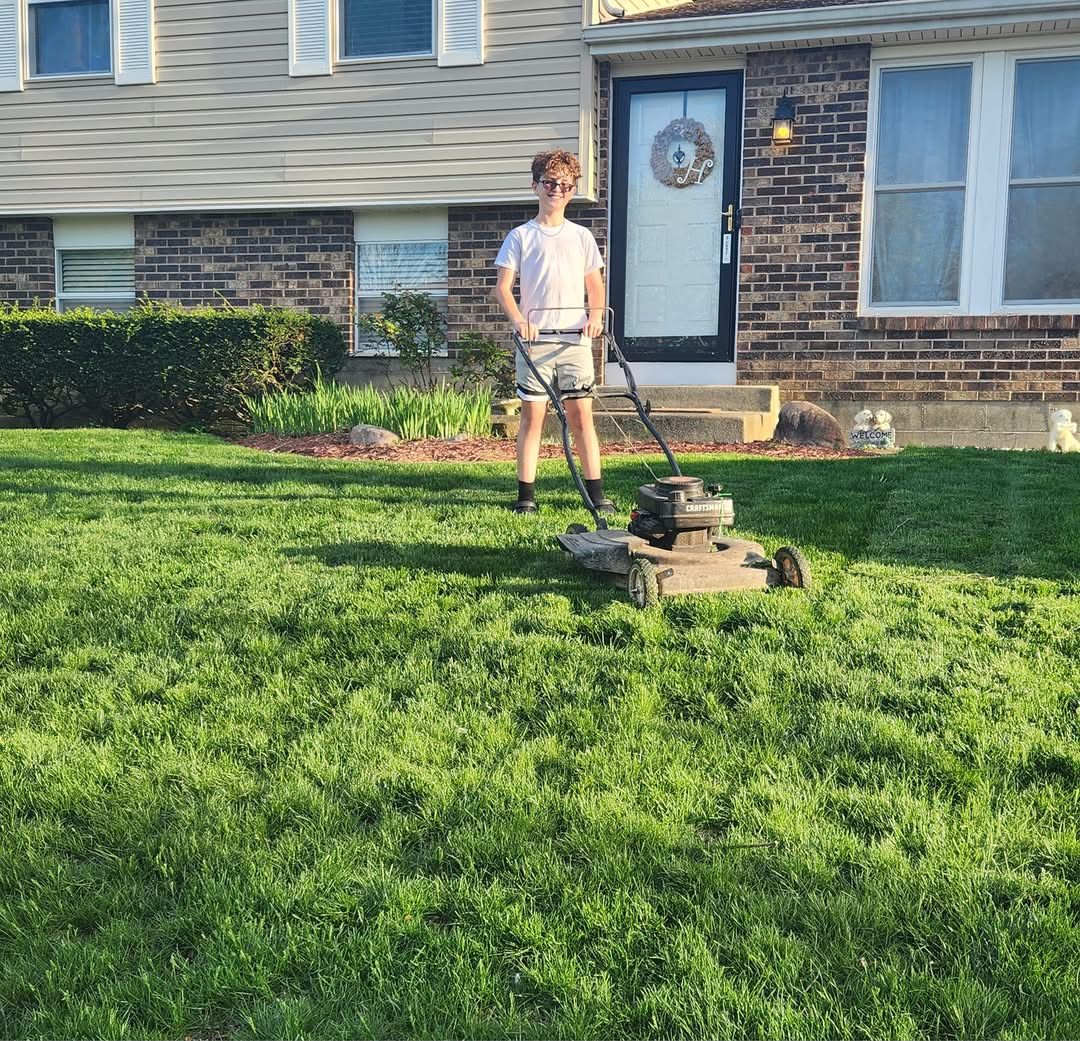
Step 1 — Find your actual cutting height.
Park the mower on a flat hard surface — your driveway works perfectly. Take a tape measure or ruler and measure from the ground to the bottom edge of the mower deck on each corner. That number is your cutting height. Most homeowners who’ve never checked this are surprised by what they find. Mowers often come from dealers or previous owners set low — the assumption is that a short lawn looks tidy.
Step 2 — Adjust to 3 inches.
Every mower has a deck height adjustment — usually a lever on each wheel or a single central adjustment depending on the model. Set it so the deck sits 3 inches from the ground. If your mower’s highest setting is 2.5 inches, use it — some older mowers don’t go up to 3 inches but higher is always better on Sudbury’s cool-season grass.
Step 3 — Check the blade sharpness.
With the mower off and the spark plug disconnected — safety first — tip the mower on its side and look at the blade. A sharp blade has a visible edge and no nicks or visible deformation. A dull blade looks rounded at the edge or has visible chips. If you’re not sure, take it to a small engine shop. They’ll tell you in thirty seconds whether it needs sharpening.
Step 4 — Mow at the new height and then leave it.
The most common mistake after adjusting the cutting height is raising it for a week and then dropping it back down because the lawn looks “too long.” Don’t. The lawn will look different at 3 inches than it did at 1.5 inches — that’s the point. Give it four weeks at the new height before you evaluate whether it’s working. The root system change takes time to produce visible results.
When Cutting Height Isn’t the Problem
I want to be clear about something. Cutting height fixes a specific set of problems — thin grass, browning in July, slow recovery after dry stretches. It’s not a fix for every lawn problem.
If your lawn has significant grub damage — sections you can pull up like a carpet — cutting height isn’t going to fix that. The root system has been physically destroyed and needs replacement.
If your soil is severely compacted — screwdriver stops at an inch or less — cutting height will help but it won’t overcome the fundamental soil problem. Core aeration is what you need first.
If your lawn has a drainage issue — the same corner dies every year, the soil is soggy well into June — cutting height won’t fix that either. The roots are drowning, not drying out, and the solution is grading and drainage correction.
And if more than 50% of your lawn is genuinely dead — bare soil, no root system — there’s nothing to save with a height adjustment. That’s a sod replacement situation.
But if your lawn has a reasonable base of grass and your main complaints are browning in summer, slow recovery from dry stretches, and a lawn that looks thin despite fertilizer and watering — check your cutting height before you spend another dollar on anything else. You might be three notches away from a $35 fix.
The Broader Point — Most Lawn Problems Have a Root Cause That Isn’t Being Addressed
The Chelmsford lawn story is one version of a pattern I see constantly. A homeowner has a lawn problem. They identify a symptom — thin grass, browning, bare patches. They buy a product that addresses the symptom — fertilizer, seed, weed killer. The symptom improves slightly or temporarily and then comes back. They try the next product. Same result. Three years later they’re calling me about sod.
In most of these cases, nobody has ever asked the basic diagnostic question: what is actually causing this?
Cutting height was the cause in Chelmsford. Compaction is the cause on most other Sudbury properties. Grubs are the cause on some. Drainage is the cause on others. The right fix depends entirely on the right diagnosis, and the right diagnosis comes from actually looking at the lawn — not just looking at the symptoms and reaching for the nearest product.
This is the conversation I have on every quote call. I walk the property. I do the screwdriver test. I look at the root system in the problem areas. I look at the drainage. I look at the mower deck if it’s sitting in the garage. And then I tell you honestly what I see and what I think it will take to fix it.
Sometimes the fix is a $4,500 sod installation. Sometimes it’s a $150 aeration. And sometimes it’s adjusting a lever on a mower deck and a $35 blade sharpen.
If your lawn has been struggling and you’re not sure what’s actually causing it — give me a call. I’ll come out, walk the property with you, and give you a straight answer before you spend another dollar on products that might not be solving the right problem.
📞 Call or text me directly: 705-507-6787
Or fill out the free quote form here and I’ll get back to you same day.
We service Garson, Val Caron, Hanmer, Lively, Chelmsford, Azilda, Capreol, and all of Greater Sudbury.
— Ryan Lingenfelter
Owner, Cutting Edge Lawn & Landscaping
Garson, Ontario
Frequently Asked Questions
What height should I cut my lawn in Sudbury?
3 inches is the right cutting height for cool-season grass on Sudbury properties. This height allows the grass plant to maintain enough leaf surface for photosynthesis and energy production while building the deep root system needed to survive July and August dry periods. Cutting below 2 inches on Sudbury’s clay soil consistently produces shallow roots that can’t access soil moisture during dry stretches, which causes the summer browning that most Sudbury homeowners mistake for heat damage or drought.
How do I know if my mower blade needs sharpening?
The most visible sign is grass that looks grey or brown-tipped one to two days after mowing. A dull blade tears the grass rather than cutting it cleanly, and the torn tips die back and turn brown. You can also check directly — with the mower off and spark plug disconnected, look at the blade edge. A sharp blade has a visible cutting edge. A dull blade looks rounded, nicked, or deformed. Sharpening once per season is the minimum for a standard residential lot; more often if you’re regularly hitting hard surfaces or debris.
Why does my Sudbury lawn brown out every July even when I water it?
The most common cause is cutting height that’s too low. A lawn cut at 1.5 to 2 inches has shallow roots that can’t access moisture below the top inch or two of soil. When July heat dries out that surface layer, the grass has nothing to pull from. The fix is raising the mowing deck to 3 inches — the deeper roots that develop at proper cutting height can access moisture further down in the soil profile and stay green through dry periods. If raising the cutting height doesn’t resolve the summer browning, soil compaction is the next thing to check.
How long does it take to see results after raising the mowing height?
Most Sudbury lawns that have been cut too short show visible improvement within 3 to 4 weeks of raising the cutting height to 3 inches. The grass thickens as the plant redirects energy from constant blade regrowth toward lateral spread and root development. Full improvement — including resistance to summer browning — is typically visible within 6 to 8 weeks. The key is not reverting to the previous cutting height during that period; the lawn will look longer than you’re used to, which is correct.
Can cutting height really fix a struggling lawn without fertilizer or overseeding?
For lawns with a viable base of grass that have been cut too low, yes — adjusting the cutting height is often the primary fix required. Grass that has been consistently scalped is stressed, shallow-rooted, and slow to spread, but the root system is usually still alive and will respond quickly when the stress is removed. Fertilizer applied to a scalped lawn mostly drives fast blade regrowth rather than root development — you’re feeding a symptomatic plant rather than fixing the cause. Fix the cutting height first and evaluate after 6 weeks before spending money on other treatments.
What other cheap fixes can help a struggling Sudbury lawn?
After cutting height, the next highest-impact low-cost changes are watering correctly and leaving clippings on the lawn. On Sudbury clay, deep watering twice a week outperforms daily light watering because clay absorbs water slowly — a cycle-and-soak approach gets moisture to the root zone more effectively. Leaving clippings instead of bagging them returns nitrogen to the soil and reduces fertilizer needs by up to 25%. Neither of these costs anything. Together with proper cutting height, they form the foundation of a healthy Sudbury lawn before any paid service is needed.
Ryan Lingenfelter is the owner of Cutting Edge Lawn & Landscaping in Garson, Ontario. Since 2020, his crew has provided full lawn care and landscaping services across Greater Sudbury — Garson, Val Caron, Hanmer, Lively, Chelmsford, Azilda, and Capreol. Licensed, insured, BBB A+ rated, and ThreeBest Rated for lawn care services in Sudbury.
📞 Phone: 705-507-6787
📍 Service Area: Greater Sudbury, Ontario
🔗 Free Quote: cuttingedgelawn.ca/quote
Related Services
- Grass Cutting Services in Sudbury
- Core Aeration Services
- Sod Installation in Sudbury
- Property Cleanup Services
Continue Reading
- The May Mistake That Kills Sudbury Lawns by July
- 5 Lawn Care Mistakes Sudbury Homeowners Make Every Spring
- How to Water Your Sudbury Lawn the Right Way
- When Should You Actually Aerate Your Sudbury Lawn?
