

Last July we had a stretch where the temperature hit 31 degrees and stayed there for about a week. No rain. Humid. The kind of heat that sits on everything and doesn’t move.
I was out on properties every day that week, and my phone was going off constantly. Texts, missed calls, voicemails. Homeowners across Greater Sudbury — Hanmer, Val Caron, Lively, the South End, out in Chelmsford — all calling about the same thing: their lawn was going brown and they wanted to know what was happening and what they should do.
By Thursday of that week I noticed something. Every single caller had the same issue. Not similar issues — the exact same one. And it wasn’t the heat. The heat was just what made it visible.
What They Were All Calling About
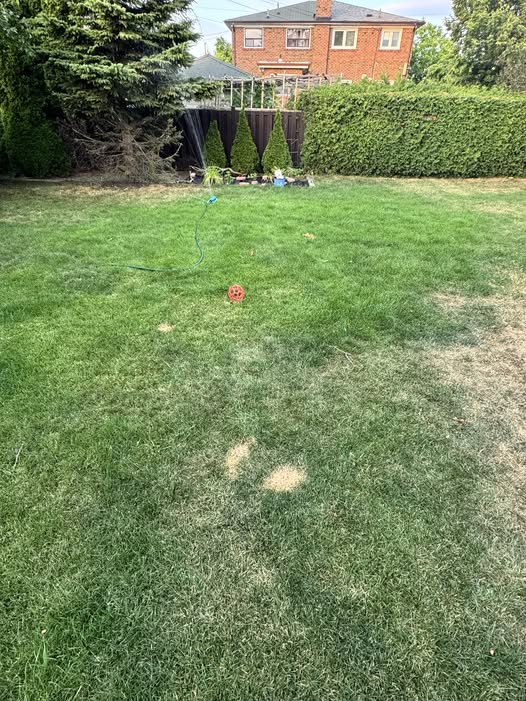
The calls went something like this. “My lawn was fine in June. Now it’s brown in patches — some areas are completely gone. Is it dead? Did I do something wrong? Can it be saved?”
And in almost every case, when I asked a few follow-up questions, the same picture emerged. The lawn had never been aerated. It had been cut short — usually somewhere around an inch and a half to two inches — by whoever was cutting it. And nobody had done anything to address the soil before summer arrived.
That combination — compacted soil, short cut height, no aeration — is exactly the setup that turns a hot week in Sudbury into a lawn emergency. Here’s why each piece of it matters.
Compacted soil can’t absorb water properly. When it rains, the water runs off instead of soaking in. When it doesn’t rain and temperatures climb, the soil dries out from the surface down much faster than healthy, loose soil would. The grass roots — which are already shallow because compacted soil prevented them from going deep — run out of accessible moisture within days of a dry stretch starting.
Short grass makes everything worse. Grass cut at an inch and a half has almost no shade over the soil surface. The soil bakes directly under 31-degree sun. Moisture evaporates fast. The grass plant has less leaf area to work with and less capacity to manage heat stress. It goes dormant or dies faster than grass at three inches would.
Put those two things together and a week of July heat doesn’t just stress the lawn — it overwhelms it. That’s what all those callers were seeing.
What I Told Every Single One of Them
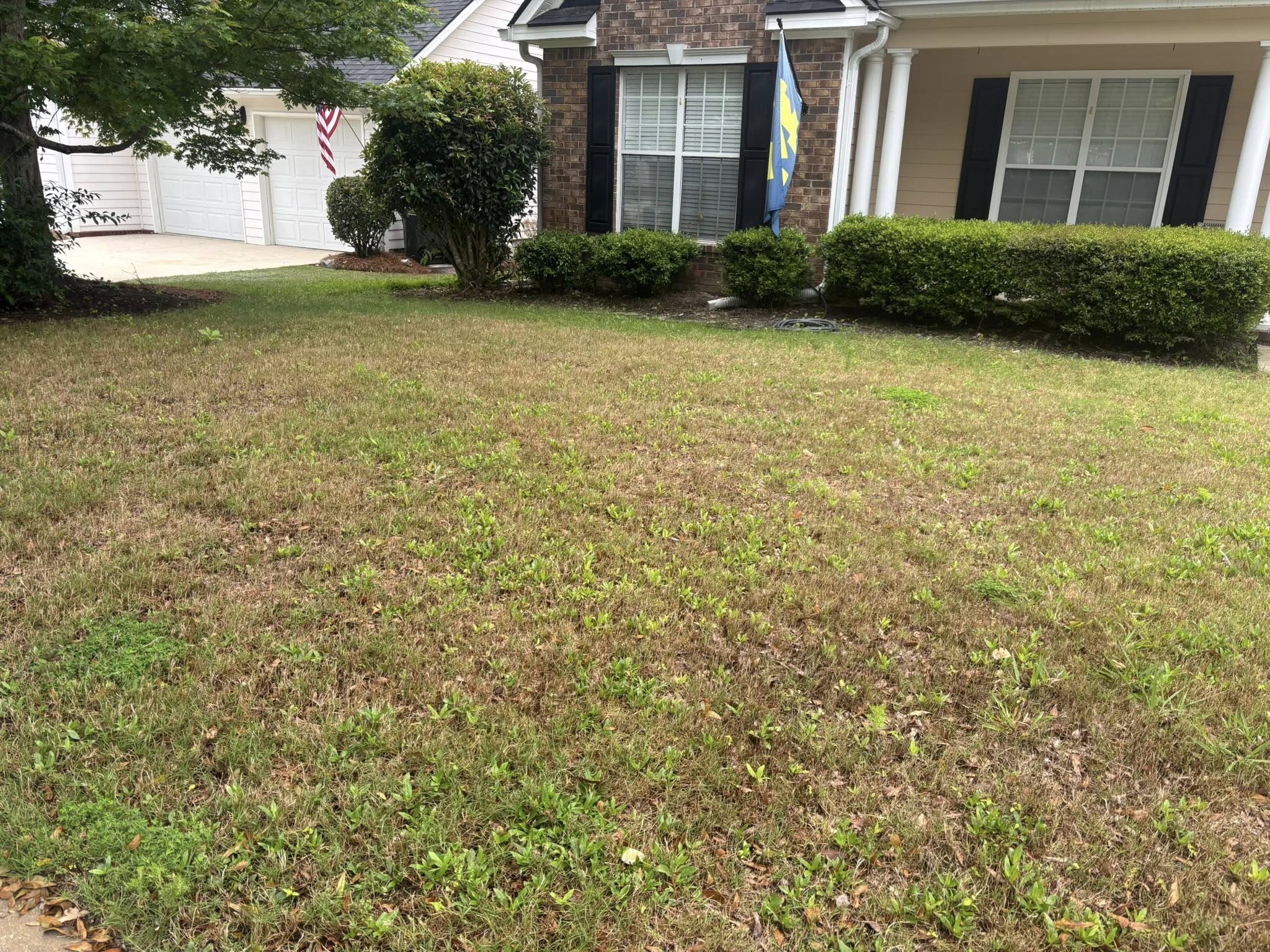
I’ll be honest — most of those calls I couldn’t do much about in the moment. When a lawn is in the middle of heat stress during an active dry stretch, the immediate options are limited. You water, you stop mowing, you let the grass rest. That’s it. You’re in damage management mode, not recovery mode.
What I told most of them was: water deeply today, raise your cut height immediately, and don’t mow again until the heat breaks. And then — this is the part most of them hadn’t heard before — call me in September and let’s talk about what to do before next summer.
Because here’s the thing. A lawn that struggled through one hot July can almost always be brought back. The grass crowns in most of those brown patches were still alive — dormant, not dead. With water, cooler temperatures, and a few weeks of recovery time, most of those lawns greened up again by late August.
But without changing the underlying conditions — the compaction, the cut height habit, the lack of any pre-season soil work — the same thing was going to happen again the following July. Same calls, same brown patches, same conversations. That’s the cycle I wanted to break for them.
What Preparation Actually Looks Like — Before the Heat Hits
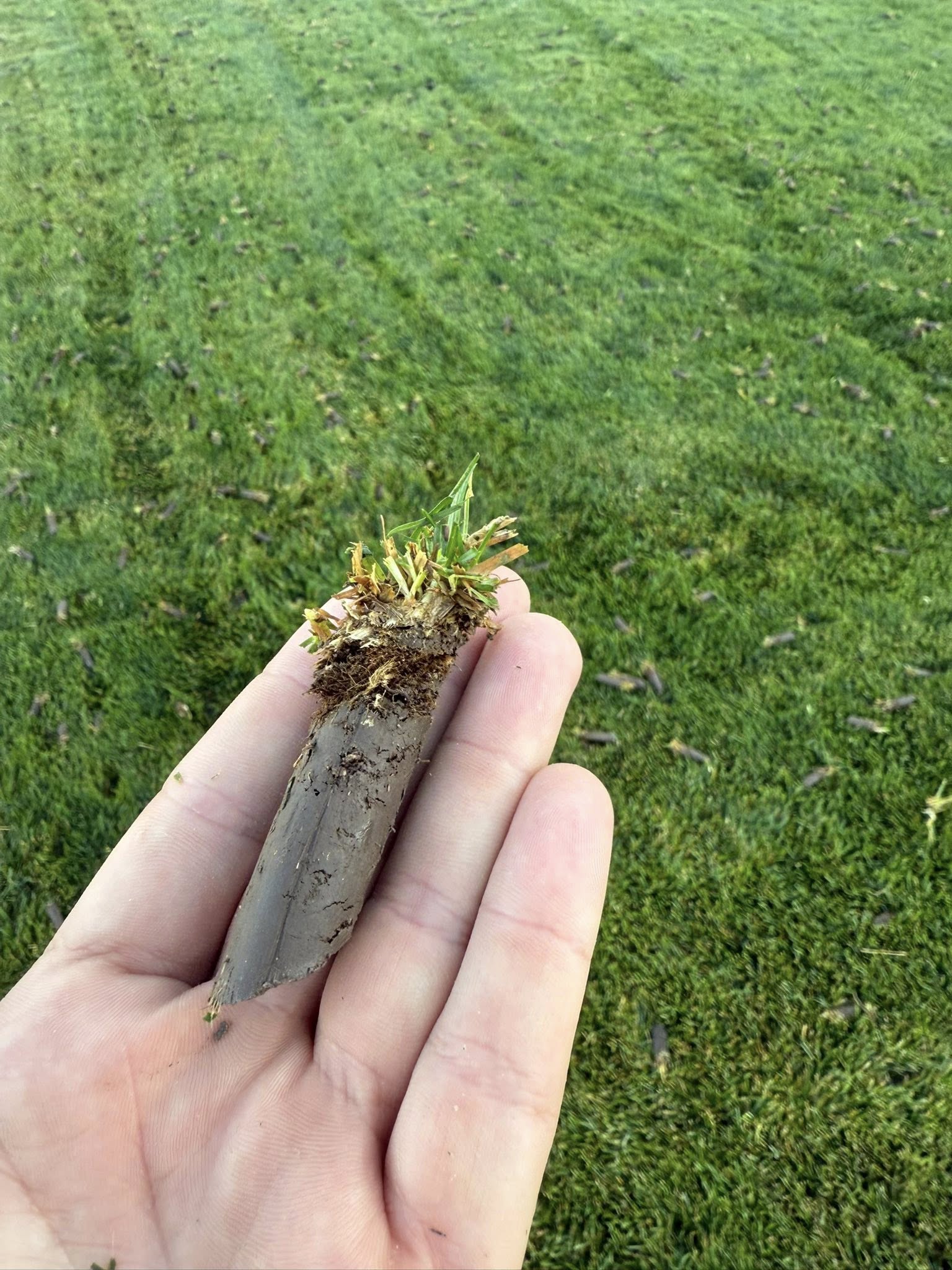
The work that protects a Sudbury lawn through a hot July happens in April, May, and June — not in July when people are already calling me in a panic.
Core aeration in spring is the single most protective thing you can do. Pulling plugs out of the soil breaks up compaction, opens channels for water to penetrate deeply, and gives roots a path to grow further down where soil moisture is more stable. A lawn on properly aerated soil has roots that go four to six inches deep rather than one to two. During a dry July, those deep roots are the difference between a lawn that goes slightly dormant and greens back up, and one that turns brown in patches and stays that way.
I did aeration on dozens of properties in May of that same year. Not one of those homeowners called me in July panicking about their lawn. That’s not a coincidence.
Cut height from the very first mow of the season. The habit of cutting short gets set early. If the first five cuts of the year are at two inches, the grass never develops the root depth and density it needs to handle summer stress. Starting at three inches in May and staying there through the season — raising slightly in July heat — builds a lawn that has actual reserves to draw on when conditions get difficult.
Consistent watering before drought sets in. Deep, infrequent watering in May and June trains roots to go down rather than staying near the surface. A lawn that’s been watered shallowly every day all spring has roots sitting just below the surface, completely exposed when the top inch of soil dries out in July. Water two or three times a week, long enough to soak 4 to 5 inches down, and you’re building a lawn that has somewhere to go when the rain stops.
The Pattern I See Every Summer — And How to Break It
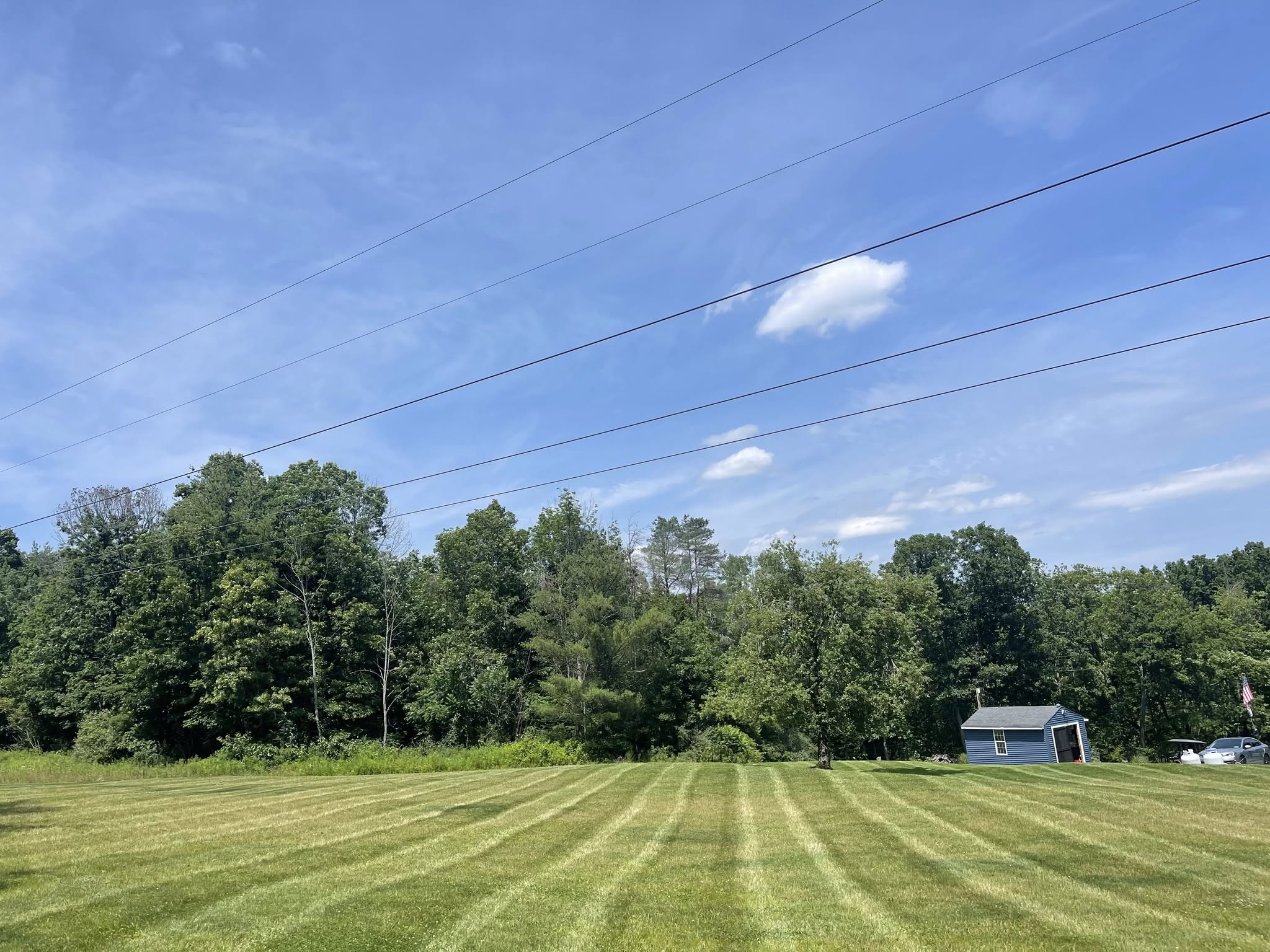
Every summer it’s the same pattern. Spring is fine. The lawn looks decent in June. Then the first real heat wave hits and the calls start. People are surprised, even though it happens every year.
It happens every year because the same conditions get recreated every year. Compacted soil never addressed. Grass cut too short from the first mow. No deep watering routine established before the dry stretch. And then July arrives and does what July in Sudbury does.
The homeowners who don’t call me in a panic in July are the ones who did the work in spring. It’s not complicated. It’s not expensive. It’s aeration, the right cut height, and a watering habit that builds deep roots before the heat gets here. Those three things, done consistently, change what a hot Sudbury July does to a lawn completely.
If you had a rough July last year and you want a different result this year — reach out in spring. That’s when the conversation that actually matters needs to happen. I’d rather talk to you in May than answer a panicked call in July.
And if you’re reading this in July and your lawn is already struggling — reach out anyway. We’ll talk through where you’re at, what to do right now, and what to put in place before next summer arrives.
— Ryan Lingenfelter
Cutting Edge Lawn & Landscaping, Garson, Ontario
📞 705-507-6787
Serving all of Greater Sudbury — Garson, Hanmer, Val Caron, Lively, Chelmsford, Azilda, Capreol, and Sudbury proper. We offer core aeration, grass cutting, and full lawn maintenance. Free quotes, no pressure.
Get a Free Quote |
Call 705-507-6787
