
I’m Ryan Lingenfelter — owner of Cutting Edge Lawn & Landscaping in Garson, Ontario.
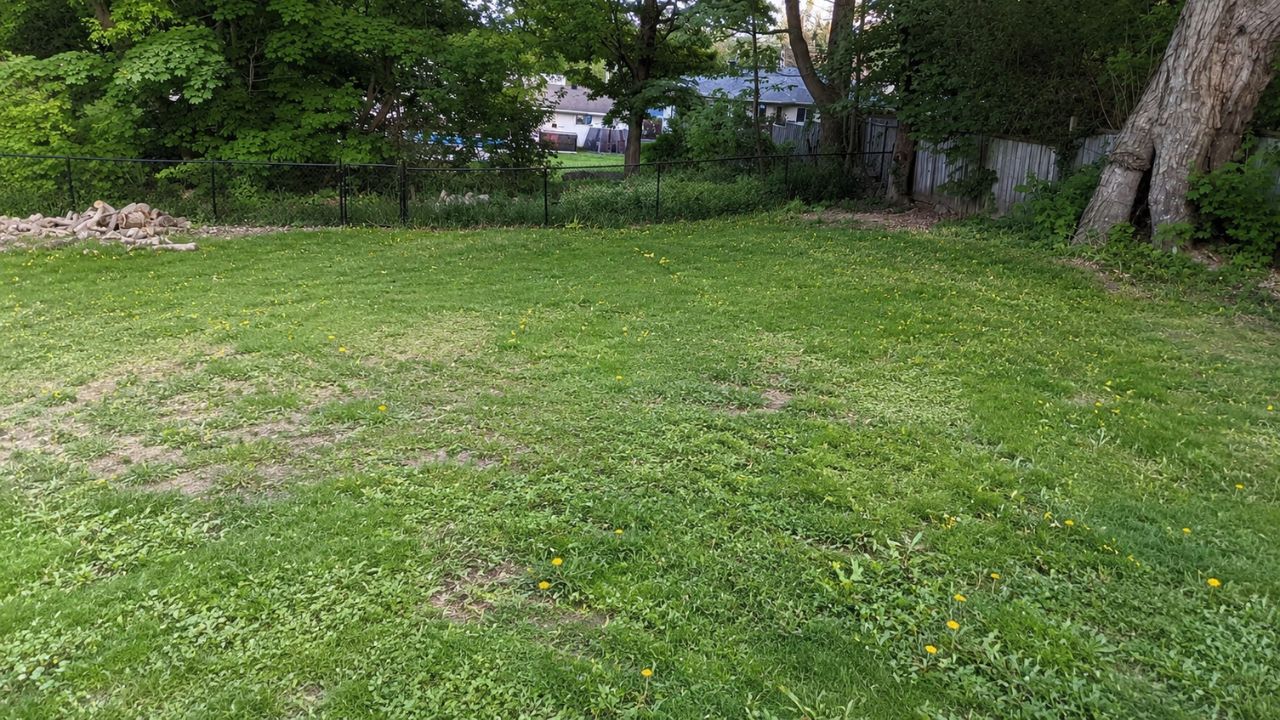
One of the most common calls I get in spring is from a homeowner standing in their backyard, looking at a lawn that came through winter looking worse than last year, and asking the same question:
“Ryan, is this lawn worth saving or do I need to start over?”
It sounds like a simple question. It isn’t. The answer depends on what you’re actually looking at — not just what it looks like from the surface.
I’ve made this call on hundreds of properties across Greater Sudbury since 2020. Garson, Val Caron, Hanmer, Lively, Chelmsford, Azilda, Capreol. Every time I walk a property, I’m running through the same assessment — not a gut feeling, but a specific checklist of what I’m seeing in the soil, in the grass, and in the underlying conditions.
Here are the five signs that tell me sod replacement is the right call — and what the alternative looks like when repair can still work.
Sign #1 — Less Than 40% of the Lawn Is Live Grass

This is the clearest and most decisive sign I look for. Walk your entire lawn and honestly estimate what percentage is live, growing grass versus dead material, bare soil, and weeds.
Here’s the line I use after years of making this call: if less than 40% of the lawn is live grass, you don’t have a lawn to repair — you have patches of surviving grass surrounded by a landscape that will keep undermining any recovery effort you make.
Overseeding into a lawn that’s mostly dead or mostly weeds is one of the most persistent money-wasting mistakes I see on Sudbury properties. New seed germinates — briefly — and then the same conditions that produced the dead and weed-dominated areas take over the new growth. You spend money on seed every season and the lawn stays at 40% every year because the other 60% keeps reasserting itself.
Full sod replacement on a properly prepped base gives you a clean start where the new grass establishes without competition from the conditions that killed the original. It costs more on day one and saves you years of spending on a recovery that was never going to happen.
When repair still works: If 60% or more of your lawn is live, healthy-looking grass — just thin or patchy in spots — you have a base worth working with. Core aeration followed by overseeding of the thin areas can produce significant improvement in one season. I covered the full repair vs replace decision in my sod replacement vs repair guide here if you want the complete framework.
Sign #2 — Sections Pull Up Like a Loose Carpet

This is the grub damage tell — and it’s unmistakable once you know what you’re looking for.
Go to a dead section of your lawn and grab a handful of grass near the surface. Pull gently. If the grass and dead material lift away from the soil with almost no resistance — like pulling up a loose mat — the root system underneath has been eaten away by grub larvae.
Grubs are the larvae of beetles that lay eggs in Sudbury lawns every summer. They feed on grass roots through fall and the following spring, and the damage often doesn’t become fully visible until the following May when the dead sections fail to green up. By the time you’re pulling up grass like a carpet, the root system in that section is gone.
Here’s why this sign almost always means sod, not seed: the root system has been physically destroyed, not just stressed. There’s nothing left for new seedlings to connect to, and without treating the grub population first, new grass faces the same threat. The right sequence is grub treatment first, soil prep, then sod — and sod establishes roots faster than seedlings can, which matters when you’re racing against the next grub cycle.
Trying to overseed grub-damaged sections without treating the grub population is the lawn care equivalent of patching a leak without fixing the pipe. I’ve seen homeowners repeat this cycle for three or four years before calling me. The sod they needed in year one would have cost less than the cumulative seed bills.
When repair still works: Small sections of grub damage — under 100 square feet — on a lawn that’s otherwise healthy can sometimes be overseeded successfully if the grub population is treated first. Larger sections, or a lawn where grub activity is widespread, need sod on the damaged areas. See my sod vs seed comparison here for the complete breakdown.
Sign #3 — The Same Dead Section Comes Back Every Year
A dead section that recovers over summer and dies again in the same spot the following spring is almost never a lawn problem. It’s a drainage or grading problem that’s wearing a lawn problem as a disguise.
Here’s the pattern I see repeatedly on Sudbury properties — particularly in Val Caron, Chelmsford, and Azilda where drainage issues are common. A homeowner notices a dead section in May. They reseed it in fall and it looks okay. The following May the same section is dead again. They reseed again. Same result. Year three, same section, they call me.
When I walk that section and check the soil and drainage, the answer is usually visible within two minutes. A low spot where snowmelt water pools in spring. A grading issue where the property directs runoff toward that corner. The section drowns in saturated soil for three to four weeks every April and May, the root system never establishes properly, and by July when everything dries out, those shallow roots have nothing to pull from.
Reseeding or sodding this section without fixing the drainage produces the same result every year. The water will always kill whatever you put down. The fix isn’t grass — it’s regrading the low spot so water moves away rather than pooling, then reseeding or sodding once the drainage is corrected.
If you’ve reseeded the same spot twice or more with no lasting improvement, stop spending money on grass until the drainage is addressed. I covered the drainage diagnosis in detail in my honest drainage advice article here — it’s the situation I’ve most often seen homeowners spend years trying to fix with the wrong solution.
When repair still works: If the recurring dead section is small and you can confirm it’s not a drainage issue — just a spot that was damaged by snow mould or winter kill — overseeding after spring cleanup and aeration often works. The key test is whether the spot was wet and soggy in spring. If yes, fix the drainage first.
Sign #4 — More Than 50% Weed Coverage With Little Live Grass Between

There’s a meaningful difference between a lawn that has weeds and a lawn that is mostly weeds. The first is a maintenance issue. The second is a replacement situation.
When more than half the lawn coverage is dandelions, plantain, creeping Charlie, or bare patches where weeds haven’t established yet — and the remaining grass is thin, sparse, and scattered — overseeding into that lawn produces grass seedlings that are immediately outcompeted by the established weed root systems already in the soil. The weeds have been in that soil for seasons. Their root systems are deep and established. New grass seedlings don’t have a chance against them.
The right move on a heavily weed-dominated Sudbury lawn is a full restart: kill the existing growth, strip or till the dead material, prep the soil properly — which in Sudbury almost always means addressing the compaction that created conditions for weeds in the first place — and lay sod that establishes quickly enough to outcompete new weed germination.
I go into the weed-soil relationship in detail in my spring lawn care mistakes article — the short version is that most Sudbury weed problems are really compaction problems. Dandelions and plantain thrive in the compacted clay conditions where grass roots can’t establish. Fix the compaction and the weed pressure drops over time as thick grass crowds out the weed seed germination.
When repair still works: If weeds are scattered through a lawn that still has significant live grass — under 30% weed coverage — aeration, overseeding, and spot weed treatment in the right sequence can bring the balance back toward grass over one to two seasons. The grass getting thicker is what actually solves the weed problem long-term.
Sign #5 — The Lawn Has Failed to Respond After Two Seasons of Correct Care
This is the sign people find hardest to accept — and it’s the one I have to deliver most carefully.
A homeowner has done everything right. Annual aeration. Correct mowing height. Proper watering. Overseeding at the right time with quality seed. Two seasons of this. The lawn is still thin, still patchy, still not what it should be.
At this point, one of two things is true. Either there’s a structural problem that hasn’t been identified yet — drainage, grubs, shallow soil over bedrock — or the lawn has degraded past the point where even correct maintenance can produce meaningful recovery in a reasonable timeframe.
Two seasons of correct care with minimal response is the signal to walk the property again and look harder for what’s being missed. In Sudbury, the most common hidden cause is shallow soil over Canadian Shield bedrock — particularly on Capreol properties and some older Garson and Hanmer lots where the topsoil is genuinely too thin to support a full root system. On these properties, grass will always struggle more than a standard depth property, and the honest answer is sometimes a combination of sod on the worst sections and adjusted expectations for the rest.
I covered the full neighbourhood-by-neighbourhood picture of what drives lawn failure across Greater Sudbury in my area-by-area lawn problem guide here — knowing what’s typical for your specific neighbourhood changes the diagnosis.
When repair still works: If you’ve been doing correct care for one season and the lawn is showing improvement — even slow improvement — stay the course. One season of aeration and overseeding on a severely compacted Sudbury property produces noticeable but not dramatic improvement. The improvement compounds over multiple seasons as the soil structure recovers. Patience is warranted if the trajectory is positive.
The Honest Assessment Checklist — Before You Spend a Dollar

Before you decide on sod replacement or repair, run through this checklist. These are the same checks I do on every property before I give a recommendation.
Live grass percentage: Walk the entire lawn. Estimate honestly. Under 40% — lean strongly toward replacement. Over 60% — lean toward repair.
The pull test: Grab handfuls of dead grass in the worst sections and pull. Comes up like a carpet with no resistance — grub damage, sod on affected sections. Rooted but dead — compaction or winter kill, repair candidate.
The screwdriver test: Push a flathead screwdriver into the soil in multiple spots. Stops before 2 inches — severe compaction, aeration is essential before anything else. Goes in 4+ inches — soil structure is reasonable.
The drainage check: Was this section wet and soggy in April and May? If yes — drainage problem, fix the grade before putting down any grass.
The repeat failure question: Has the same section failed two or more consecutive years despite treatment? If yes — there’s an unresolved cause. Find it before spending more.
The response history: Has the lawn responded at all to correct care in the last season? If yes, even partially — keep going, the trajectory is right. If no change after two full seasons of correct care — look for what’s being missed.
Running through this checklist takes about twenty minutes on a standard residential property. It costs nothing and it changes the recommendation significantly. Spending money on sod when repair would have worked is wasteful. Spending money on repair when the lawn needed replacement is more wasteful — you’ll be having this conversation again in two years.
If you want someone to run through this checklist on your specific property and give you a straight answer — that’s exactly what I do on every quote call. No pressure, no upselling, no recommendation that doesn’t match what I actually find.
📞 Call or text me directly: 705-507-6787
Or fill out the free quote form here and I’ll get back to you same day.
We service Garson, Val Caron, Hanmer, Lively, Chelmsford, Azilda, Capreol, and all of Greater Sudbury.
— Ryan Lingenfelter
Owner, Cutting Edge Lawn & Landscaping
Garson, Ontario
Frequently Asked Questions
What are the signs that a Sudbury lawn needs sod replacement?
The five clearest signs are: less than 40% of the lawn is live grass, dead sections pull up like a carpet indicating grub damage, the same dead section fails in the same spot every year suggesting a drainage problem, more than 50% of the lawn is weed-dominated with little live grass between, and the lawn has failed to respond after two full seasons of correct care including annual aeration, correct mowing height, and proper watering. Any one of these signs warrants serious consideration of replacement; multiple signs together make replacement the clear right call.
How much of a lawn needs to be dead before sod replacement makes sense in Sudbury?
The general threshold is 40% — when less than 40% of a Sudbury lawn is live grass, replacement almost always makes more long-term sense than continued repair attempts. Below this threshold, the dead areas, bare soil, and weed coverage dominate the lawn and continue to undermine any grass that’s trying to recover. Above 60% live grass, repair through core aeration and overseeding typically produces good results. Between 40 and 60% is the grey zone where the answer depends on what caused the damage and whether those causes can be resolved.
Can grub-damaged lawn sections in Sudbury be overseeded instead of sodded?
For small sections — under 100 square feet — overseeding after grub treatment can work if done carefully. For larger grub-damaged areas, sod is almost always the better call because the root system has been physically destroyed and sod establishes roots significantly faster than seedlings. Most importantly, grub treatment must happen before any new grass is established — putting down seed or sod without addressing the grub population produces the same damage the following season. I covered this decision in detail in my sod vs seed comparison here.
Why does the same section of my Sudbury lawn keep dying every year?
A recurring dead section in the same location almost always has a structural cause — most commonly a drainage problem where water pools in that area during spring snowmelt, drowning the root system before the growing season starts. Repeatedly reseeding or sodding this section without fixing the grade produces the same result every year because the water damage recurs every spring. The fix is drainage correction — regrading the low spot so water moves away rather than pooling — followed by reseeding or sodding after the water problem is resolved.
What is the cost of sod replacement in Sudbury in 2026?
Sod installation in Greater Sudbury runs approximately $0.85 to $1.20 per square foot installed, including materials and labour. A 1,500 square foot lawn replacement costs roughly $1,275 to $1,800. Soil preparation — tilling, topsoil, grading — is additional and is typically necessary on Sudbury’s clay-heavy lots. Partial replacement of damaged sections only costs significantly less than full replacement. A free on-site quote gives you the accurate number for your specific property. I covered the full pricing breakdown in my Sudbury landscaping cost guide here.
Is it better to sod or repair a Sudbury lawn in spring?
Late May through early July is the best window for sod installation in Greater Sudbury — warm soil, full growing season ahead, ideal rooting conditions. For repair through aeration and overseeding, late May is also the right window for spring work, with late August to early September being the better window specifically for overseeding. The repair vs replace decision should be made based on the lawn’s condition — not the season — using the five-sign checklist above. Getting the diagnosis right matters more than the timing.
Ryan Lingenfelter is the owner of Cutting Edge Lawn & Landscaping in Garson, Ontario. Since 2020, his crew has provided full lawn care and landscaping services across Greater Sudbury — Garson, Val Caron, Hanmer, Lively, Chelmsford, Azilda, and Capreol. Licensed, insured, BBB A+ rated, and ThreeBest Rated for lawn care services in Sudbury.
📞 Phone: 705-507-6787
📍 Service Area: Greater Sudbury, Ontario
🔗 Free Quote: cuttingedgelawn.ca/quote
Related Services
Continue Reading
- Sod Replacement in Sudbury — When to Replace vs When to Repair
- Sod vs Seed in Sudbury — Which One Is Right for Your Lawn?
- Dead Lawn to Green Sod in 4 Days — How We Did It
- Dead Lawn to Best on the Street in One Season
- What Sudbury Landscaping Companies Charge in 2026
