
I’m Ryan Lingenfelter — owner of Cutting Edge Lawn & Landscaping in Garson, Ontario.
One of the things I’ve noticed after five years of working properties across Greater Sudbury is that lawn problems aren’t random. They’re geographic.
The same issue shows up repeatedly in the same areas — not because of bad luck or bad homeowners, but because of how the land was developed, what the soil profile looks like, how old the housing stock is, and what the drainage patterns are in each part of the city.
A homeowner in Chelmsford dealing with a soggy corner in spring is dealing with a different underlying problem than a homeowner in Garson’s east end whose lawn won’t establish properly no matter what they put down. A property in Hanmer with heavy weed pressure has a different cause than the same symptom in Capreol.
I’ve worked in every one of these areas consistently since 2020. Here’s what I actually see, area by area — and what tends to fix it.
Garson — The Thin Topsoil Problem
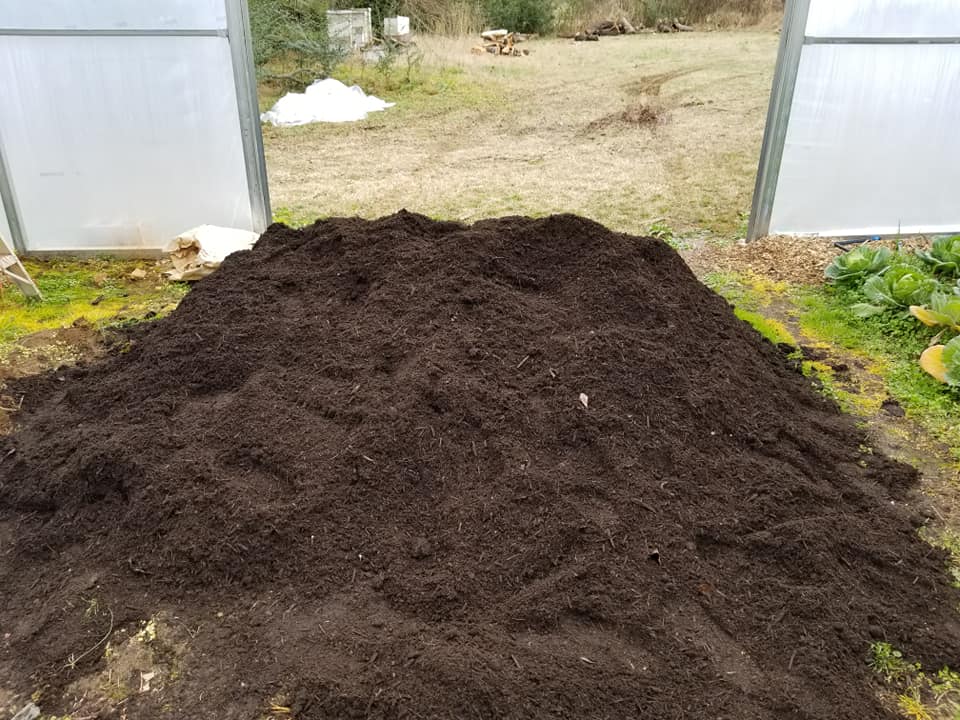
Garson is where I’m based, so I’ve worked more properties here than anywhere else. And the single most consistent issue I see — especially in the east end subdivisions built in the late 1990s and 2000s — is thin topsoil sitting directly over hard clay subsoil.
During construction in those developments, topsoil was scraped, graded, and either removed or redistributed in a thin layer over the clay base before houses were sold. What many homeowners are working with is three to four inches of topsoil — sometimes less — before you hit clay that a screwdriver won’t penetrate past two inches.
Grass roots need depth to develop properly. On a three-inch topsoil layer over hard clay, the roots hit clay and stop. The lawn looks okay in spring when moisture is near the surface, then struggles badly through July and August when the surface layer dries out and there’s nowhere for the roots to go.
The fix in Garson isn’t complicated but it’s foundational: annual aeration to fracture the clay interface and create channels into the subsoil, topdressing with quality topsoil or compost over multiple seasons to gradually build up the organic layer, and cutting at 3 inches to maximize the root development that can happen in the soil that does exist. Properties where I’ve done this consistently over three or four years look dramatically better than neighbouring properties that haven’t addressed the topsoil depth issue.
Most common Garson problem: Thin topsoil over clay, poor root depth, summer browning
Most effective fix: Annual aeration, gradual topdressing, correct mowing height
Hanmer — The Weed Pressure Area
Hanmer properties consistently show higher weed pressure than most other areas of Greater Sudbury — dandelions, creeping Charlie, and plantain in particular. And the reason isn’t that Hanmer homeowners are worse at lawn care. It’s that Hanmer has a higher proportion of older properties where compaction has built up over decades without intervention, combined with lot sizes that create more edge exposure to weed seed sources.
I’ve pushed the screwdriver into Hanmer lawns that stopped at under an inch. That level of compaction doesn’t just suppress grass growth — it actively favours weed establishment. Dandelions, plantain, and creeping Charlie all have deep taproots that penetrate compacted clay that grass roots can’t get through. In a competition on severely compacted Hanmer soil, weeds win every time.
The mistake I see repeatedly in Hanmer is homeowners applying broadleaf herbicide year after year. It knocks back the dandelions for a few weeks. Then new ones establish in the same compacted soil because the conditions that favoured them haven’t changed. Kill the weed, leave the cause, get more weeds.
The sequence that actually works in Hanmer: aerate first to break the compaction, overseed immediately after aeration to establish thick grass in the opened soil, then treat remaining weeds. Thick established grass doesn’t give weed seeds the exposed soil they need to germinate. The weed pressure drops each season as the grass fills in — not because you killed the weeds, but because you fixed the soil condition that invited them.
Most common Hanmer problem: Severe compaction, persistent weed pressure
Most effective fix: Core aeration first, overseeding, then weed treatment — in that order
Val Caron — The Drainage and Grub Area
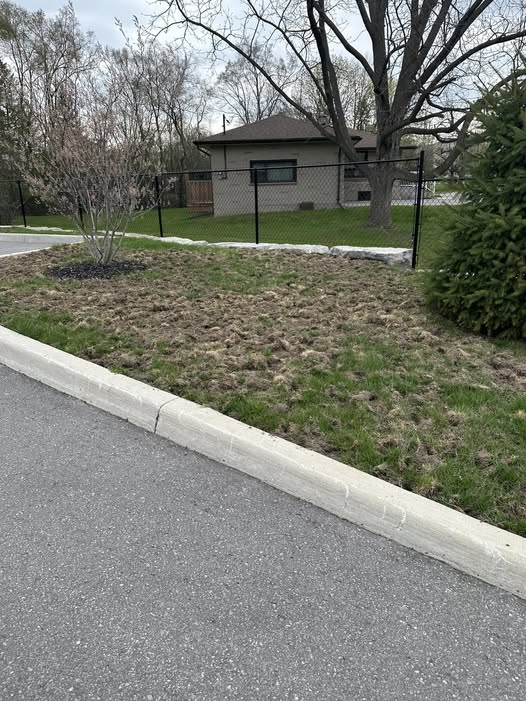
Val Caron is the area where I see the most grub damage, and it’s also the area where I see the most drainage-related lawn failure. The two problems are different but they often show up on the same property.
The grub issue in Val Caron is partly geographic — the area has conditions that favour the Japanese beetle and European chafer populations that produce the most lawn-damaging larvae. Properties with south-facing slopes and well-drained, warm soil in summer are particularly prone to egg-laying. A property that’s had grub damage once is likely to see it recur without population management.
The tell in Val Caron is the carpet pull — sections of lawn that lift up with no root resistance because the larvae have eaten the root system from underneath. I’ve cut squares in Val Caron yards and found 15 or more larvae per square foot. Way above threshold.
The drainage issue is separate but common. Val Caron has a number of low-lying properties and older subdivisions where grading was done with less attention to surface drainage. Low areas that pool water in spring, soggy corners that stay wet into June — these produce the same visible symptom as grub damage (dead grass) but with a completely different cause.
The right diagnosis matters here more than almost anywhere else, because the fix for grub damage (treat population, replace damaged sections with sod) is completely different from the fix for drainage damage (regrade, correct the grade, reseed or sod after the water issue is resolved). Treating the wrong one produces no result.
Most common Val Caron problem: Grub damage, drainage-related lawn failure
Most effective fix: Correct diagnosis first — pull test for grubs, drainage check for wet spots — then treat accordingly
Chelmsford and Azilda — The Heavy Clay Belt
Chelmsford and Azilda sit on some of the heaviest clay soil in the Greater Sudbury area. Where Garson has thin topsoil over clay, Chelmsford and Azilda often have clay from the surface down — deep clay with very little topsoil layer at all on some properties, particularly in older parts of both communities.
Heavy clay does two damaging things to lawns. In spring it holds water — the soil is saturated for weeks after snowmelt and grass roots effectively drown before the growing season even starts. In summer it bakes hard and pulls away from itself, cracking and creating conditions where roots can’t access moisture even when it’s there.
The visual pattern I see on Chelmsford and Azilda properties is distinctive: the lawn greens up late in spring compared to the rest of the street, struggles through the transition from spring to summer, and then has a dramatically better-looking period in early June before starting to thin and brown in July. That pattern — late green-up, good June, poor July — is the signature of heavy clay with inadequate drainage and compaction.
The fix in these areas requires more soil amendment work than most other parts of Sudbury. Aeration alone helps but isn’t sufficient when the clay is this heavy. Properties in Chelmsford and Azilda benefit significantly from topdressing with quality topsoil or compost after aeration, repeated over multiple seasons, to build an organic layer that moderates the clay’s extreme behaviour. It’s a multi-year process, not a one-season fix.
Most common Chelmsford/Azilda problem: Heavy clay, late spring green-up, severe summer browning
Most effective fix: Annual aeration plus topdressing, multi-season soil amendment program
Lively — The Older Property Compaction Zone
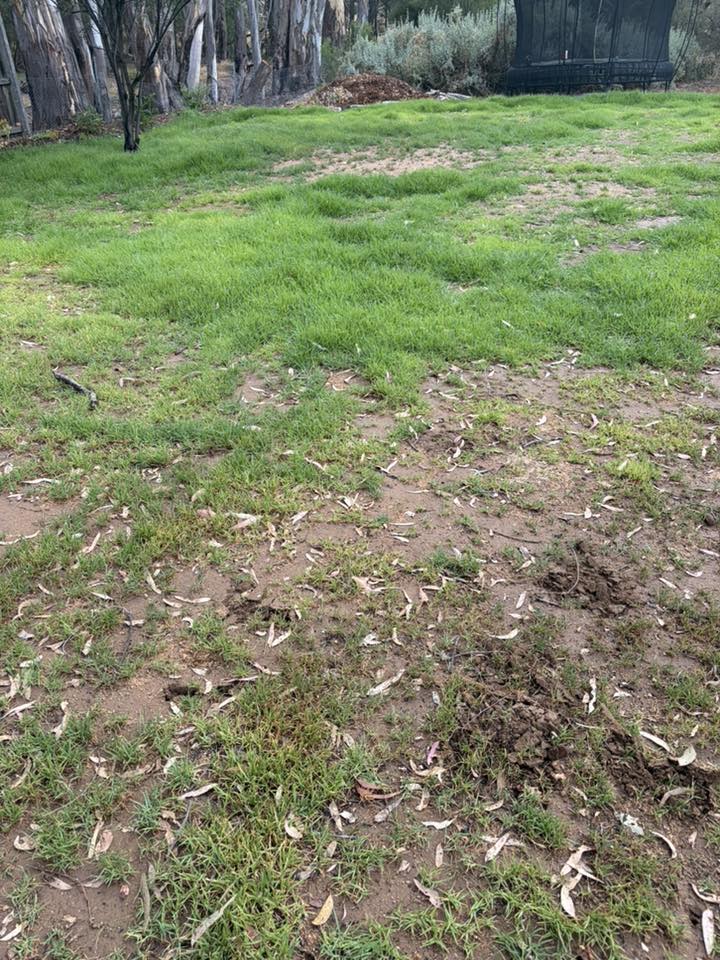
Lively has a high proportion of older properties — many built in the 1950s through 1970s — where lawns have been in place for decades without serious intervention. The compaction on some Lively properties I’ve walked is the most severe I see anywhere in Greater Sudbury. These are lawns where the freeze-thaw cycle has been pressing the clay down for 50 or 60 years without aeration to counteract it.
The screwdriver test on these properties sometimes won’t go past half an inch. The soil has been compressed to the point where it’s essentially impermeable — water runs off the surface in rain rather than soaking in, fertilizer has no pathway to the root zone, and grass roots exist only in the top inch of soil. The lawns look like they’re growing on pavement because functionally, they almost are.
The good news about old compaction is that it responds well to aeration — sometimes dramatically so. Properties in Lively where I’ve done the first aeration in years or decades show significant improvement within one season, not because anything was added but because the soil could suddenly breathe, hold water, and allow roots to grow deeper. It’s genuinely satisfying work.
These properties often benefit from two aerations in the first year of restoration — spring and fall — to accelerate the compaction reversal before moving to an annual maintenance schedule.
Most common Lively problem: Decades of accumulated compaction, near-impermeable soil surface
Most effective fix: Two aerations in year one, then annual maintenance aeration, overseeding after aeration passes
Capreol — The Rocky Shallow Soil Challenge
Capreol properties sit on terrain where the Canadian Shield bedrock is closer to the surface than almost anywhere else in the Greater Sudbury service area. On many Capreol properties, the soil depth above bedrock is eight to twelve inches — sometimes less in the rocky sections of older streets.
Shallow soil over rock creates a specific challenge: there’s a hard ceiling on how deep roots can go, and the thin soil layer dries out faster during summer heat than deeper soil profiles. Watering helps but can’t fully compensate for the limited root zone.
The honest answer for some areas of Capreol properties is that certain sections simply won’t perform as well as a standard lawn — there isn’t enough soil depth for full root development regardless of what surface treatments you apply. The practical responses are choosing drought-tolerant grass varieties that perform better in shallow soil, accepting that some sections near exposed rock outcrops are better maintained as mulched beds than lawn, and topdressing annually to gradually build the soil depth over time.
Where Capreol properties do have reasonable soil depth — typically in the flatter sections away from rock outcrops — they respond well to standard care. Aeration, correct mowing height, proper watering. The results are similar to other parts of Sudbury once the soil depth question is addressed honestly.
Most common Capreol problem: Shallow soil over bedrock, limited root zone depth
Most effective fix: Drought-tolerant grass varieties, annual topdressing to build soil depth, accepting mulched beds where soil is genuinely too shallow for lawn
What This Means If You’re Trying to Fix Your Lawn
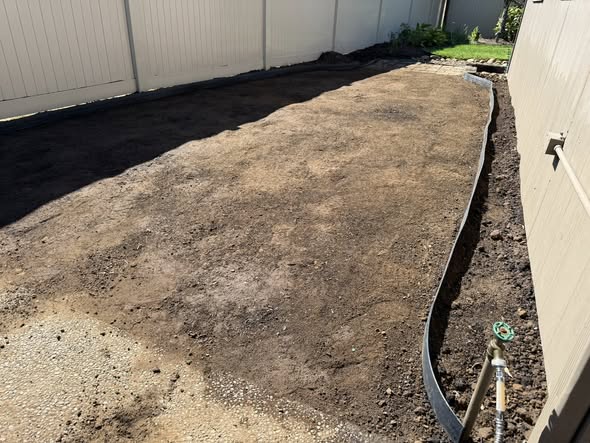
Generic lawn care advice treats every property the same way. It can’t account for whether you’re on thin Garson topsoil, heavy Chelmsford clay, compacted Lively soil, or shallow Capreol ground over rock. The right approach for each of these situations is different — sometimes significantly so.
This is why I walk every property before quoting anything. The neighbourhood gives me a starting hypothesis about what’s probably going on. The screwdriver test, the pull test, the drainage check, and the mowing height check tell me what’s actually happening on that specific property. The diagnosis comes first. The recommendation comes from the diagnosis.
If you’re in any of these areas and you’ve been throwing treatments at a lawn that isn’t responding, the most useful thing you can do is get someone to walk the property and tell you honestly what’s causing the problem — not just what product to try next.
That’s exactly what I do on every quote call. Free. No obligation.
📞 Call or text me directly: 705-507-6787
Or fill out the free quote form here and I’ll get back to you same day.
We service Garson, Val Caron, Hanmer, Lively, Chelmsford, Azilda, Capreol, and all of Greater Sudbury.
— Ryan Lingenfelter
Owner, Cutting Edge Lawn & Landscaping
Garson, Ontario
Frequently Asked Questions
Why do lawn problems vary by neighbourhood in Greater Sudbury?
Lawn problems in Greater Sudbury vary by area because the underlying soil conditions, development history, and land characteristics differ significantly across the city. Garson’s east end subdivisions have thin topsoil from construction grading. Chelmsford and Azilda have heavy clay from the surface down. Capreol has shallow soil over Canadian Shield bedrock. Hanmer has older properties with accumulated compaction. Each situation produces different visible symptoms that need different approaches — generic lawn care advice doesn’t account for these differences.
What is the most common lawn problem in Garson Ontario?
The most common lawn problem in Garson — particularly in the east end subdivisions — is thin topsoil over hard clay subsoil, a result of construction grading that removed or redistributed topsoil before houses were sold. With only three to four inches of workable soil before hitting clay, grass roots can’t develop the depth needed to survive summer dry periods. Annual core aeration to break the clay interface, gradual topdressing to build the organic layer, and consistent mowing at 3 inches produce the best long-term results on these properties.
Why does my Val Caron lawn have dead patches every year?
Val Caron has two common causes of recurring dead patches: grub damage and drainage problems. Grub damage produces sections that lift up like a loose carpet because the larvae have eaten the root system from below. Drainage problems produce dead sections in low areas where water pools in spring and drowns the roots. Both look similar from the surface but need completely different fixes. The pull test identifies grub damage. A drainage check after rain identifies pooling areas. Treating the wrong cause produces no improvement.
Is Chelmsford lawn care different from other parts of Sudbury?
Yes — Chelmsford and Azilda sit on some of the heaviest clay soil in Greater Sudbury, which requires more intensive soil amendment work than most other areas. The clay holds water in spring and bakes hard in summer, producing a pattern of late spring green-up, reasonable June appearance, and significant summer browning. Standard aeration helps but properties in this area benefit most from repeated topdressing with quality topsoil or compost after aeration, building an organic layer over multiple seasons that moderates the clay’s extreme behaviour.
Why won’t grass grow properly on my Capreol property?
Many Capreol properties have shallow soil above Canadian Shield bedrock — sometimes only eight to twelve inches deep. This limits how far grass roots can develop and means the soil dries out faster during summer heat than deeper profiles elsewhere in Sudbury. In sections where soil depth is genuinely limiting, drought-tolerant grass varieties and annual topdressing to gradually build soil depth are the practical responses. Some spots near exposed rock outcrops perform better as mulched beds than lawn — accepting this honestly prevents years of spending on lawn treatments that can’t overcome insufficient soil depth.
What should I do first if my Sudbury lawn has been struggling for years?
Start with a property walk and the screwdriver test — push a flathead screwdriver into the soil in different spots to check for compaction. If it stops before three to four inches anywhere, compaction is a factor. Then do the pull test in dead sections — if dead grass lifts up easily like a carpet, grub damage is likely. Check for drainage patterns after rain. And check your mower deck height — below 2.5 inches is too low for Sudbury properties. Understanding what’s actually causing the problem in your specific area and on your specific property is the most important step before spending money on any treatment.
Ryan Lingenfelter is the owner of Cutting Edge Lawn & Landscaping in Garson, Ontario. Since 2020, his crew has provided full lawn care and landscaping services across Greater Sudbury — Garson, Val Caron, Hanmer, Lively, Chelmsford, Azilda, and Capreol. Licensed, insured, BBB A+ rated, and ThreeBest Rated for lawn care services in Sudbury.
📞 Phone: 705-507-6787
📍 Service Area: Greater Sudbury, Ontario
🔗 Free Quote: cuttingedgelawn.ca/quote
Related Services
Continue Reading
- Three Sudbury Neighbours. Three Different Lawns. Here’s Why.
- 5 Lawn Care Mistakes Sudbury Homeowners Make Every Spring
- When Should You Actually Aerate Your Sudbury Lawn?
- Sod vs Seed in Sudbury — Which One Is Right for Your Lawn?
