
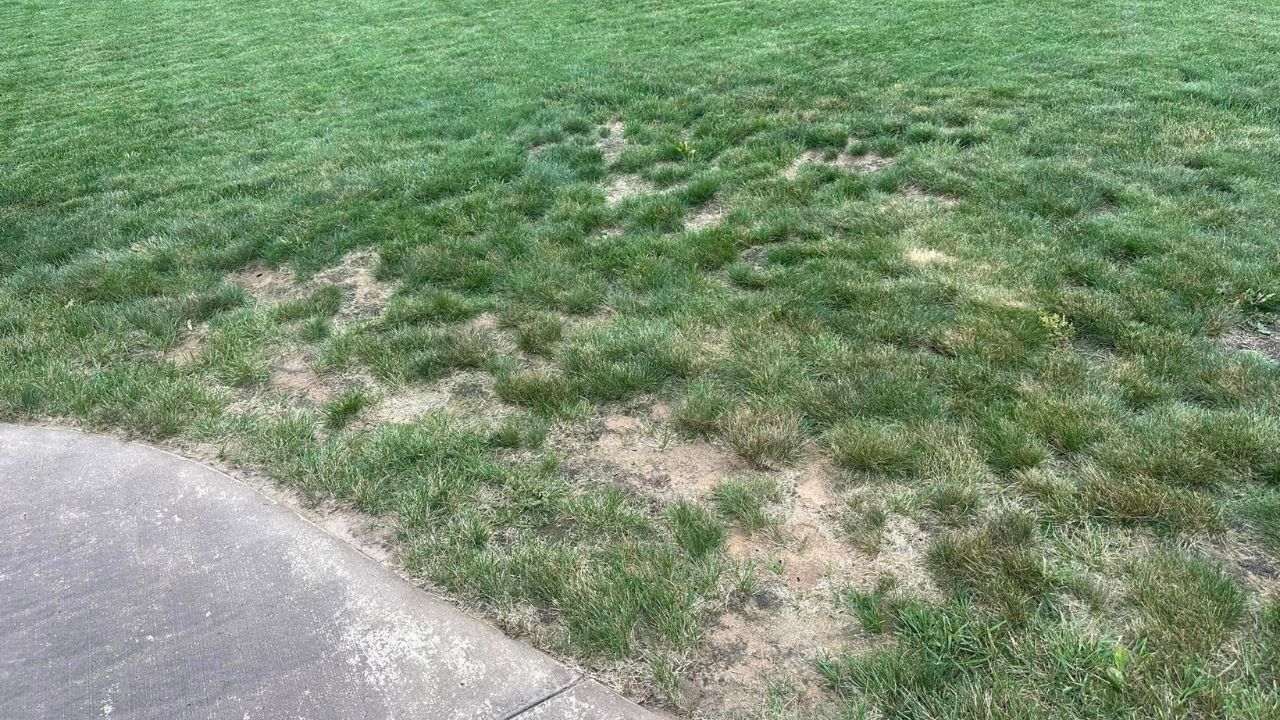
I get the same theory from homeowners almost every August, and I understand why they land on it.
“It’s the heat, right? It just gets too hot and dry for the grass and that’s why it goes patchy.”
Heat plays a role. I won’t pretend it doesn’t. But after walking hundreds of Sudbury properties every August since 2020, I can tell you that heat is rarely the actual root cause of a patchy lawn. It’s the trigger that exposes a problem that was already there in May and June — a problem most homeowners never see coming because it doesn’t look like anything until the heat arrives and forces it into view.
I’m Ryan Lingenfelter, owner of Cutting Edge Lawn & Landscaping in Garson, Ontario. Since 2020, I’ve maintained properties across Greater Sudbury — Garson, Val Caron, Hanmer, Lively, Chelmsford, Azilda, Capreol. Here’s what’s actually causing the patchy lawns I see every August, and why it has almost nothing to do with the weather.
The Real Cause — Root Depth That Was Decided Months Before August
A patchy lawn in August isn’t a lawn that suddenly failed in August. It’s a lawn whose roots were never deep enough to handle August, and that outcome was determined back in May and June by how the grass was being cut.
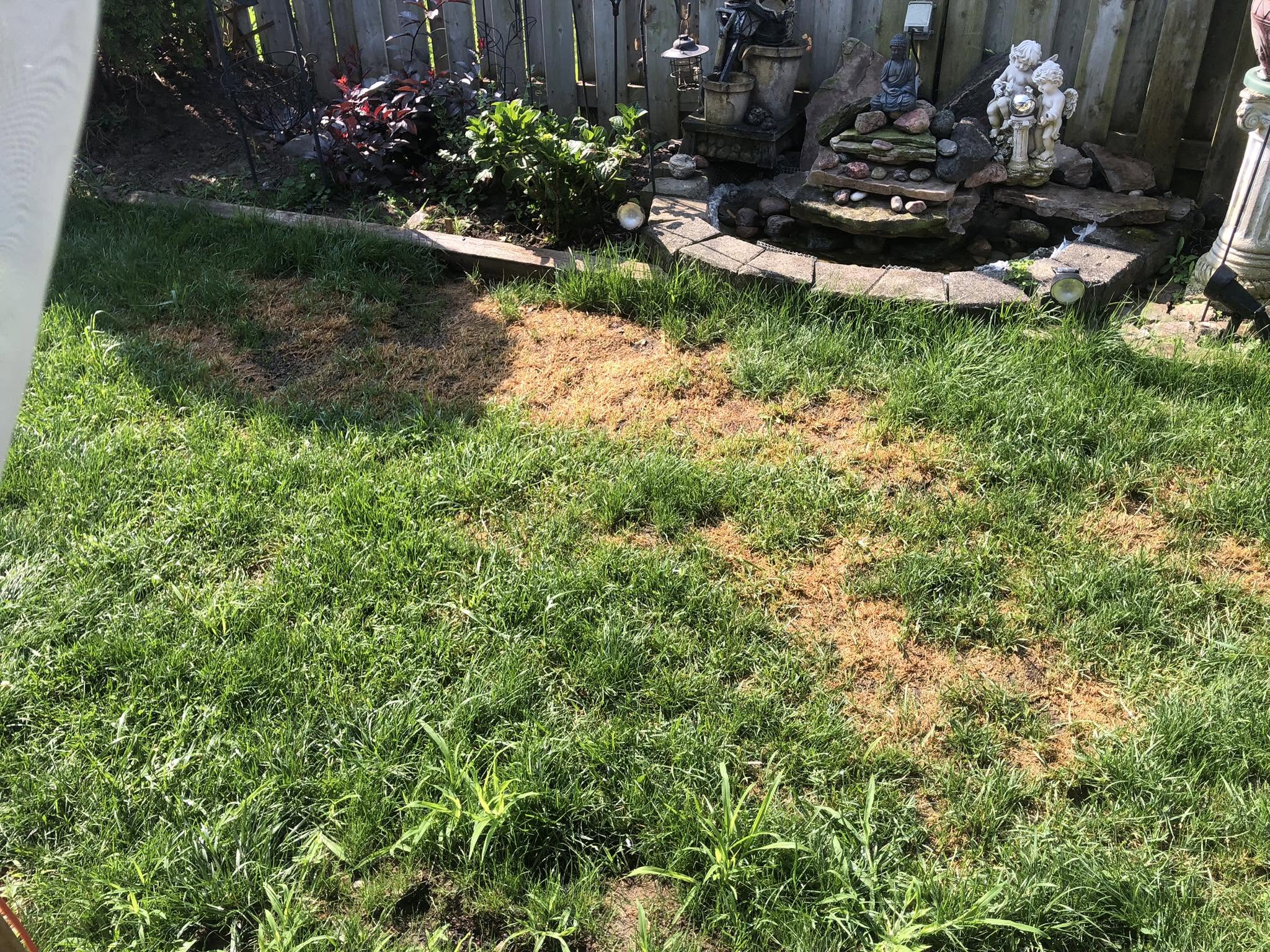
Here’s the mechanism. Grass roots grow proportionally to the blade. A lawn maintained at 3 inches develops roots reaching 4 to 6 inches into the soil over the course of a season. A lawn cut at 2 inches or shorter — which happens far more often than homeowners realize, usually because a mower’s default deck height is lower than people think — develops roots that rarely exceed 2 to 3 inches.
Through May and June, this difference is invisible. There’s enough moisture from snowmelt and spring rain that both the deep-rooted and shallow-rooted grass look equally green. The shallow-rooted lawn isn’t struggling yet because it doesn’t need to reach deep for moisture — there’s plenty available near the surface.
Then July arrives and Sudbury goes through its typical dry stretch. The top few inches of soil dry out first — this happens regardless of root depth, it’s just physics. The deep-rooted lawn keeps pulling moisture from 4 to 6 inches down, where the soil is still holding water from earlier in the season. The shallow-rooted lawn has nothing below 2 to 3 inches to draw from. It goes from looking fine to looking stressed within days, and by August, the patches that started as slightly paler areas have turned into bare or badly thinned sections.
The mowing decision that caused this happened in May. The patch that shows up in August is just the delayed consequence becoming visible. I covered this mechanism in detail in the May mowing mistake article here — it’s the single biggest factor I’ve found behind August patchiness, and it’s almost entirely preventable with one simple change to mower deck height.
Why the Patches Show Up in the Same Spots, Not Evenly
If shallow roots were the only factor, you’d expect a lawn to brown out uniformly. What actually happens is patchy — certain sections fail while others nearby hold on. That pattern points to a second factor working alongside root depth: soil compaction variation across the property.
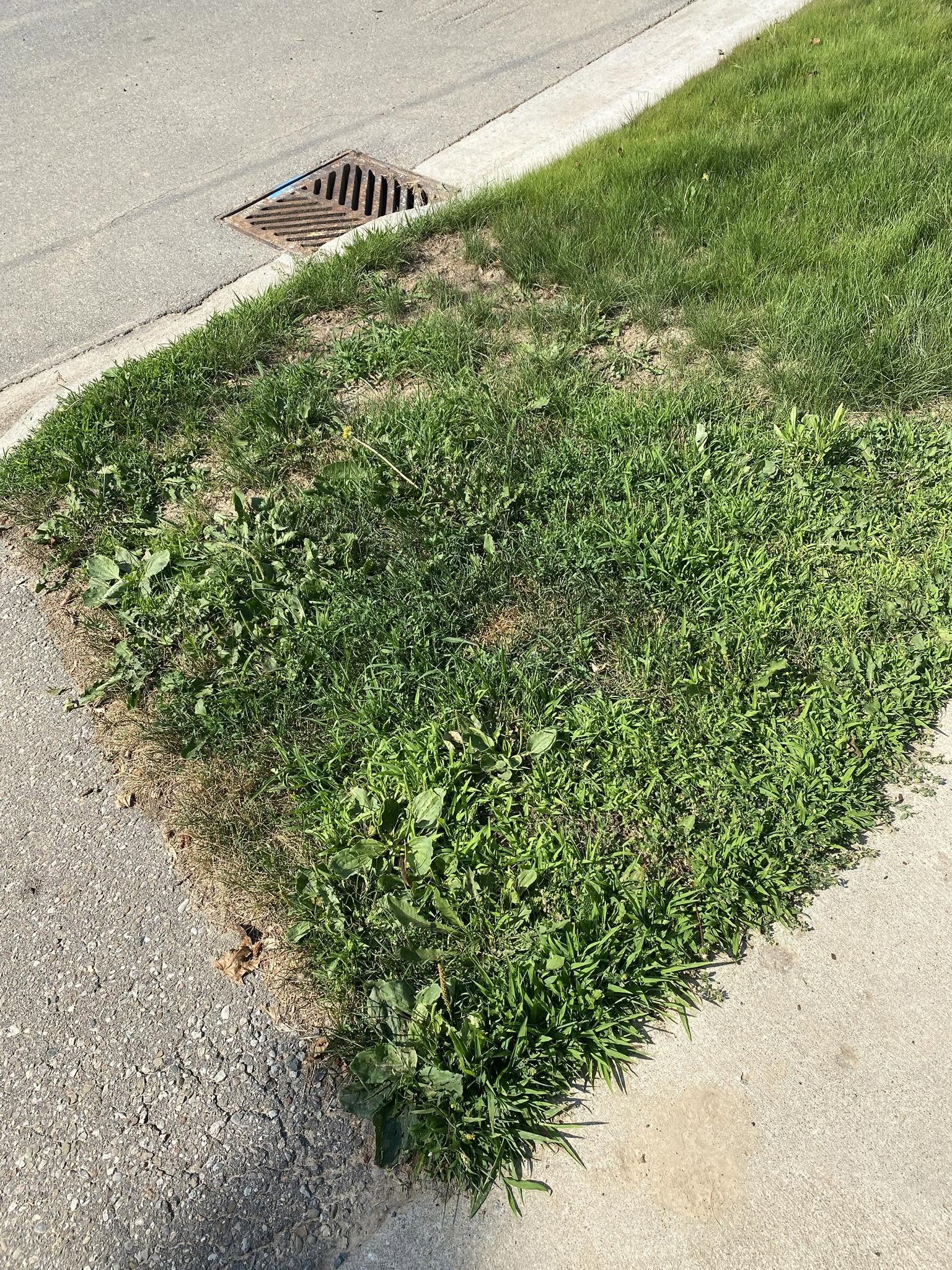
Sudbury’s clay soil doesn’t compact evenly across a property. Areas near a driveway, along a frequently walked path, near a gate, or in a section that gets vehicle traffic compact significantly harder than the rest of the lawn. These areas have less oxygen and water penetration to begin with, and when combined with shallow roots from short mowing, they fail first and most severely.
I’ve walked properties where I can predict almost exactly where the August patches will be just by looking at traffic patterns and proximity to hard surfaces in May, before any visible stress has occurred. The path from the back door to the garden, the strip along the driveway edge, the area near a side gate that gets used daily — these are compaction hot spots, and they’re where roots have the least room to grow regardless of mowing height.
This is also why annual core aeration matters so specifically in these areas. A general aeration pass across the whole lawn helps everywhere, but the compaction hot spots benefit the most because they’re starting from the worst soil condition. If you’re seeing the same patches appear in the same locations every August, that’s compaction telling you exactly where it’s worst on your property.
The Factor Almost Nobody Considers — Uneven Watering Coverage
This is the one that surprises homeowners most when I point it out. Sprinkler systems and hose-end sprinklers rarely apply water perfectly evenly across a lawn, and the gaps in coverage become exactly where August patches form.
A rotary sprinkler head that’s slightly misaligned, a fixed spray pattern that doesn’t quite reach a corner, a hose-end sprinkler positioned in one spot that delivers more water to the centre of its pattern than the edges — all of these create sections of a lawn that are consistently getting less water than the rest, every single time you water.
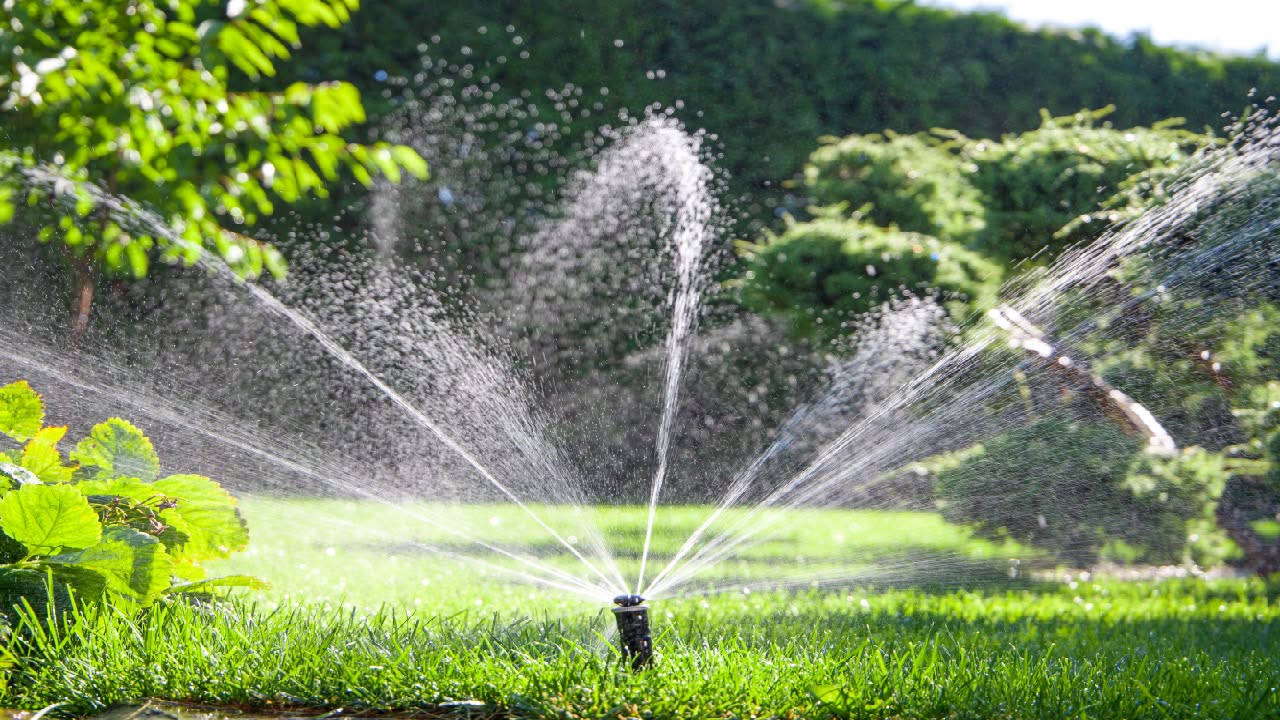
Through May and June, when there’s enough rainfall topping up whatever the sprinkler misses, this gap doesn’t show. By late July and August, when irrigation is doing most of the work and rainfall has slowed, those consistently under-watered sections are the ones that go patchy first — independent of root depth or compaction, just from receiving less water week after week.
The way to catch this before it becomes a problem: run your sprinkler system or hose sprinkler and actually watch where the water lands. Walk the perimeter of the coverage area. Corners and edges are the most common gaps. If you find a section that’s consistently getting less coverage, that’s worth manually supplementing or adjusting the sprinkler positioning before the dry stretch of summer arrives, not after the patch has already formed.
Grubs Get Blamed More Than They Deserve
I want to address this directly because grub damage is the explanation I hear most often from homeowners trying to diagnose their own August patches, and it’s usually not the actual cause.
Grub damage has a specific signature — the affected turf pulls up like a loose carpet with little to no root resistance, because the grubs have eaten through the root system entirely. If you grab a patch of brown grass and it holds firm when you pull, that’s not grub damage. That’s stress from shallow roots, compaction, or uneven watering — the three factors I’ve already covered.
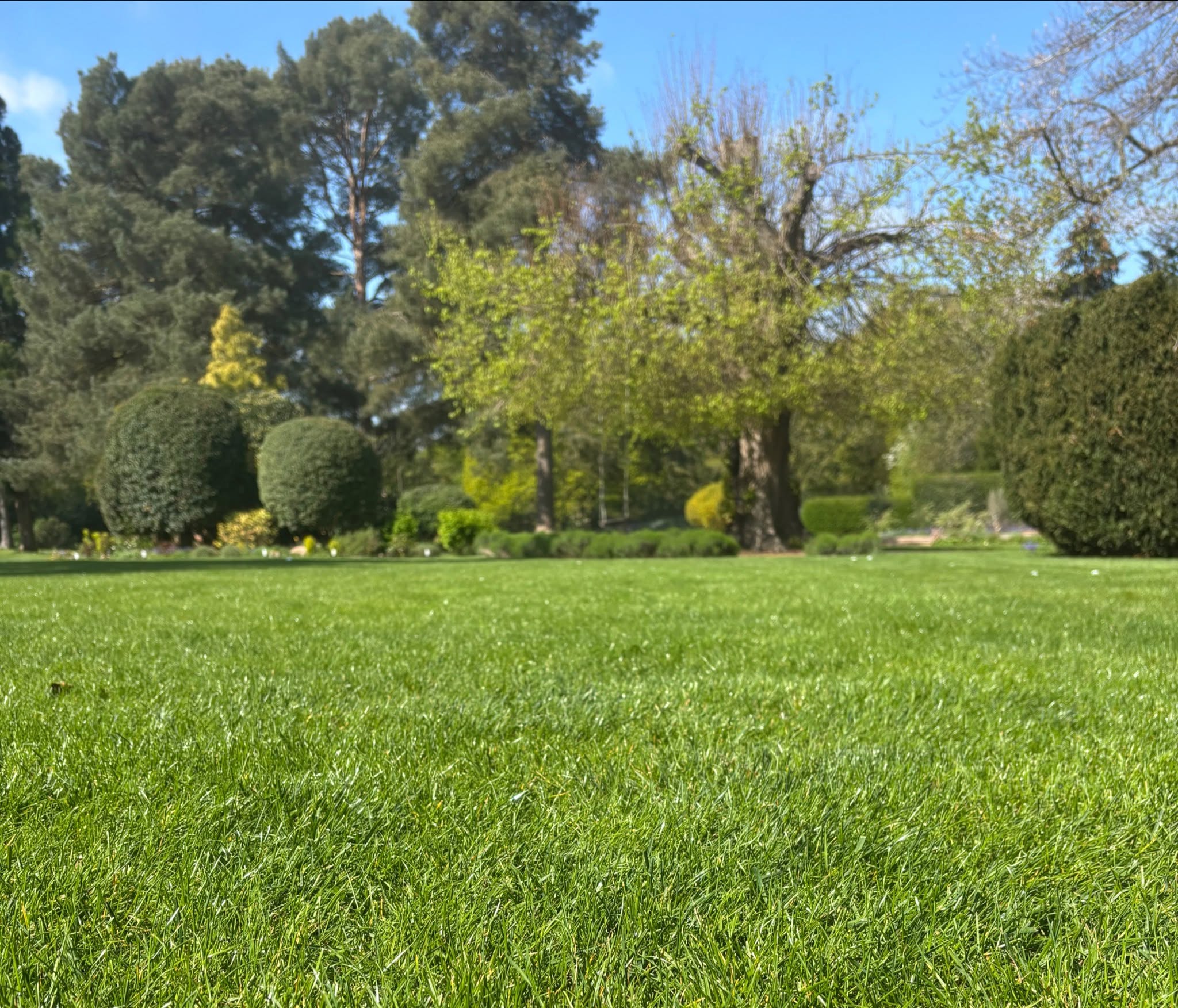
I do find genuine grub damage on Sudbury properties, and when I do, the pull test confirms it immediately — the turf lifts with essentially zero resistance, like peeling up a doormat. But out of the August patch calls I get every season, the actual percentage that turn out to be grub damage is smaller than most homeowners expect. The majority are root depth, compaction, or watering coverage issues that have nothing to do with insects at all.
The reason grubs get blamed so often is that they’re the explanation that feels external — something attacking the lawn rather than something about how the lawn has been maintained. It’s an easier story to tell than “I’ve been cutting it too short since May.” But the pull test takes thirty seconds and tells you definitively which situation you’re actually in. If you want the full diagnostic walkthrough for grub damage specifically, the lawn grubs article here covers exactly what to look for.
What This Means for Preventing Next Year’s August Patches
If you’re standing in a patchy lawn right now in August, the immediate fixes are limited — you can correct watering coverage and raise the mower deck right away, but root depth and soil compaction take a full season to meaningfully improve. The real opportunity is preventing next August’s patches by addressing the actual causes starting next spring.
Set your mower to 3 inches starting with the first cut in May and keep it there all season. Don’t drop it for a “tidy” early-season cut or the last cut of the year — both of those moments are when I see homeowners undo months of proper height maintenance in a single pass.
Get the lawn aerated annually in late May, paying particular attention to the compaction hot spots near driveways, paths, and gates. These areas need the most help and benefit the most from consistent treatment.
Check your watering coverage in May or June, before the dry stretch arrives, rather than discovering the gap in August when the patch has already formed. A few minutes watching where the water actually lands saves a section of lawn that would otherwise fail predictably every summer.
If you want me to walk your property and tell you specifically which of these three factors is driving your August patches — that’s exactly what a quote call is for. I’ll point to the exact spots and explain what’s causing each one.
📞 705-507-6787
🔗 Get a Free Quote
📍 Serving Greater Sudbury — Garson, Val Caron, Hanmer, Lively, Chelmsford, Azilda, Capreol
— Ryan
Frequently Asked Questions
Why does my Sudbury lawn get patchy every August?
The most common cause is shallow root depth from mowing the grass too short earlier in the season — roots that never grew past 2 to 3 inches deep have nothing to draw moisture from when the topsoil dries out during Sudbury’s typical July dry stretch. Soil compaction in specific high-traffic areas and uneven sprinkler coverage are the second and third most common causes. Grub damage is blamed often but is actually responsible for a smaller percentage of August patches than most homeowners assume.
How do I know if my patchy lawn is grub damage or something else in Sudbury?
Grab a section of the affected grass and pull. If it lifts easily with almost no resistance, like a loose carpet with no roots holding it down, that’s grub damage. If the grass holds firm when you pull and just looks stressed, brown, or thin, the cause is more likely shallow roots from short mowing, soil compaction, or inconsistent watering coverage — not grubs.
Why do the same spots on my Sudbury lawn go patchy every year?
Recurring patches in the same locations almost always indicate either a soil compaction hot spot — common near driveways, paths, and gates where foot or vehicle traffic compacts the clay more than the surrounding lawn — or a gap in sprinkler coverage that consistently under-waters that specific area. Both causes are location-specific and predictable once identified, which is why the same sections fail year after year until the underlying issue is addressed.
Can I fix a patchy Sudbury lawn in August or do I have to wait until next year?
Some fixes can happen immediately — correcting sprinkler coverage gaps and raising your mower deck to 3 inches help right away. Root depth and soil compaction, however, take a full growing season to meaningfully improve and are best addressed starting the following spring with proper mowing height from the first cut and annual aeration in late May. Major reseeding in already-patchy areas is best done in late August to mid-September, Sudbury’s ideal seeding window, rather than attempted during peak heat.
What mowing height prevents patchy lawns in Sudbury?
3 inches, maintained consistently from the first cut in May through the last cut in October. This height supports root development reaching 4 to 6 inches into the soil, which gives the grass access to moisture below the surface layer that dries out first during summer heat. Cutting at 2 inches or shorter, even occasionally, limits root depth and is the single biggest preventable cause of August patchiness on Sudbury lawns.
Ryan Lingenfelter is the owner of Cutting Edge Lawn & Landscaping in Garson, Ontario. Since 2020, his crew has provided full lawn care services across Greater Sudbury — Garson, Val Caron, Hanmer, Lively, Chelmsford, Azilda, and Capreol. Cutting Edge is licensed, insured, BBB A+ rated, and ThreeBest Rated for lawn care services in Sudbury.
📞 Phone: 705-507-6787
📍 Service Area: Greater Sudbury, Ontario
🔗 Free Quote: cuttingedgelawn.ca/quote
Helpful Lawn Care Services in Sudbury
- Grass Cutting Services
- Core Aeration for Healthy Lawns
- Property Cleanup Services
- Sod Installation in Sudbury
- Mulch & Decorative Stone
- Hedge Trimming Services
Continue Reading
- The May Mistake That’s Killing Sudbury Lawns by July
- Lawn Grubs in Sudbury — How to Spot Them Before They Kill Your Lawn
- I’ve Seen Hundreds of Sudbury Lawns in July — Here’s What the Good Ones All Have in Common
