
By Ryan Lingenfelter — Owner, Cutting Edge Lawn & Landscaping · Garson, Ontario · Serving Greater Sudbury since 2020
I went to quote a property in the Sudbury area expecting a standard initial visit. Walk the lawn, assess the conditions, talk through what I’d recommend, give a price.
What happened instead was that the homeowner — a retired teacher in her late sixties who’d lived in the house for thirty-one years — walked me through the lawn herself. Not asking questions. Teaching.
Twenty minutes later I got back in my truck and sat there for a few minutes before I drove away. She’d shown me things I look for on every property now that I hadn’t been looking for before that visit. From a homeowner. Someone I came to quote.
That doesn’t happen often. This is the story of what she showed me.
How It Started — She Asked If She Could Walk Me Through It First
She met me at the front door and before I’d said anything about wanting to look at the property, she said: “Would you mind if I walk you through it first? I want to show you a few things before you form an impression.”
I said of course. I assumed she had complaints about previous services, or specific problem areas she wanted me to address. That’s the usual reason homeowners want to lead the walkthrough.
It wasn’t that. She started in the front corner of the yard, crouched down, and pointed at the soil surface between two grass plants. “See how the soil colour changes here? This section drains differently than the rest. It dries out faster. I’ve been watching it for fifteen years.”
Fifteen years of watching one section of her front lawn dry out differently than the sections adjacent to it. That’s the kind of observation that comes from paying attention to the same property across hundreds of seasons.
I crouched down and looked. She was right. The soil colour was slightly lighter there — less moisture content, different organic matter density. I’d walked past it on the way to the door and filed it as normal variation. She’d been watching it since 2009.
We hadn’t been outside for three minutes and she’d already shown me something I’d missed. I stopped forming the assessment I’d been starting to build and started actually listening.
What She Showed Me That I Didn’t Know to Look For
We walked the whole property over about twenty minutes. She narrated as we went — not in a performative way, just the quiet accumulation of things she’d noticed over three decades of watching the same lawn through every season Sudbury has to offer.
She showed me where the frost line ran differently than the rest of the yard — a strip along the north side of the house that stayed frozen two to three weeks longer than the open sections each spring. That section, she said, needed to be treated differently in spring because it was still cold and wet when the rest of the lawn was ready for the first cut. “I learned that the hard way. First company I had cut the whole lawn on the same day every spring. That strip was always damaged for months after.”
She showed me a section in the backyard where the neighbour’s maple roots had been working into the soil for the past eight years. She’d watched the grass gradually thin in that section as the maple roots increased competition for moisture and nutrients. “It’s not a soil problem. It’s a root competition problem. Nobody’s ever treated it as that.” This connects directly to what I’ve seen on other properties — understanding what’s actually happening under the surface changes what intervention is appropriate.
She showed me where the grade had shifted over twenty years — a slight settling that had created a low point near the back fence that didn’t exist when she first moved in. Water now collected there after heavy rain in a way it didn’t before. She’d adjusted her watering in that section accordingly — never watering it directly, letting rainfall handle it. “If I water there, it stays wet for three days and the grass suffers. I figured that out in 2014.”
She showed me a section along the east fence where the afternoon sun reflected off a light-coloured fence panel and created extra heat load on the grass directly underneath. That section had always been harder to keep green in July — not because of shade, but because of reflected heat. She’d eventually switched to a more heat-tolerant grass mix in that section and it had made a difference.
By the time we’d finished the walkthrough, I had a property picture that would have taken me three seasons of observation to build on my own. She’d handed it to me in twenty minutes.
What She Asked Me After the Walkthrough
When we got back to the front of the property, she said: “The last three companies I hired didn’t know any of that when they started. Two of them never learned it. One of them figured out the frost strip problem on his own by the second season, which is why I stayed with him for four years.”
Then she asked me something I wasn’t expecting: “How long does it usually take you to really understand a property?”
I thought about it honestly. “A full season to get the basic picture. Two seasons to understand the seasonal patterns. Three or more to really know what the property does under different conditions.”
She nodded. “That’s what I thought. Which is why I wanted to walk you through it first. I don’t want to wait three years for you to figure out what I already know.”
That reframing has stayed with me. The homeowner as an information source — not just as someone to be assessed and advised, but as someone who has data about their own property that no amount of professional expertise substitutes for. What I can read in the first sixty seconds on any property is real but it’s surface observation. Thirty years of watching the same lawn is a completely different depth of knowledge.
After that visit I started asking every new customer a question I hadn’t been asking before: “Is there anything about this property you’ve noticed over time that you think I should know before I start?” Most homeowners have something. A few have a lot. All of it is useful — and none of it is information I’d get by just walking the lawn and forming my own impression.
What This Changes About How I Work
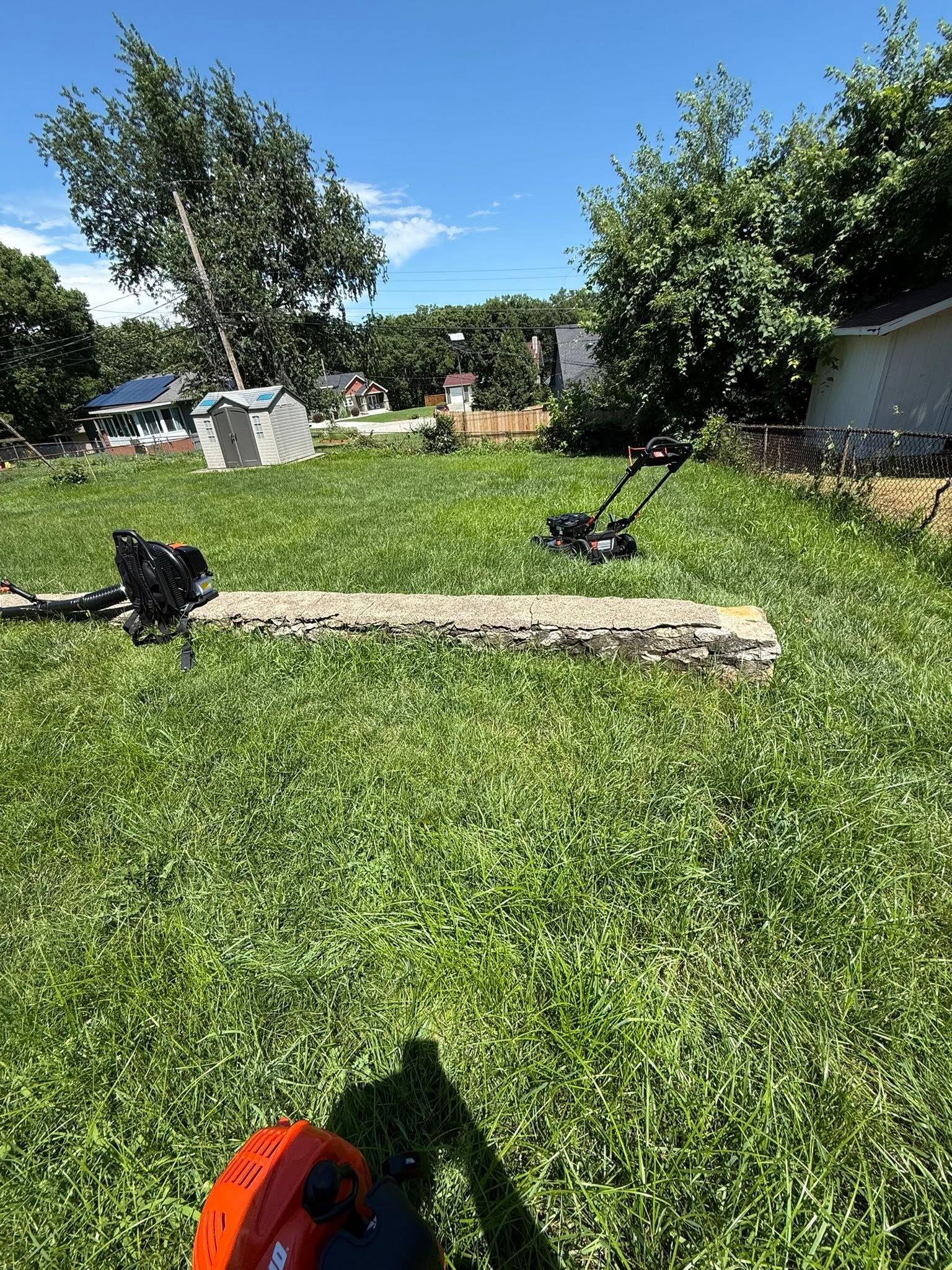
The retired teacher is still a customer. Her lawn is one of the better-maintained properties I work on in Greater Sudbury — not because I’ve done anything extraordinary on it, but because I had an extraordinary amount of information about it before I started. The frost strip gets treated differently in spring. The maple root section gets a different approach than the open backyard. The reflected-heat section along the east fence gets the heat-tolerant mix she’d identified as working. The low spot near the back fence doesn’t get supplemental watering.
None of that is complicated lawn care. It’s just responding accurately to what the specific property actually needs — which is only possible if you know what the property actually does.
The lesson I took from twenty minutes with a retired teacher who’d been paying attention for thirty-one years is simpler than it sounds: the homeowner knows things about their property that the professional doesn’t, and treating that knowledge as irrelevant is a significant disadvantage that affects the quality of the work.
This is related to something I’ve written about before — the Azilda homeowner who was doing almost everything right but in the wrong order. She had detailed records and real observations about her lawn. The gap wasn’t knowledge — it was sequence. Same principle: the homeowner’s observations are valuable data, not something to be politely set aside while the professional does their assessment.
When I pull up to a new property in Greater Sudbury now, the walkthrough I do is still important — what those first minutes of observation tell me is real. But before I start forming strong conclusions, I ask. What has this property done over time? What have you noticed? What have previous services missed?
Sometimes the answer is “nothing much, it’s been pretty straightforward.” Sometimes it’s twenty minutes of detailed observation from someone who’s been paying closer attention to a specific piece of ground than I ever could in a first visit.
Both are useful. The second one is rarer — and significantly more valuable when you get it.
If you have observations about your Sudbury property that previous services never asked about — reach out. I want to know what you know before I start forming my own impression. That conversation is always free, and it usually produces better lawn care than the alternative.
— Ryan Lingenfelter
Cutting Edge Lawn & Landscaping, Garson, Ontario
📞 705-507-6787
Serving all of Greater Sudbury — Garson, Hanmer, Val Caron, Lively, Chelmsford, Azilda, Capreol, and Sudbury proper. We offer grass cutting, core aeration, property cleanup, sod installation, and full lawn maintenance. Free quotes, no pressure.
Get a Free Quote |
Call 705-507-6787
