

I’m Ryan Lingenfelter — owner of Cutting Edge Lawn & Landscaping in Garson, Ontario.
Capreol is the northernmost community in Greater Sudbury — sitting on the Vermilion River, about 30 kilometres north of Sudbury proper, on terrain that sits closer to Canadian Shield bedrock than almost anywhere else in the city.
I’ve worked properties in Capreol since 2020. And after five years of walking lots here, I can tell you honestly: Capreol lawns are harder to maintain than most of Greater Sudbury. Not impossible. Not hopeless. But harder — and harder in specific ways that generic lawn care advice doesn’t account for and that most Capreol homeowners have never had properly explained to them.
Here’s what I’ve found on Capreol properties, what makes them different, and what actually works here versus what works in Garson, Val Caron, or Chelmsford.
Why Capreol Is Different — The Bedrock Factor

Greater Sudbury sits on the Canadian Shield, but the bedrock isn’t equally close to the surface everywhere. In Garson, Val Caron, and the newer subdivisions of Hanmer and Chelmsford, you typically have 8 to 18 inches of soil before you hit hard rock — thin by most standards, but workable. In Capreol, the bedrock exposure is more frequent and the soil depth is often less.
On many Capreol residential properties, you hit rock — or very dense pre-glacial till that behaves like rock — within 6 to 10 inches of the surface. In some spots, particularly near the older streets in the original townsite, you’re looking at 4 to 6 inches of soil before the screwdriver hits something it won’t go through.
That shallow soil ceiling creates a set of lawn conditions that are genuinely different from the rest of Sudbury:
Root depth is physically limited. Grass roots can only go as deep as the soil allows. On a Capreol property with 6 inches of soil over bedrock, you’re never going to have the root depth that a Garson property with 14 inches of soil can develop. This matters most in July and August when surface soil dries out and deep roots are what keep a lawn green. On shallow-soil Capreol properties, summer browning is more severe and more persistent than on comparable properties elsewhere in Greater Sudbury — not because of poor maintenance, but because the physical root zone is smaller.
Drainage is more variable. Bedrock close to the surface creates unpredictable drainage patterns. Water moves across the rock face underground rather than soaking through a deep soil profile. This means some Capreol properties have sections that are perpetually wet — water moves to low spots across the rock surface — while adjacent sections are dry. I see this constantly on Capreol lots: one corner always soggy, one corner always dusty, and the homeowner trying to water both consistently.
Freeze-thaw damage is more pronounced. Shallow soil over rock freezes all the way through more rapidly than deep-soil properties. When 6 inches of soil freezes solid and then thaws, the physical disruption to the soil structure and any surface plantings is more extreme than when 14 inches of soil goes through the same cycle. New seed, recently planted grass, and even established turf in thin soil areas suffers more from Capreol’s winter cycle than equivalent plantings on deeper-soil properties elsewhere in Greater Sudbury.
What This Looks Like on Actual Capreol Properties

I want to be specific about what I actually see on Capreol properties — not abstract soil science, but what the screwdriver test and the lawn walk actually shows.
On most Capreol properties I walk, the screwdriver test tells a two-part story. In sections with reasonable soil accumulation — typically lower, flatter areas where soil has collected over time — the screwdriver goes in 5 to 8 inches. In sections over higher ground, rock outcrops, or the original undisturbed terrain — it stops at 3 to 4 inches or sometimes less.
That variation within a single property is more pronounced in Capreol than anywhere else I work. A Garson property might have some variation between 10 inches and 14 inches of soil depth. A Capreol property might have variation between 4 inches and 10 inches on the same lot — and those different zones respond completely differently to the same lawn care treatments.
The zones with 8-10 inches of soil respond reasonably well to standard care — aeration, overseeding, proper mowing height, consistent watering. The zones with 4 inches of soil are a different situation. In those zones, even proper care produces mediocre results because the physical constraints on root development are significant. The lawn in a 4-inch-soil zone over bedrock will always perform worse in July heat than the lawn in an 8-inch zone on the same property — not because of anything the homeowner is doing wrong, but because there simply isn’t enough soil depth for the root system the grass needs to survive extended dry periods.
This is the conversation I have with Capreol homeowners that I rarely need to have elsewhere in Greater Sudbury: some sections of your lawn are fighting a constraint that no amount of fertilizer, aeration, or watering will fully overcome. And understanding which sections those are changes what you do with them.
What Actually Works on Capreol Lawns — And What Doesn’t
Let me be direct about what I’ve found works and what doesn’t on Capreol properties after five years of working here.
What works well:
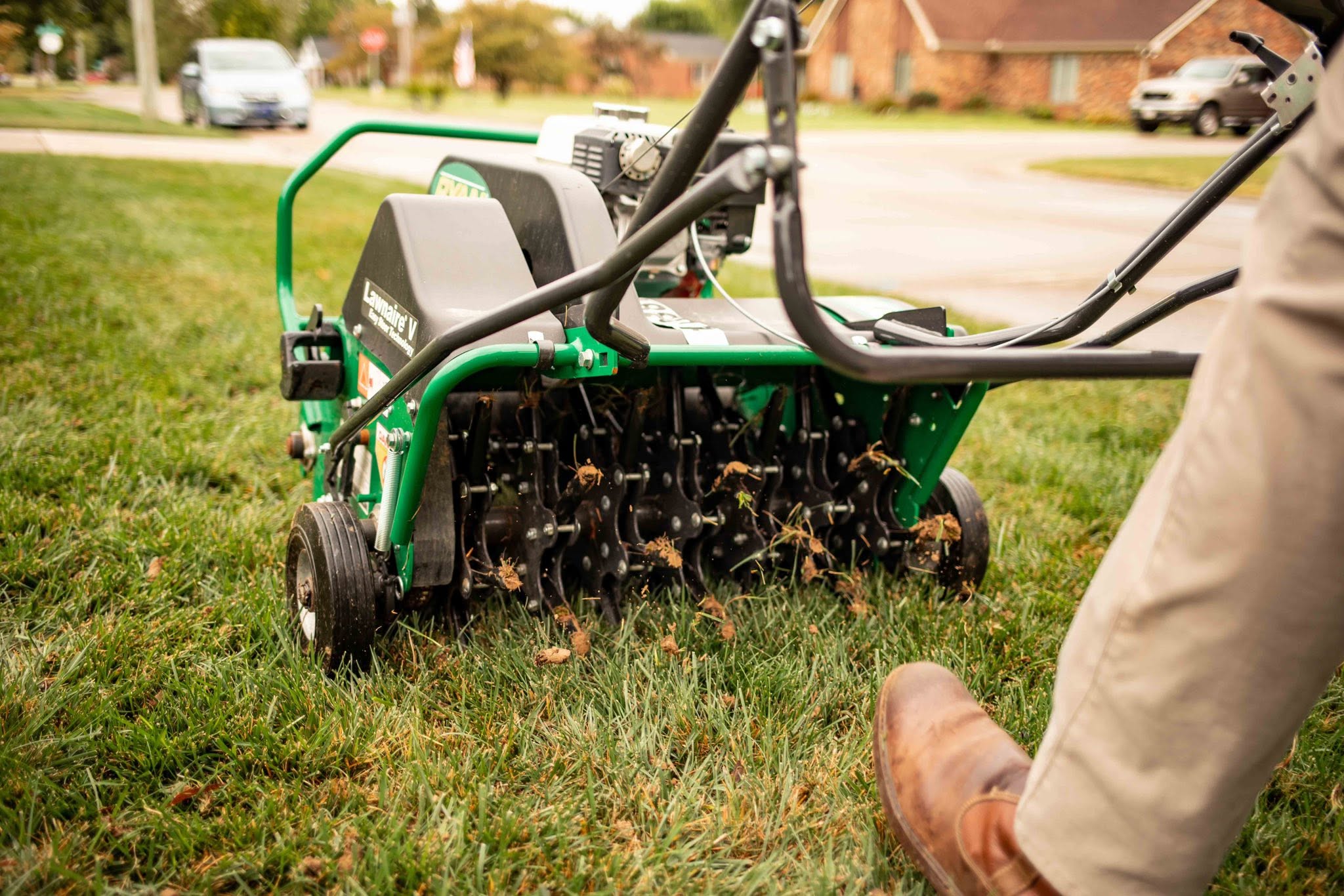
Annual core aeration — mandatory, not optional. On shallow soil over bedrock, the freeze-thaw compaction that Sudbury winters produce is even more damaging than on deeper-soil properties. There’s less soil to work with, so compacted soil is a higher proportion of the total root zone. Annual aeration to keep the limited soil as open and functional as possible is the highest-return single service on Capreol properties. I covered the aeration timing decision for Sudbury in my spring vs fall aeration guide here — for Capreol properties specifically, I’d recommend double-pass aeration in spring for shallow-soil sections.
Topdressing to build soil depth over time. This is the long-term answer to the shallow soil problem — and it’s a multi-year commitment, not a one-season fix. Applying a thin layer (half to one inch) of quality compost or topsoil to the surface after aeration each season, allowing it to settle into the aeration holes and gradually incorporate into the existing shallow profile, builds the effective soil depth by a small amount every year. On a Capreol property that starts at 5 inches of soil, five years of consistent topdressing after aeration can meaningfully improve the root environment. It’s the only approach that actually addresses the root cause rather than working around it. I discussed this same principle in the context of overall neighbourhood soil differences in my neighbourhood lawn problems guide here.
Drought-tolerant grass varieties in shallow-soil zones. When overseeding thin areas, variety selection matters more on Capreol properties than elsewhere in Sudbury. Fine fescue varieties — creeping red fescue, hard fescue — have deeper root systems relative to their size and better drought tolerance than Kentucky Bluegrass in shallow soil conditions. For Capreol sections with less than 6 inches of soil, a fescue-dominant mix performs better through Sudbury summers than standard bluegrass. Valley Nursery Sod near Chelmsford can advise on what varieties they carry that suit shallow-soil conditions.
Correct mowing height — 3 inches, non-negotiable. On any Sudbury property, cutting height is the most impactful free variable in lawn performance. On shallow-soil Capreol properties, it’s even more critical. At 3 inches, the grass can develop the deepest root system the limited soil allows. At 2 inches or less, the plant diverts all energy into regrowing blade and the root system stays in the top inch of soil — which is everything on a property where the total soil depth might only be 5 inches. I covered the science and the practical impact in my $35 lawn fix article here.
Accepting mulched beds where soil is genuinely too shallow for lawn. This is the honest answer for Capreol sections where bedrock is truly limiting. Where rock is within 3-4 inches of the surface, grass will always be marginal — summer browning severe, recovery slow, results frustrating regardless of what you do. Converting those specific zones to mulched beds with shade-tolerant ground cover or decorative stone removes the ongoing cost and frustration of trying to maintain grass in conditions it can’t sustain. This isn’t giving up — it’s using the right plants for the conditions that exist. I wrote about the mulch vs stone decision in my 3-year mulch vs stone comparison here.
What doesn’t work on shallow-soil Capreol properties:
Heavy fertilizer programs applied without addressing compaction first. The fertilizer can’t reach the root zone in compacted shallow soil any better than it can in compacted deep soil — and in shallow soil, the distance to the root zone is even smaller, so the proportion of fertilizer that’s wasted is higher.
Standard sod installation without topsoil amendment. Laying sod directly on 4-5 inches of Capreol clay over rock without bringing in quality topsoil first produces sod that establishes slowly and struggles through its first summer. The root environment isn’t sufficient without the amendment. I covered proper sod prep in detail in my 4-day lawn transformation article here.
Expecting the same July performance as deeper-soil properties elsewhere in Greater Sudbury. This is the expectations-management conversation I have with most Capreol homeowners. A properly maintained Capreol lawn with adequate soil depth will look good through summer. A Capreol lawn over 4 inches of soil above bedrock will always struggle more in July heat than a comparable property in Garson or Val Caron — not because anything is wrong with the care, but because the physical root zone is smaller.
The Honest Assessment for Capreol Homeowners

After five years of working in Capreol, here’s what I’d tell every homeowner in this community before they spend money on lawn care.
First — do the screwdriver test yourself in multiple sections of your property. Push it in different spots. Note where it stops. Map the variation. This tells you the most important thing about your lawn — where you have workable soil depth and where you don’t. The sections that stop at 4 inches need different treatment than the sections that go in 8 inches.
Second — don’t measure your lawn against your neighbour in Val Caron or Garson. You’re working with different physical constraints. A well-maintained Capreol lawn on shallow soil is a success story. Comparing it to a property with twice the soil depth isn’t a fair benchmark.
Third — invest in topdressing consistently, not occasionally. Building soil depth on a Capreol property is a multi-year project that pays off. Skip it and the shallow soil stays shallow indefinitely. Commit to it annually after aeration and the root environment genuinely improves over time.
Fourth — be strategic about where you invest lawn care dollars. The sections of your property with deeper soil will respond well to standard care and produce good results. The sections over very shallow rock are candidates for mulched beds rather than grass — and converting them saves you the ongoing frustration of trying to maintain grass where the soil won’t support it through Sudbury summers.
If you want someone to walk your Capreol property, do a proper soil depth assessment, and tell you honestly what’s workable versus what you’re better off converting — that’s what I do on every quote call.
📞 Call or text me directly: 705-507-6787
Or fill out the free quote form here and I’ll get back to you same day.
We service Garson, Val Caron, Hanmer, Lively, Chelmsford, Azilda, Capreol, and all of Greater Sudbury.
— Ryan Lingenfelter
Owner, Cutting Edge Lawn & Landscaping
Garson, Ontario
Frequently Asked Questions
Why is lawn care harder in Capreol than in other parts of Sudbury?
Capreol is the northernmost community in Greater Sudbury and sits on terrain where Canadian Shield bedrock is closer to the surface than almost anywhere else in the city. Many Capreol properties have only 4 to 8 inches of soil before hitting rock or very dense pre-glacial till — significantly less than the 10 to 18 inches common in deeper-soil areas like Garson or Val Caron. This limited soil depth restricts how deep grass roots can develop, makes summer drought impact more severe, creates more variable drainage patterns across a single property, and amplifies the freeze-thaw damage from Sudbury winters.
What is the best way to improve a shallow-soil lawn in Capreol?
Annual core aeration combined with topdressing — applying a thin layer of quality compost or topsoil after each aeration — is the most effective long-term approach. This gradually builds the effective soil depth in shallow-soil sections over multiple seasons. Combined with correct mowing height at 3 inches to maximize root development within the limited soil depth, and drought-tolerant fescue varieties in the shallowest sections, this approach produces meaningful improvement over 3 to 5 years on properties that had been frustrating to maintain.
Should I sod or overseed a Capreol lawn with shallow soil?
Both can work on Capreol properties with adequate soil depth — 6 inches or more. For sections with less than 5 inches of soil, bringing in quality topsoil and working it into the existing profile before any new grass is established is important. Sod installation without topsoil amendment on shallow Capreol clay over rock produces slow rooting and poor summer performance. Overseeding with drought-tolerant fescue varieties in the shallowest sections typically produces better long-term results than Kentucky Bluegrass sod in areas where root depth is severely limited.
Why does my Capreol lawn brown out so badly in July and August?
Summer browning on Capreol properties is primarily a function of shallow soil depth over bedrock. When the limited soil dries out in July heat, grass roots have nowhere deeper to reach for moisture — the bedrock creates a hard ceiling on root development. On properties with deeper soil elsewhere in Sudbury, roots can reach moisture below the dry surface layer. On Capreol properties with 4 to 6 inches of soil, the roots can’t go deep enough to survive extended dry periods without supplemental watering. Correct mowing height at 3 inches maximizes root development within the available soil depth, and cycle-and-soak watering gets moisture deeper into the limited profile than single-session watering.
Is it worth sodding a Capreol property with shallow soil?
For sections with 7 or more inches of workable soil, quality sod installation with proper preparation produces good results. For sections with less than 5 inches of soil over rock, the honest answer is that sod will establish but will always struggle more through Sudbury summers than sod on deeper-soil properties — because the physical root zone available is genuinely small. Converting the very shallow-soil sections to mulched beds or ground cover and investing sod budgets in the deeper-soil sections of the property produces better overall results than trying to maintain grass everywhere regardless of soil conditions.
How often should I aerate a Capreol lawn?
Annually — and on shallow-soil sections, double-pass aeration in spring produces significantly better results than a single pass. Capreol’s freeze-thaw conditions compact the limited soil more severely than on deeper-soil properties, and with less soil to work with, maintaining as much openness and porosity as possible is more important than on deeper-profile properties. Annual spring aeration combined with fall aeration and overseeding in restoration years gives Capreol lawns the best chance of maintaining the soil quality the limited depth allows.
Ryan Lingenfelter is the owner of Cutting Edge Lawn & Landscaping in Garson, Ontario. Since 2020, his crew has provided full lawn care and landscaping services across Greater Sudbury — Garson, Val Caron, Hanmer, Lively, Chelmsford, Azilda, and Capreol. Licensed, insured, BBB A+ rated, and ThreeBest Rated for lawn care services in Sudbury.
📞 Phone: 705-507-6787
📍 Service Area: Greater Sudbury, Ontario
🔗 Free Quote: cuttingedgelawn.ca/quote
Related Services
- Core Aeration Services in Sudbury
- Sod Installation in Sudbury
- Grass Cutting Services
- Mulch & Decorative Stone
Continue Reading
- Every Sudbury Neighbourhood Has a Different Lawn Problem
- Spring or Fall Aeration in Sudbury — Which Is Better?
- The $35 Fix That Saved a Sudbury Lawn
- Mulch vs Stone in Sudbury — Which Still Looks Good After 3 Years?
- Dead Lawn to Green Sod in 4 Days — How We Did It
- Sudbury vs GTA Sod Installation — Why Northern Ontario Is Different
