
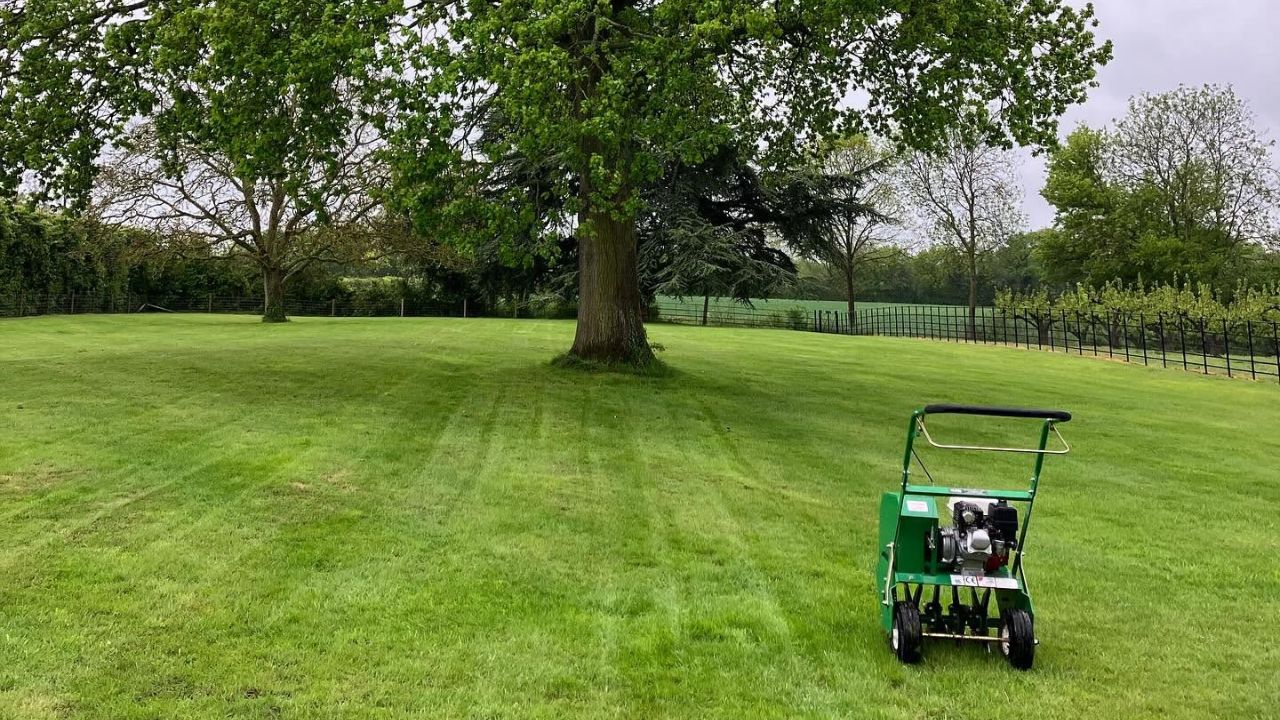
I want to tell you about a property in Garson — close to where I live, actually — that had a problem for eight years before anyone figured out what it actually was.
Three different companies had worked on this lawn over those eight years. Aeration, seeding, sod patches, fertilizer programs — all of it. And every single year, the same section of the backyard came back looking the same way. Thin, yellowish, slow to green up, never quite matching the rest of the lawn no matter what was done to it.
The homeowner — I’ll call him Tom — had basically given up on that section. He told me when I first walked the property: “That part of the yard just doesn’t grow grass. We’ve tried everything.”
He was right that they’d tried a lot. He was wrong that the section couldn’t grow grass. What was actually going on underneath that patch of lawn had nothing to do with seed, fertilizer, or aeration — and once I found it, the fix was almost simple. The hard part was that nobody had looked for it.
Here’s what happened.
Eight Years of Companies, Eight Years of the Same Lawn

When Tom called me, he described the section honestly — and a little tiredly. It was a roughly 12 by 15 foot area in the back corner of the yard, away from the house, that had looked worse than the rest of the lawn every single year since he’d moved in.
Not dead exactly. Grass grew there. But it was always thinner, always slightly yellow compared to the surrounding lawn, always slower to green up in spring, and always the first section to go brown in a dry stretch. Every treatment — seed, fertilizer, even a full sod patch one year — produced the same result. Initial improvement, then a slow decline back to the same thin, yellow patch within a season or two.
He’d had three different companies look at it over the years. Each one had a theory. One said it was a shade issue from a tree that had since been removed — but the problem persisted after the tree was gone. One said the soil pH was off and recommended lime — it was applied, tested again the following year, and the pH had corrected, but the lawn still looked the same. One simply re-sodded the area, which looked great for about four months and then declined back to match the rest of the section’s history.
By the time Tom called me, he wasn’t expecting a different answer. He told me as much. “Honestly I just want it to look less bad. I don’t think it’s fixable at this point.”
I walked the section with him. The grass was thin and yellow, as described. But what caught my attention wasn’t the grass itself — it was the ground.
What I Did Differently
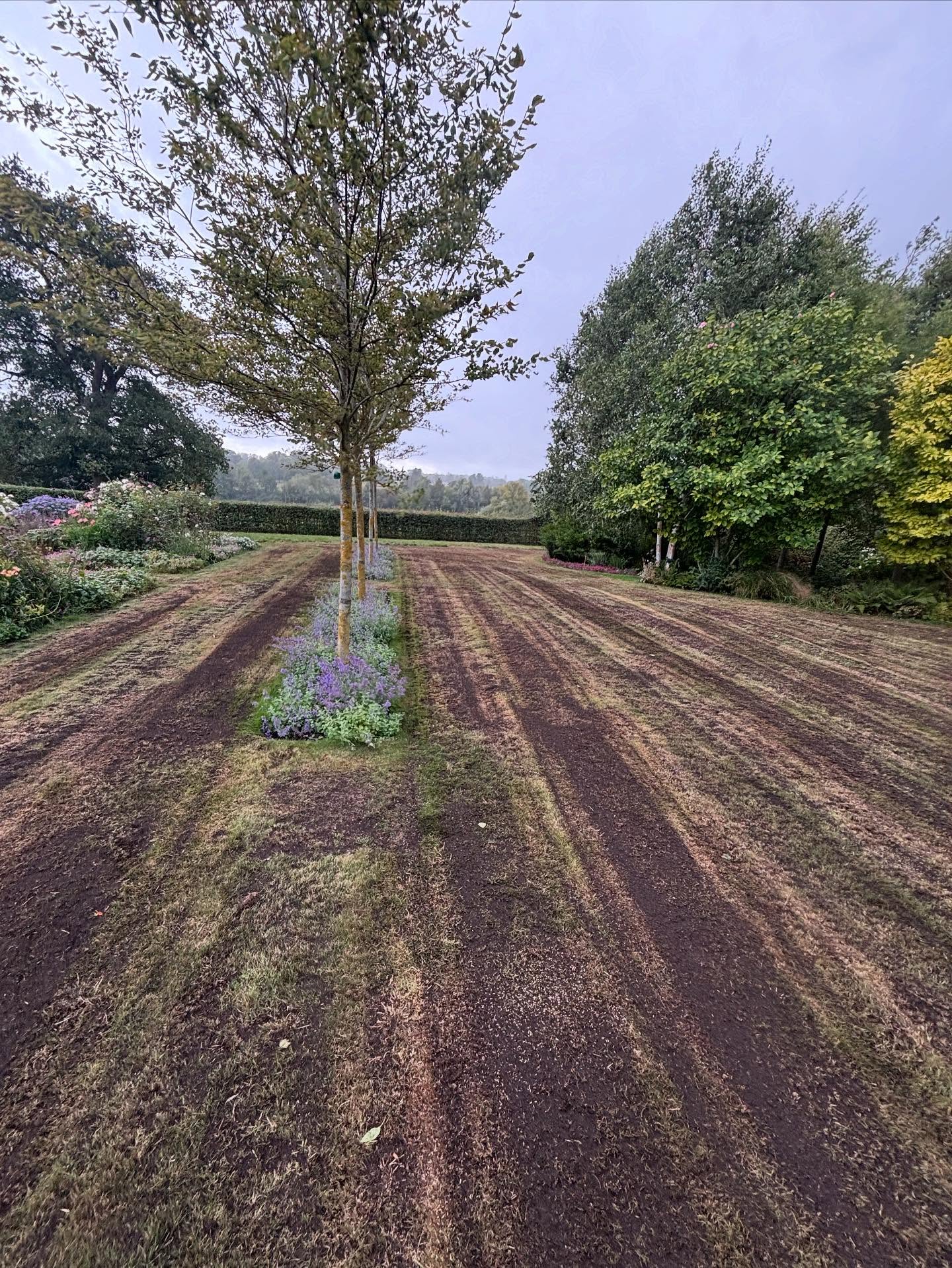
I want to be honest about this part, because I don’t think what I did was particularly clever. I think it just hadn’t been done.
The section felt different underfoot than the rest of the lawn. Not soft like a grub-damaged area — actually firmer, almost hollow-feeling in spots, like walking on a surface with something rigid just below it rather than soil all the way down.
I’d seen this feeling before, on a different property, a few years earlier — a spot where a previous owner had buried construction debris instead of hauling it away. So instead of testing the grass, the soil chemistry, or anything above ground, I went and got a soil probe from the truck.
A soil probe is a simple tool — basically a long, narrow steel cylinder that you push into the ground and pull out, taking a core sample of the soil profile as you go. I use it regularly to check soil depth and composition, especially before sod jobs where I need to know what we’re working with below the surface.
I pushed the probe into the problem section. It went down about 4 inches — normal topsoil depth — and then hit something solid. I tried again a foot to the left. Same thing, about 4 inches down. I tried a third spot near the edge of the section. Same result.
I tried the probe in the healthy lawn ten feet away, just to compare. It went down the full 10 inches of the probe without hitting anything.
Something was buried under that entire section, roughly 4 inches below the surface, across the whole problem area.
What Was Actually Under the Lawn

With Tom’s permission, I dug a small test hole — about a foot square — in the corner of the section, going down past where the probe had stopped.
At about 4 inches down, we hit a layer of broken concrete and asphalt chunks. Construction debris. Pieces ranging from fist-sized to about the size of a dinner plate, packed together in a layer that — based on the probe tests across the whole section — extended across the full 12 by 15 foot area.
Tom’s house was built in the early 2000s. My guess, and it’s just a guess, is that this section was where construction waste from the build got buried instead of hauled away — a shortcut some builders and contractors took, especially on lots where it was convenient to just dig a hole and bury the debris rather than pay for disposal.
Here’s why this had been causing the lawn problem for eight years, and why nothing anyone tried had fixed it.
A layer of broken concrete and asphalt 4 inches below the surface does a few things to the soil and grass above it. It blocks roots from growing deeper than 4 inches — there’s simply nowhere for them to go. Shallow roots mean the grass is more vulnerable to drying out, because it can’t access moisture in the deeper soil layers. It’s why that section was always the first to go brown in dry weather and always thinner overall — the root system was physically capped at a depth that couldn’t support a healthy lawn.
It also affects drainage and temperature in ways that show up as the yellowish colour and slow spring green-up. Concrete and asphalt retain and release heat differently than soil, and a solid layer at root depth disrupts normal soil temperature patterns and water movement. The grass above it was essentially growing in a shallow tray sitting on top of rubble — and every season, no matter what was applied to the surface, the rubble was still there underneath, limiting what the grass above it could ever do.
None of the previous companies had been wrong about the symptoms — the lawn really was thin, yellow, and slow. They’d just been treating the symptoms from above without checking what was below. Seed, fertilizer, lime, even a full sod patch — all of it sits on top of the same 4-inch root ceiling. None of it changes what’s underneath.
What We Did About It and What the Lawn Looks Like Now

Once we knew what was actually there, the fix — while more involved than a normal lawn repair — was straightforward in concept.
We excavated the section. All of it, the full 12 by 15 foot area, down through the debris layer. This took longer than a typical repair — we were removing broken concrete and asphalt, not just dead grass and a few inches of soil. The debris got hauled off the property.
Once the area was excavated down to clean soil — well below the old debris layer — we brought in new topsoil and built the section back up to grade, matching the level of the surrounding lawn. We graded it properly, making sure it tied into the drainage pattern of the rest of the yard rather than creating a new low spot.
For the surface, Tom and I talked about whether to seed or sod this section. Given that he’d been looking at a problem patch for eight years and was understandably eager to see it actually look like the rest of his lawn, we went with sod. I’ve written about what a sod installation day actually looks like if you want the full process — for this job it was the same process, just on a smaller section with the added excavation work beforehand.
The new sod went down on properly prepared soil with no buried obstruction below it. Roots could actually grow down as far as they needed to.
I went back to check on it about six weeks later. The section had rooted in and matched the surrounding lawn in colour and density — for the first time in eight years, you genuinely couldn’t tell where the old problem area had been.
Tom sent me a photo at the end of that summer. The whole backyard looked uniform. He said it was the first time since he’d bought the house that the lawn looked like one lawn instead of “a good lawn with a bad patch.”
What This Job Taught Me About Diagnosing Lawn Problems
I think about this property more than almost any other job I’ve done, because it reframed how I approach persistent problem areas.
The pattern that should have been a clue from the start was this: a section that responds to treatment temporarily and then declines back to the same state, repeatedly, over years, regardless of what treatment is applied. That pattern doesn’t point to a surface problem. Surface problems — nutrient deficiency, thatch, minor compaction, even most types of winter damage — respond to treatment and the response holds, assuming the underlying soil is normal. If a section keeps reverting to the same problem state no matter what’s done above ground, something below ground is the more likely explanation.
The other thing this job reinforced for me: a soil probe should be a standard part of assessing any persistent problem area, not just something I pull out before sod jobs. It takes thirty seconds and it would have told any of the previous three companies what was going on in about the time it took to walk over and push it into the ground.
I’ve used the same approach since on other persistent problem spots — areas that have been treated repeatedly without lasting improvement. Sometimes the probe finds nothing unusual and the explanation really is something at the surface, like a grub infestation or a drainage pattern that needs grading work. But sometimes — not often, but sometimes — there’s something buried that’s been quietly capping the lawn’s potential the entire time, and no amount of seed or fertilizer was ever going to change that.
If You Have a Section That Never Seems to Get Better
If you’ve got a part of your lawn that’s been a persistent problem — thin, discoloured, slow to green up, always the first to brown out — and you’ve already tried the normal things without lasting results, it might be worth having someone actually check what’s below the surface before trying the same fix again.
This doesn’t apply to every problem area. Most thin or struggling sections in Sudbury lawns are explained by things at or near the surface — compaction that responds to core aeration, grub damage, drainage and grading issues, or normal seasonal damage that just needs the right repair sequence. Those are the more common explanations and they’re worth ruling out first.
But if you’ve genuinely tried the standard fixes more than once on the same spot and it keeps reverting, that’s the pattern worth paying attention to. I’m happy to come out, walk the property, and if something doesn’t add up, bring the probe and check what’s underneath. It costs nothing extra and it might be the thing that finally explains a problem you’ve been living with for years.
For a full picture of everything we do — repair, aeration, sod, and the diagnostic work that goes into figuring out what a property actually needs — the complete service breakdown covers it.
Call or text me at 705-507-6787, or fill out the free quote form on the site. We cover all of Greater Sudbury — Garson, Val Caron, Hanmer, Lively, Chelmsford, Azilda, Capreol.
— Ryan Lingenfelter
Cutting Edge Lawn & Landscaping
Garson, Ontario
705-507-6787
