

There’s a street in Sudbury I’ve been cutting for three years now. I’m not going to name it — that’s not the point — but I’ve been on it every two weeks, season after season, long enough that I know every lawn on it the way you know a face you’ve seen a hundred times.
I know which one has the low spot that stays wet for two days after rain. I know which one gets cut too short by the homeowner between my visits. I know which one looks like a different property every May because the owner does the work in September that everyone else skips.
Three years on the same street is a strange kind of education. The weather is the same for all of them. The soil profile is roughly the same — we’re in the same part of Greater Sudbury, same clay-heavy ground, same freeze-thaw cycles every winter. The lawns are similar sizes. These are not lawns in different conditions. They’re lawns in identical conditions that look completely different from each other.
I’m Ryan Lingenfelter — I own Cutting Edge Lawn & Landscaping in Garson, Ontario, and I want to tell you what I’ve noticed. Not to embarrass anyone — nobody on this street is reading this, and even if they were, I’m not naming names. But because the patterns I’ve watched repeat themselves on this one street are the same patterns I see across every neighbourhood in Greater Sudbury. The same decisions. The same results. Year after year.
The Street — and Why It’s a Good Test Case
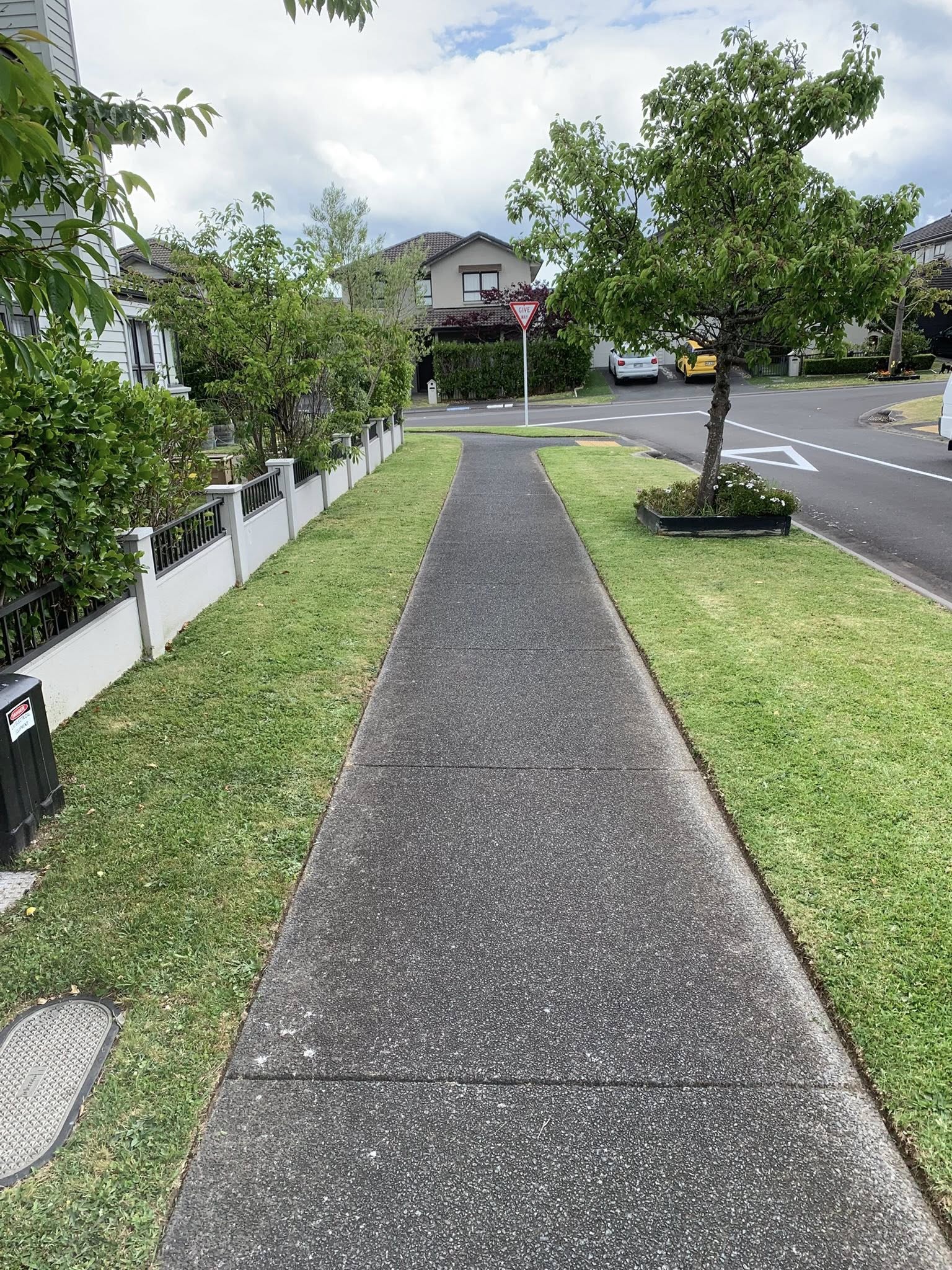
The street has eleven properties I service — not all of them, but most of the block. A few homeowners handle their own maintenance between my visits. A couple of them I only see in spring and fall for seasonal work. A few I cut every two weeks all season, front and back.
In three years, I’ve watched the same basic story play out repeatedly. Some lawns get better every year. Some stay exactly the same. One got significantly worse for two years running and then turned around completely in the third year, which I’ll get to.
What’s interesting is that the differences aren’t random. They track almost perfectly with a handful of specific decisions — decisions that each homeowner makes, or doesn’t make, that compound over time. A good decision in September 2022 is still showing up in how a lawn looks in summer 2025. A bad habit repeated every mowing season for three years produces exactly the kind of lawn you’d expect from three years of that habit.
I don’t think most homeowners realize how much their choices accumulate. They see the lawn as it looks today, not as the result of three years of decisions. I see both. After three years on the same street, it’s hard not to.
The Lawns That Look Good Every Single Year

Three properties on this street look genuinely good every summer. Not just decent — good enough that people walking past slow down and look at them. Dense, even coverage, consistent colour, no bare patches, no weed pressure to speak of.
Here’s what those three properties have in common, without exception:
They were aerated at least once in the last two years
Every one of them. Not all of them get aerated every year — one of them goes every other year and it holds up fine — but the soil on these properties has been broken up recently enough that roots can push deep, water can penetrate, and the lawn has the foundation it needs to respond to everything else that gets done to it.
When I push my thumb into the soil on these three properties, there’s give. Not soft — firm, but with some yield. That’s what healthy Sudbury lawn soil feels like when it’s been managed properly. The other eight properties on the street range from moderately compacted to what I can only describe as trying to push your thumb into a brick.
They get cut at the right height
Three inches. Consistently. When I cut them, when the homeowners cut them in between — the deck is always at three or three and a half inches. The difference in how a lawn handles Sudbury summer heat at three inches versus an inch and a half is not subtle. I watch it happen on this street every July. The short lawns start to pale and thin out around the edges first. The three-inch lawns stay green and dense through stretches that would stress a shorter lawn into dormancy.
I’ve written about why mowing height matters so much in Sudbury summers — the short version is that longer grass shades the soil, slows evaporation, and supports deeper root development. Every lawn on this street that consistently gets cut at the right height looks better in August than every lawn that doesn’t. No exceptions in three years.
They had overseeding done at least once
Two of the three had overseeding done in fall — one of them two years ago, one of them last September. The density you see on those lawns today is partially the original grass and partially the new seed that filled in the thin spots and thickened what was already there. A lawn that gets overseeded in September, properly after aeration, looks noticeably different by the following summer. I know because I watch it happen.
The Lawns That Struggle Every Single Year
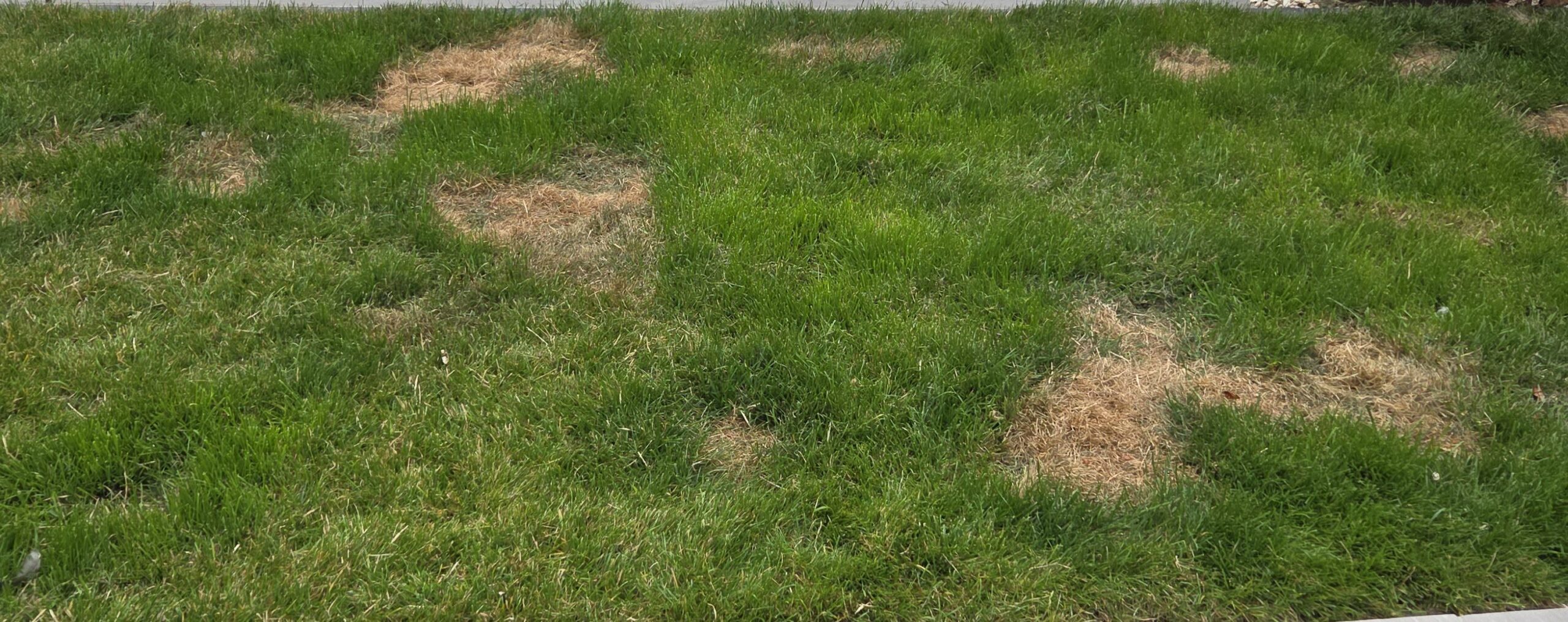
Four properties on this street look roughly the same every year as they looked the year before. Thin in the same spots. Bare along the same edges. Weeds filling the same gaps. The homeowners aren’t neglecting them — they’re cutting them, sometimes watering them, one of them fertilizes every spring. But nothing changes.
When I look at what these four properties have in common, the list is short:
No aeration. Ever, as far as I can tell.
Three years on this street and I have never seen an aerator on any of these four properties. The soil underneath them is locked up. I know because I’ve pushed my thumb into all of them dozens of times — each one harder than the last. Water runs off the surface after rain instead of soaking in. Fertilizer sits on top instead of reaching root depth. Overseeding wouldn’t take properly in this soil without breaking it up first.
The homeowner who fertilizes every spring is spending money on a product that can’t do what it’s supposed to do because the soil it’s going into can’t receive it. That’s not a fertilizer problem. It’s a compaction problem that aeration would fix.
Cut too short, too often
Two of these four properties get cut short — an inch to an inch and a half — on a weekly schedule. I can see the scalping damage along the driveway edges. I can see the difference in colour between the sections I cut at three inches and the sections the homeowner cuts at an inch and a half in between my visits. It’s visible from the street.
Short frequent mowing in Sudbury is one of the most common and most damaging habits I see. It looks neat. It feels like you’re maintaining the lawn properly. What it actually does, over a full season, is train roots to stay shallow, reduce the lawn’s ability to handle heat and drought, and create the bare edge strips that are almost impossible to fix without addressing the mowing habit that caused them.
Surface watering that never penetrates
One of these properties gets watered almost every day — I see the wet surface when I show up in the morning. But it’s light watering, ten minutes at a time, and on compacted soil it never gets below the first inch. The grass roots are trained to stay right at the surface where the moisture is. In a hot July stretch, that top inch dries out in a day and the lawn stresses immediately.
Deep, infrequent watering — one inch once or twice a week — would do more for this lawn than daily ten-minute cycles. But the compaction is still the first problem to solve, because even deep watering struggles to penetrate locked-up clay.
The One That Changed — and What Made It Different
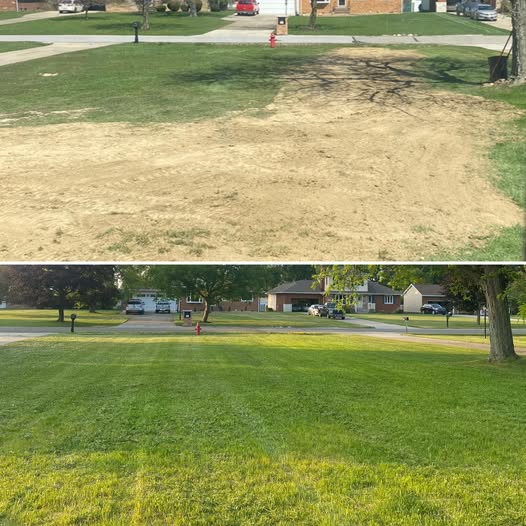
There’s one property on this street I want to tell you about specifically, because it’s the clearest example of what I’ve been watching for three years.
For the first two years I was on this street, this property was one of the struggling ones. Thin, patchy, weeds in all the open spots, bare strips along the driveway. The homeowner — I’ll call him Mark — would ask me occasionally what he could do differently, and I’d tell him the same thing every time: the soil needs aeration before anything else will stick. He’d nod, say he’d think about it, and nothing would change.
In September of the second year he called and said he wanted to do it properly. Same conversation I described in a different article — the one about the Val Caron customer who kept calling before he was ready to do it right. Same dynamic. Different street, same story.
We did the full core aeration, heavy overseeding, and a fall fertilizer application. I told him to raise the mowing height going forward and switch to deep infrequent watering.
The following May, his lawn was the most improved property on the street. Not perfect — one season doesn’t undo two years of compaction entirely — but visibly, noticeably better. Denser than it had been. The bare edge strips had started to fill in. The thin patches in the middle of the front yard were covered.
By the third summer — this past season — his lawn is in the top three on the street. The same lawn that was one of the four struggling ones two years ago is now one of the three that people slow down to look at.
Nothing changed about the weather. Nothing changed about the soil profile or the neighbourhood. What changed was one decision made in September, followed by a mowing height adjustment and a different watering habit. That’s the entire difference between where his lawn was and where it is now.
What Three Years on the Same Street Teaches You
The thing I keep coming back to is how much time matters in lawn care — not in a complicated way, but in the way that small consistent decisions compound into very different results over two or three years.
The homeowners whose lawns look good aren’t doing dramatically different things than the ones whose lawns struggle. They’re doing the same things — mowing, watering, occasionally fertilizing — but with two or three specific differences that add up over time. The right mowing height. Aeration when the soil needs it. Overseeding in fall to keep density up and keep weeds out. Deep watering rather than frequent surface watering.
None of it is expensive. None of it is technically complicated. But it requires knowing what actually makes a difference versus what just feels like you’re doing something.
If you’ve been maintaining your lawn for a few years and it keeps looking the same — thin in the same spots, struggling through every summer, weeds filling the same gaps — the answer is almost never to do more of what you’ve already been doing. It’s usually to change one or two specific things, starting with the soil.
I’ll tell you honestly what those things are for your property. Walk it with me, and I’ll give you the same read I give every lawn I look at — what it needs, what it doesn’t, and what order to do it in.
📞 Call or text me: 705-507-6787
Or fill out the free quote form here — I get back to everyone the same day.
— Ryan Lingenfelter
Owner, Cutting Edge Lawn & Landscaping
Garson, Ontario
Related Articles
- The First Thing I Do When I Pull Up to a New Property in Sudbury
- This Is the Week Most Sudbury Lawns Start Struggling — Here’s How to Get Ahead of It
- A Sudbury Homeowner Sent Me Photos of Her Lawn Every Week for 8 Weeks
- I Turned Down the Same Val Caron Customer Three Times — Then Finally Said Yes
- Core Aeration Services in Greater Sudbury
- Grass Cutting Services in Greater Sudbury
