
I’ve seen a lot of lawns in rough shape across Greater Sudbury. After six years doing this work, you develop a kind of internal scale — you walk a property and you immediately know whether it’s a bad lawn, a very bad lawn, or something that genuinely stops you in your tracks.
This one stopped me in my tracks.
I’m Ryan Lingenfelter — I own Cutting Edge Lawn & Landscaping in Garson, Ontario. I was called out to this property in Sudbury earlier this season by a homeowner who said, and I’m quoting almost exactly: “I don’t know what happened. It was fine in May. I went away for three weeks in July and came back to this.”
What he came back to was, genuinely, the worst lawn I’ve assessed this season. And the reason it looked the way it did was something most homeowners would never identify — because it looks almost identical to something much more common, and if you treat the wrong thing, you waste an entire season and the problem comes back worse the following year.
I want to walk you through exactly what I found, because if your lawn has patches that aren’t recovering the way they should, or areas that died off in summer and haven’t come back, there’s a real chance you’re looking at the same thing and don’t know it yet.
What I Pulled Up To

The property is a standard residential lot — detached house, front yard maybe forty feet wide, back yard with a fence line along one side and a garden bed running the back edge. Midsize by Sudbury standards. The kind of lawn that, maintained properly, would take me about twenty-five minutes to cut.
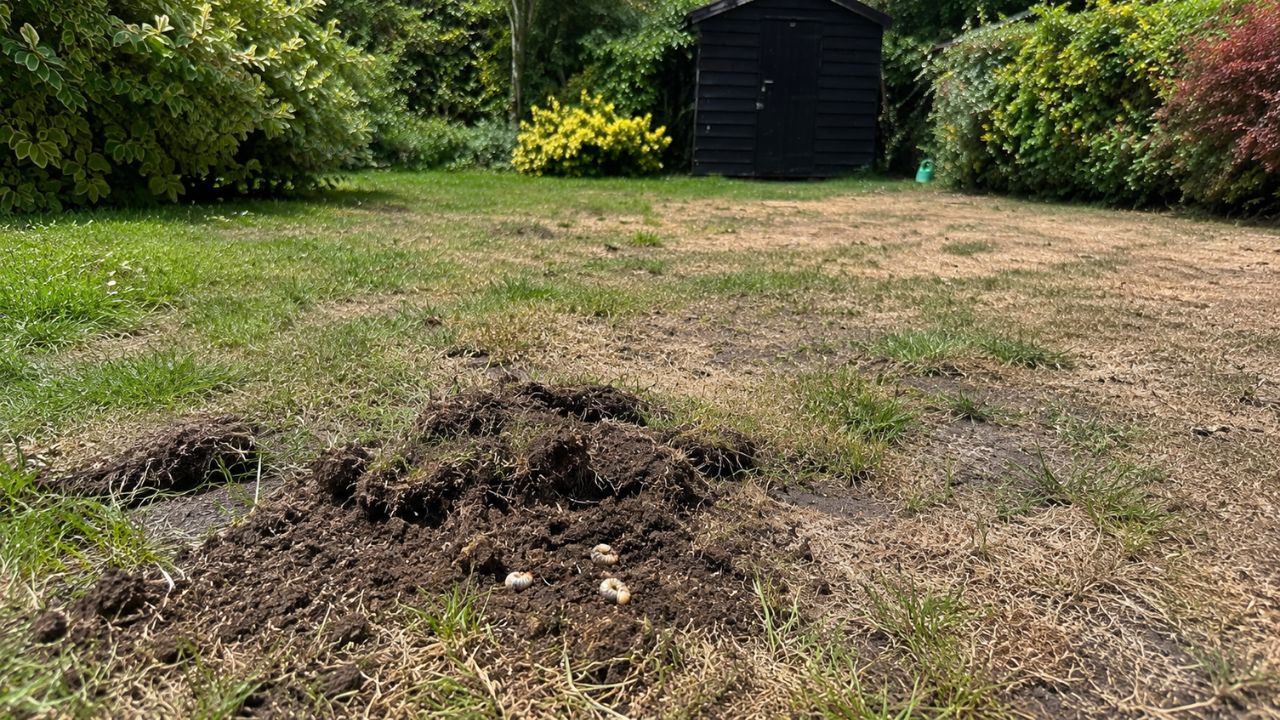
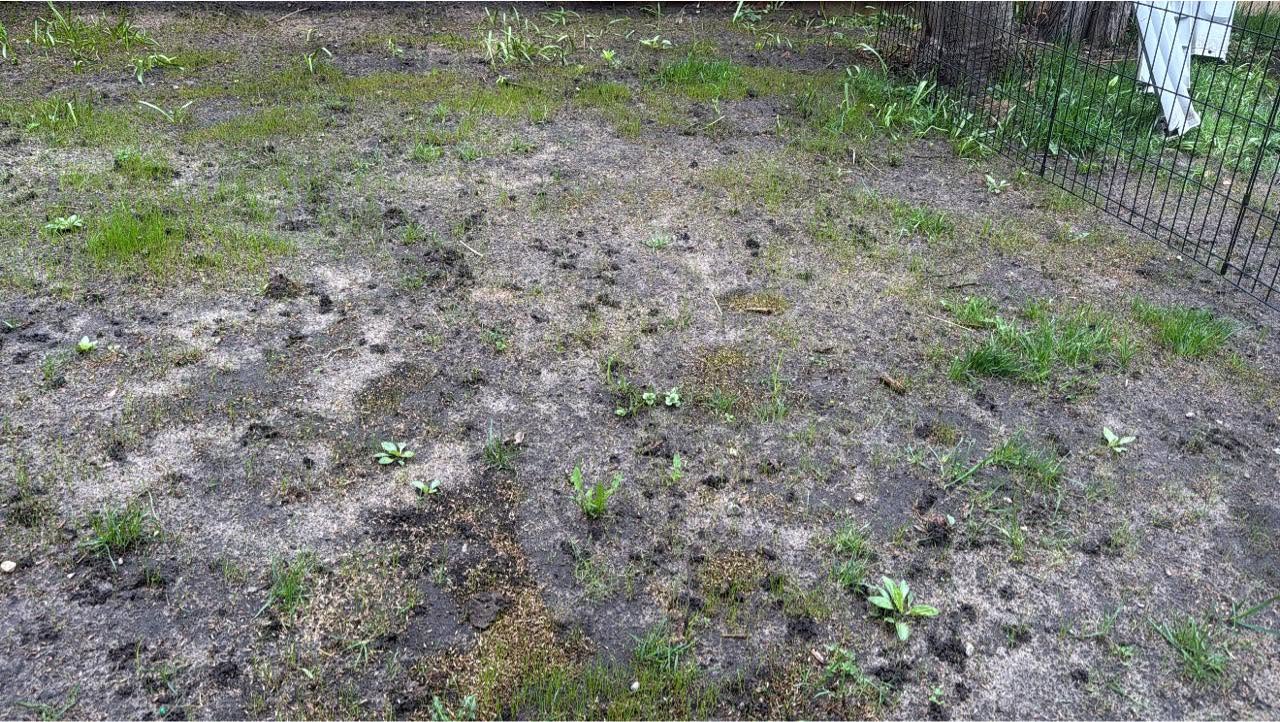
From the driveway, the front yard was about thirty percent grass. The rest was bare soil — pale, dry-looking, with a dusty surface. Not thin coverage. Not patchy in the way compaction produces patchy. Just dead, in large irregular sections that ran across the middle of the front yard and wrapped around the left side toward the backyard.
The edges near the house and along the driveway still had grass. The perimeter had coverage. But the interior sections — the middle of the front yard, the high-traffic area of the back — were gone. Not dying. Gone.
My first thought, honestly, was drought stress. That’s what it looked like from the street. Dead patches in July after a dry stretch, some coverage surviving near structures where soil stays slightly cooler. A homeowner who went away for three weeks and didn’t arrange watering. It fit the surface explanation.
Then I got out of the truck and walked it.
What I Found When I Actually Got Down and Looked
The first thing I do on any property is the thumb test — push into the soil in multiple spots, feel what’s underneath. I did it across the bare areas and across the surviving grass near the edges.
Here’s what was strange: the surviving grass near the edges was sitting on compacted soil — hard, dense, what I’d expect on a Sudbury property that hadn’t been aerated recently. But the bare areas in the middle? The soil was softer. Not healthy — but it had more give than the edge sections where the grass was still alive.
That’s backwards from drought damage. In drought damage, the soil is uniformly hard and the grass dies from heat stress. Softer soil in the dead areas with grass surviving on harder soil nearby doesn’t fit that pattern.
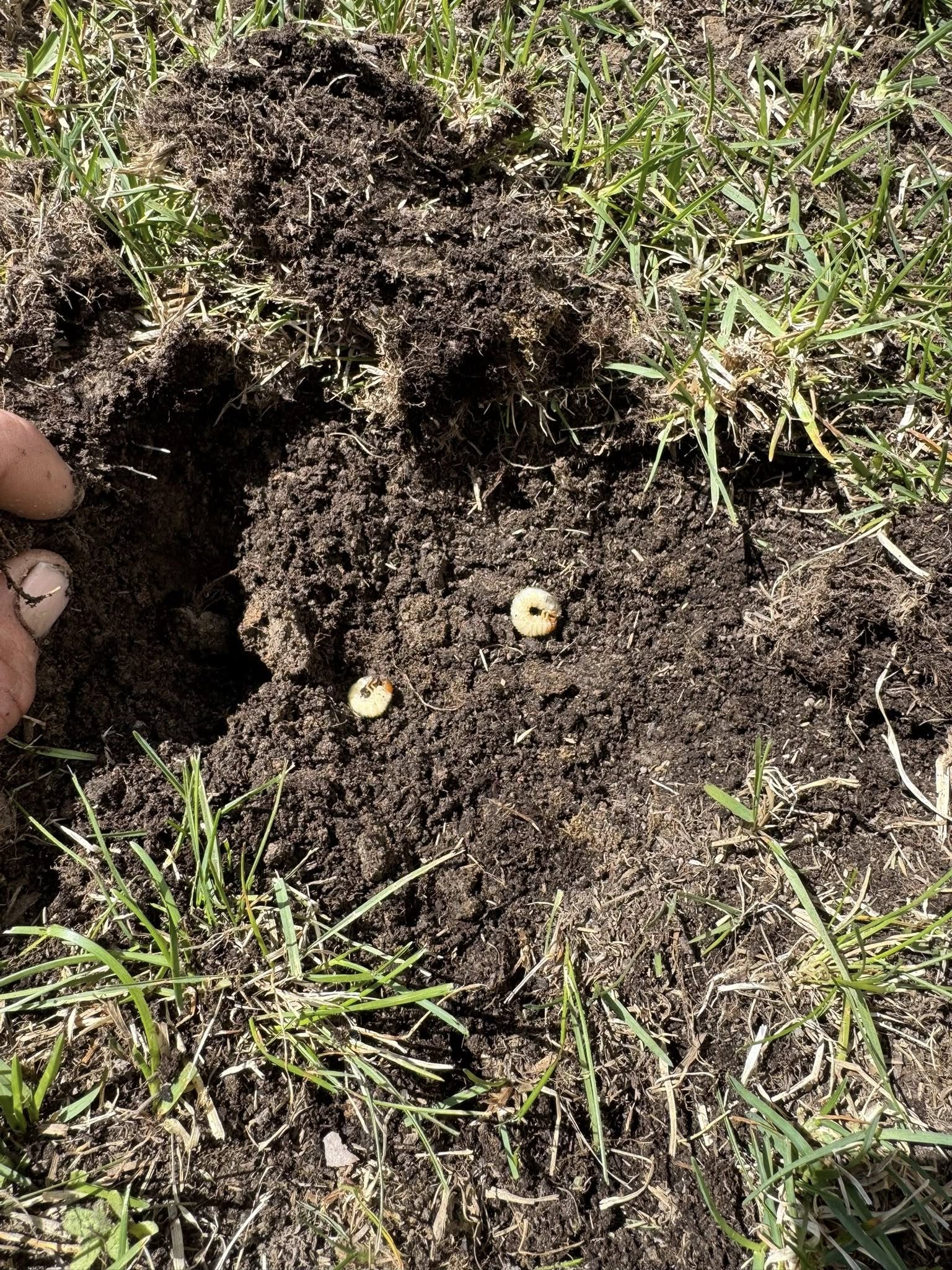
I crouched down on one of the bare patches and tried to lift a section of the dead material — what was left of the grass surface. It peeled back. The whole section, roots and all, lifted like a loose mat, almost no resistance. Underneath it was pale, dry soil with no root structure remaining.
And when I looked at what was in that soil — I found them immediately. White C-shaped grubs, about the size of a large grape, multiple per square foot in the worst areas.
This wasn’t drought damage. This was a grub infestation that had been active all summer, feeding on the root system from underneath while the lawn looked fine on the surface. By the time the homeowner left for three weeks in July, the roots in the worst areas were already severed. The grass was dead before the drought stress even started — it just took the top dying off to make it visible.
Three weeks away without watering made it look like drought. Drought didn’t cause it.
Why This Happens — and Why It Gets Misdiagnosed So Often
Grub damage is one of the most commonly misdiagnosed lawn problems I see in Greater Sudbury. And the misdiagnosis happens for one reason: by the time the damage is visible on the surface, it looks exactly like drought stress or heat damage, which are far more common and far more familiar to homeowners.
Here’s how grub damage actually works, so you understand what you’re looking for:
- Beetles — usually European chafer or June beetles in Ontario — lay eggs in lawn soil in early to mid-summer. The eggs hatch into grubs in July and August. The grubs feed on grass roots through late summer, working their way through the root zone and severing the connection between the grass plant and the soil.
- The surface looks fine while this is happening. The grass blades are still green. The lawn still looks okay. There’s no visible sign of what’s happening underneath until the root system is damaged enough that the grass can no longer pull water or nutrients from the soil — at which point it dies, fast, in irregular patches.
- The timing overlaps perfectly with summer heat and drought stress. Grub damage becomes visible in July and August — exactly when lawns are most likely to be stressed by heat and lack of rain. The visual result looks almost identical. Most homeowners, and honestly many lawn care companies, see dead patches in July and treat for drought.
- The tell is the tug test. Pull on a section of the dead grass. If it’s drought damage, the roots are still attached to the soil and the grass won’t lift easily. If it’s grub damage, the root system has been eaten and the dead grass peels back like a loose carpet — no resistance at all. That’s the test. It takes ten seconds and it’s definitive.
- Secondary damage from animals makes it more obvious — and more destructive. Skunks and raccoons can smell grubs in the soil. A heavily infested lawn will get dug up overnight — animals tearing through the dead sections to get to the grubs underneath. If you come out in the morning and your lawn has been torn apart in the dead areas, that’s almost certainly what happened. This property had some of that too — the homeowner had assumed neighbourhood animals were causing the damage. They were attracted by it, but they didn’t cause it.
The misdiagnosis matters because the treatment for drought damage and the treatment for grubs are completely different. Watering a grub-damaged lawn doesn’t fix it — there are no roots left to absorb the water. Overseeding into grub-infested soil fails because the new roots get eaten at the same rate as the old ones. If you treat for drought and the cause is grubs, you spend a season doing the wrong thing and the infestation continues.
What We Did — and What the Property Looks Like Now
I gave the homeowner a straight assessment on the spot. The damage was extensive enough — close to forty percent of the total lawn area with root systems gone — that overseeding alone wasn’t going to be the right answer for the worst sections. When soil has been heavily infested and the root zone is destroyed, seeding into it without addressing the grubs first just puts new seed in front of the same problem.
Here’s what we did, in order:
First, grub treatment. A nematode application — beneficial nematodes are microscopic organisms that target and kill grubs in the soil without affecting the surrounding lawn, garden, or anything above ground. This is the approach I use rather than chemical insecticides. Applied in the right conditions — moist soil, applied in the evening — they work through the soil and reduce the grub population significantly. This happened first, before any restoration work, because restoring a lawn on top of an active infestation is a waste of time and money.
Then, core aeration across the entire lawn. The surviving grass near the edges was sitting on compacted soil that hadn’t been aerated in years — I could feel it the moment I pushed my thumb in. Even though the grubs hadn’t reached those sections badly, the soil structure needed work before any restoration could hold. Aeration was the foundation step regardless of what came next.
Then sod installation on the worst-affected areas — the sections where coverage was completely gone. I recommended sod over seeding for these sections because the homeowner wanted results he could see by end of season, and because sod gives you an established root system immediately rather than asking new seed to germinate and establish in sections of soil that had just been through a major infestation. For the areas with partial coverage still surviving, we did overseeding post-aeration to thicken what remained.
Finally, a fall fertilizer application across the whole lawn — a root-building slow-release formula to support both the new sod and the recovering existing grass heading into dormancy.
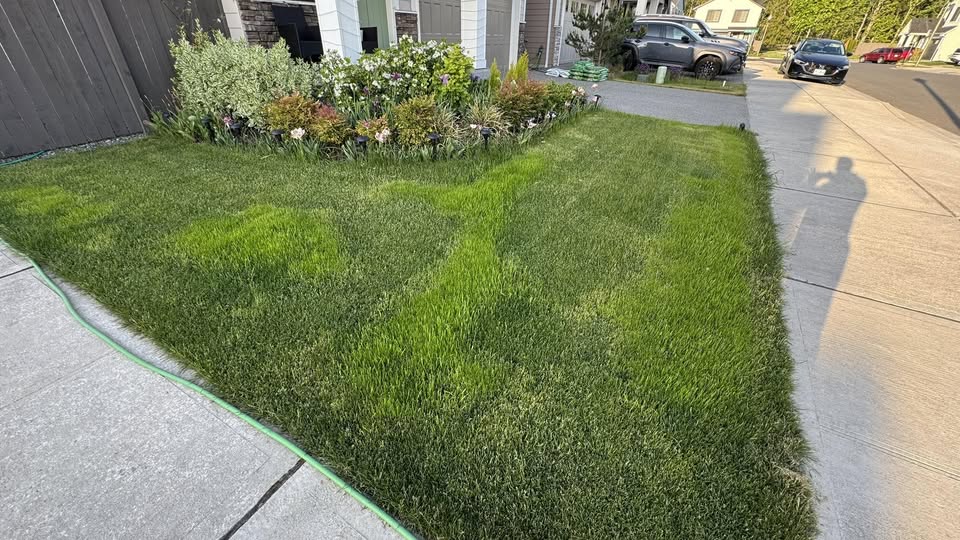
I checked the property three weeks after the sod went down. The installed sections had rooted and were growing. The overseeded areas had germinated well — good soil contact from the aeration made the difference there. The bare, dead patches that had stopped the homeowner in his tracks when he came back from his trip were gone.
It’s not a perfect lawn yet. One season of recovery after that level of damage doesn’t get you all the way there. But it’s a recoverable lawn now, with a root system that’s actually attached to the soil and soil structure that can support proper growth going forward. Next spring, with one more aeration pass and consistent maintenance through the season, it’ll be unrecognizable from what I walked up to in August.
How to Know If Your Lawn Has Grubs — Right Now
If you have patches in your lawn that died off this summer and haven’t recovered the way they should, do the tug test this week. Go to one of the dead or struggling patches, grab a section of the grass surface, and pull.
If it lifts easily — if the dead material peels back without resistance — check the soil underneath. You’re looking for white C-shaped grubs, usually concentrated in the top two to three inches of soil. If you find them, you have a grub problem, not a drought problem, and what you do next matters.
Don’t overseed into it yet. Don’t water more and hope it recovers. The root system in those sections is gone or severely compromised, and until the grub population is addressed and the soil is restored, surface treatments won’t hold.
Call me and I’ll come out and look at it with you. I’ll tell you whether what you’re seeing is grubs, drought stress, compaction damage, or something else entirely — and what the right sequence of steps is based on what’s actually there, not what it looks like from the surface.
This is exactly the kind of thing that gets worse the longer you wait. A grub infestation left untreated goes into a second season and takes more of the lawn with it. A lawn assessed and treated correctly in fall comes back strong the following May.
📞 Call or text me: 705-507-6787
Or fill out the free quote form here — I get back to everyone the same day.
— Ryan Lingenfelter
Owner, Cutting Edge Lawn & Landscaping
Garson, Ontario
Related Articles
- The First Thing I Do When I Pull Up to a New Property in Sudbury
- A Lively Homeowner Called Me in September Saying Her Lawn Looked Worse Than Spring
- I’ve Been Cutting the Same Sudbury Street for 3 Years — Here’s What I’ve Noticed
- A Sudbury Homeowner Sent Me Photos of Her Lawn Every Week for 8 Weeks
- Sod Installation in Greater Sudbury
- Core Aeration Services in Greater Sudbury
