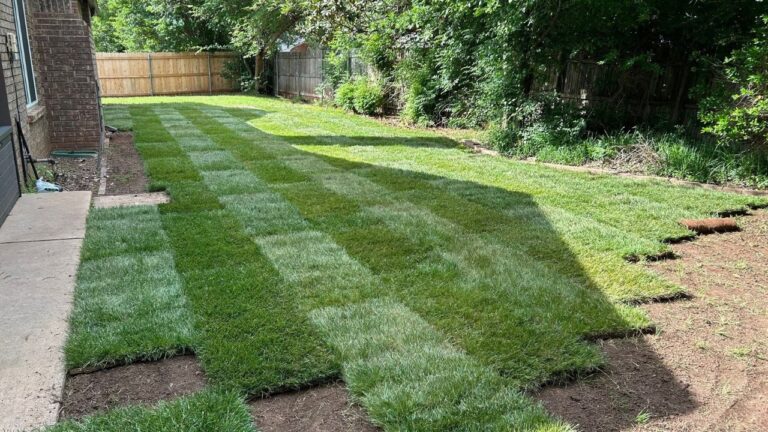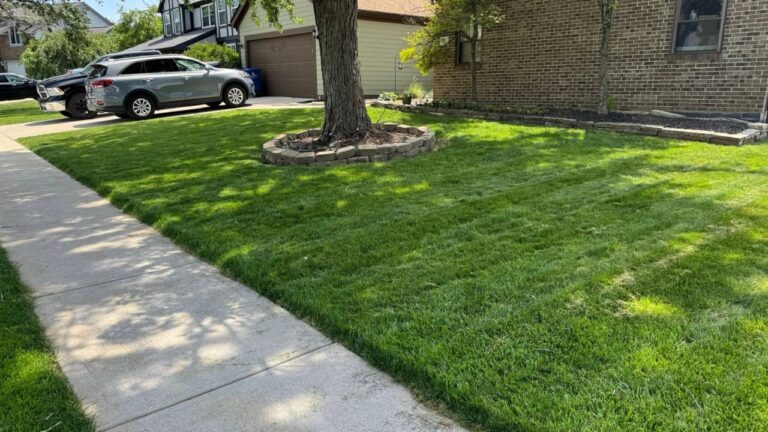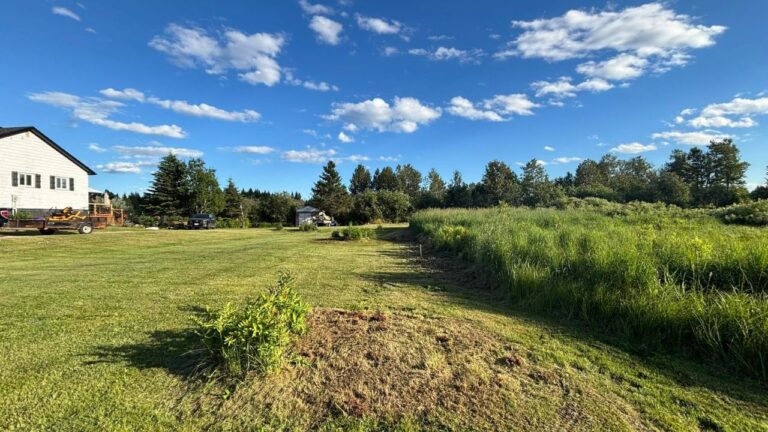
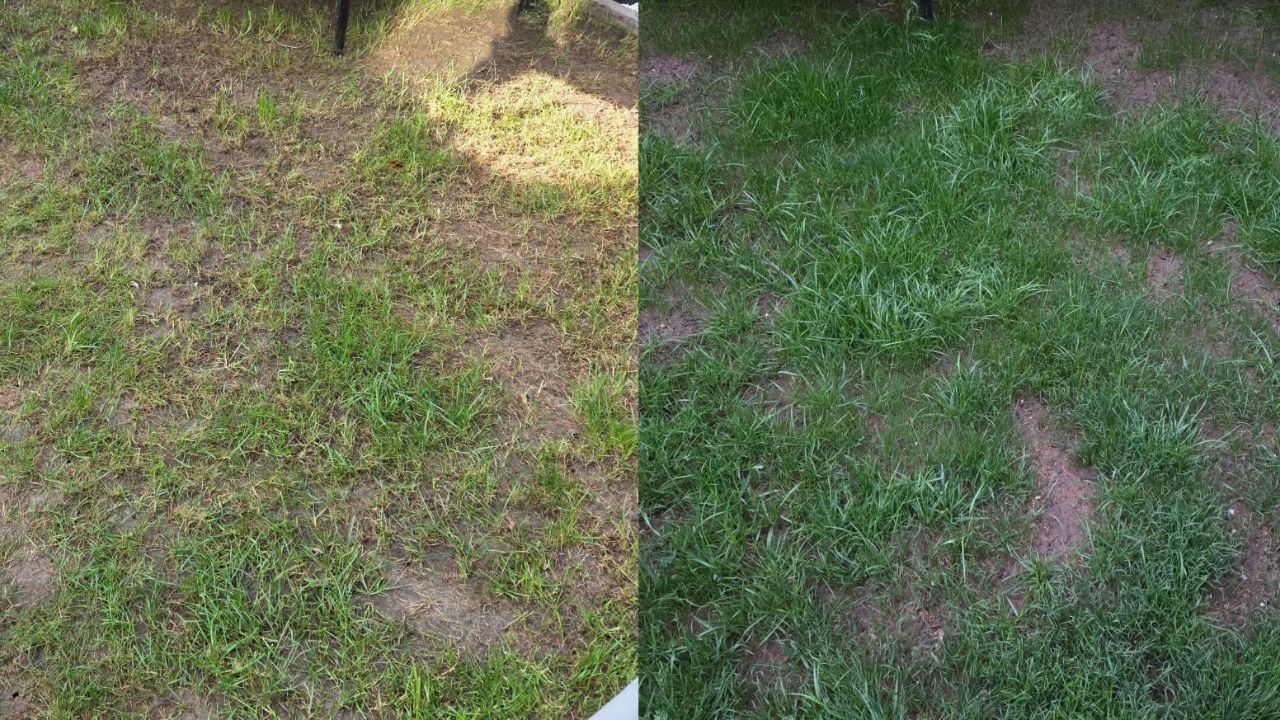
Two properties I drive past regularly on the same street in Hanmer — similar lot size, same builder, same exposure to sun. One has held green and dense through every dry stretch this summer. The other has gone patchy and brown twice already, and it’s only July.
I ran the math on this out loud with a customer recently, because it’s a question I get a version of constantly: what’s actually different between these two lawns? It’s not a different sprinkler system, and it’s not a different fertilizer brand. It comes down to roughly 90 minutes a week.
I’m Ryan Lingenfelter, owner of Cutting Edge Lawn & Landscaping in Garson, Ontario. Since 2020, I’ve worked on properties across Greater Sudbury — Garson, Val Caron, Hanmer, Lively, Chelmsford, Azilda, Capreol. Here’s exactly where that 90 minutes goes, and why it’s the difference between a lawn that survives this climate and one that doesn’t.
Where the First 30 Minutes Goes — Mowing Done Right, Not Just Done
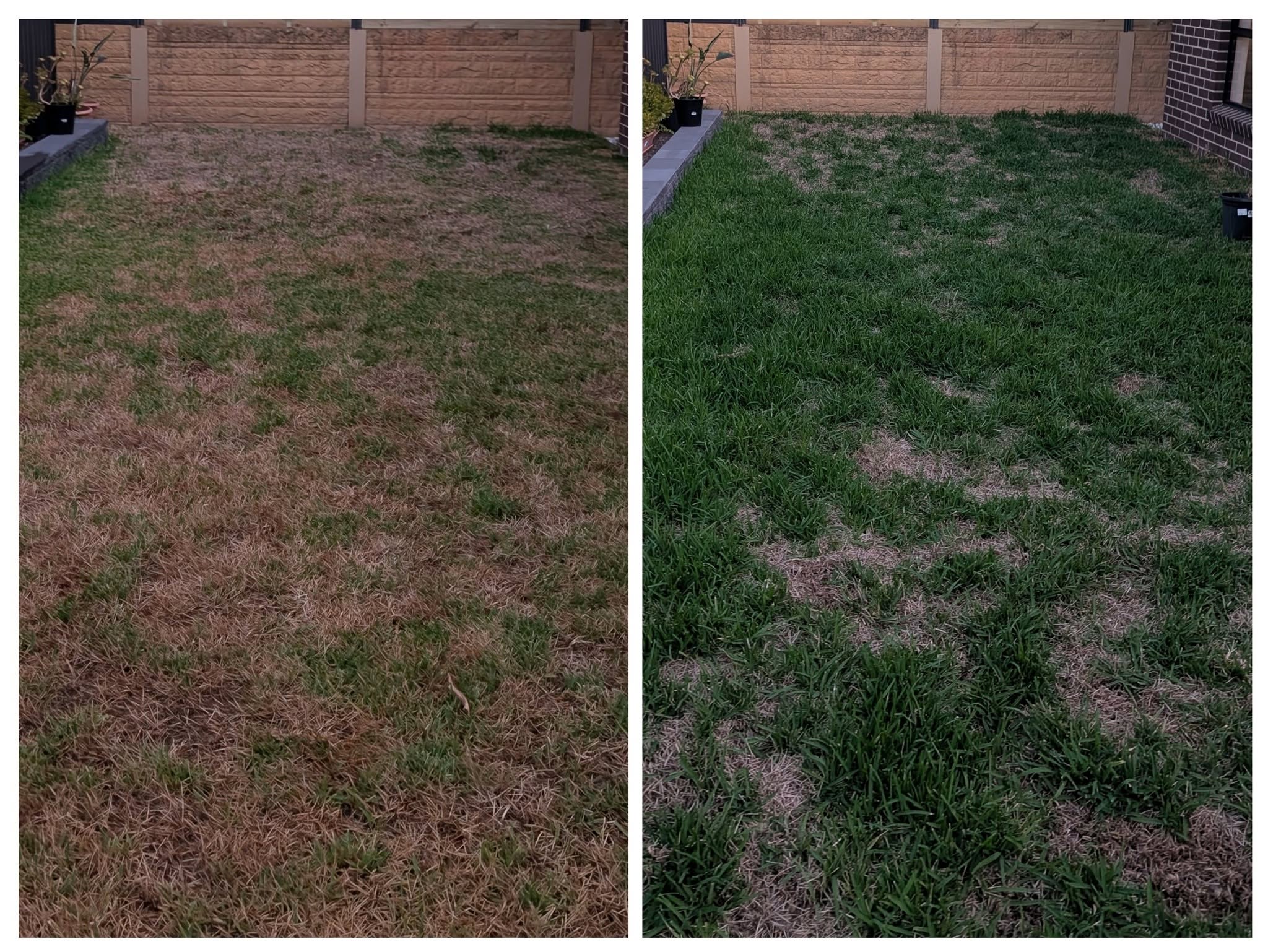
Both homeowners on that Hanmer street mow weekly. The difference isn’t whether the mowing happens — it’s the few extra minutes it takes to do it at the right height instead of the fastest convenient setting.
Cutting at three inches versus cutting at one and a half doesn’t add meaningful time to a standard residential mow — maybe a couple of extra minutes if the deck height adjustment is awkward on a particular mower. But the consequence of that setting compounds all summer. I’ve written in detail about why scalping creates shallow roots that can’t survive Sudbury’s dry stretches in the mowing mistake article here — the short version is that root depth follows blade height, and shallow roots run out of accessible moisture the moment a dry week hits.
The lawn that’s surviving this summer is being mowed at the right height every single time. Not most of the time, not whenever it’s convenient — every time. That consistency is part of the 90 minutes, even though the act of mowing itself takes the same amount of time either way.
Where the Next 30 Minutes Goes — Watering Deep Instead of Often
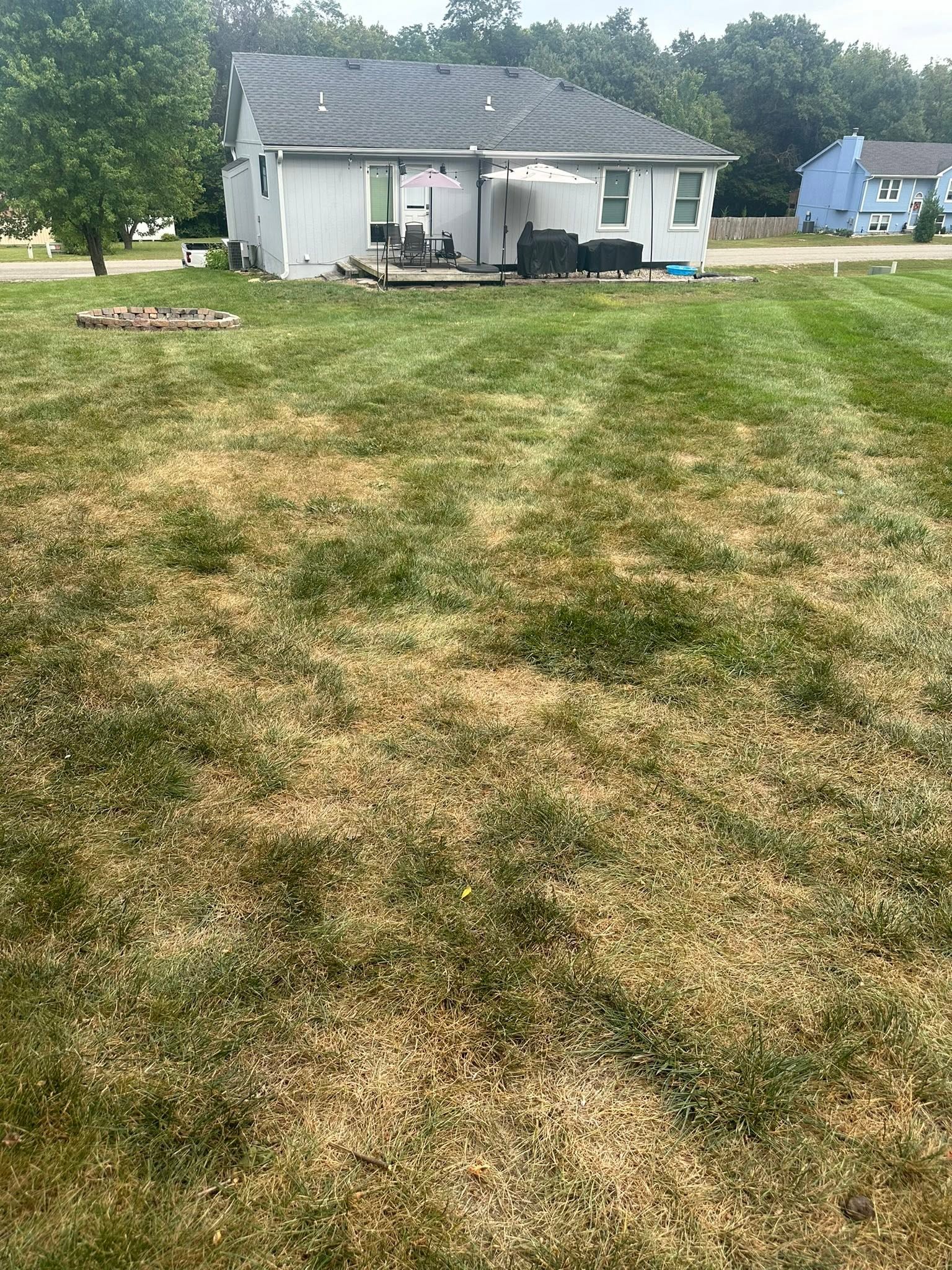
This is where I see the biggest time misallocation, and it’s almost always backwards. A lot of homeowners spend 10 minutes a day running a sprinkler lightly, thinking they’re putting in consistent effort. That’s roughly 70 minutes a week of standing around moving a hose or watching a timer — and it produces a worse result than half that time spent properly.
One or two deep watering sessions a week, each running 15 to 20 minutes long enough to actually soak the soil several inches down, does more for root depth than daily light watering ever will. Light, frequent watering keeps moisture near the surface, which trains roots to stay shallow exactly where they’re most vulnerable to a hot stretch. Sudbury’s clay base holds water well once it’s actually down there — the trick is getting it deep enough in the first place, which takes a longer single session rather than several short ones.
So the surviving lawn on that Hanmer street isn’t necessarily getting more total water. It’s getting roughly 30 minutes of correctly applied watering a week instead of 70 minutes of incorrectly applied watering — less time, better result. That’s part of where the math actually flips in favour of doing less, but doing it right.
Where the Last 30 Minutes Goes — A Weekly Walk That Catches Problems Early
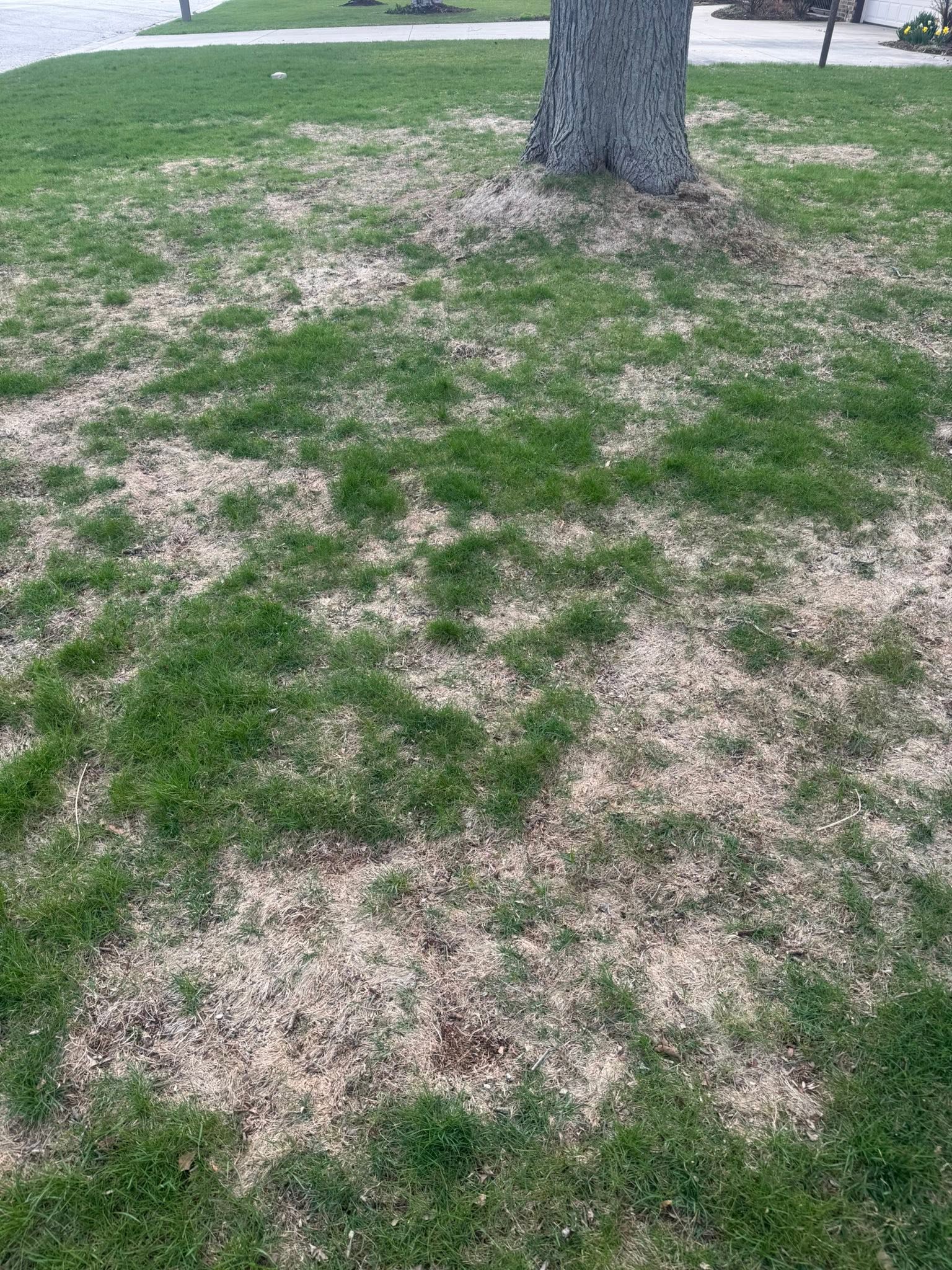
The final stretch of the 90 minutes is the one most homeowners skip entirely, and it’s arguably the cheapest insurance available — a slow walk across the whole lawn, once a week, actually looking at it rather than glancing at it on the way to the car.
This is exactly the kind of attention that catches a thinning patch while it’s still small, or notices a section that feels softer underfoot than the rest of the yard after rain — a sign worth investigating before it becomes a recurring dead zone. I’ve described what that closer look can reveal even on a lawn someone assumed was completely fine in the walk-it-together article here — problems are almost always smaller and cheaper to fix the earlier they’re caught.
The lawn that’s surviving this summer on that Hanmer street had a thin patch near the fence line addressed in June, before it spread. The lawn that’s struggling had a similar spot that nobody noticed until it had already tripled in size by the time it became visually obvious from the porch.
The Honest Math
Add it up: roughly 90 minutes a week, most of it spent doing things that already happen anyway — mowing, watering, occasionally looking at the lawn — just done with slightly more attention to height, timing, and noticing. It’s not extra work most weeks so much as it’s the same work redirected toward what actually matters.
The lawn that doesn’t get that attention isn’t doomed instantly. It survives a mild summer the same way a poorly maintained lawn often does. But the first real dry stretch, the first hot week without rain, is when the gap becomes visible — and by August it’s usually too late in the season to fully reverse without significant aeration and overseeding work the following spring.
If your lawn has been one of the ones going patchy every summer despite regular effort, it’s worth checking whether that effort is going to the right 90 minutes or the wrong ones.
📞 705-507-6787
🔗 Get a Free Quote
📍 Serving Greater Sudbury — Garson, Val Caron, Hanmer, Lively, Chelmsford, Azilda, Capreol
— Ryan
Frequently Asked Questions
How much time does it actually take to keep a Sudbury lawn healthy in summer?
Roughly 90 minutes a week split across three things: mowing at the correct height of three inches rather than scalping it short, one or two deep watering sessions instead of frequent light ones, and a weekly walk-through to catch any thinning or stressed areas early. Most of this time isn’t extra work — it’s redirecting time already being spent toward the right technique.
Is daily light watering bad for a Sudbury lawn?
Yes, generally. Light, frequent watering keeps moisture near the soil surface, which trains grass roots to stay shallow rather than growing deeper. Shallow roots run out of accessible moisture quickly during a dry stretch. One or two longer, deeper watering sessions per week — enough to soak several inches into the soil — produce stronger root depth and better drought resistance than daily light watering, often using less total time.
Why does mowing height matter so much for surviving summer heat in Sudbury?
Root depth follows blade height. Grass cut at three inches develops deeper roots than grass scalped to an inch and a half. Deeper roots can access moisture further down in the soil during dry weather, while shallow roots run out of accessible water within days of a dry stretch starting. The mowing height decision made every single cut compounds over the course of a summer.
How often should I walk my lawn to check for problems?
Once a week is enough for most residential properties in Greater Sudbury. A slow walk across the whole lawn — rather than a quick glance from the porch — catches thinning patches, soft or wet areas, and early stress signs while they’re still small and inexpensive to address. Problems caught early are almost always cheaper and faster to fix than ones that get noticed only after they’ve spread.
Why do two similar lawns on the same street perform so differently in summer?
Usually the difference comes down to maintenance technique rather than the property itself — mowing height, watering method, and how quickly small problems are caught and addressed. Two lots built the same way by the same developer can end up with very different soil compaction, root depth, and resilience based purely on how they’ve been maintained over time, not how they were originally constructed.
Ryan Lingenfelter is the owner of Cutting Edge Lawn & Landscaping in Garson, Ontario. Since 2020, his crew has provided full lawn care services across Greater Sudbury — Garson, Val Caron, Hanmer, Lively, Chelmsford, Azilda, and Capreol. Cutting Edge is licensed, insured, BBB A+ rated, and ThreeBest Rated for lawn care services in Sudbury.
📞 Phone: 705-507-6787
📍 Service Area: Greater Sudbury, Ontario
🔗 Free Quote: cuttingedgelawn.ca/quote
Helpful Lawn Care Services in Sudbury
- Grass Cutting Services in Sudbury
- Core Aeration for Healthy Lawns
- Property Cleanup Services
- Sod Installation in Sudbury
Continue Reading
- A Greater Sudbury Homeowner Said the Lawn Was Fine — I Asked Him to Walk It With Me
- Sudbury Climate and Soil: Why Lawn Care Is Harder Here Than Anywhere in Ontario
- What “Professional Lawn Care” Actually Means in Sudbury