By Ryan Lingenfelter · Cutting Edge Lawn & Landscaping, Garson, Ontario · June 2026
I’ve been cutting grass professionally since 2020. Before that I was doing it for neighbours, for family, for anyone who’d pay a teenager with a mower and a willingness to work. By the time I started Cutting Edge Lawn & Landscaping I’d been behind a mower for years. I knew what I was doing.
Or I thought I did.
Harold lives on a quiet street in Greater Sudbury. He’s ninety years old. He maintained his own lawn for sixty-five of those years — cut it himself every week from spring to fall, right up until two seasons ago when his daughter gently convinced him that maybe someone else should be doing it now. He agreed, reluctantly, on the condition that he could watch. That condition was non-negotiable.
Harold watches. Every single cut, he’s somewhere nearby — on the front step, or at the side window, or occasionally standing in the yard in a way that makes it clear he’s observing very specifically. He doesn’t say much. But on my third visit, he said something that I’ve thought about on every property I’ve worked since.
How I met Harold — and why he called me in the first place
Harold’s daughter contacted me. She’d been looking for someone she trusted to take over the lawn without disrupting the way her father felt about it. She was clear about what that meant: Harold cared about this lawn the way some people care about a garden they’ve spent decades building. It was his. It had his fingerprints all over it — not literally, but in the way it looked and the way it had been kept.
When I arrived for the assessment, Harold answered the door himself. He was smaller than I’d expected — ninety years will do that — but entirely alert, the kind of alert that comes from a mind that’s been engaged for a long time and hasn’t slowed down. He walked me around the property before I could start any formal assessment. He knew exactly what he wanted to show me.
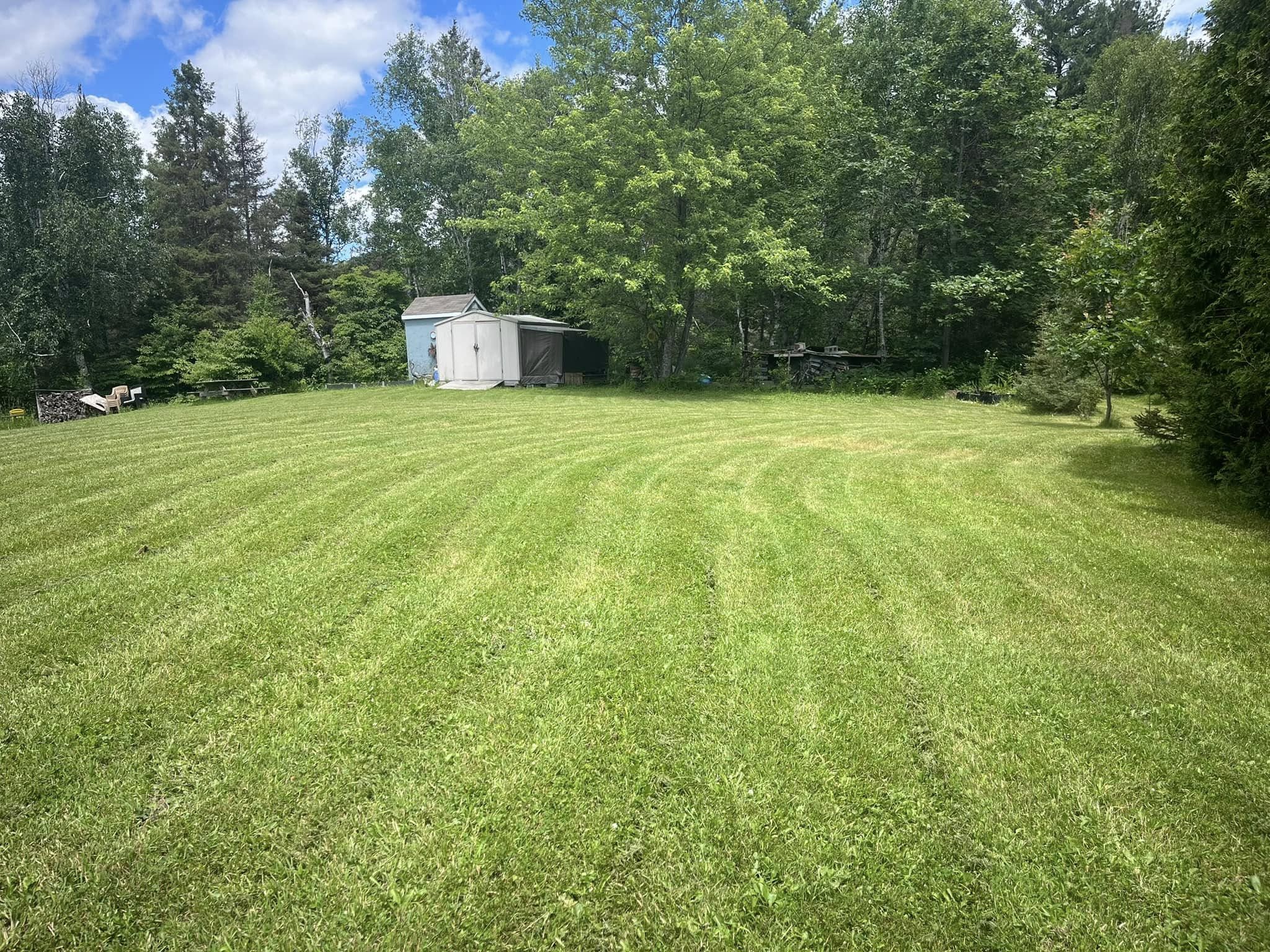
The lawn was exceptional. Not just for a property maintained by an elderly man who’d been doing it himself until recently — exceptional by any standard. Dense, even, consistent colour across the full surface. The edges along the driveway were sharp in a way that told me they’d been done with a proper spade or edging tool rather than a string trimmer. There was no visible thatch. The soil, when I checked it, had good depth and reasonable moisture. The root depth on a sample I pulled was four and a half inches.
I asked Harold when he’d last aerated. He looked at me with an expression I couldn’t quite read — somewhere between amusement and mild disdain. He said he’d aerated every May for forty years. He said it like it was obvious. Like asking whether he’d ever eaten breakfast.
I told him the lawn was in excellent condition. He said he knew. He wasn’t being rude. He was just stating a fact.
I told him I’d take good care of it. He said he’d be watching to make sure. He wasn’t joking.
What he showed me on the first visit — the thing I’d been overlooking
The first two cuts went without comment from Harold. He watched both times, from the step the first time and from near the garden bed the second. After the second cut he nodded once, which I took as provisional approval.
On the third visit he came out while I was still mowing. He stood at the edge of the lawn and watched for a few minutes. When I finished and came back toward him he beckoned me over to a section near the middle of the yard.
He pointed at the grass. He said: “Look at where you turned.”
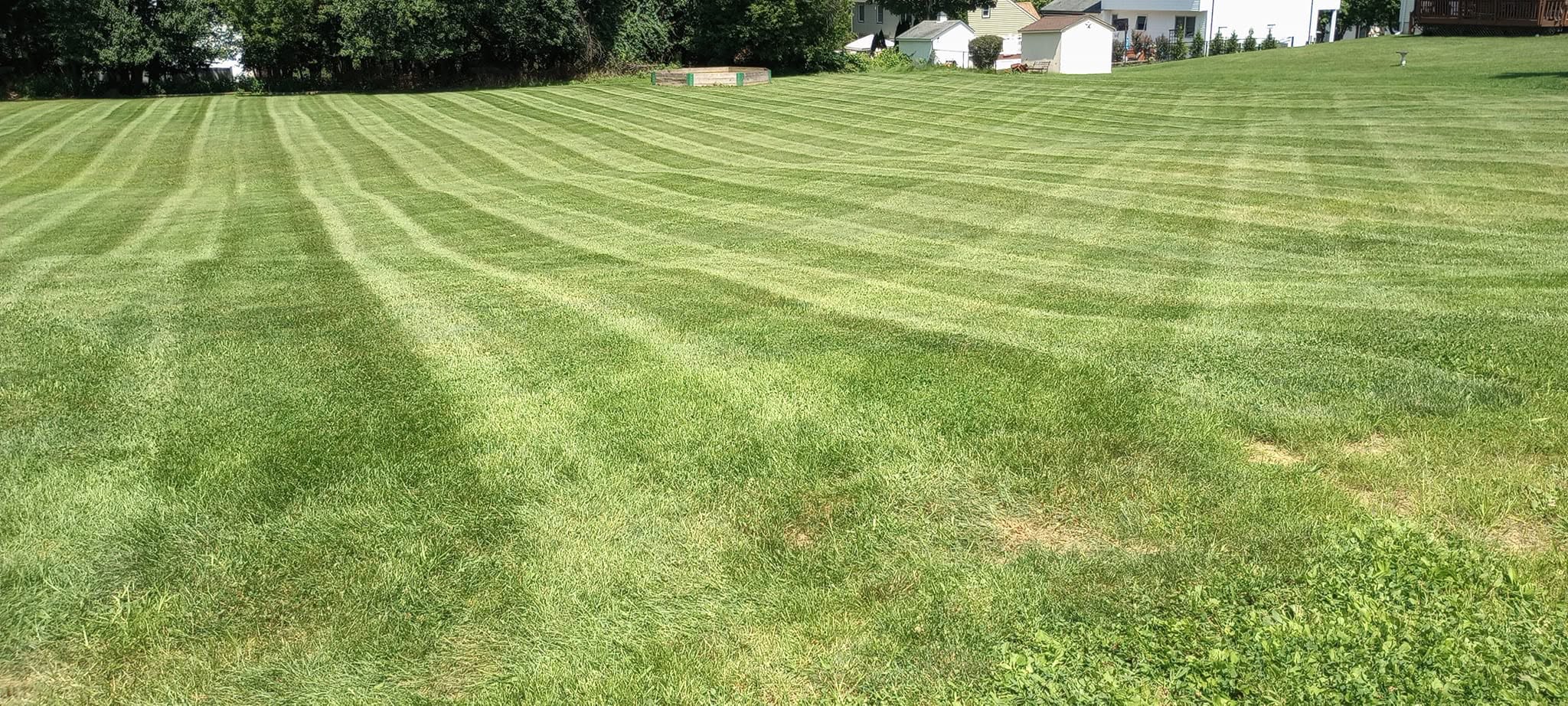
I looked. There was a faint strip — barely visible, but there when you looked at the right angle — where the turns at the end of each pass had slightly compressed the grass. Not dramatically. Not something most people would notice from the street. But visible up close, in the right light, as a slightly darker, slightly flatter strip running perpendicular to my mowing lines about eighteen inches in from the lawn’s edge.
Harold had been turning in the same spot at the end of each pass — a natural thing to do, because the end of the lawn is where you turn. But turning in exactly the same spot every week meant the grass in that turn zone was being compressed by the front wheels of the mower repeatedly, in the same location, each cut. Over weeks it produced a subtle but real effect on the grass in that strip.
“You’re turning in the same spot every time,” Harold said. “Move it by a foot each week.”
Then he went back inside.
I stood there for a moment. He was right. It was something I’d never thought about — not because I didn’t know mower compaction from repeated passes was a thing, but because the turn zone at the edge of the lawn hadn’t registered as something to vary. I turned there because that’s where the lawn ended. It hadn’t occurred to me that rotating the turn location was something a careful operator would do.
Harold had been doing it for sixty-five years. He’d varied his turn position instinctively, in a way that had become habit, because he’d understood at some point that any repeated mechanical action in the same precise location creates a pattern in the grass over time.
The lesson — what Harold understood that most people don’t
The specific correction Harold gave me — vary your turn position by a foot each week — is worth following directly. But the lesson behind it is larger than that specific technique.
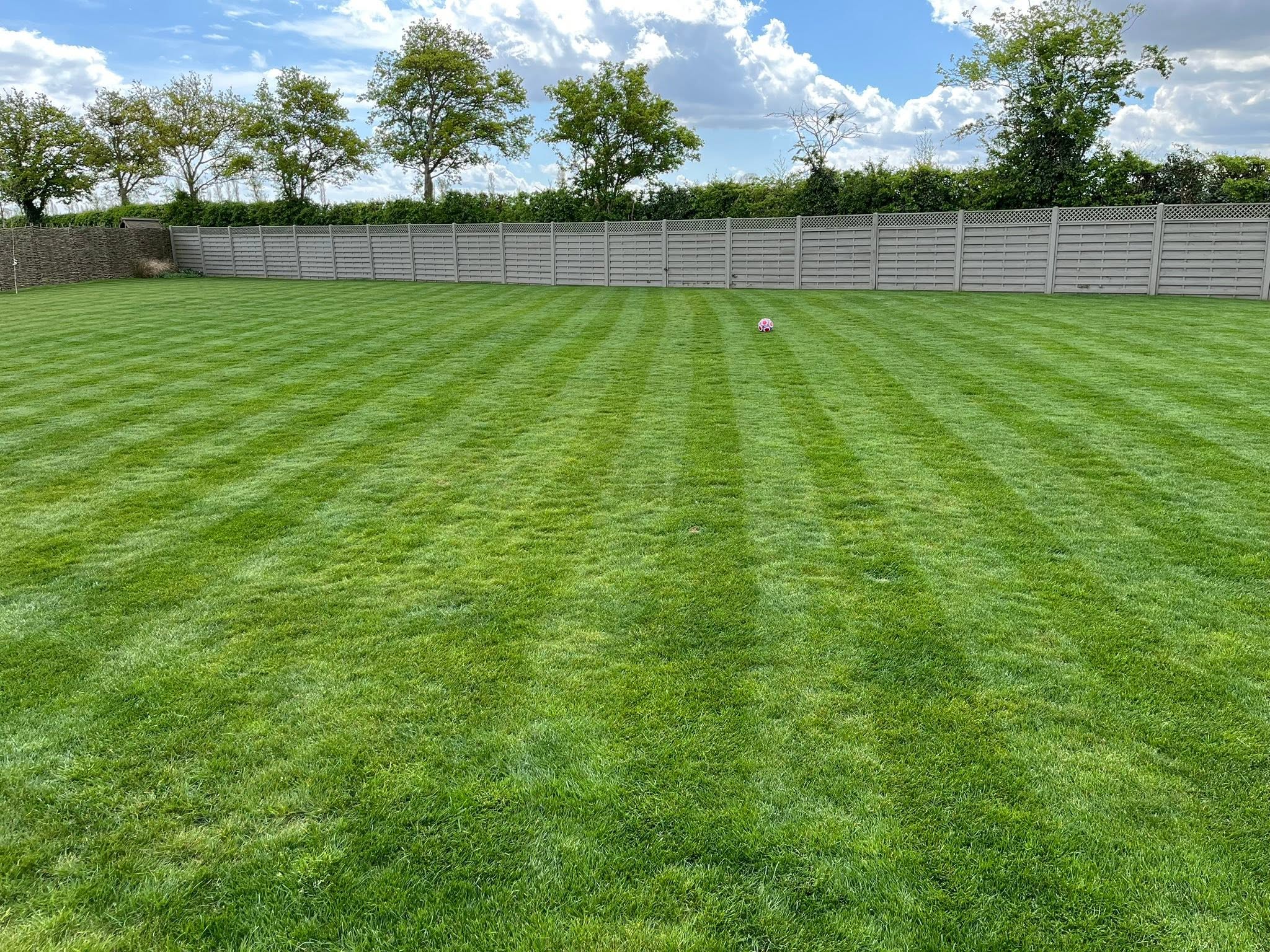
Harold understood something about lawn care that took him decades to learn and that I’d been skating past in my professional training: every repeated action on a lawn creates a cumulative effect. The effects are often invisible in the short term. They become visible over seasons and years. And by the time they’re visible, the underlying pattern has been established long enough that correcting it requires active effort rather than just changing what you do going forward.
The mowing direction alternation I recommend — and that I described in the article on teaching the 12-year-old to mow — is the same principle applied to the full pass direction. Alternating north-south and east-west prevents the grass from leaning in one direction. Harold’s turn position variation is the same principle applied to the end of each pass. Both come from the same understanding: grass responds to what you do repeatedly, and varying the repeated actions prevents any single pattern from accumulating into a problem.
This principle extends beyond mowing technique. It’s the same reason I recommend deep infrequent watering rather than light daily watering — daily watering in the same pattern trains roots to stay in the same shallow zone. It’s the same reason I tell clients to vary their walking routes across their lawns if possible — the same footpath taken repeatedly becomes a compaction track. It’s the same reason aeration needs to happen on a consistent annual schedule rather than reactively — compaction from any repeated mechanical stress accumulates, and the correction needs to happen before the accumulation is visible.
Harold had internalised all of this through sixty-five years of paying attention. He didn’t have it theorised. He just did it correctly because he’d noticed what happened when he didn’t, and adjusted, and noticed again, and adjusted again, over decades. The result was the lawn I walked when I first arrived for the assessment — one of the best residential lawns I’ve seen in Greater Sudbury, not from expensive inputs or professional intervention, but from consistent attentiveness applied over a very long time.
What Harold demonstrated is the same long-game principle I tried to articulate in the article on the Val Caron homeowner who asked what I’d do with his lawn over twenty years — that the lawns which look genuinely exceptional aren’t the result of any single season’s effort. They’re the compounded result of right decisions made consistently, season after season, adjusted when something goes slightly wrong, and maintained with the kind of attention that notices a faintly flattened strip eighteen inches from the edge of the lawn.
How I changed what I do because of Harold — and what it’s produced
I changed two specific things in how I work after the conversation with Harold.
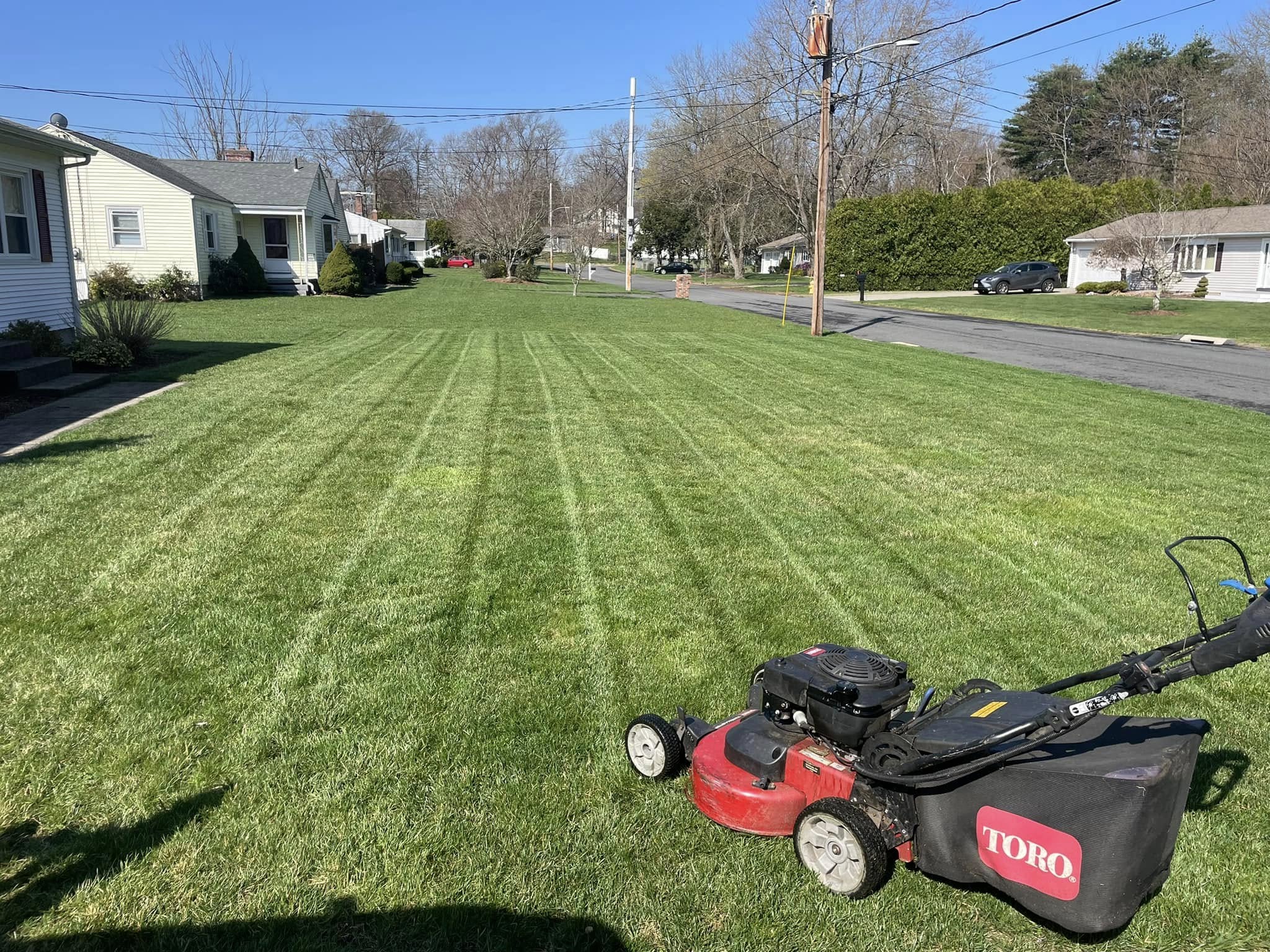
First — I vary my turn position by approximately one foot per visit on every property I maintain. This means I’m not turning in exactly the same location on consecutive cuts. On a property where I cut every week, the turn zone rotates through a band of about four to five feet over a month, then repeats. No single strip in the turn zone is receiving repeated wheel pressure on consecutive visits. The subtle flattening Harold pointed out on his lawn has never reappeared since I made this change — on his property or on any other property where I’ve applied it consistently.
This sounds minor. It’s the kind of detail that doesn’t show up in any lawn care guide I’ve read. It’s the kind of thing you learn from someone who’s been doing it for sixty-five years and has noticed what happens when you don’t.
Second — I slow down near the edges and in tight sections. Harold’s cut had taken him considerably longer than mine would have on the same property. Part of that was age. But part of it was deliberate pacing in specific areas — near the garden beds, around the tree in the front yard, along the fence line. He moved slower in those zones because those were the zones where imprecision is most costly: a blade too close to the garden bed damages roots, a wheel too close to the fence compresses the perimeter grass, a turn too tight near the tree corner tears the surface.
I’m not naturally a slow mower. I run a business — time matters, schedules matter, efficiency matters. But Harold’s pace in those critical zones was correct, and I recognised it when I thought about it honestly. I’ve changed how I approach tight sections on every property since then. I don’t rush turns near beds or obstacles. I slow down at fence lines. The time difference per property is small — a few minutes at most. The quality difference in those sections is visible.
Harold watches every cut. He’s commented once since the visit where he corrected my turns — he said, without preamble, “Better.” That was it. One word. From a ninety-year-old man who maintained his own lawn for sixty-five years, it landed the way a review from a professor who grades harshly lands when it’s positive.
I’ve thought about what Harold represents in this industry. He’s not a lawn care professional. He never ran a company, never had clients, never worked on anyone’s property but his own. But he accumulated sixty-five years of observation on a single property, noticed what his repeated actions produced, and adjusted until the lawn was what it needed to be. That’s a form of expertise that no training program produces.
The practical advice I give — the cutting height, the watering approach, the aeration timing — is based on soil science and pattern recognition across hundreds of properties. Harold’s advice is based on something different: sixty-five years of paying close attention to one thing. Both kinds of knowledge matter. And sometimes the second kind catches something the first kind missed entirely.
If you want grass cutting in Greater Sudbury from someone who slows down at the edges and varies the turn zone — give me a call.
📞 705-507-6787 | Get a free quote online
— Ryan Lingenfelter
Owner, Cutting Edge Lawn & Landscaping
Garson, Ontario · 705-507-6787