
By Ryan Lingenfelter · Cutting Edge Lawn & Landscaping, Garson, Ontario · June 2026
After hundreds of lawn assessments across Greater Sudbury, the bad ones have stopped being surprising. Not because I’ve become indifferent to them, but because the problems repeat with enough consistency that I can usually predict what I’ll find before I’ve left the truck. The bad lawns share a set of specific, recurring characteristics. The good lawns don’t.
Here are the six things I see on virtually every struggling Sudbury lawn — and then the one thing I almost never see on a genuinely great one. That last item surprises people every time I mention it.
Thing one — thatch over half an inch that nobody’s noticed
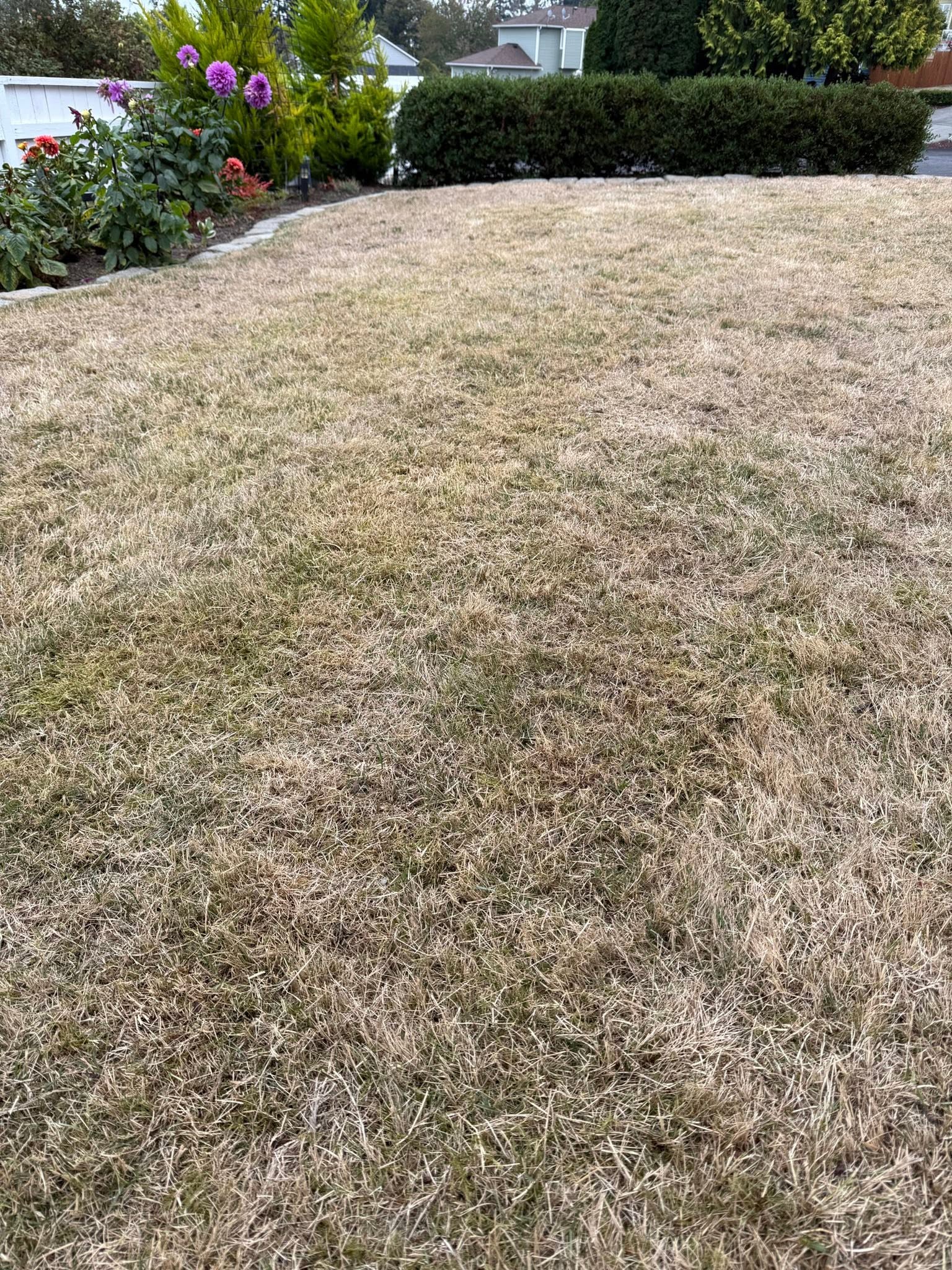
I find it on the majority of struggling lawns I assess across Greater Sudbury. A thatch layer — the accumulated organic material between the soil surface and the living grass above it — that has built past the half-inch threshold where it stops being beneficial and starts actively working against the lawn.
The reason I lead with thatch is that it’s the problem most directly connected to every other symptom on a struggling lawn. Fertilizer applied over thick thatch gets trapped in the organic layer rather than reaching the soil. Water hits dry thatch in summer and runs off rather than soaking through. Seed broadcast over thick thatch can’t reach soil contact and doesn’t germinate. The cutting height issues and watering problems I’ll describe next are more damaging on a lawn with thick thatch than they’d be on a well-managed surface, because the thatch compounds every other problem’s effect.
What makes thatch so consistently present on struggling lawns is that it builds invisibly. It accumulates a little more each season. The lawn doesn’t look noticeably worse each year — it just slowly becomes less responsive to inputs, less able to handle heat, less competitive against weeds. By the time the homeowner notices the lawn isn’t performing, the thatch has often been a meaningful problem for two or three seasons already.
The check is simple: part the grass in an open section and push your fingers toward the soil surface. Dense, springy grey-brown material over half an inch thick is thatch that’s causing problems. I found it on 38 of 52 properties in a single spring assessment round, as I described in the article on what I found on 52 Sudbury lawns this spring. It’s the most consistently present problem on bad lawns across this region.
Things two, three, and four — the cutting height, watering, and fertilizer trio
I put these three together because they almost always appear together on struggling Sudbury lawns — and because each one makes the other two more damaging than they’d be in isolation.
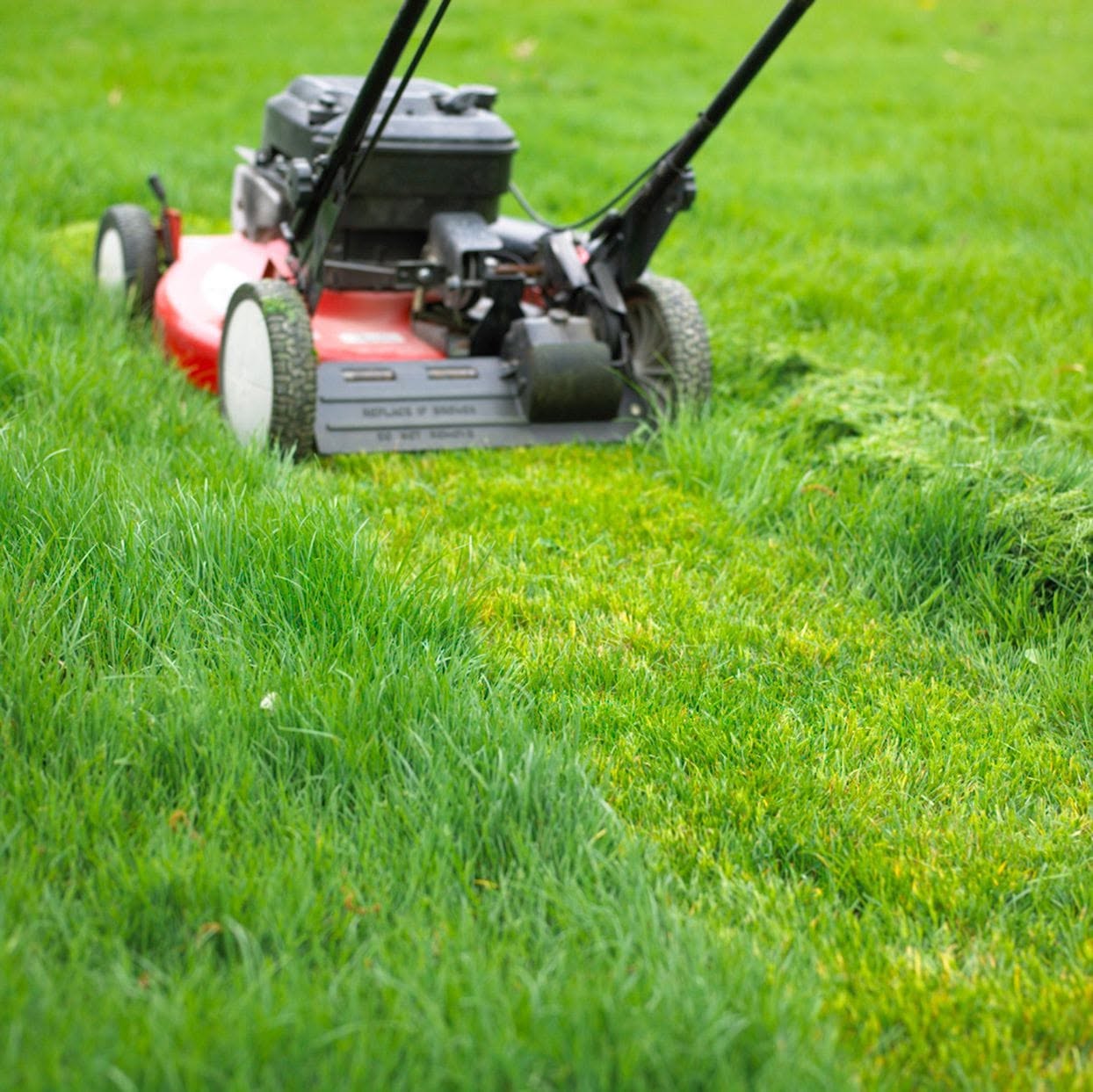
Thing two: cutting height below three inches. The mower deck is set too low. Almost universally on bad Sudbury lawns, the cutting height is somewhere between an inch and a half and two and a half inches. Sometimes lower. The homeowner thinks shorter is neater. The grass responds by developing shallow roots, providing no shade to the soil surface, and spending its energy regrowing the blade rather than building resilience. By July it’s stressed, pale, and thin — and the homeowner blames the summer heat rather than the mower setting that’s been working against the lawn since May.
I covered the most extreme version of this in the article on the 90-year-old Sudbury customer who taught me something about cutting grass — Harold’s lawn at three inches was one of the best I’ve seen. The lawns cut at two inches are among the worst. The correlation between cutting height and overall lawn condition across hundreds of properties is the strongest single relationship I’ve found in this work.
Thing three: daily light watering. The sprinkler runs for twenty minutes every morning, or every other morning. The surface stays moist. The roots stay shallow because the moisture is always in the top inch — they have no reason to push deeper. In July, when the surface dries out between watering sessions, the shallow roots have nothing to draw from. The lawn browns. The homeowner waters more frequently. The water still doesn’t reach root depth because the roots aren’t deep enough to use it even when it does. It’s a cycle that daily light watering creates and maintains, and most homeowners don’t know they’re in it. The Lively homeowner story in the article on the lawn that looked worse every September is the definitive version of this pattern — daily watering was the primary driver of a lawn that declined all season despite consistent effort.
Thing four: fertilizer applied too early or to cold soil. The bag says to fertilize in spring. The homeowner fertilizes in early April when the soil is still below eight degrees Celsius and biologically inactive. The fertilizer washes away or sits unprocessed until conditions improve. By the time the soil is warm enough to take it up, the timing the bag intended has passed. The homeowner fertilizes again. The lawn looks okay in May when conditions are forgiving and then declines in summer when the shallow roots and low organic matter limit what the fertilizer could have done. Combined with wrong cutting height and daily light watering, this timing error ensures that every input is working at a fraction of its potential.
Things five and six — compaction and the drainage problem hiding underneath
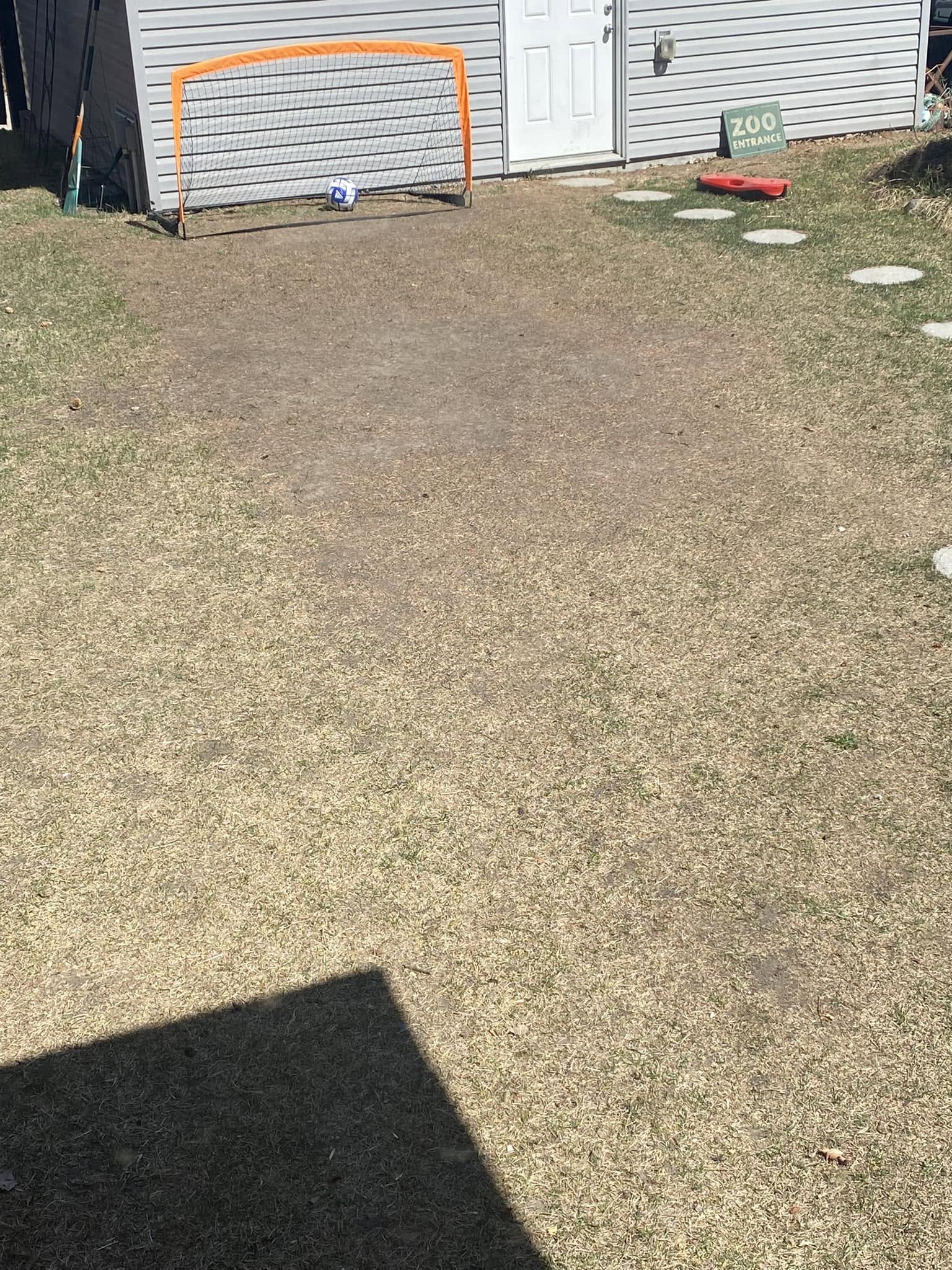
Thing five: compaction that hasn’t been addressed in years. When I press the screwdriver test on a struggling Sudbury lawn, it stops within two to three inches in the worst cases. The soil is dense. The roots are confined to the thin organic layer above the compaction point. Every symptom on the struggling lawn — thin turf, poor response to fertilizer, summer browning, weed pressure — is worsened by compaction because compacted soil restricts the root depth, nutrient movement, and water penetration that the grass needs to compete and recover.
The compaction picture on struggling Sudbury lawns is particularly consistent because our clay-influenced soil compacts faster than lighter soils would under the same conditions, and because most struggling lawns have never been aerated — or haven’t been aerated recently enough to matter. Annual aeration in the late May window is the thing that separates the good Sudbury lawns from the bad ones more consistently than almost any other single practice. I documented this in the article on the 10 free assessments I did across Greater Sudbury — compaction was present on all ten properties, without exception.
Thing six: a drainage or structural problem that’s being treated as a lawn care problem. The wet corner that fails every year. The section near the fence that stays thin regardless of seeding. The strip along the south wall that goes brown in July despite correct cutting and watering everywhere else. On struggling lawns, there’s almost always at least one section where the failure is being driven by something structural — a grade that directs water into a low point, a drainage failure underground, inadequate topsoil depth over construction fill, a foundation drainage issue — and the homeowner has been treating it as a lawn care problem by overseeding, fertilizing, or applying products to a section that the underlying structural issue will defeat every time.
This is the hardest conversation to have on a struggling lawn assessment, because fixing a structural problem costs more and takes longer than buying a bag of seed. But continuing to apply surface treatments to a structural problem is the definition of spending money without making progress. I described the most striking version of this in the article on the Sudbury property where I found drainage problems underground — a collapsed pipe that had been causing surface failures for years while every homeowner-level intervention failed because the cause wasn’t on the surface.
The 1 thing I almost never see on a good Sudbury lawn — and why it surprises people
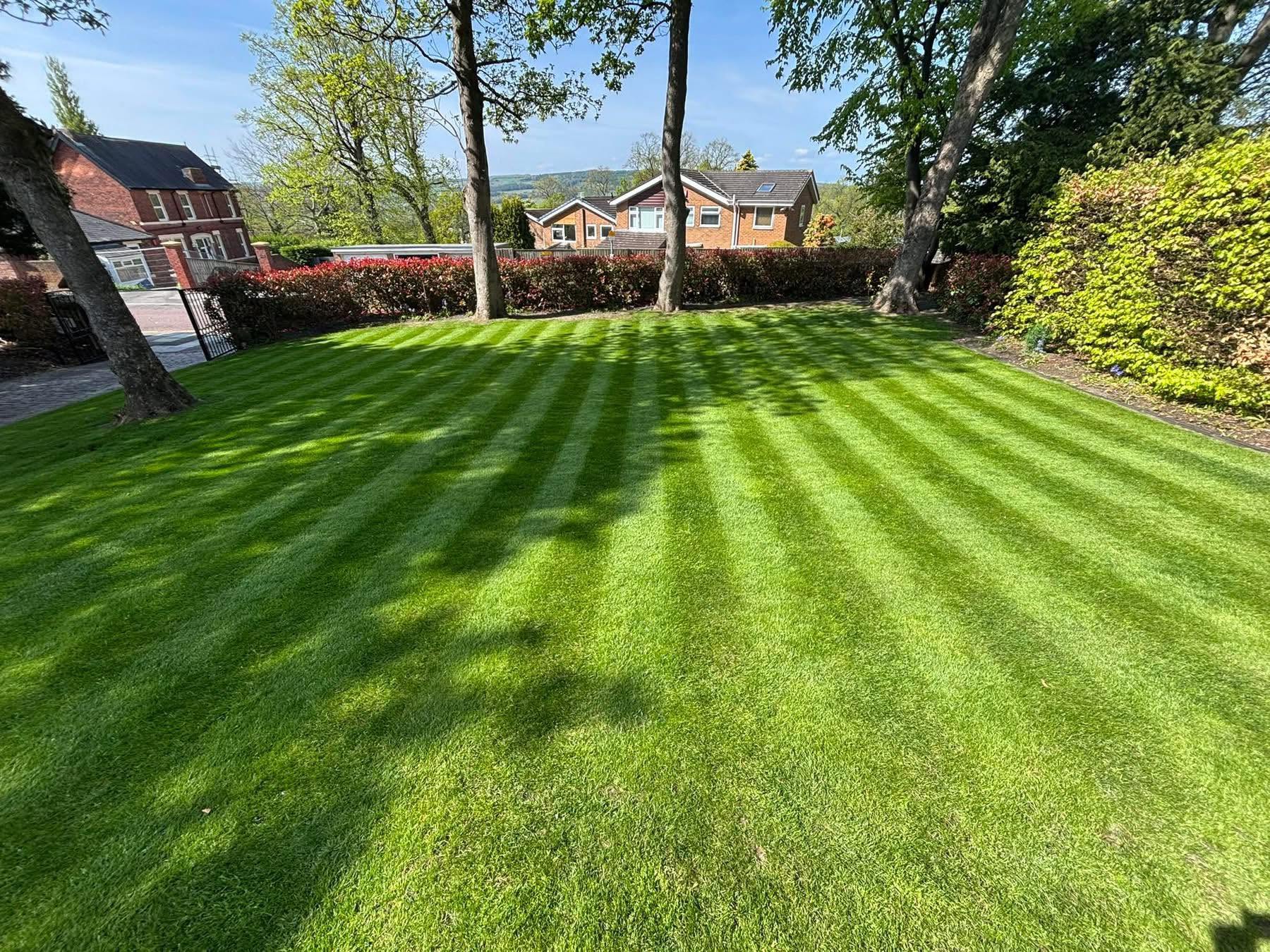
Here’s the one that gets the most reaction when I describe it on quote visits: the consistently great lawns in Greater Sudbury almost never have a complex or expensive treatment history.
People expect the answer to be something specific — a particular product, a specialty seed, a professional service they haven’t tried. They’re prepared for me to tell them the great lawns have something they need to add.
The thing I almost never see on great Sudbury lawns is a complicated inputs history. The lawns that look consistently excellent are almost universally being maintained with the same small set of basic correct practices: annual spring aeration, correct cutting height held all season, deep infrequent watering, and fertilizer applied at the right time into biologically ready soil. No specialty products. No complex programs. No exotic seed blends or expensive treatments.
What they have instead of complexity is consistency. The same right things done the same right way every season for multiple years. The compounding effect of correct basics applied without interruption produces a lawn that no single-season intervention on a neglected property can match — because the soil has been improving annually, the root system has been deepening annually, the thatch has been managed annually, and the results of each season’s correct care are the starting point for the next season rather than something that has to be rebuilt from poor conditions.
The struggling lawns, by contrast, often have a complex treatment history. They’ve tried products. They’ve overseeded multiple times. They’ve had a company come out and spray for weeds. They’ve bought the four-step fertilizer program and followed it carefully. None of it has produced lasting results because the underlying basics — cutting height, aeration, watering approach — haven’t been right, and no surface treatment compensates for sustained basic errors.
This is the core argument in the article on the 5 things every great Sudbury lawn has in common — the best lawns are not the most expensively treated lawns. They’re the most consistently correctly treated lawns. Stopping the wrong things produces more improvement than adding new things to a lawn where the fundamentals are off.
If your lawn has some or all of the six problems I’ve described, the path forward is not another product. It’s correcting the basics in the right sequence and giving that correction enough time to produce the compounding results that consistent right practice produces. The sequence — thatch assessment, cutting height correction, watering adjustment, aeration in late May, correctly timed fertilizer — is the same sequence I’d recommend to any homeowner in Greater Sudbury whose lawn has been struggling despite honest effort.
If you want me to walk your property and tell you exactly which of these six things are present and in what priority order to address them — give me a call. The assessment is free. The answer is usually simpler than people expect.
📞 705-507-6787 | Get a free quote online
— Ryan Lingenfelter
Owner, Cutting Edge Lawn & Landscaping
Garson, Ontario · 705-507-6787
