
I’m Ryan Lingenfelter — owner of Cutting Edge Lawn & Landscaping in Garson, Ontario.
She asked me the question while we were walking the back section of her property in Val Caron. We’d been out there for about fifteen minutes. I’d done the screwdriver test, checked the drainage in the low corner, looked at the thin patchy sections near the fence line, and she’d been watching and listening.
Then she stopped and asked directly.
“Ryan, I’m not asking for perfect. I just want it to look decent — the kind of lawn where you’re not embarrassed when someone walks by. How long is that going to take?”
It’s a fair question. It’s one I get asked in some form on almost every restoration quote call. And I’ve learned over five years that there’s a version of the answer homeowners want to hear, and there’s the true answer — and giving the first one does nobody any favours.
I told her the truth. Here’s what I said, and why.
What “Looking the Way You Want” Actually Depends On
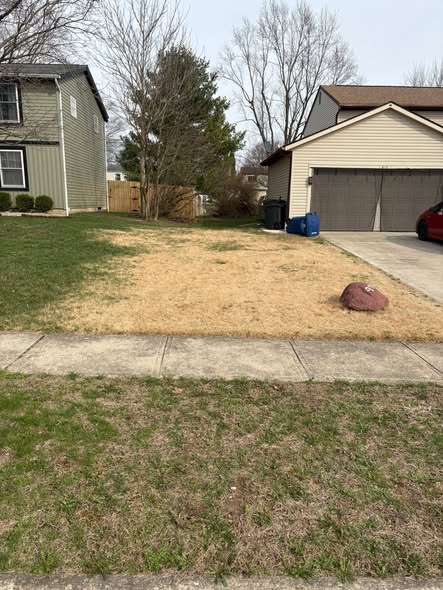
Before I gave her a timeline, I needed to be honest about what was making her lawn look the way it did. Because the timeline isn’t a fixed number — it depends entirely on what’s wrong and what’s being done to fix it.
Her property had three things going on.
The first was compaction. The screwdriver stopped at about an inch and a half in the main lawn area. That level of compaction means water runs off rather than soaking in, roots stay shallow, and anything she’d applied to the lawn — fertilizer, seed, effort — had been producing limited results because the soil structure was working against it. This wasn’t her fault. It was the product of multiple Sudbury winters without aeration, which is the standard story on most properties I walk. I’ve been through this explanation with homeowners from Garson to Chelmsford to Capreol — and every time, the compaction story is the same. I wrote about exactly why Sudbury winters do this in my Sudbury vs GTA soil comparison here — our Canadian Shield clay compacts harder than almost anything else in Ontario.
The second was the drainage issue in the back corner. Water marks on the fence posts, soil that was still noticeably softer than the surrounding areas in mid-June — the classic signs of a low spot where snowmelt was pooling every spring and drowning roots before the season started. That corner had been failing for years and would keep failing until the grade was corrected.
The third was the mowing height. Her mower was set at just under two inches. I’ve seen this on more Sudbury properties than I can count — homeowners who like the look of a tight short lawn, not knowing that cutting height is the primary driver of root depth, and root depth is what determines whether the lawn survives July and August on Sudbury’s shallow clay.
Three problems. Each one alone would have kept the lawn from looking the way she wanted. Together, they’d been compounding on each other for years.
The timeline I gave her depended on which of these were going to be addressed and when.
The Honest Timeline — What I Actually Told Her
I told her this.
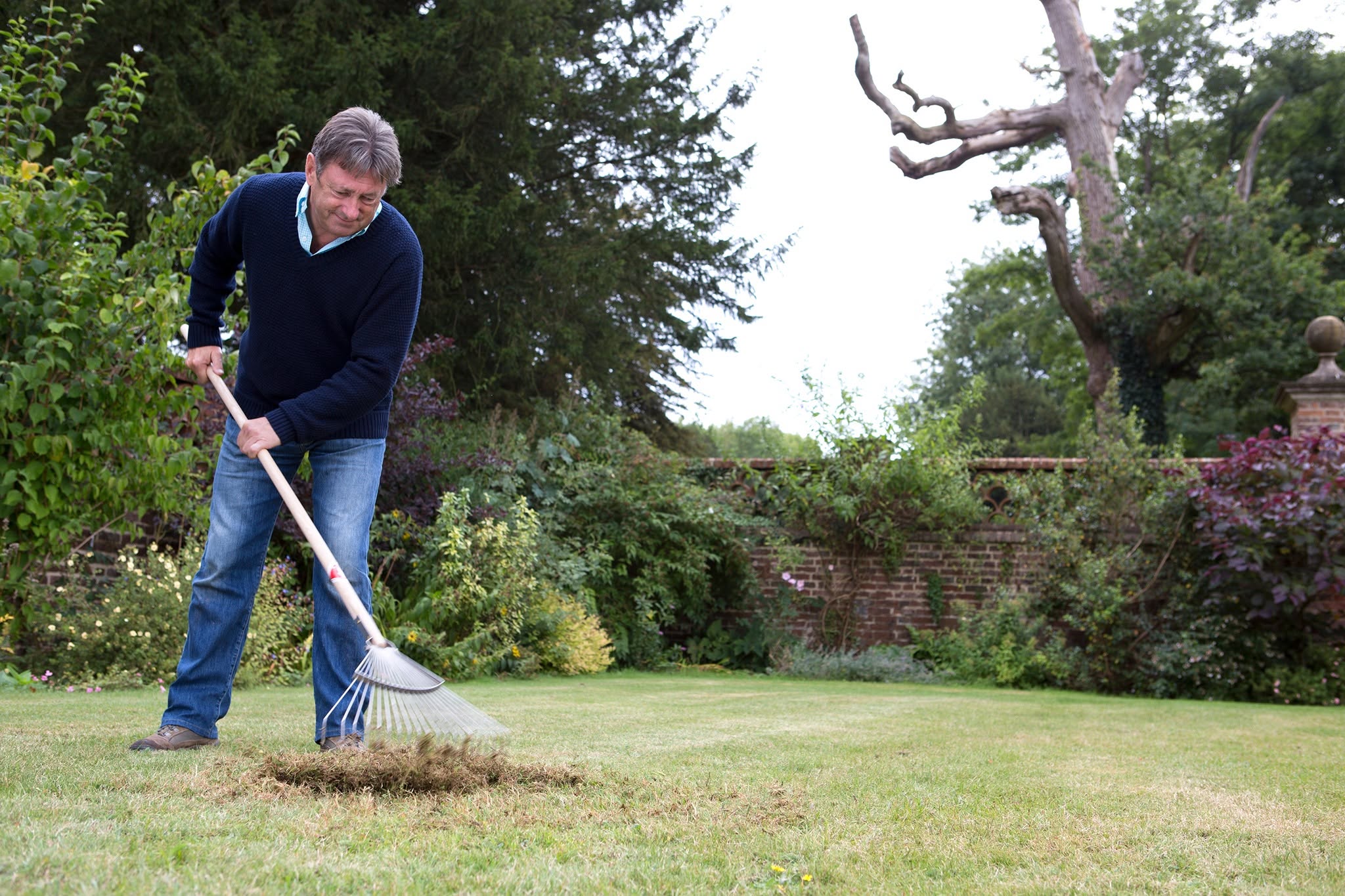
If we do the aeration this month and you raise your mowing deck to 3 inches today and keep it there — you’ll see a difference by September. Not the lawn you’re imagining. But better than this. The compacted areas will start to open up, the roots will get the first season of growing at a proper depth, and the thin spots will fill in some from the overseeding we’ll do after the aeration.
September of this year — better. Noticeably better. Not the goal.
If you do fall aeration and overseeding in early September — which I’d strongly recommend — you come out of winter with new grass that established in good conditions rather than seedlings that had to fight summer heat. Spring of next year looks more like a real lawn.
If you keep mowing at 3 inches through the whole next season, aerate again next spring, and water on a deep cycle-and-soak schedule — by September of next year, you have the lawn you’re describing. The kind where people walk by and it looks maintained and cared for.
That’s two full seasons. Not one.
She was quiet for a moment.
Then she said: “Every company I’ve called has told me one season.”
I told her that one season is possible if the starting conditions are right. If a lawn has decent soil structure, reasonable grass coverage, no drainage issues, and just needs proper maintenance — one season of correct care produces visible improvement. Her lawn didn’t have those starting conditions. Two of the three problems on her property were structural — compaction and drainage — and structural problems don’t reverse in one season regardless of how good the surface treatments are.
Telling her one season would have set her up to be disappointed by October. Telling her two seasons gave her an accurate expectation and a plan that actually matched what her property needed.
Why Most Sudbury Lawn Timelines Are Wrong — And What Sets the Realistic Ones Apart
The “one season” answer is common in lawn care because it’s what customers want to hear. And for a specific category of Sudbury property — thin but structurally sound, decent soil depth, no significant compaction, just needs consistent care — one season is sometimes accurate.
But that category of property is not most of what I walk across Greater Sudbury.
Most properties I assess have at least one structural issue that adds time to the realistic timeline. Here’s how each one affects the schedule.
Compaction adds one to two seasons. The first year of annual aeration on severely compacted Sudbury clay produces improvement — sometimes significant improvement. But severe compaction that’s built up over multiple winters without intervention doesn’t reverse in twelve months. Year two on aerated clay looks noticeably better than year one. Year three on consistently aerated clay is where the soil structure has genuinely changed. I documented this progression in my article about the aeration advice I changed after two years — the difference between year one and year two results on compacted clay properties was the thing that finally showed me what I’d been missing.
Drainage problems add one full season minimum. A drainage problem that’s been causing a section to fail every spring takes one full season after correction to show improvement, because the sod or seed going into the corrected area still needs a full cycle to establish properly. If the drainage is corrected in fall, the following spring is the first spring that section doesn’t drown — and that spring is when the recovery starts, not when it’s visible. The section will likely look thin in May, better by July, and show real progress by the following September. Expecting the corrected section to look great in the same season the drainage is fixed is optimistic. I’ve had this exact conversation about drainage-related timelines in my drainage honesty article.
Cutting height takes effect quickly but compounding takes time. This is the good news part of the timeline. Raising the mowing deck to 3 inches produces visible improvement faster than either of the other two changes — because the grass that’s already there starts developing deeper roots immediately. Within four to six weeks of a height adjustment on a lawn with reasonable coverage, the difference in July performance is measurable. But the full benefit compounds over multiple seasons as the deeper roots produce thicker, more stress-resistant grass that crowds out weeds and fills thin spots on its own.
What sets a realistic Sudbury lawn timeline apart from an optimistic one is an honest account of which structural issues are present and what each one adds to the clock.
What the Val Caron Lawn Looked Like at the End of the First Season
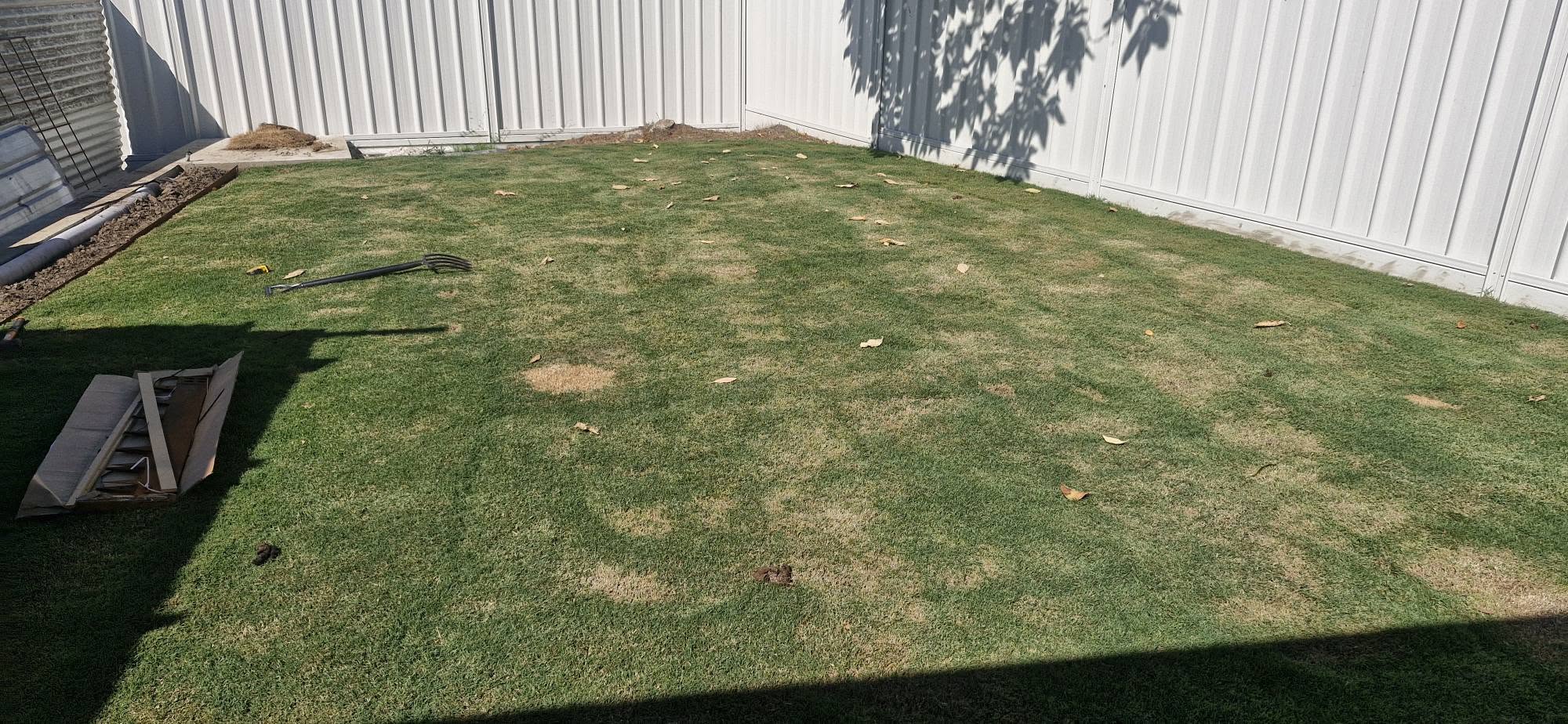
We did the aeration in late June — later than ideal, but better than waiting until spring. She raised the mowing deck that same week and kept it there all season. We overseeded in early September after a second aeration pass. She watered on the cycle-and-soak schedule I described in my Sudbury watering guide.
The back corner — the drainage problem — we didn’t touch in year one. She decided to budget for it in the spring.
By late September, the lawn was noticeably better than it had been in June. The main lawn area — where the compaction had been moderate — had thickened visibly. The September overseeding had germinated well into the aeration holes. The thin strips were still thin but less so.
The back corner was still struggling. Same as always. Because the drainage hadn’t been fixed yet.
She texted me a photo in early October and said: “It’s better. Not where I want it yet, but better.”
That was exactly what I’d told her to expect. And the fact that her expectations matched what she was seeing meant she wasn’t frustrated — she was on a known schedule.
The following spring, we did the drainage correction in the back corner. Spring aeration across the whole property. The corner got sod once the grade was corrected. By September of year two, she sent me a different kind of photo.
“This is what I wanted,” she said.
Two seasons. That’s what it actually took on her property. Not one. Not three. Two — with the right work done in the right order.
The Honest Answer for Your Property — What Changes the Timeline
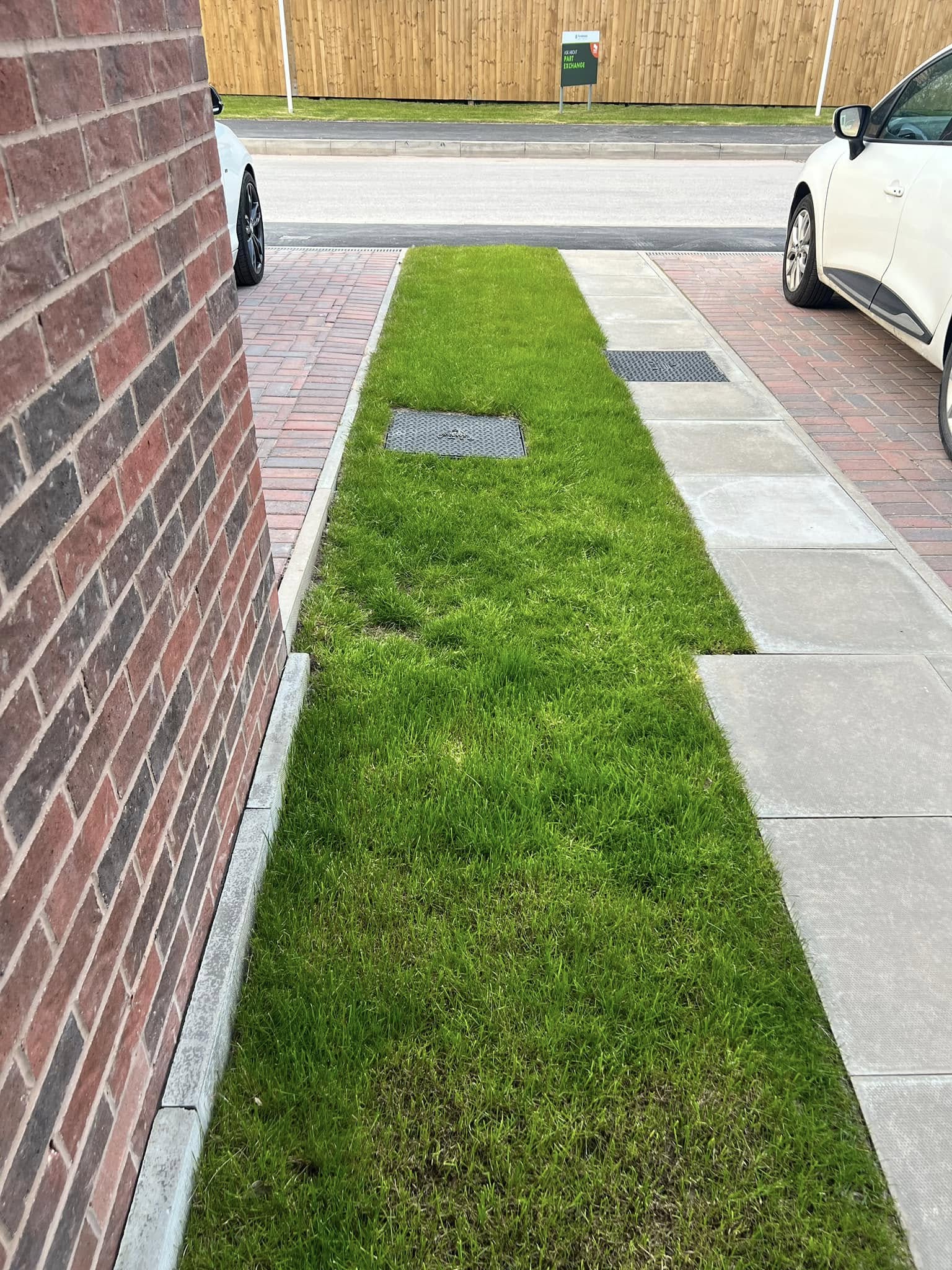
If you’re standing in your Sudbury backyard asking the same question she asked — here’s how to estimate your own realistic timeline before calling anyone.
If your screwdriver goes in 4+ inches across most of the property: Your soil structure is reasonable. One season of correct maintenance — mowing at 3 inches, deep twice-weekly watering, spring aeration, fall overseeding — will produce visible improvement by next September. You’re in the faster category.
If your screwdriver stops at 2-3 inches: Moderate compaction. Two to three annual aerations will produce the most meaningful improvement. Year one looks better. Year two looks like what you’re imagining. You’re in the standard Sudbury category — this is most of the properties I work on.
If your screwdriver stops at an inch or less: Severe compaction. You need two aerations in year one — spring and fall — and consistent annual aeration from there. You may also need topsoil amendment in the worst sections. Your realistic timeline is two to three seasons for the lawn to look the way you want. That’s not pessimism — that’s the math of how long it takes severe clay compaction to meaningfully reverse.
If you have a recurring drainage problem: Add one full season after the drainage is corrected. The correction needs to happen first. Everything else waits until the root cause is fixed. I covered the specific signs of drainage problems and how to identify them in my sod replacement signs article here — recurring failure in the same spot every year is the clearest drainage indicator.
If more than 40% of your lawn is dead or weed-dominated: You’re looking at a sod replacement on the damaged sections rather than a maintenance plan. The right comparison for your timeline is how long it takes sod to establish versus how many seasons of overseeding it would take to achieve the same result — and the answer almost always favours sod on badly damaged sections. I covered this decision in my replace vs repair guide here.
The honest answer for most Sudbury homeowners is somewhere between one and three seasons. The specific number depends on what’s wrong and what’s being done to fix it — in the right order.
If you want someone to walk your property, run through the assessment, and give you a straight timeline before anything is scheduled — that’s what every quote call with me looks like.
📞 Call or text me directly: 705-507-6787
Or fill out the free quote form here and I’ll get back to you same day.
We service Garson, Val Caron, Hanmer, Lively, Chelmsford, Azilda, Capreol, and all of Greater Sudbury.
— Ryan Lingenfelter
Owner, Cutting Edge Lawn & Landscaping
Garson, Ontario
Frequently Asked Questions
How long does it take for a Sudbury lawn to look good after starting proper care?
For most Greater Sudbury properties, the realistic timeline is one to three seasons depending on the starting conditions. A lawn with moderate compaction and reasonable grass coverage shows visible improvement within one season of annual aeration, correct mowing height at 3 inches, and proper watering. A lawn with severe compaction, drainage issues, or significant dead sections typically requires two seasons of correct care before it matches what most homeowners are picturing. The specific timeline depends on which structural issues are present and how many seasons those take to meaningfully reverse.
Can a Sudbury lawn be transformed in one season?
Yes — for a specific category of property. If the soil has reasonable structure (screwdriver goes in 4+ inches), there are no drainage problems, more than 60% of the lawn is live grass, and the main issue is inconsistent maintenance — one season of annual aeration, correct mowing height, and proper watering produces significant visible improvement by the following September. For properties with severe compaction, drainage issues, or significant dead sections, one season produces improvement but not transformation. Realistic expectations matched to the actual property conditions produce better outcomes than optimistic timelines.
Why doesn’t one season of lawn care fix a Sudbury lawn with compaction?
Severe clay compaction that’s built up over multiple Sudbury winters doesn’t reverse in twelve months regardless of what surface treatments are applied. The first year of annual aeration produces real improvement — soil opens up, roots grow slightly deeper, watering and fertilizing become more effective. But the full reversal of severe compaction is a multi-year process on Sudbury’s Canadian Shield clay. Year two on a consistently aerated property shows meaningfully better results than year one. Year three shows better results than year two. The compounding improvement is real — it just doesn’t happen all at once.
Does fixing a Sudbury lawn drainage problem produce immediate results?
Drainage correction produces permanent results — but not immediate visible improvement. A section that has been drowning every spring for years won’t look like a healthy lawn the same season the drainage is corrected. The roots in that area are damaged or absent. New grass needs to be established after the drainage is fixed. The following spring is the first spring that section doesn’t drown — and the improvement becomes visible through that season. Expecting a corrected drainage section to look great by fall of the same year the work is done is optimistic. Expecting it to look significantly better the following September is realistic.
What order should Sudbury lawn problems be fixed in?
Drainage correction first — if water is pooling and drowning roots every spring, nothing else you do to that section will hold. Soil preparation second — aeration to break compaction before overseeding or sodding, so new grass has somewhere to establish. Then the surface work — overseeding or sod, depending on how much live grass remains. Then maintenance — mowing at the correct height, proper watering, annual aeration going forward. Doing these in the wrong order produces wasted money — seed going down before drainage is fixed, sod installed on compacted clay, fertilizer applied before the soil can receive it.
Should I sod or overseed a Sudbury lawn that’s been struggling for years?
The percentage of live grass determines this. More than 60% live — overseed after aeration. Less than 40% live — sod the damaged sections. Between 40 and 60% — depends on the cause. Structural problems like grubs and drainage usually mean sod on affected sections; compaction and winter kill are overseeding candidates once the soil is prepared. The timeline difference is significant — sod produces a lawn that looks established within three to four weeks. Overseeding produces visible progress within one season but full thickness takes longer. For a homeowner with a fixed timeline, sod on the worst sections gets you to the goal faster.
Ryan Lingenfelter is the owner of Cutting Edge Lawn & Landscaping in Garson, Ontario. Since 2020, his crew has provided full lawn care and landscaping services across Greater Sudbury — Garson, Val Caron, Hanmer, Lively, Chelmsford, Azilda, and Capreol. Licensed, insured, BBB A+ rated, and ThreeBest Rated for lawn care services in Sudbury.
📞 Phone: 705-507-6787
📍 Service Area: Greater Sudbury, Ontario
🔗 Free Quote: cuttingedgelawn.ca/quote
Related Services
- Core Aeration Services in Sudbury
- Sod Installation in Sudbury
- Grass Cutting Services
- Property Cleanup Services
Continue Reading
- Sudbury vs GTA Sod Installation — Why Northern Ontario Is Different
- I Realized I’d Been Giving Sudbury Homeowners the Wrong Advice for Two Years
- Sod Replacement in Sudbury — When to Replace vs When to Repair
- 5 Signs It’s Time for Sod Replacement in Sudbury
- How to Water Your Sudbury Lawn the Right Way
