
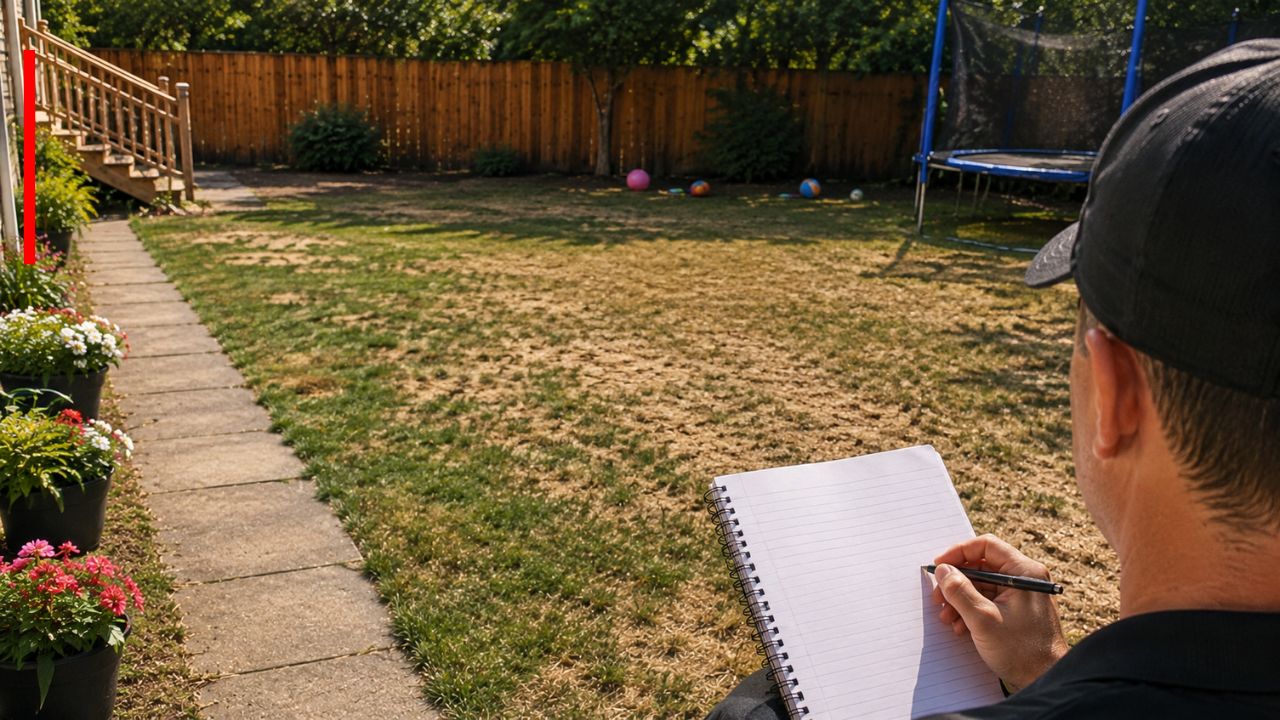
`Ryan Lingenfelter reflecting on lawn care advice given to Greater Sudbury Ontario homeowners — Cutting Edge Lawn and Landscaping Garson`
I’m Ryan Lingenfelter — owner of Cutting Edge Lawn & Landscaping in Garson, Ontario.
I want to tell you about the moment I realized I’d been getting something wrong.
Not catastrophically wrong. Not wrong in a way that produced bad results on every property. Wrong in a way that was subtle enough that it took two years to catch — and obvious enough, once I caught it, that I couldn’t believe I’d missed it.
The moment happened on a property in Hanmer in the fall of 2022. I was doing a follow-up visit on a lawn I’d aerated and overseeded the previous spring. The homeowner — a retired teacher who’d been meticulous about following the watering schedule I’d given him — was walking me around the yard to show me how things had gone.
The front lawn had responded well. Good germination, decent fill, exactly what I’d expected from the spring work. The back lawn was a different story.
The back had improved — but not as much as it should have. The thin areas were thinner than I expected. The germination in the aeration holes had happened but the new grass wasn’t thickening the way it typically did. I stood there looking at it trying to understand what was different between the front and the back of the same property.
He mentioned something almost in passing. He said the back got full afternoon sun. Blazing sun from about noon through seven in the evening.
I pushed the screwdriver into the soil in the back lawn. It stopped at about two inches. Then I pushed it into the front lawn. Four and a half inches.
Same property. Same soil type. Dramatically different compaction. And I’d aerated both sections with the same single-pass treatment.
That was the moment. Because I’d been recommending and performing single-pass spring aeration as the standard approach for two years — and it was the right approach for most of what I was seeing. But for the specific combination of heavy clay, south or west-facing full afternoon sun, and no significant shade relief, single-pass aeration in spring wasn’t enough. The soil was drying and recompacting through the summer faster than a single pass could meaningfully counter.
I’d been giving the same advice to everyone. And the advice was wrong for a specific subset of Sudbury properties — not all of them, but enough that I’d been leaving results on the table for two years without knowing it.
Here’s what I changed, why it mattered, and what it tells you about the specific soil conditions that make Sudbury different from everywhere else.
What I’d Been Getting Wrong — The Specific Mistake
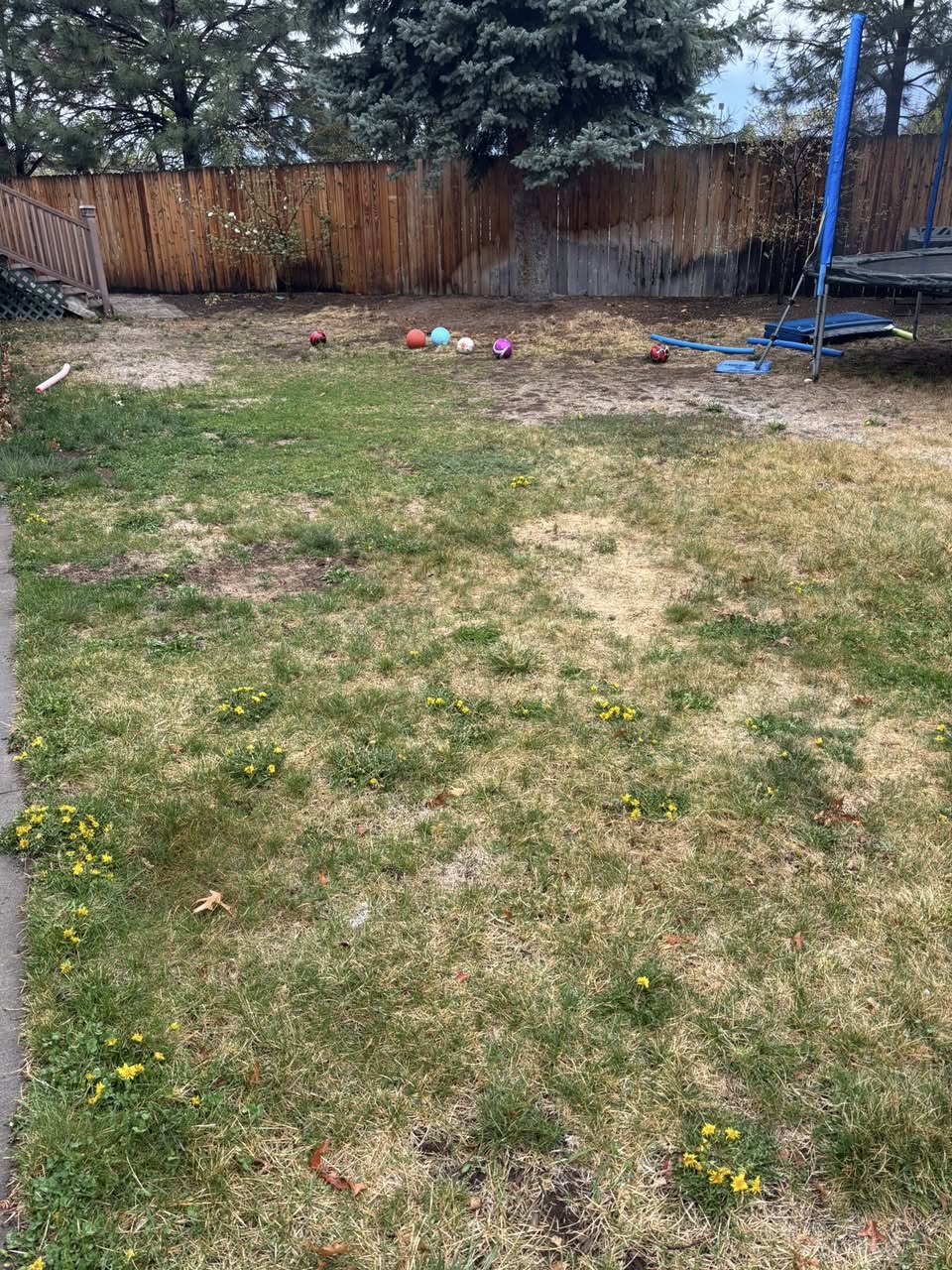
My standard aeration recommendation for two years was: one pass of core aeration in late May, overseed immediately after, water consistently for three weeks. For most Sudbury properties on clay soil with reasonable shade or north-facing orientation, this produced good results. The aeration opened the compaction, the seed established in the holes, the lawn improved measurably within one season.
The mistake was assuming that single-pass spring aeration was the universal answer for Sudbury clay — when in fact a specific set of conditions required a different approach.
Here’s the soil science behind why I was wrong for that subset of properties.
Sudbury’s clay soil has a specific behaviour in combination with intense heat exposure. When clay is aerated in spring and then exposed to sustained high temperatures and direct sun through July and August, the surface dries more rapidly than on shaded or north-facing properties. As it dries, clay contracts and the aeration holes begin to close from the edges inward. On a property with partial shade and moderate afternoon temperatures, the aeration holes stay open longer — maintaining the improved drainage and root pathways through the critical summer growth period. On a full-sun south-facing property, those same holes can effectively close within six to eight weeks under July heat.
What this meant for the Hanmer backyard was that by mid-July, most of the benefit of the spring aeration had been partially negated by the clay recompacting in the heat. The seed that germinated in June was working with progressively deteriorating soil structure as summer progressed. The front lawn, which was shaded through the afternoon and held moisture longer, had maintained the open soil structure through the season.
I’d been treating every Sudbury clay property as if the compaction response to spring aeration was uniform. It’s not. Heat exposure, sun orientation, and shade coverage materially affect how long aeration stays effective — and for the high-heat, full-sun subset of Sudbury properties, the answer was different from what I’d been recommending.
What I Changed — And Why It Worked
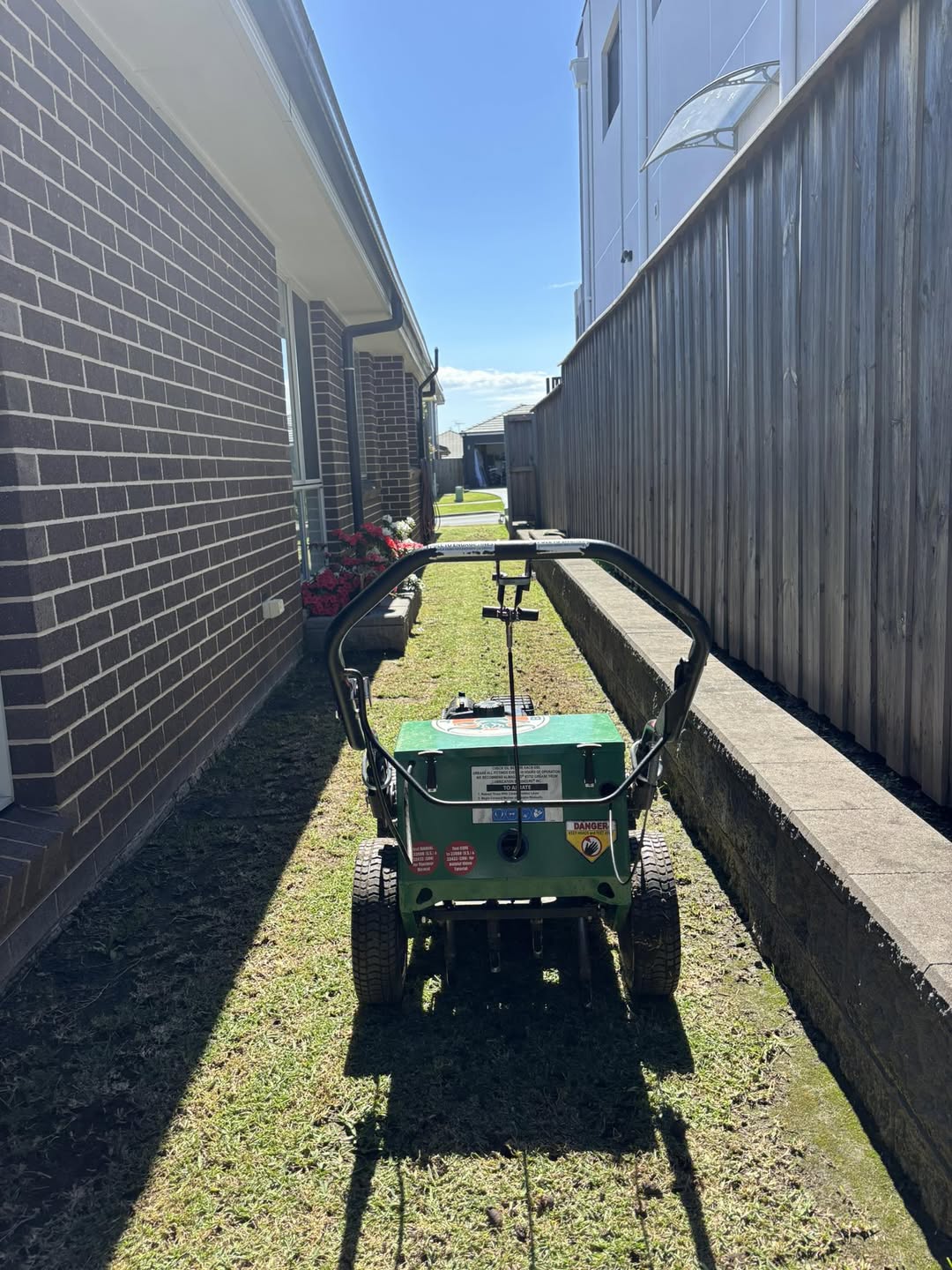
After that Hanmer visit, I went back and thought about the properties where my aeration results had been lower than I expected. There was a pattern. South or west-facing backyards with full afternoon sun, clay soil with limited shade, properties in the newer subdivisions of Garson’s east end and parts of Val Caron where topsoil was thin and clay was close to the surface.
I changed my approach in two ways.
First — I added a second aeration pass to my assessment checklist. For properties with full afternoon sun exposure and thin topsoil over clay, I now recommend either a second aeration pass perpendicular to the first (which dramatically increases the hole density and the total soil opening effect), or two aeration events in the same season — spring and fall — rather than one. The second pass in fall, when the clay has been through the summer heat cycle and recompacted, reopens the soil for winter and sets up better root pathways for the following spring. I wrote about the spring vs fall timing decision in detail in my aeration timing guide here — the full-sun property case is one of the clearest situations where fall aeration adds meaningful value.
Second — I changed how I communicate watering advice on these properties. For full-sun clay properties, I now emphasize the cycle-and-soak approach more strongly and more specifically — two shorter watering sessions with at least 45 minutes between them, timed to morning, with the explicit goal of getting moisture deeper into the clay rather than just wetting the surface. On a shaded property, a single longer morning session does the job reasonably well. On a full-sun clay property in July, single-session watering produces surface moisture that evaporates before it reaches the root zone in the increasingly dense clay. The detailed watering approach is in my Sudbury watering guide here.
The following spring on the Hanmer property, I did a double-pass aeration in late May — two perpendicular passes — plus a fall aeration in September with overseeding. By the following October, the back lawn had caught up to the front lawn. The same seed, the same soil, the same homeowner following the same watering schedule — different result because the soil treatment matched what the specific conditions actually required.
The Broader Lesson — Why Uniform Advice Fails Sudbury Properties

The reason this mistake was easy to make for two years is that for most properties, single-pass spring aeration produced noticeable improvement. Improvement masked the gap. If a lawn goes from a screwdriver stopping at an inch to stopping at three inches after aeration and the homeowner sees visible improvement through the season, neither of us is motivated to question whether more would have been better.
It was only when I started comparing outcomes across properties — specifically when I noticed that two properties with similar starting conditions and similar care produced different results — that I started looking for what was different. And the answer was in the conditions I hadn’t been systematically accounting for.
This is a broader principle that I now apply to every assessment. Sudbury’s Canadian Shield soil is not uniform. The compaction level, the topsoil depth, the clay density, the drainage patterns, the sun exposure, the age of construction grading — these variables interact differently on every property. I wrote about the neighbourhood-by-neighbourhood differences in detail here — Garson east end, Val Caron, Chelmsford, Lively all have different typical soil profiles that call for different approaches.
Generic lawn care advice — even advice that’s right for the average Sudbury property — will miss the specific conditions that change what’s needed on a particular lot. The advice I was giving wasn’t wrong for most properties. It was insufficient for a specific subset. And that subset was getting mediocre results while I assumed the approach was working.
The right response isn’t to hedge every recommendation with excessive caveats. It’s to build the assessment rigour to catch the conditions that change the approach before giving the recommendation. That means checking sun exposure and orientation, not just compaction level. It means noting topsoil depth and clay density, not just whether the screwdriver test passes or fails. It means asking about previous aeration history, mowing height, and watering practice, not just what’s visible on the surface.
I covered how these factors combine in the three-way comparison I wrote about in the three neighbours article here — the difference between the lawn that looks perfect and the ones that struggle is almost always in the accumulated conditions underneath, not just the visible surface.
What This Means If You’ve Had Aeration Done and It Didn’t Fully Work

If you’ve had core aeration done on your Sudbury property and seen improvement but not the improvement you expected — or seen improvement in some sections but not others — this is worth thinking about.
Single-pass spring aeration is the right starting point for most Sudbury lawns. For full-sun, south or west-facing properties on heavy clay with thin topsoil, it may not be sufficient on its own.
The questions worth asking:
Which direction does the problem area face? South and west-facing exposures get the most intense afternoon heat. Combined with Sudbury clay, that accelerates surface recompaction after spring aeration.
How much shade does the problem area get? Shade reduces soil temperature and slows the recompaction cycle. A problem area under a canopy that “never improves” may actually be responding differently than an adjacent open area for reasons unrelated to the aeration itself — root competition from the tree may be the separate issue. I wrote about the tree canopy problem specifically in my replace vs repair guide here.
How thin is the topsoil? Do the screwdriver test in the problem area and in a section that’s performing well. If the problem area stops significantly earlier, the clay is denser there and may need more intervention — double-pass aeration, topdressing, or both.
Was a fall aeration done? For high-compaction, full-sun properties, adding a fall aeration pass to an annual spring pass changes the trajectory. The fall aeration reopens soil that recompacted through summer and gives the lawn better root pathways going into winter and emerging in spring.
If you’ve been aerating annually and the results have been good but not great — the answer might be this specific combination of factors, not a different product or a different seed.
Why I’m Telling You This
I could have written this article differently — just given advice without the backstory about being wrong for two years. But I think the backstory matters for the same reason I think honesty matters in any service relationship.
The lawn care advice that circulates online and on product packaging is almost entirely generic. It’s not wrong for average conditions. It misses the specific interactions between soil type, sun exposure, topsoil depth, and climate that change what the right approach is for a particular property. Sudbury’s combination of Canadian Shield clay, freeze-thaw compaction, and variable summer heat makes those interactions more consequential here than they are in southern Ontario or the US markets where most lawn care content is produced.
Every time I’ve discovered a gap in my own understanding — the drainage advice I got wrong in Val Caron that I wrote about in my drainage honesty article, the uniform aeration approach I just described — it’s improved the assessments I do for every property afterward.
If you’ve been doing the right things and getting incomplete results, the answer isn’t usually a different product. It’s a more specific diagnosis of what your particular property’s conditions actually require.
That’s the assessment I try to do on every quote call. Walk the property, test the soil in multiple spots, check the orientation and sun exposure, look at the drainage, ask about what’s been tried before and what the results were. Then give a recommendation that fits what I actually found — not a generic starting point that works for most properties and misses the specific factors that matter for yours.
📞 Call or text me directly: 705-507-6787
Or fill out the free quote form here and I’ll get back to you same day.
We service Garson, Val Caron, Hanmer, Lively, Chelmsford, Azilda, Capreol, and all of Greater Sudbury.
— Ryan Lingenfelter
Owner, Cutting Edge Lawn & Landscaping
Garson, Ontario
Frequently Asked Questions
Why didn’t core aeration improve my Sudbury lawn as much as expected?
Several factors can limit aeration results on Sudbury properties. For full-sun, south or west-facing lawns on heavy clay with thin topsoil, single-pass spring aeration may not maintain open soil structure through the summer heat cycle — the clay recompacts faster in sustained high temperatures than on shaded or north-facing properties. Double-pass aeration (two perpendicular passes in spring), combined with a fall aeration pass, produces significantly better results on this specific type of Sudbury property. Watering approach also affects how long aeration benefits are maintained — cycle-and-soak morning watering gets moisture deeper into clay than a single long evening session.
Does sun exposure affect how well aeration works on Sudbury clay?
Yes — significantly on properties with full afternoon sun and thin topsoil over heavy clay. Sustained heat from south or west-facing sun exposure dries the clay surface more rapidly after spring aeration, causing the aeration holes to close from the edges inward faster than on shaded properties. This means the improved drainage and root pathways from spring aeration may be partially negated by mid-July on full-sun clay properties. The solution is either double-pass spring aeration to increase hole density, or adding a fall aeration event to reopen soil that recompacted through summer.
When should you aerate a Sudbury lawn twice in one year?
Two aeration events per year are most beneficial on Sudbury properties with full afternoon sun exposure, heavy clay soil with thin topsoil, and significant compaction history — particularly properties that haven’t been aerated in multiple years, or where single-pass spring aeration has produced improvement but not the full improvement expected. Spring aeration in late May for compaction relief and growing season benefit, fall aeration in early September for overseeding and pre-winter soil preparation. After one restoration year with two passes, annual spring aeration is typically sufficient maintenance. I covered the full timing rationale in my spring vs fall aeration guide here.
Why do some sections of my Sudbury lawn respond to aeration and others don’t?
Variable results across sections of the same property almost always reflect different conditions in those sections — different sun exposure, different topsoil depth, different clay density, or different root competition from nearby trees. Do the screwdriver test in the good sections and the poor sections. If the compaction level is significantly different, the sections need different treatment intensity. Check whether the poor section gets significantly more direct afternoon sun — that’s the most common cause of uneven aeration results on Sudbury’s clay soil.
Is fall overseeding better than spring overseeding on Sudbury properties?
For most Sudbury properties, yes — late August to early September overseeding produces better germination and first-year establishment than spring overseeding. Soil is warm, air is cooling, and new grass has weeks of ideal conditions before the ground freezes. Spring overseeding on Sudbury clay produces germination but the seedlings face summer heat stress before they’re fully established, and the surface soil can dry rapidly during a dry June or July stretch. The combination of fall aeration and immediate overseeding is one of the highest-return end-of-season investments on Sudbury properties.
What does a thorough lawn assessment in Sudbury actually involve?
A complete Sudbury lawn assessment should include the screwdriver compaction test in multiple spots across the property, noting significant variation between sections, an estimate of live grass versus dead, bare, and weed coverage, identification of drainage patterns and any low areas or recurring wet spots, assessment of sun exposure and orientation for each problem section, mowing height check, and a review of what treatments have been done and when. This information changes the recommendation — a full-sun south-facing clay section with thin topsoil needs a different approach than a shaded north-facing section with reasonable soil depth, even on the same property.
Ryan Lingenfelter is the owner of Cutting Edge Lawn & Landscaping in Garson, Ontario. Since 2020, his crew has provided full lawn care and landscaping services across Greater Sudbury — Garson, Val Caron, Hanmer, Lively, Chelmsford, Azilda, and Capreol. Licensed, insured, BBB A+ rated, and ThreeBest Rated for lawn care services in Sudbury.
📞 Phone: 705-507-6787
📍 Service Area: Greater Sudbury, Ontario
🔗 Free Quote: cuttingedgelawn.ca/quote
Related Services
- Core Aeration Services in Sudbury
- Sod Installation in Sudbury
- Grass Cutting Services
- Property Cleanup Services
Continue Reading
- Spring or Fall Aeration in Sudbury — Which Is Better?
- How to Water Your Sudbury Lawn the Right Way
- Every Sudbury Neighbourhood Has a Different Lawn Problem
- Three Sudbury Neighbours. Three Different Lawns. Here’s Why.
- Sod Replacement in Sudbury — When to Replace vs When to Repair
