
There’s a step in how I run this business that doesn’t show up on any invoice and that I’ve never charged anyone for. Two weeks after every new client’s first job — whether it’s a simple cut, a full sod installation, or an aeration and overseeding visit — I call them.
Not a text. Not an email. An actual phone call, where I ask a specific question and actually listen to the answer.
I started doing this somewhat informally in my first year and it’s become one of the most consistent habits in how I operate, because I’ve seen directly how much it catches that would otherwise turn into a bigger problem, a frustrated client, or both. I want to explain exactly why two weeks specifically, what I ask, and what these calls have actually revealed over five years of doing this.
I’m Ryan Lingenfelter, owner of Cutting Edge Lawn & Landscaping in Garson, Ontario.
Why Two Weeks — Not One, Not a Month
The specific timing isn’t arbitrary. I settled on two weeks after trying both shorter and longer intervals in my early years and noticing that two weeks consistently hit a window where it’s genuinely useful information rather than either too early or too late to matter.
A one-week follow-up is often too early. If I did core aeration and overseeding, a week in is barely enough time to assess whether watering has been consistent, let alone whether germination is progressing the way it should. I’ve covered the actual establishment timeline in detail in articles about what new sod and seed need in the first two weeks — at the one-week mark, you’re still inside the most fragile part of that window, and a check-in at that point mostly just repeats instructions rather than catching actual problems.
A one-month follow-up, on the other hand, is often too late. If something has gone wrong with watering, or if there’s an emerging issue with how a new client is interpreting my instructions, a month gives that problem a full extra two weeks to compound before anyone catches it. By the time I’d hear about it, in some cases the damage would already be harder to reverse.
Two weeks lands in the window where enough time has passed for real patterns to show — has the watering actually been happening as planned, is the lawn responding the way I’d expect, has anything come up that the client didn’t think was worth calling about on their own — while still being early enough that almost anything I find can still be corrected before it becomes a bigger issue.
The Question I Always Ask First
I open every one of these calls with a version of the same question: “Has anything looked different or surprised you since I was there?”
I’m deliberate about the wording. I don’t ask “is everything okay?” because that question is too easy to answer with a reflexive yes, even when something is actually nagging at the client. People are generally polite, and “is everything okay” invites a polite, brief answer rather than genuine reflection.
Asking specifically whether anything has looked different or surprised them invites a more thoughtful response. It gives people permission to mention something small that they might otherwise have dismissed as not worth bothering me about — a patch that seems slightly off, a section that isn’t greening up as fast as the rest, something about the watering schedule that’s been hard to keep up with.
I’ve found that this phrasing surfaces real information far more often than a generic check-in does. People will mention a small detail in response to “what’s looked different” that they would never have thought to call me about on their own, because individually it seemed too minor to be worth a phone call — but minor details are often exactly the early signal of something that becomes a bigger issue if it goes unaddressed for another few weeks.
What These Calls Have Caught Over the Years
I want to give some real examples of what this specific habit has actually surfaced, because the value of it is much clearer with concrete cases rather than as an abstract policy.
On one Val Caron property, a two-week call revealed that the homeowner’s sprinkler system had a coverage gap on one section of newly installed sod — similar to the irrigation issue I described in the story of watching a homeowner water her lawn and seeing exactly where the technique was falling short. She mentioned, almost as an aside, that one corner “always seemed a little drier” than the rest. That offhand comment was the only signal of a real problem, and catching it at two weeks meant adjusting the sprinkler coverage before that corner suffered any real damage, rather than discovering dead sod in that section a month later.
On a Hanmer property, a two-week call after a fall aeration and overseeding job surfaced a homeowner’s concern that the overseeded areas “didn’t look like they were doing anything yet.” In that specific case, the timing was actually completely normal — germination at two weeks in cool fall conditions is often still minimal and doesn’t mean anything has gone wrong. But without the call, that homeowner would have spent another few weeks worrying, possibly second-guessing the work or even overseeding again unnecessarily on top of seed that was actually progressing fine. The call let me explain the realistic germination timeline and head off unnecessary anxiety — and unnecessary additional spending — before it happened.
On a Garson property, a two-week call after a full sod installation revealed that the homeowner’s dog had been let out into the newly sodded backyard daily, something that hadn’t come up during the initial installation conversation. New sod roots are particularly vulnerable to disruption during establishment, and consistent pet traffic on a specific path can prevent proper rooting in that strip even when the rest of the lawn establishes normally. We worked out a temporary solution — a designated path using stepping stones — until the sod was fully rooted, which avoided a section of failed sod that would otherwise have shown up as a mysterious problem a month or two later with no obvious cause.
What Happens on the Calls Where Nothing Is Wrong
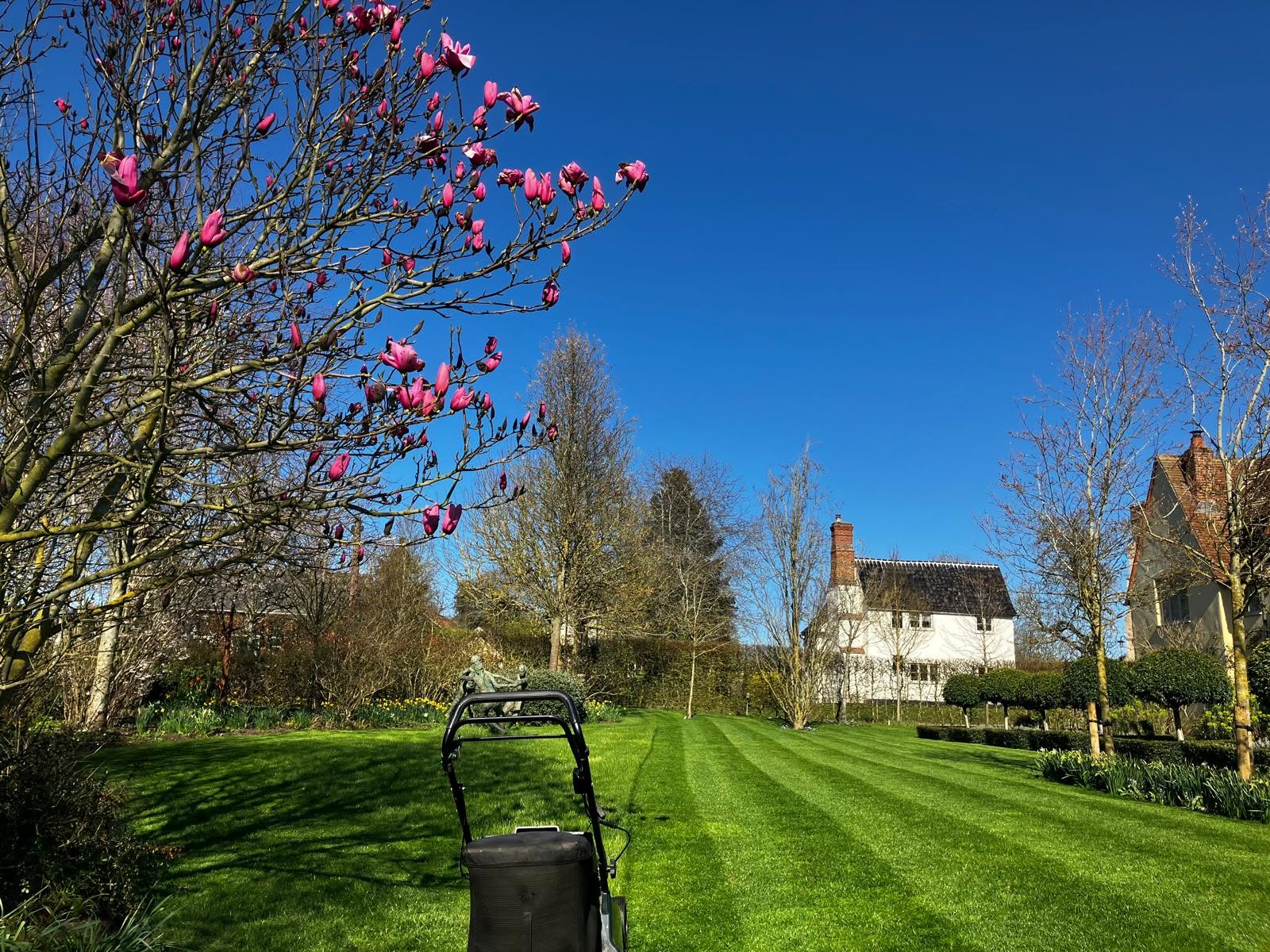
It’s worth being honest that most of these calls don’t reveal a hidden problem. Most of the time, the honest answer to “has anything looked different or surprised you” is genuinely “no, it all looks good” — and that’s a completely valid and common outcome of the call.
Even on those calls, I don’t think the two weeks is wasted. It’s an opportunity to confirm the client is still following the right watering and maintenance approach, to answer any small questions that have come up since the visit, and simply to maintain the relationship rather than disappearing after the invoice is paid. I’ve written about why that ongoing relationship matters in a Sudbury homeowner who asked if I’d come back next year — the two-week call is one concrete way that long-term accountability actually shows up in practice, rather than just being a phrase I use when describing how I operate.
It also gives me useful information even when nothing is technically wrong. If a client tells me everything looks great, that’s a real data point I can compare against what I find at their next visit, building exactly the kind of property-specific history I’ve described in why I keep notes on every Sudbury lawn I work on. The two-week call becomes part of that ongoing record for the property, not just an isolated check-in.
What This Means If You’re a New Client
If you’ve recently had work done and you’re inside that two-week window, here’s my honest advice regardless of who did the work: pay attention to anything that’s looked different or unexpected, even if it seems too minor to mention. The small, easy-to-dismiss observations are often exactly the early signal that matters most, and catching something at two weeks is almost always easier and cheaper to address than catching it a month or two later.
If you’re considering hiring someone for lawn work in Greater Sudbury, it’s worth asking directly whether they follow up after the job, and how. A company that disappears the moment the invoice is paid is giving up the chance to catch exactly the kind of small, early signals that have repeatedly saved my clients from bigger problems.
📞 Call or text me: 705-507-6787
Or fill out the free quote form here — I get back to everyone same day.
— Ryan Lingenfelter
Owner, Cutting Edge Lawn & Landscaping
Garson, Ontario
Related Articles
- A Sudbury Homeowner Asked If I’d Come Back Next Year — Here’s Why That Question Matters
- “Do You Guarantee Results?” — Here’s My Honest Answer Every Single Time
- What Happens If You Don’t Water New Sod in Sudbury’s First Two Weeks
- A Sudbury Homeowner Asked Me to Watch Her Water the Lawn — Here’s What I Saw
- Why I Keep Notes on Every Sudbury Lawn I Work On
- Two Sudbury Neighbours Did the Exact Same Lawn Routine — Only One Lawn Thrived
