
I’m Ryan Lingenfelter — owner of Cutting Edge Lawn & Landscaping in Garson, Ontario.
“The lawn is fine. It’s not perfect, but it’s fine.”
That’s what the homeowner — I’ll call him Dennis — told me on the phone before I drove out to his property in Hanmer. He was calling because he wanted to add grass cutting to his service, not because anything was wrong. The lawn was fine, he said. Just needed regular maintenance from here on out.
I told him I’d come out and take a look before quoting anything.
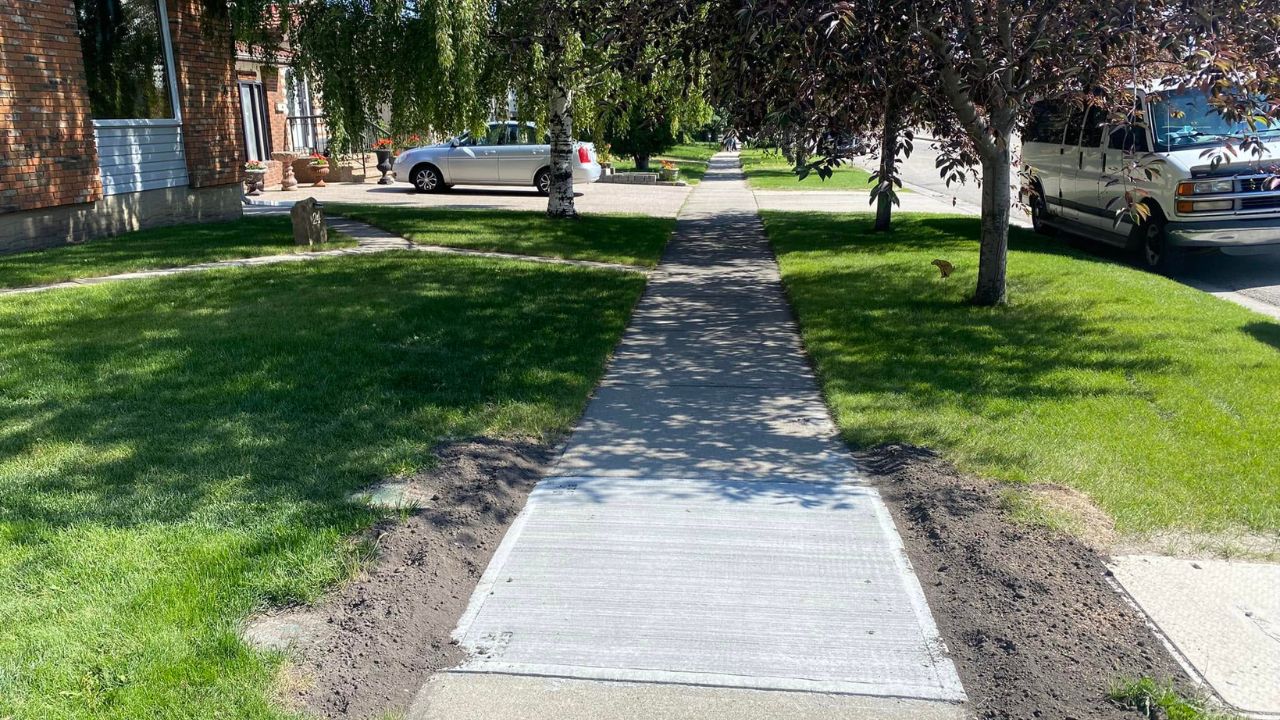
When I arrived, Dennis met me at the driveway. He gestured toward the front yard. From the driveway, it looked reasonable. Not spectacular — a bit thin in places, some variation in colour — but nothing that screamed emergency. I could see why he’d described it as fine.
Then I asked him to walk it with me.
What happened in the next twenty minutes is a version of something I’ve experienced on dozens of Sudbury properties. The lawn that looks acceptable from the driveway looks completely different when you’re standing in it, pushing a screwdriver into the soil, pulling on the grass, looking at the drainage patterns after a recent rain.
Dennis went quiet about halfway through the walk. Not upset — just processing. By the time we finished, he had a different understanding of what he was actually working with.
Here’s what we found — and what it means for any Sudbury homeowner who thinks their lawn is fine.
What the Lawn Looked Like From the Driveway vs What It Looked Like Up Close
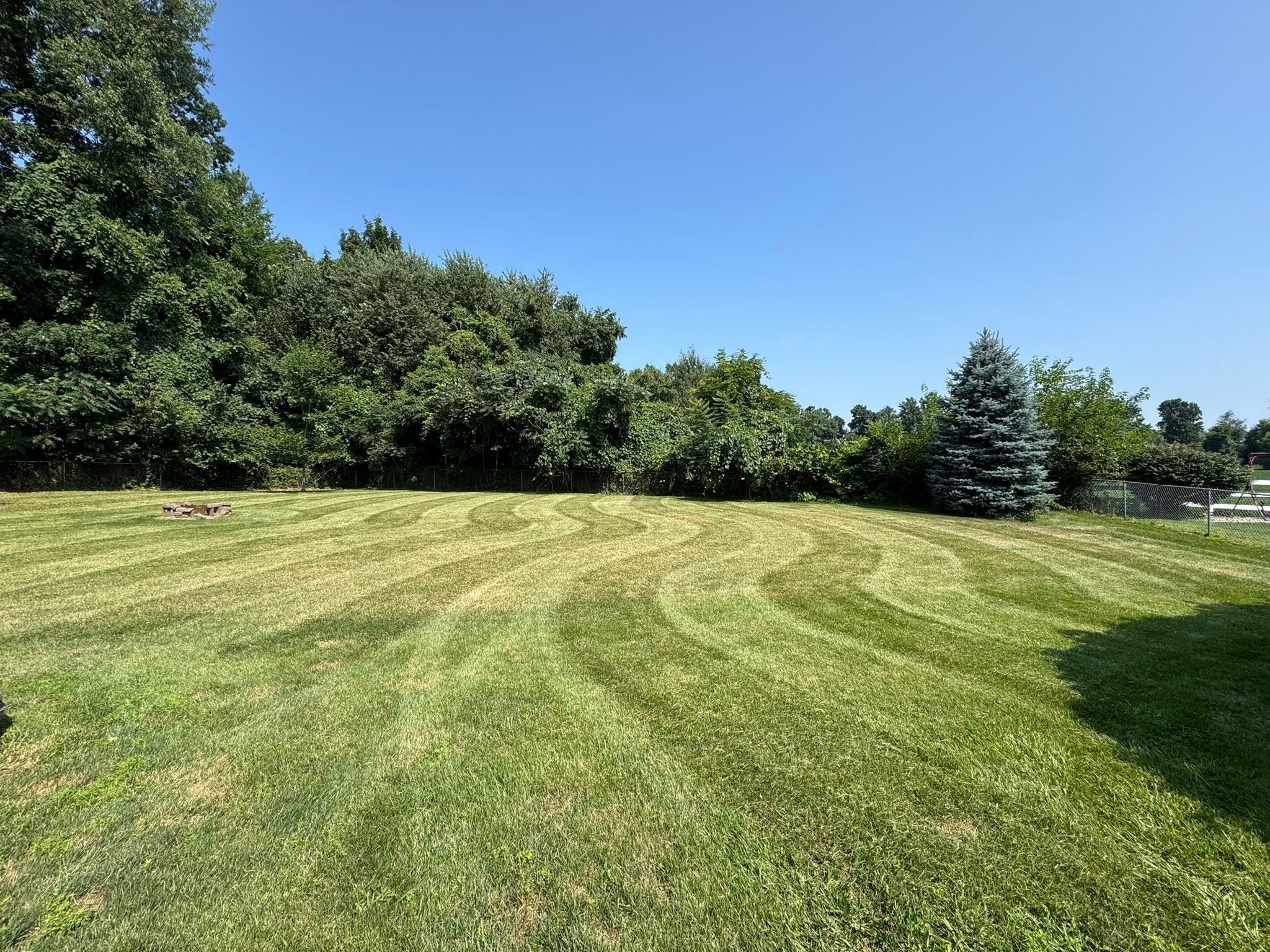
From the driveway, Dennis’s front lawn was green in the shaded section near the house, thin but present in the open middle section, and slightly brown at the back near the fence. Nothing alarming. A typical Sudbury lawn that had been cut but not really maintained.
The first thing I did was the screwdriver test in three spots — front shaded section, open middle, and the thin area near the back.
Front section: four inches. Reasonable.
Middle section: just over an inch and a half. Severe compaction.
Back section near fence: less than an inch. The worst compaction I’d seen on a residential property in months.
Three sections of the same lawn, three completely different soil conditions. From the driveway, they all looked like variations of the same struggling grass. Up close, they were three different problems requiring three different responses.
Dennis watched me do the test in each spot. When the screwdriver stopped at under an inch in the back section, he said “that’s not normal, is it?”
No. That’s concrete-level compaction. Water doesn’t penetrate it. Roots can’t grow through it. Fertilizer sits on the surface and washes away. Anything you do to that section — seed, fertilizer, water — is largely wasted until the compaction is addressed. I covered exactly why compaction is the root cause of most Sudbury lawn failures in my spring lawn care mistakes guide here.
The Drainage Problem Nobody Had Noticed
We moved to the backyard. Dennis told me there was a section near the side fence that had “always been a bit wet in spring.” He said it dried out by June so he hadn’t thought much about it.
There were still water marks on the fence posts — visible lines about four inches up showing where water had been sitting against the wood. It was mid-June, three weeks past any significant rain. The marks were still there because the water had been sitting long enough to stain.
I pushed the screwdriver into that corner. It went in six inches without resistance — the soil was saturated significantly deeper than the surrounding areas. The water wasn’t just sitting on the surface in spring. It was pooling underground in that corner for weeks after snowmelt, keeping the soil waterlogged well into the growing season.
Dennis’s back fence section was the worst-looking part of his lawn — thin, struggling, never really greening up properly in spring. He’d attributed it to the fact that it was on the north side and didn’t get much sun. The shading was a factor, but it wasn’t the main cause.
The main cause was drainage. The grading at the back of the property was directing snowmelt runoff toward that corner every spring. The grass roots in that section were drowning before the season started, every year, systematically. The shading just made a bad situation worse.
No amount of overseeding, fertilizer, or maintenance was going to fix that section until the grade was corrected. I’ve seen homeowners repeat this exact mistake for years — I wrote about one specific case in my drainage honesty article here where I gave a customer the wrong answer for two seasons before catching what was actually wrong.
The Mowing Height Discovery
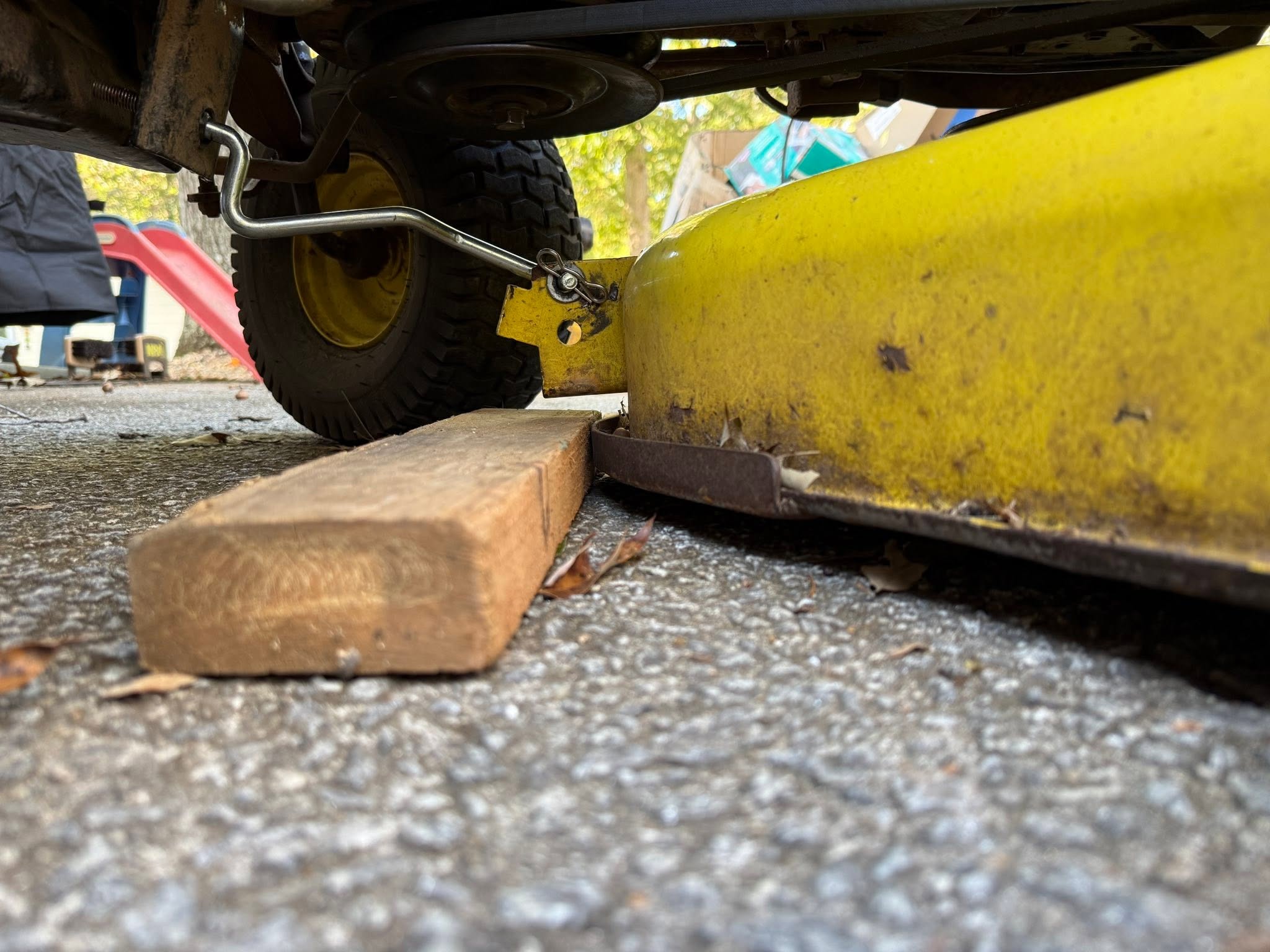
Dennis mentioned he cut the lawn himself. I asked if I could look at his mower. He took me to the garage.
The deck was set at the second notch from the bottom. Just under two inches.
This was the answer to one of the things I’d been noting during the walk — the middle section of the front lawn that had severe compaction but was also cut very short had almost no root system. I could see this by pulling on the grass — it came up with minimal resistance even in sections where the screwdriver test showed moderate compaction. The roots were so shallow they barely anchored.
A lawn cut at under two inches on Sudbury clay with any compaction at all develops roots only in the top half inch of soil. In July, when the surface layer dries out during a warm stretch, those roots have nowhere to pull moisture from. The lawn goes brown fast and stays brown. Not because of heat or drought — because the root system was never given the conditions to develop properly.
Dennis had been cutting his lawn short because he thought a tight, neat lawn looked better. What he’d been producing for multiple seasons was a grass plant with no viable root depth — one that looked decent in May and June when moisture was near the surface, and struggled through every July and August regardless of how much he watered.
I moved the deck adjustment lever to the third notch from the top — about three inches — while we were standing there. Took twenty seconds. That one adjustment, if maintained all season, would produce meaningfully different July results than anything else he could do to the lawn. I documented this exact situation on a Chelmsford property in my June-to-August lawn failure article here — same mechanism, same clay soil, same result.
What the Walk Changed About the Recommendation

If I’d taken Dennis at his word on the phone — lawn is fine, just needs regular cutting — I would have quoted him a grass cutting service and left.
What I actually quoted after the walk was:
A grass cutting service — yes, what he called for. Same day, same price. But at 3 inches, not whatever the previous setting was.
Spring aeration — the middle section and back section of the front yard had compaction that was going to undermine the cutting service all season. Mowing a compacted lawn consistently doesn’t fix the compaction. It just produces consistent results on a problem that isn’t being addressed.
Drainage correction on the back fence corner — not immediately urgent but necessary before any new grass investment in that area. A small topsoil and grading job that would stop the annual spring drowning that had been killing that section for years.
The total scope was larger than what Dennis had called about. But it was the honest scope. Booking grass cutting alone on that property without flagging the compaction and drainage issues would have produced mediocre results and a frustrated customer by August — and I’d be the one getting the call wondering why the lawn wasn’t improving despite consistent maintenance.
Dennis signed for the grass cutting and the aeration. He decided to hold off on the drainage correction until fall — his budget call to make. I told him the back corner would keep struggling until it was done, and he accepted that. At least he understood why now.
That’s the difference between a quote based on a phone description and a quote based on an actual walk.
What Most Sudbury Homeowners Miss When They Look at Their Own Lawn

Dennis’s situation is common. Not because he was inattentive — he clearly cared about his property. It’s common because the visual information available from the driveway, or even from mowing the lawn weekly, doesn’t reveal the soil conditions underneath.
You can mow a severely compacted Sudbury lawn every week for three years and not know the compaction is there. You can water a drainage-damaged section faithfully and not connect the water marks on the fence post to the dead grass two feet away. You can look at thin grass in a shaded area and attribute it to the shade rather than to the waterlogged soil underneath.
The tools that reveal these problems are simple. The screwdriver test takes two minutes and tells you more about your lawn’s actual situation than any visual assessment. The water mark check on fence posts after rain tells you where drainage problems are. The pull test on dead sections tells you whether roots are intact or gone.
None of these things require professional knowledge to do. They just require knowing to do them — and most homeowners have never been shown.
Here’s the three-step version I’d recommend for any Sudbury homeowner who wants to actually understand what they’re working with before spending money on lawn care:
Step one — the screwdriver test. Walk the property with a flathead screwdriver. Push it into the soil in the front, middle, and back sections, in sun and shade. Note where it stops. Under 3 inches anywhere means compaction is affecting that section. Under 2 inches means severe compaction. The difference between sections tells you where the problems are concentrated. I explained the full compaction picture for each Sudbury neighbourhood in my area-by-area lawn guide here.
Step two — the drainage check. After any significant rain, walk the property and note which sections are still wet two days later. Check for water marks on fence posts, shed walls, or foundation edges. Soggy spots more than 48 hours after rain are drainage candidates. Those sections will keep underperforming any lawn care you apply until the grade is addressed.
Step three — the mower deck check. Park your mower on the driveway and measure the deck height from the ground. If it’s below 2.5 inches — raise it to 3 and leave it there. This is the single highest-impact free change most Sudbury homeowners can make, and it costs nothing except adjusting a lever.
If you run through those three steps and find problems — now you have a real picture of what your lawn needs. And the recommendations that follow from that picture are going to produce different results than a grass cutting service quoted over the phone based on “the lawn is fine.”
If you want someone to walk your property and do this assessment with you — give me a call. I’ll come out, run through exactly what I ran through with Dennis, and give you a straight answer about what’s actually going on.
📞 Call or text me directly: 705-507-6787
Or fill out the free quote form here and I’ll get back to you same day.
We service Garson, Val Caron, Hanmer, Lively, Chelmsford, Azilda, Capreol, and all of Greater Sudbury.
— Ryan Lingenfelter
Owner, Cutting Edge Lawn & Landscaping
Garson, Ontario
Frequently Asked Questions
How do I know if my Sudbury lawn has hidden problems?
Three tests reveal most hidden lawn problems on Sudbury properties. The screwdriver test — push a flathead screwdriver into the soil in multiple spots — tells you about compaction. If it stops before 3 inches anywhere, compaction is limiting that section regardless of what the surface looks like. The drainage check after rain — sections still soggy 48 hours after rain have drainage issues that undermine any lawn care applied there. And the mower deck check — if it’s set below 2.5 inches, shallow roots are being produced that will fail in every July dry stretch regardless of how much you water.
Why does my Sudbury lawn look different from different spots on the property?
Sudbury’s Canadian Shield soil creates significant variation in compaction, drainage, and soil depth across a single property. Sun exposure, grading patterns, construction history, and foot traffic all create different conditions in different zones. A front shaded section may have reasonable soil structure while the open back section has severe compaction — same property, same maintenance, completely different results. The screwdriver test in multiple sections reveals this variation accurately and quickly.
What does a professional lawn assessment actually look for in Sudbury?
A proper assessment on a Sudbury property includes the compaction test with a screwdriver in multiple sections, an estimate of live grass versus dead and weed coverage, identification of drainage patterns and any recurring wet spots, a check of the mowing height, and a review of what treatments have been done and what the results were. These inputs change the recommendation — a section with drainage problems needs different treatment than a section with compaction, and a section with both needs both addressed before any maintenance service will produce lasting improvement.
Is regular grass cutting enough to maintain a Sudbury lawn?
For a lawn with healthy soil structure — reasonable compaction level, no drainage issues, adequate topsoil depth — consistent grass cutting at the correct height is the primary maintenance requirement. For most Sudbury properties, which have clay-heavy soil that compacts every winter, regular cutting alone doesn’t address the compaction that accumulates. Annual core aeration alongside regular cutting produces dramatically different long-term results than cutting alone. I covered exactly why in my article about the aeration advice I got wrong for two years here.
How much does a lawn assessment cost in Sudbury?
A quote call with Cutting Edge Lawn and Landscaping is free — I walk the property, do the compaction tests, check for drainage issues, look at the mowing setup, and give you an honest assessment of what I find. No charge for the assessment. The quote that follows reflects what the property actually needs. Call 705-507-6787 or fill out the quote form to schedule.
What is the most important thing to check on a Sudbury lawn before starting any treatment?
Soil compaction — because it determines whether every other treatment you apply will work or be wasted. Fertilizer on compacted clay doesn’t reach the root zone. Seed on compacted clay doesn’t establish reliably. Water on baking compacted clay runs off rather than penetrating. The screwdriver test in sixty seconds tells you whether compaction is a factor. If it is, aeration before anything else produces the most improvement for the money spent. I covered the full sequence in my Azilda homeowner routine article here — she was doing everything right but the compaction was blocking all of it.
Ryan Lingenfelter is the owner of Cutting Edge Lawn & Landscaping in Garson, Ontario. Since 2020, his crew has provided full lawn care and landscaping services across Greater Sudbury — Garson, Val Caron, Hanmer, Lively, Chelmsford, Azilda, and Capreol. Licensed, insured, BBB A+ rated, and ThreeBest Rated for lawn care services in Sudbury.
📞 Phone: 705-507-6787
📍 Service Area: Greater Sudbury, Ontario
🔗 Free Quote: cuttingedgelawn.ca/quote
Related Services
- Core Aeration Services in Sudbury
- Grass Cutting Services
- Sod Installation in Sudbury
- Property Cleanup Services
Continue Reading
- Every Sudbury Neighbourhood Has a Different Lawn Problem — Area by Area
- Perfect in June, Half Dead by August — The Problem Nobody Talks About
- I Realized I’d Been Giving Sudbury Homeowners the Wrong Advice for Two Years
- A Homeowner Showed Me Her Lawn Care Routine — I Had to Be Honest
