
I’m Ryan Lingenfelter — owner of Cutting Edge Lawn & Landscaping in Garson, Ontario.
The call came in mid-August. A homeowner in Garson — I’ll call her Diane — was confused and frustrated. She’d had her lawn aerated in spring. She’d been following a fertilizer program. She’d been watering consistently. In June her lawn had looked genuinely good — thick, green, one of the better-looking properties on her street.
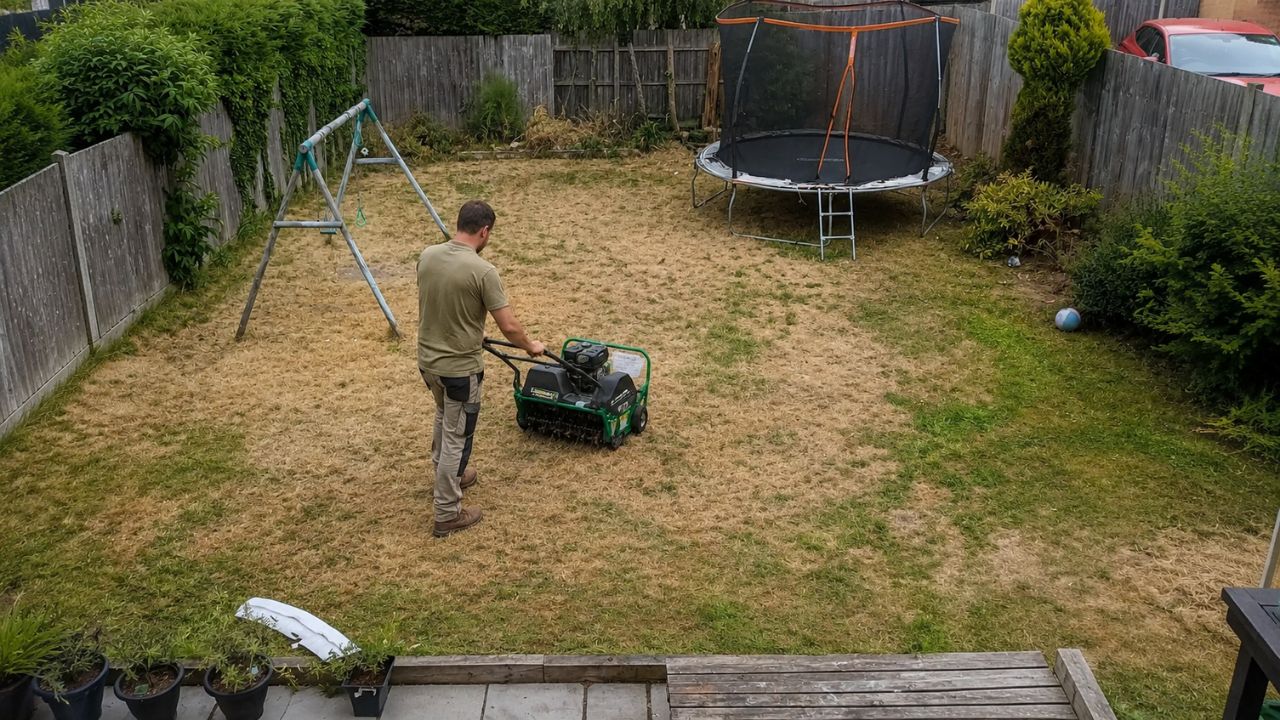
Now it was August and roughly half the lawn was dead or dying. Not the whole lawn. Specific sections. The back section that got afternoon sun. A strip along the west side. The area near the back fence that had always been the thinnest.
She’d called the company that had done her aeration. They told her it was the heat and the dry stretch in July. They said to wait and it would come back in fall.
She wasn’t satisfied with that answer. Because her neighbour’s lawn — same street, same soil, same July — looked fine.
So she called me.
What I found when I walked that property explained not just why Diane’s lawn had failed, but why this specific pattern — looking good in June, declining through July, half dead by August — shows up on Sudbury properties every single summer. And why it almost always goes undiagnosed as “summer heat” when the real cause is something entirely different.
What I Found When I Actually Walked the Property

The first thing I noticed was the pattern of the dead sections. This matters. Dead sections distributed randomly across a lawn tell a different story than dead sections that follow a geographic pattern.
Diane’s dead sections were on the south and west-facing areas — the parts of the property that got the most direct afternoon sun. The north-facing front section and the shaded side yard near the neighbour’s cedar hedge were both still green.
That pattern is the diagnostic. It’s not random heat damage. It’s not drought damage distributed uniformly. It’s heat-differential damage — sections that faced the maximum sun exposure dying while sections with relief surviving.
I did the screwdriver test in the dead back section. Stopped at just under an inch. Then I did it in the green front section. Three and a half inches.
Same property. Same aeration in spring. Dramatically different soil compaction by mid-August.
This is the problem that almost nobody explains to Sudbury homeowners, and it’s the reason the “wait for fall” answer is wrong. It wasn’t heat that killed Diane’s back lawn. It was a combination of three things that had been quietly working against that section all season — and the spring aeration had masked the problem long enough that June looked good before the failure became visible.
The Three Things Working Against Her Back Lawn All Season

Problem One — Differential Recompaction After Spring Aeration
Spring aeration opened Diane’s entire lawn in late May. Both the front and back sections benefited. In June, both looked good because both had improved soil structure from the fresh aeration.
But between May and August, something different happened in each section. The front yard — shaded through most of the afternoon by her house and a mature tree — maintained soil moisture. The clay stayed at a moderate temperature. The aeration holes stayed open longer because the soil wasn’t drying and contracting under intense heat.
The back section — full afternoon sun from noon to 7pm, no shade relief — dried and recompacted rapidly through June and July. Sudbury clay in sustained 28-30 degree direct sun contracts and closes the aeration holes within 6-8 weeks. By mid-July, the back lawn was operating on soil that was nearly as compacted as before the spring aeration. The roots that had started to grow deeper after aeration had no more room to go.
When the dry stretch in mid-July hit, the front lawn had roots deep enough to survive it. The back lawn had roots in the top 1-2 inches of a recompacted clay surface — and those roots had nothing to pull from.
I’ve written about this specific phenomenon in detail in my wrong advice article here — it’s the thing I missed on Sudbury properties for two years before a similar situation made me look more carefully.
Problem Two — Watering That Was Correct in Principle But Wrong for the Specific Conditions
Diane had been watering twice a week, long sessions, early morning. On paper this is good practice — the advice I’d give to most Sudbury homeowners.
But on a full-sun clay surface that was recompacting through July, the water wasn’t penetrating the way it needed to. The clay was increasingly dense and hydrophobic — when clay dries and bakes, it actually repels water rather than absorbing it. The water was wetting the surface, evaporating quickly in the afternoon heat, and providing significantly less actual root-zone moisture than the same volume of water would have delivered on the more porous front lawn clay.
The fix for this specific condition is the cycle-and-soak approach I explain in my Sudbury watering guide here — two shorter sessions with 45-60 minutes between them, which allows the first pass to soften the clay surface enough for the second pass to penetrate. On a baking recompacted clay surface in July, this approach is the only way to consistently get moisture below the surface layer.
Problem Three — A Mowing Height That Removed the Last Buffer
When I checked Diane’s mower, the deck was set at just under 2 inches. She’d dropped it from her spring setting because she wanted the lawn to look neat in summer.
At 2 inches on a recompacting clay surface with roots already struggling to go deep, every mow was removing most of the grass blade and forcing the plant to divert all available energy into regrowing leaf rather than extending roots. The already-shallow root system got no relief. By late July, the back lawn was a stressed, shallow-rooted plant growing on baking clay being cut weekly to leave almost no leaf surface for energy production.
The front lawn, with the same mowing height, was surviving because the soil conditions were better — the deeper roots had more resources to work with. The back lawn was fighting everything at once.
Why June Looked Good — And Why That Made It Harder to Catch
This is the part that I think is most important for Sudbury homeowners to understand.
The spring aeration genuinely helped the whole lawn in May and June. Both sections opened up. Both sections produced better growth than the previous year. The homeowner saw improvement and correctly attributed it to the spring work.
But the improvement in the back section was conditional — it depended on the aeration holes staying open through the summer. And on a full-sun clay surface with no shade relief, those holes were going to close by mid-July regardless of what else was done. The spring work bought two good months. It didn’t solve the underlying condition.
The company that had done the aeration saw a good June result and assumed the job was done. They didn’t flag that the south and west-facing sections were higher risk for summer recompaction. They didn’t adjust the watering recommendation for the specific conditions of those sections. They didn’t tell Diane to check in mid-July to see if those sections were holding.
When August came and those sections failed, the explanation was “summer heat and the dry stretch.” That explanation was partly true. But it missed the mechanism — and without understanding the mechanism, Diane would have gotten the same spring aeration next year, the same good June, and the same dead August.
What the Fix Actually Looked Like

I told Diane what had actually happened and why. Then I told her what needed to change.
For the immediate situation — August with a half-dead back lawn — the honest answer was that the dead sections weren’t coming back that season. The root system was gone in those areas. We were going to do a fall aeration and overseed in early September, and the spring following would be the test of whether the new approach worked.
For the ongoing situation — what to do differently so this didn’t repeat — three changes.
First, I recommended double-pass aeration on the south and west-facing sections in spring — two perpendicular passes rather than one, which significantly increases the hole density and extends how long the soil improvement holds in high-heat conditions. This is what I now do routinely on full-sun clay properties in Sudbury. The aeration timing guide here covers when and why.
Second, I adjusted her watering approach for the south-facing section specifically — cycle-and-soak twice a week rather than single long sessions, with more frequent application in July when the clay is baking. The goal is getting water below the surface layer, not just wetting it.
Third — raise the mowing deck to 3 inches and leave it there regardless of season. The longer blade gives the plant energy for root development. On recompacting clay in August, every millimetre of blade length that stays on the plant matters. I wrote about why cutting height is the highest-impact low-cost change most Sudbury homeowners can make in my $35 lawn fix article here.
The following spring, double-pass aeration in late May. Fall aeration in early September with immediate overseeding into the fresh holes. By September of the second year, the back section was no longer dying by August. The pattern had broken.
The Pattern I See Every Summer Across Sudbury
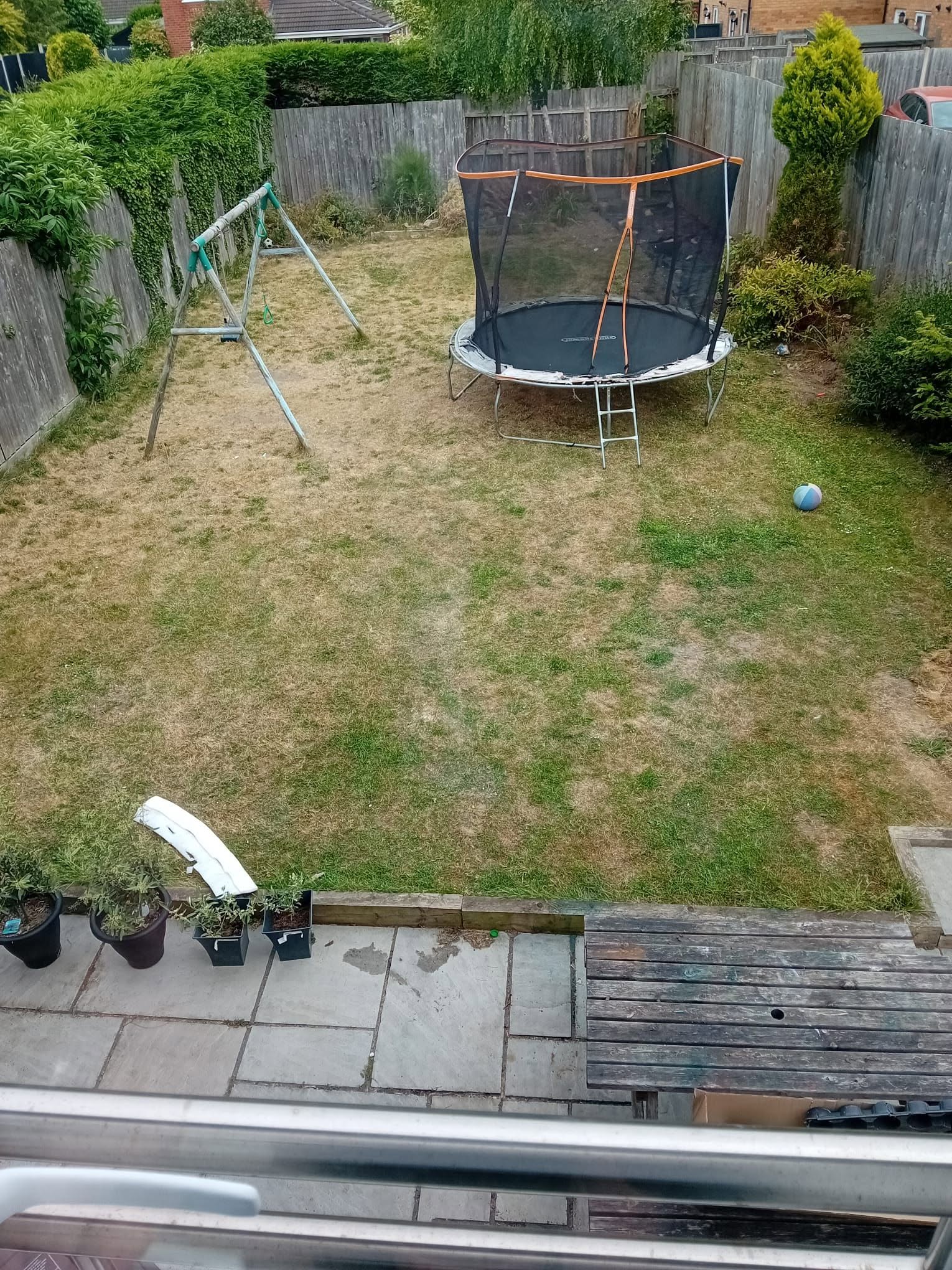
Diane’s situation isn’t unusual. Every August I get calls from Sudbury homeowners describing the same pattern — lawn that looked good in June declining through July and dying in specific sections by August. It gets blamed on heat, drought, and summer stress. Sometimes those explanations are partially accurate. But the underlying mechanism on Sudbury properties is almost always differential recompaction driven by sun exposure — and that mechanism is almost never identified.
The tell is the geographic pattern of the dying sections. Random dying across the whole lawn is something else — disease, grubs, drainage. Dying concentrated in the south and west-facing sections while north-facing and shaded sections stay green is the signature of this specific problem.
If you see that pattern on your property this summer, here’s what I’d do:
Do the screwdriver test in a dying section and a healthy section. If the dying section stops significantly earlier, recompaction is confirmed.
Check your mowing height. If it’s below 2.5 inches, raise it to 3 immediately and leave it there.
Switch your watering in the dying sections to cycle-and-soak — two shorter passes with an hour between them rather than one long session.
Book a double-pass aeration for next spring specifically for those south and west-facing sections. One pass won’t hold through a Sudbury summer on heavy clay with full afternoon sun.
These changes together will produce a different result next year. Not because the soil type is different — Sudbury clay is what it is. But because the treatment will match the specific demands of the conditions rather than applying a generic approach that works for average conditions and misses the high-heat outlier.
If you’ve been seeing this pattern and want someone to walk the property and confirm what’s happening before next season — give me a call.
📞 Call or text me directly: 705-507-6787
Or fill out the free quote form here and I’ll get back to you same day.
We service Garson, Val Caron, Hanmer, Lively, Chelmsford, Azilda, Capreol, and all of Greater Sudbury.
— Ryan Lingenfelter
Owner, Cutting Edge Lawn & Landscaping
Garson, Ontario
Frequently Asked Questions
Why does my Sudbury lawn look good in June but die in August?
The most common cause on Sudbury properties is differential recompaction — the clay soil in south and west-facing sections exposed to afternoon sun dries and recompacts significantly faster after spring aeration than shaded or north-facing sections. The spring aeration produces genuine improvement that’s visible in June, but on full-sun clay sections the aeration holes close by mid-July as the clay contracts in sustained heat. By August, those sections are operating on recompacted soil with shallow roots that have no moisture reserve during dry stretches — while shaded sections with better soil structure remain green.
What does it mean if only some sections of my Sudbury lawn die in summer?
A geographic pattern of summer die-off — sections on the south or west side dying while north-facing or shaded sections stay green — is the specific signature of differential heat-driven recompaction on Sudbury clay. It’s not random heat damage and it’s not drought stress distributed uniformly. It’s a soil structure problem that varies across the property based on sun exposure. The screwdriver test in the dying sections versus healthy sections will usually confirm this — the dying sections will stop significantly earlier, showing higher compaction in those specific areas.
Does single-pass aeration work for full-sun Sudbury lawns?
Single-pass spring aeration is the right starting point for all Sudbury lawns. For full-sun south and west-facing sections on heavy clay with thin topsoil, a single pass often isn’t sufficient to maintain improved soil structure through a hot Sudbury summer — the holes close too quickly in sustained heat. Double-pass aeration in spring (two perpendicular passes that significantly increase hole density) plus a fall aeration pass produces lasting improvement on these specific sections. I covered the sun exposure factor and its effect on aeration timing in my aeration advice article here.
How should I water a Sudbury lawn that’s browning out in summer?
On Sudbury clay that’s baking in July and August, standard watering often fails because dry clay becomes hydrophobic — it repels water rather than absorbing it. The fix is cycle-and-soak: two shorter watering sessions with 45-60 minutes between them rather than one long session. The first pass softens the clay surface enough for the second pass to penetrate to the root zone. Combined with morning timing so grass blades dry during the day, this approach gets significantly more moisture to the roots than the same volume applied in a single session. Details in my Sudbury watering guide here.
Can a Sudbury lawn that died in August come back in fall?
Sections that went fully dormant — browning but with intact root systems — may green up in September when temperatures cool and moisture returns. Sections that actually died — root systems gone, grass pulling up with no resistance — will not come back and need overseeding or sod. The test is the pull test: grab grass in the dead section and pull gently. If it comes up with no resistance, the root system is gone. If it resists, the roots are alive and dormancy recovery is possible. Fall aeration in early September followed by overseeding gives dormant-but-alive sections their best chance of recovery and filling in before winter.
Why does my neighbour’s Sudbury lawn survive summer heat when mine doesn’t?
The most common reasons are differences in cutting height, watering approach, aeration history, and shade coverage — even small differences in these factors compound significantly on Sudbury clay over a hot summer. A neighbour cutting at 3 inches has roots significantly deeper than one cutting at 1.75 inches — those extra inches of root depth are the entire difference between surviving a July dry stretch and dying in it. I covered the full comparison in my neighbour’s lawn article here — the difference is almost always in accumulated foundational habits, not luck or different soil.
Ryan Lingenfelter is the owner of Cutting Edge Lawn & Landscaping in Garson, Ontario. Since 2020, his crew has provided full lawn care and landscaping services across Greater Sudbury — Garson, Val Caron, Hanmer, Lively, Chelmsford, Azilda, and Capreol. Licensed, insured, BBB A+ rated, and ThreeBest Rated for lawn care services in Sudbury.
📞 Phone: 705-507-6787
📍 Service Area: Greater Sudbury, Ontario
🔗 Free Quote: cuttingedgelawn.ca/quote
Related Services
- Core Aeration Services in Sudbury
- Grass Cutting Services
- Sod Installation in Sudbury
- Property Cleanup Services
Continue Reading
- I Realized I’d Been Giving Sudbury Homeowners the Wrong Advice for Two Years
- Spring or Fall Aeration in Sudbury — Which Is Better?
- The $35 Fix That Saved a Sudbury Lawn
- How to Water Your Sudbury Lawn the Right Way
- My Neighbour’s Lawn Looks Perfect Every Summer — Here’s What I Found Out
