

I’ve worked on properties all over Greater Sudbury since 2020, and there’s one conversation I have over and over again, usually with people who’ve moved here from somewhere else in Ontario.
“Why is everything so hard here? I had a lawn in Barrie for fifteen years and never had problems like this.”
And the honest answer is: you’re standing on different ground. Literally. Greater Sudbury sits on the Canadian Shield — one of the oldest and most geologically distinct landscapes on the planet — and that fact shapes almost everything about how yards, lawns, and landscaping work up here. It’s not that you’re doing anything wrong. It’s that the rules are different, and most lawn care advice you’ll find online is written for places that aren’t sitting on two billion year old bedrock.
This article is the explanation I wish I could hand every new homeowner the day they move to Sudbury. What the Shield actually is, what it does to your soil and your yard, and what it means practically for how you take care of your property.
What the Canadian Shield Actually Is
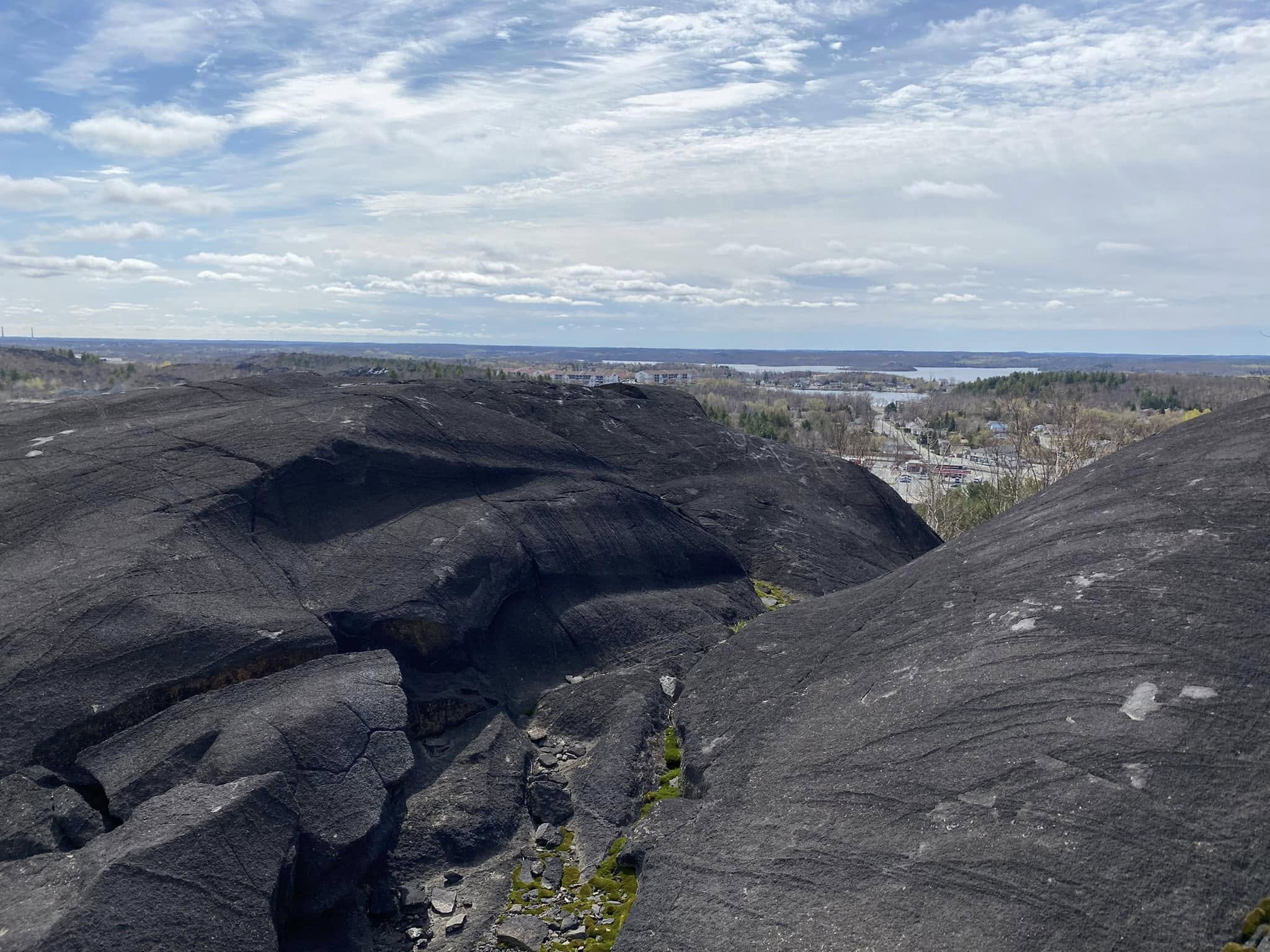
The Canadian Shield is a massive area of exposed and near-surface bedrock that covers most of central and eastern Canada — roughly half the country by area. It’s made up of some of the oldest rock on Earth, much of it over a billion years old, formed from ancient volcanic and metamorphic processes long before there was complex life on the planet.
Sudbury sits right in the middle of it, and our specific geology is even more unusual than most of the Shield. The Sudbury Basin — the geological structure underlying much of the city — was formed by a massive meteorite impact roughly 1.8 billion years ago. That impact is part of why this area has such significant mineral deposits, which is the entire reason Sudbury exists as a mining city in the first place.
What matters for homeowners is simpler than the geological history, though. Across most of Greater Sudbury, solid rock sits close to the surface. In many areas, it’s at the surface — you can see it. Rock outcrops in backyards, rock faces along roadways, boulders that are clearly part of the bedrock rather than loose stones. In areas where the rock isn’t visibly exposed, it’s often just a few inches to a couple of feet below the surface, covered by a relatively thin layer of soil that’s accumulated since the last ice age.
This is fundamentally different from most of southern Ontario, where soil depths can be many feet deep with no bedrock anywhere near the surface. When someone moves from Barrie or London or the GTA to Sudbury, they’re moving from deep soil to thin soil over rock, and almost everything that feels different about yard work here traces back to that one fact.
Why Sudbury Soil Is So Thin and What That Means
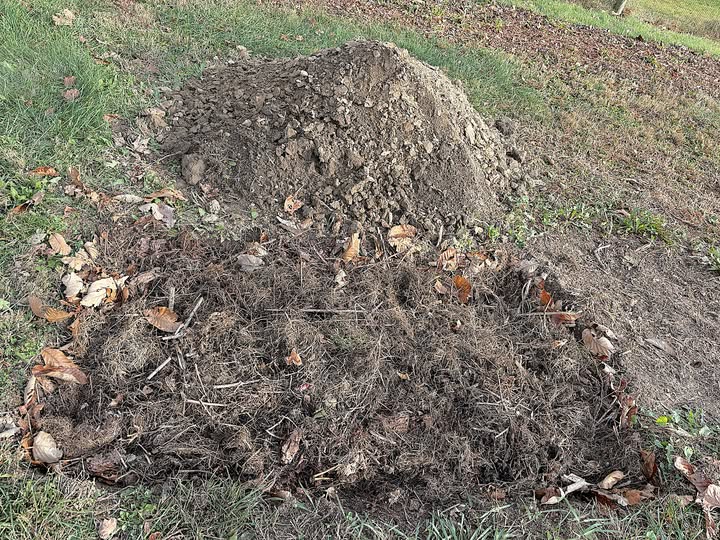
The soil that exists on top of the Shield in Sudbury is mostly the product of glacial activity from the last ice age, plus thousands of years of organic accumulation since. In some areas it’s a reasonable depth — a foot or more of decent soil. In a lot of areas, especially on higher ground or where construction graded away the existing topsoil, you might have only a few inches before you hit rock or very dense glacial till.
Here’s what thin soil over rock actually means for a lawn, practically.
Root Depth Is Limited
Grass roots want to grow down. In deep soil, roots can extend a foot or more, accessing moisture and nutrients well below the surface. When rock or dense till sits 4 to 8 inches down, roots hit that barrier and have nowhere to go. A lawn with a shallow root system is more vulnerable to drought stress, because it can’t reach moisture that might be available deeper down — there simply isn’t a deeper down to reach.
This is part of why Sudbury lawns can go from looking fine to looking stressed surprisingly quickly during a dry stretch in July. The buffer that deeper-rooted grass would have in better soil just isn’t there.
Soil Warms and Cools Faster
Thin soil over rock responds to temperature changes faster than deep soil. In spring, this can actually work in your favour — the soil warms up relatively quickly once the snow is gone, which is part of why the spring growing window in Sudbury, while short, can be quite productive once it starts. But it also means the soil can dry out faster in summer heat, and cool down faster in fall, compressing the growing season from both ends.
Soil Volume for Nutrients and Water Is Limited
A given square foot of lawn with 12 inches of soil holds significantly more water and nutrient reserve than the same square foot with 4 inches of soil over rock. This means Sudbury lawns, especially on thin-soil lots, dry out faster and use up available nutrients faster than a lawn with deep soil would. It’s not that the soil itself is necessarily poor quality — it’s that there’s less of it to work with.
You Can’t Just “Dig Deeper” to Fix Problems
In areas with deep soil, a lot of landscaping and drainage problems can be solved by digging — French drains, deeper planting holes, regrading by excavating. On the Shield, digging often means hitting rock within a foot or two, which limits what solutions are practical. This is one of the reasons why checking what’s actually under a problem area matters so much here — sometimes the limiting factor genuinely is the bedrock itself, and the solution has to work with that constraint rather than digging it away.
How the Shield Affects Drainage on Your Property
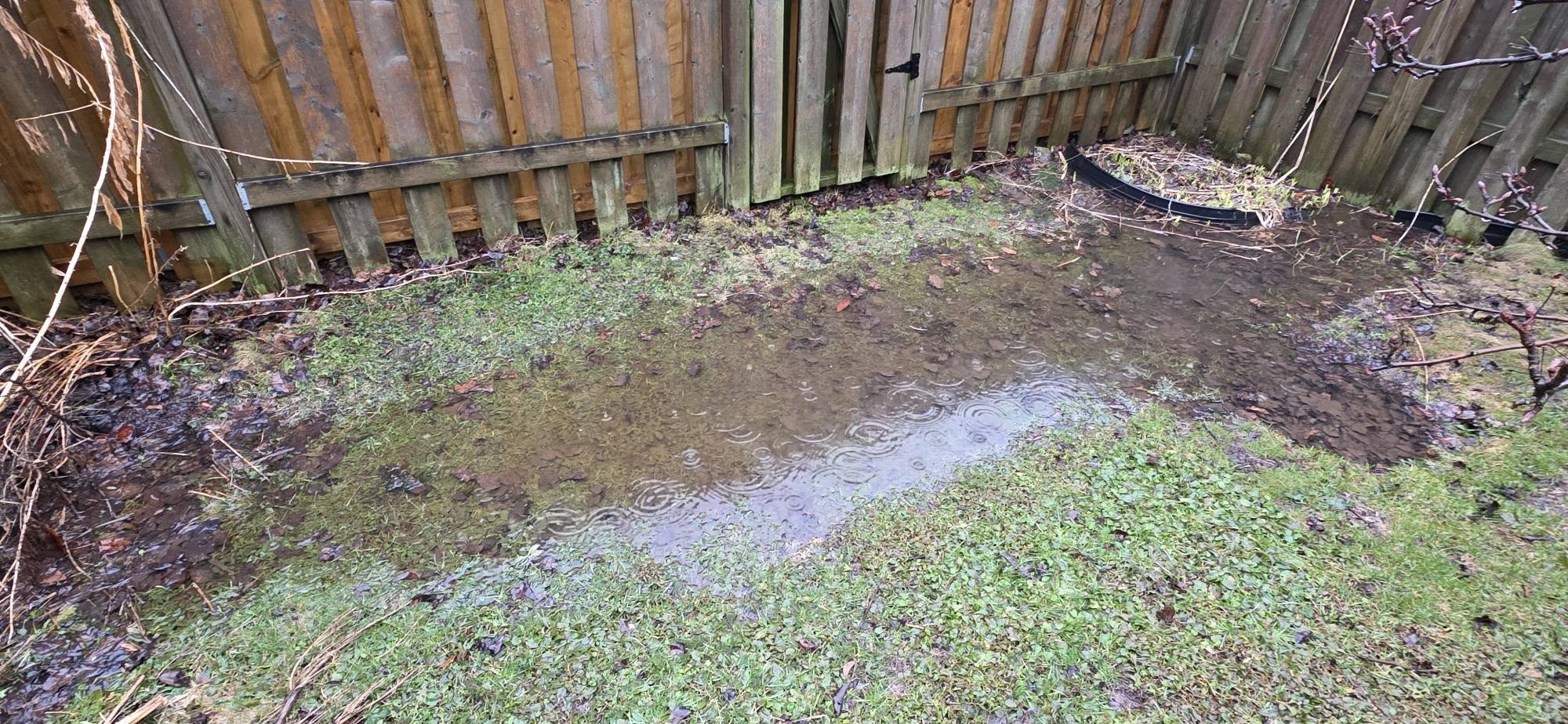
Drainage is one of the areas where the Shield’s influence is most visible — and most frustrating for homeowners who don’t understand why it’s happening.
Water Doesn’t Drain Down, It Drains Sideways
In deep soil, excess water can percolate downward through the soil profile, eventually reaching the water table well below the surface. On the Shield, when soil is thin and bedrock is close to the surface, water hits that impermeable rock layer and can’t go further down. Instead, it moves sideways along the surface of the rock, following whatever path is downhill — which may or may not align with where you’d want water to go.
This is why some Sudbury properties have persistent wet spots or areas of standing water after rain, even when the overall lot doesn’t seem particularly low-lying. Water that can’t soak down is moving along the bedrock surface and pooling wherever the rock creates a natural low point, regardless of what the soil surface above looks like.
Why Grading Matters Even More Here
Because water can’t disappear downward the way it can in deeper soil, surface grading — the slope and shape of the soil surface itself — becomes the primary tool for managing where water goes. In deep-soil areas, imperfect grading is sometimes forgiving because excess water has somewhere to go underground. On the Shield, imperfect grading often shows up directly as standing water, because there’s no underground escape route to compensate.
This is part of why grading work — bringing in topsoil, correcting slopes, directing water away from problem areas — is such a common and important service on Sudbury properties. It’s not a luxury fix. On thin-soil lots, it’s often the only practical way to solve a drainage problem, because you can’t engineer your way out of it by digging deeper drainage.
Rock Outcrops Create Their Own Drainage Patterns
On properties with visible rock outcrops, those outcrops act like miniature watersheds. Water running off an exposed rock face concentrates and flows to specific points at the base of the outcrop — often creating consistently wet areas right at those points even when the rest of the property is dry. If you’ve got a section of lawn that’s reliably wetter than everywhere else and there’s a rock outcrop or rock face uphill from it, that’s very likely the explanation.
What This Means for How You Care for Your Yard
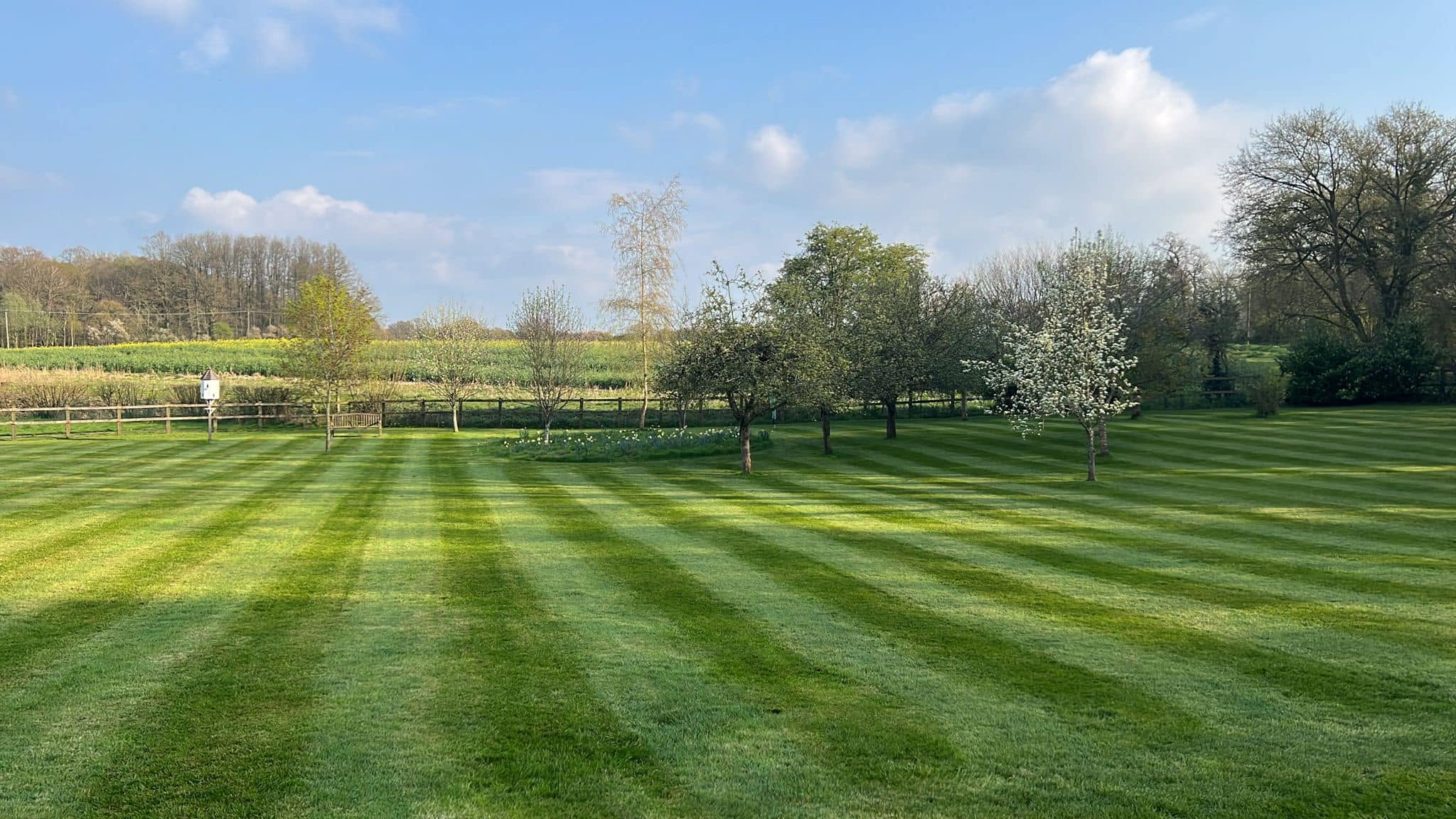
None of this is meant to be discouraging. Sudbury lawns can absolutely be healthy, thick, and good-looking. But the approach that works has to account for the conditions we actually have, rather than following generic lawn care advice written for deep-soil regions.
Aeration Matters More Here, Not Less
Some people assume that because the soil is thin, aeration is less useful — there’s “less soil to aerate.” It’s actually the opposite. With a limited volume of soil to work with, making sure that soil is as open and accessible to roots, water, and nutrients as possible matters more, not less. Compaction in a thin-soil situation has a proportionally bigger impact than the same compaction in deep soil, because there’s less uncompacted soil volume to fall back on. Annual core aeration in the right window is one of the highest-value things you can do for a Sudbury lawn precisely because of the thin-soil conditions, not despite them.
Topsoil Amendments Are Often Worth the Investment
If your lot has particularly thin soil — especially if you’re dealing with persistent struggles in specific areas — bringing in additional topsoil to increase the depth available to grass roots can make a meaningful difference. This isn’t about replacing the existing soil, but supplementing it to give roots more room to work with. For lawns being repaired or replaced, checking soil depth before deciding on the approach is part of why I always assess this before recommending sod versus seed repair — sod over genuinely insufficient topsoil won’t perform well regardless of how good the sod itself is.
Water Management Is About Where, Not Just How Much
Because water moves sideways along bedrock rather than disappearing downward, managing where water goes on your property — through grading, through directing downspouts thoughtfully, through being aware of how rock outcrops shed water — matters as much as how much you water. A lawn can be getting plenty of rain and still have persistent dry spots and persistent wet spots simultaneously, because the water that falls is moving along the rock to specific points rather than soaking in evenly.
Seasonal Timing Windows Are Tighter
Because thin soil over rock warms and cools faster than deep soil, the windows for things like seeding, aeration, and fertilization are narrower in Sudbury than in regions with deep soil and more gradual seasonal soil temperature changes. I’ve written specifically about the fall preparation window before the ground freezes and the spring aeration window — both reflect this. Generic advice that says “aerate any time in spring or fall” doesn’t account for how quickly our soil conditions shift from one state to another.
Persistent Problems Sometimes Have Geological Explanations
If you’ve got a section of your yard that’s always been a problem — always wetter, always drier, always thinner — and standard treatments haven’t helped over multiple seasons, it’s worth considering whether the bedrock itself is part of the explanation. A rock outcrop just below the surface, a seam in the rock directing water to a specific spot, or simply a section where the soil is genuinely too thin to support the same growth as the rest of the lawn — these are real possibilities on Shield properties, and they require a different kind of fix than seed and fertilizer.
I’ve dealt with a version of this myself — a persistent problem area that turned out to have an explanation underground that nobody had checked for in years. That story is worth reading if you’ve got a stubborn problem spot on your property that’s resisted every normal fix.
The Honest Summary
If you’re new to Sudbury and your lawn or yard is behaving in ways that don’t match what you’re used to from somewhere else in Ontario — drying out faster, having persistent wet spots, struggling in specific areas no matter what you do — it’s very likely connected to the fact that you’re living on the Canadian Shield. Thin soil, shallow bedrock, and sideways drainage aren’t problems you caused. They’re the baseline conditions of this region, and they affect every property to some degree.
The good news is that once you understand what’s actually going on, the solutions make a lot more sense. Aeration, topsoil supplementation, proper grading, and timing everything to our specific seasonal windows — these aren’t generic lawn care tips, they’re the specific responses to Shield conditions that actually move the needle here.
For a full picture of everything involved in maintaining a Sudbury property well — given everything I’ve described in this article — the complete serExposed Canadian Shield rock outcrop on Sudbury Ontario propertyvice breakdown covers the full range of what we do and when.
If you’ve got a property that’s been fighting you and you’re not sure why, I’m happy to come out and take a look. Sometimes the answer really is just standard lawn care done at the right time. Sometimes it’s something specific to your lot’s soil depth, grade, or what’s sitting underneath it. Either way, I can usually tell pretty quickly which situation you’re in.
Call or text me at 705-507-6787, or fill out the free quote form on the site. We cover all of Greater Sudbury — Garson, Val Caron, Hanmer, Lively, Chelmsford, Azilda, Capreol.
— Ryan Lingenfelter
Cutting Edge Lawn & Landscaping
Garson, Ontario
705-507-6787
