
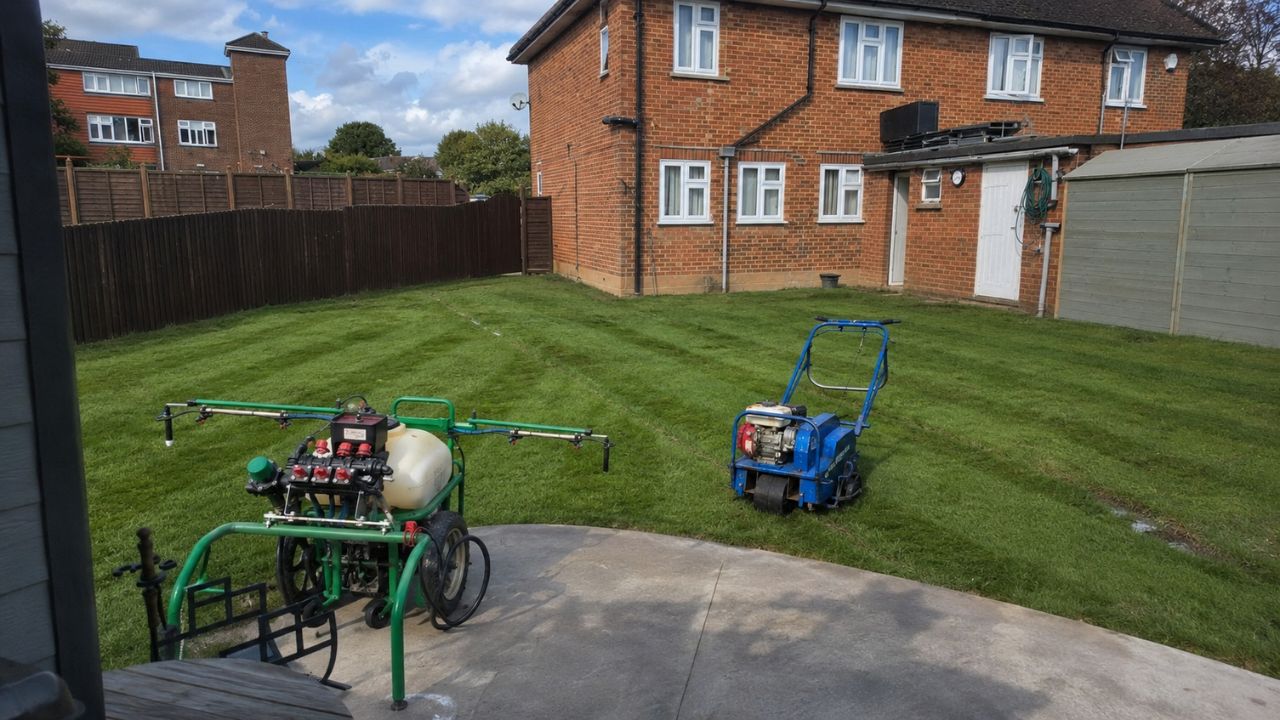
I’ve worked on a lot of lawns in Greater Sudbury over the past few years. Most of them I remember in a general way — the neighbourhood, the property size, the main issues we dealt with. A handful I remember specifically because something about the job was different or difficult or taught me something I carried forward.
And then there’s one property I think about every single time a proper rain comes through Sudbury. Not because it was my best work. Not because it ended well. Because of what I didn’t understand about it until it was too late to fix what mattered most — and because the lesson has stayed with me in a way that few others have.
This is that story.
The Property and What I Was First Called For
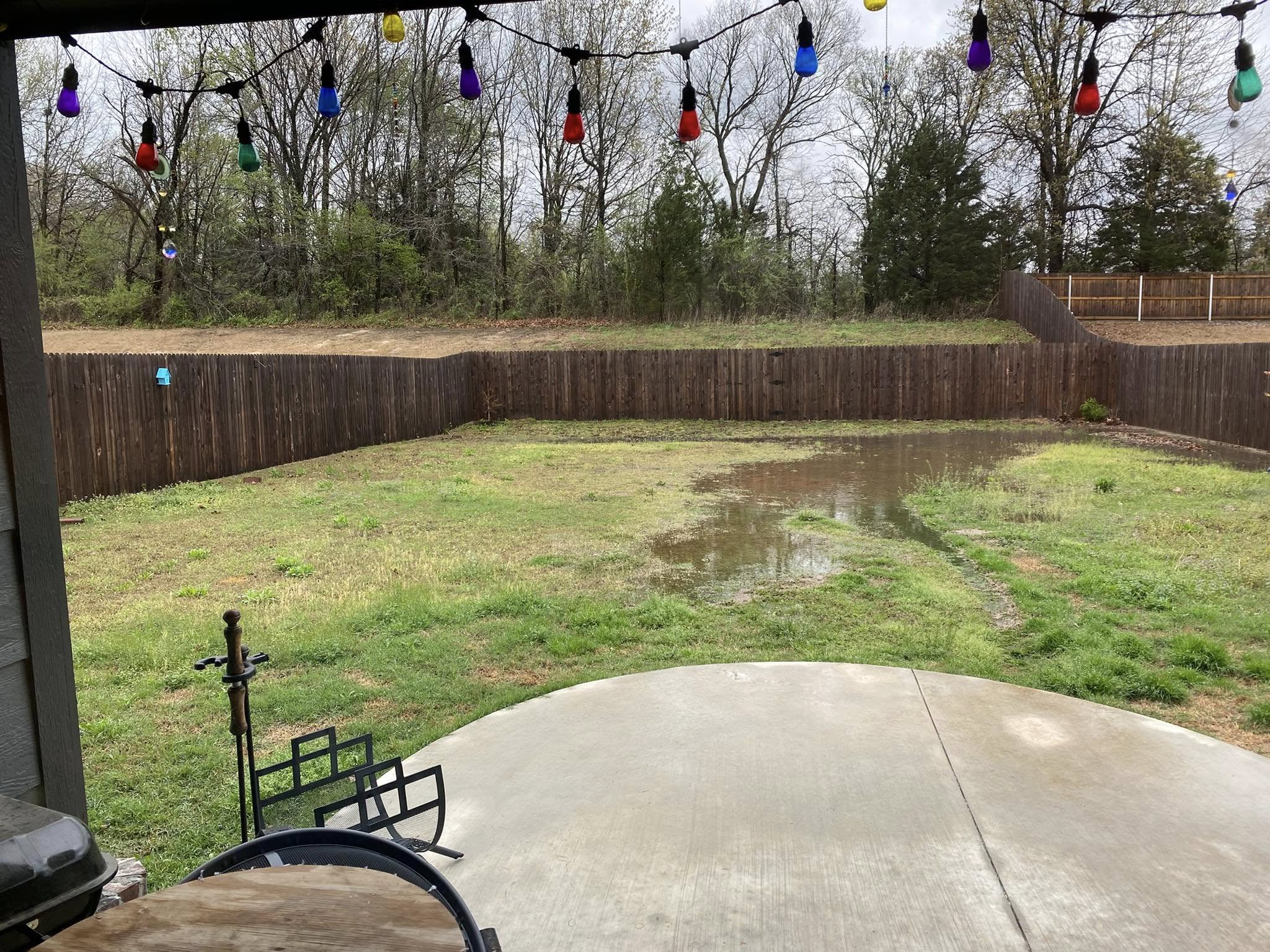
The property was in one of the lower-lying areas of Greater Sudbury — a neighbourhood that sits in a bit of a bowl geographically, where natural drainage runs toward rather than away from the properties. The house itself was fine. The lawn was the issue.
The homeowner — a woman in her early sixties who’d lived there for over twenty years — called me about regular grass cutting and some help with a lawn that she described as “always a mess after rain.” I went out, looked at it, and saw what she meant.
After any meaningful rain — and in Sudbury we get plenty of them from May through September — her backyard held water. Not everywhere, but in a section roughly a third of the yard that was slightly lower than the rest. The water would sit there for hours, sometimes into the next day. The grass in that area was perpetually stressed. It had a puffy, spongy feel underfoot even between rains. The colour was off — a yellow-green that spoke of roots sitting in conditions they couldn’t handle.
The lawn had been overseeded multiple times by previous services. None of it had held. The seed would germinate, come in thin and pale, and decline through the summer. Every year, same result. She’d been dealing with it for years and was at the point where she’d mostly accepted it as just how that part of the yard was going to look.
I didn’t accept that. Which, in retrospect, was both the right instinct and the beginning of a mistake.
What I Tried — and Why It Didn’t Work

My read on the property was that the primary issue was compaction. The low area collected water, the water compacted the soil further over time, and the compacted soil couldn’t drain properly, which kept the area waterlogged, which kept the grass stressed. Break the compaction, I thought, and the drainage would improve enough to give the grass a fighting chance.
So we did a thorough core aeration — two passes, good coverage. Followed by quality overseeding with a mix that included shade-tolerant fescues suited to Sudbury’s challenging conditions. Topdressed with compost to improve the organic matter and give the seed better rooting conditions. Starter fertilizer.
The germination was actually good. Better than what she’d seen before. By mid-June that section of the lawn looked more promising than it had in years — reasonable coverage, decent colour, filling in. I was cautiously optimistic.
Then it rained. Not a dramatic storm — a normal Sudbury June rain, the kind we get regularly. And the water sat. Exactly the same as before the aeration, exactly the same as every previous year. The low section pooled and stayed pooled for most of the following day.
The new grass held for a while. But by August it was thinning again in that same area, in that same yellowed way, for the same reason. The water had nowhere to go, and grass roots sitting in saturated soil are stressed grass roots regardless of how good the seed is or how well the aeration was done.
I had treated the symptom — compacted soil — without addressing the actual cause. The cause was drainage. The water that collected in that low section had nowhere to go because the grade directed it there and there was no outlet. Aeration improved the soil’s capacity to absorb water but didn’t change where the water went when the soil was already saturated. In a heavy rain, it would always overflow the soil’s capacity and pool.
What Was Actually Needed — and the Conversation I Should Have Had First

What that property needed wasn’t aeration and overseeding. What it needed was drainage work — either regrading the low section to redirect water flow, or installing a French drain to give the collected water an outlet, or both. That’s a different scope of work entirely, involving different equipment, different expertise, and a different conversation about cost and timeline.
I knew enough about drainage to recognize this eventually. What I didn’t do was recognize it before I started the aeration work — or if I did recognize it, I convinced myself that improving the soil would be enough to work around the drainage problem. It wasn’t.
The conversation I should have had with this homeowner, at the very first visit, was: the primary issue here is drainage, not soil or grass. We can improve the soil and overseed and it will help at the margins, but the water is going to keep collecting in this section because of the grade, and as long as it does, grass in that area is going to struggle. The real fix is drainage work. Here’s what that looks like and what it costs. Do you want to do that first, or do you want to try the soil approach and see how much it moves the needle?
That’s the honest conversation I try to have with every customer before they spend money — what the property actually needs, in plain language, with realistic expectations about what each path will and won’t achieve. I didn’t have that conversation with her as clearly as I should have. I let optimism about what aeration might accomplish substitute for a harder truth.
She ended up having the drainage work done the following year — not through me, through a landscaping company that does that kind of groundwork. The section was regraded, a simple French drain was installed along the lowest edge, and the water that used to pool there now moves through and away. The grass in that area established and held for the first time in the twenty-plus years she’d lived there.
I was glad it got fixed. I was also aware that I’d cost her a season — and some money — by not being clearer about the real problem at the start.
Why I Think About It Every Time It Rains
I think about that lawn when it rains because rain is when drainage problems become visible — and because proper drainage is one of those foundational things that determines whether everything else you do to a lawn actually works.
You can aerate the best soil in Sudbury. You can use premium seed and apply perfect fertilizer and water exactly right. If the water that falls on a property has nowhere to go except to pool on the lawn surface and saturate the root zone, you’re fighting a losing battle. Poor drainage is one of the most common underlying problems on difficult Sudbury properties — especially newer builds where grading was done quickly and not always correctly, and on properties in lower terrain where natural water movement works against you.
What I’ve taken from this property into every difficult lawn I assess now: look at the water first. Before I look at the soil, before I think about seed or fertilizer or aeration, I try to understand what happens to water on this property when it rains. Where does it go? Where does it collect? What does the grade say about where it should go? If the answer reveals a drainage issue, that conversation happens first — before any recommendation about lawn care work, because lawn care work done on top of a drainage problem is money not well spent.
Like the Garson property where something kept going wrong no matter what we tried, this lawn taught me that the real cause of a persistent problem is always specific to the property — and finding it requires looking harder and asking different questions rather than applying more of what hasn’t worked.
If your lawn has a section that struggles after every rain — pooling water, perpetually stressed grass, that yellow-green colour that never quite resolves — reach out. I’m happy to come take a look specifically at the drainage and tell you honestly whether what you’re dealing with is a soil problem, a drainage problem, or both. That assessment is always free, and it’s the right place to start.
— Ryan Lingenfelter
Cutting Edge Lawn & Landscaping, Garson, Ontario
📞 705-507-6787
Serving all of Greater Sudbury — Garson, Hanmer, Val Caron, Lively, Chelmsford, Azilda, Capreol, and Sudbury proper. We offer core aeration, grass cutting, property cleanup, sod installation, and full lawn maintenance. Free quotes, no pressure.
Get a Free Quote |
Call 705-507-6787
