There’s a week every summer in Sudbury where my phone picks up noticeably. Not a gradual increase — a distinct jump. More calls, more texts, more people looking out at their lawn and sensing that something has shifted.
It’s not the same calendar date every year. It moves a little depending on when the heat arrives. But the pattern is consistent: there’s a specific transition point in early to mid summer where the conditions that Sudbury lawns have been handling fine suddenly become too much — and the lawns that weren’t prepared for it start showing the strain.
The homeowners who call me at that point are already behind. The damage is starting. The options are narrower.
The homeowners who didn’t call me — because they were already ahead of it — have lawns that look fine through the same period.
I’m Ryan Lingenfelter, owner of Cutting Edge Lawn & Landscaping in Garson, Ontario. Here’s exactly what this week is, why it happens every year in Sudbury, and what you can do right now to make sure your lawn is on the right side of it.
The Week I’m Talking About — And Why It Happens Every Year
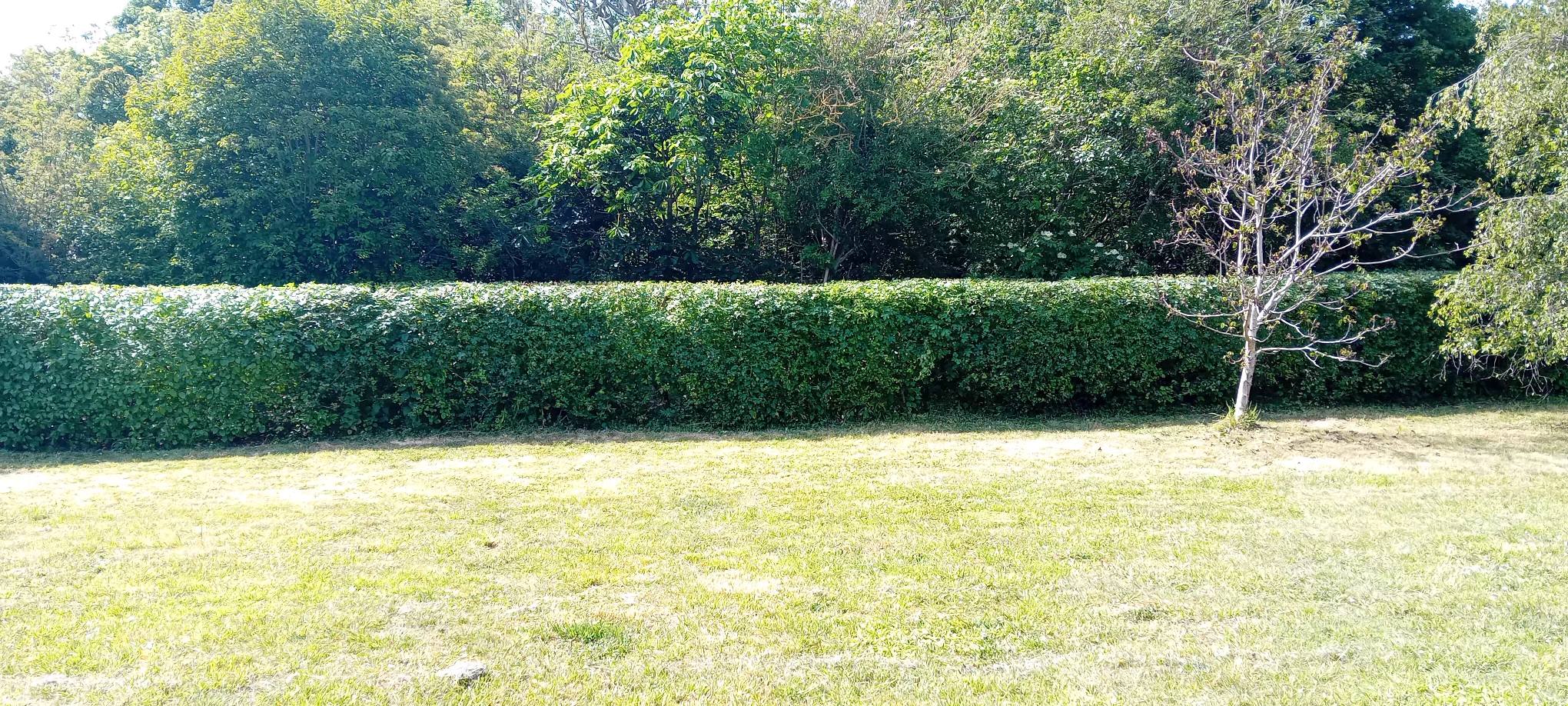
The transition I’m describing usually happens somewhere in the window between late June and mid July in Greater Sudbury — though in a warm year it can arrive earlier, and in a cool year it holds off a bit longer.
What’s happening is a convergence of several things at once.
First, temperatures cross the threshold where cool-season grass starts to feel real stress. Kentucky bluegrass and fescue — the grass varieties on almost every residential lawn in this area — are comfortable up to about 24 degrees Celsius. Once we start hitting 27, 28, 30 degrees regularly, the grass shifts from active growth mode into stress management mode. It stops growing as aggressively. It starts directing energy away from leaf production and toward survival.
Second, soil moisture becomes a genuine limiting factor for the first time in the season. May and June in Sudbury are usually cool enough and wet enough that most lawns stay reasonably moist without supplemental watering. But as July heat arrives, evaporation accelerates and rainfall becomes less reliable. The top few inches of soil — where shallow grass roots live — can go from adequately moist to dry within a day or two without rain.
Third — and this is the one that most homeowners don’t think about — the lawn has been getting cut regularly since May. Every cut has been removing leaf surface. If the cutting height has been too low, the root system has been staying shallow all spring rather than going deep. By early July, that lawn has shallow roots that are completely dependent on surface moisture that’s now evaporating fast.
These three things arrive together. And lawns that weren’t prepared — that have compacted soil, shallow roots from short cutting, and no moisture reserves to draw on — start going downhill fast.
What’s Actually Happening Under the Surface
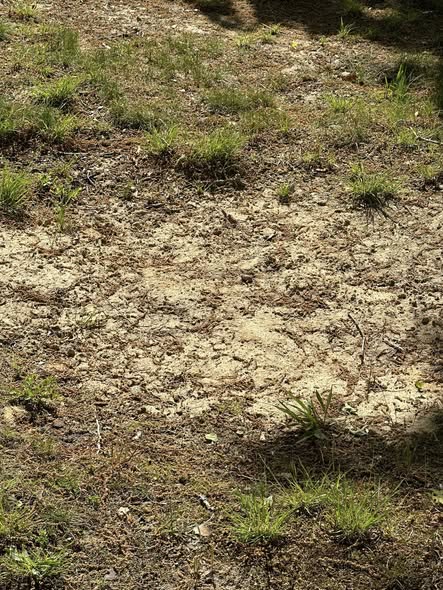
I want to explain the underground mechanics of summer lawn stress because I think understanding it changes how you approach it.
A grass plant survives heat and dryness through its root system. Deep roots mean access to moisture from further down in the soil — below where the surface drying is happening. A grass plant with roots going four to six inches deep can handle a week of hot, dry weather that would kill a plant with roots only an inch or two deep.
The problem is that most Sudbury lawns in summer have shallower roots than they should. Here’s why:
Compaction — the clay-heavy soil common across Greater Sudbury compacts over years without aeration. Compacted soil is physically dense. Roots can’t push through it. They stay in the top inch or two where the soil is loosest, which is exactly the zone that dries out first.
Short cutting — grass cut below about 2.5 to 3 inches responds by prioritizing leaf regrowth over root development. Every time you cut short, the plant pulls energy away from the roots and puts it into growing leaves back. Over a spring of regular short cuts, root depth has been actively suppressed.
Shallow watering — this one is counterintuitive but important. Frequent, light watering — a few minutes every day — only wets the top inch or so of soil. Grass roots follow moisture. If moisture is always at the surface, that’s where the roots stay. Light daily watering actually keeps roots shallow rather than encouraging them to go deep.
By the time July heat arrives, a lawn with compacted soil and shallow roots is sitting on a surface that can go from moist to dry in hours. There’s no buffer. No reserve. The heat hits, the surface dries, and the grass starts struggling within days.
Compare that to a lawn with aerated soil and roots going four to six inches deep. The surface can dry out for several days without meaningfully affecting the moisture level two or three inches down where most of the roots are. That lawn handles the same heat wave without visibly struggling.
The difference between these two lawns is almost entirely the prep work done in spring — or not done.
The 3 Things to Do Right Now — Before It Gets Worse
If you’re reading this before your lawn has started visibly struggling — here are the three most impactful things you can do right now to get ahead of the summer stress window.
1. Raise Your Mowing Height — Today
If you’ve been cutting your lawn below 3 inches, raise the deck height immediately. The target for Sudbury lawns in summer is 3 to 3.5 inches. At that height, the grass blades shade the soil surface — keeping it cooler and retaining moisture longer — and the plant has enough leaf surface to photosynthesize and support deeper root growth.
This is the single fastest thing you can do. It costs nothing and you can do it on your next mow. The improvement in how the lawn handles heat isn’t immediate but it shows up within two to three weeks as the root system responds to the change in conditions.
If you’re using a professional lawn care company, tell them your target height. If they’re cutting below 3 inches, ask them to raise it. Any professional company should be able to accommodate this without issue.
2. Switch to Deep, Infrequent Watering
If you’ve been watering a little bit every day — or you haven’t been watering at all and relying on rainfall — now is the time to change that approach.
The right summer watering strategy for Sudbury is deep and infrequent. Two to three times per week, for long enough to wet the soil two to three inches deep. Not every day for five minutes. Not a quick pass with a hose. Long, thorough waterings that push moisture down past the surface layer.
An easy way to gauge: put a small container on the lawn when you run your sprinkler. When it has about a third of an inch of water in it, that’s roughly one good watering session. You want about an inch total per week from rain and supplemental watering combined.
Deep watering does two things. It provides moisture where the roots actually are — not just on the surface. And over time, it encourages roots to grow downward to follow the moisture rather than staying at the surface. Two or three weeks of consistent deep watering genuinely changes root depth.
3. If You Haven’t Aerated This Year — Book It Now
Spring aeration window has passed but if your lawn hasn’t been aerated in more than a year — and most Sudbury lawns haven’t — booking core aeration now will still make a meaningful difference before the worst of the summer heat arrives.
Aeration in early summer breaks up surface compaction, opens channels for water to reach the root zone, and gives the roots pathways to grow deeper. It won’t produce the same results as spring aeration on a cool, moist lawn — but on a compacted lawn heading into summer stress, it still meaningfully improves the lawn’s ability to handle what’s coming.
Do not aerate during the hottest period — if you’re already in a stretch of 30-degree days, wait until it breaks. Aeration on heat-stressed turf causes additional stress. But if you’re in a moderate period right now, it’s still worth doing before the real heat settles in.
What I See Every Year on Properties That Didn’t Get Ahead of It

I want to give you a concrete picture of what the other side of this looks like — the lawns that hit summer without preparation.
By mid July, these lawns typically show a predictable pattern. The open, sunny sections go brown first — heat and evaporation hit them hardest. The areas near driveways and pathways go brown next — the hardscape radiates heat and dries the soil faster in those zones. The shaded sections stay green the longest, sometimes the only green visible by August.
The homeowner starts watering more — often daily, often in the evening. Evening watering on a stressed lawn in humid Sudbury summer conditions is actually counterproductive — wet grass overnight is the ideal environment for fungal disease, and disease on a heat-stressed lawn compounds the problem significantly. By mid August some of these lawns are dealing with both heat stress and active disease.
By September, when I’m called to assess these properties, I’m often looking at a restoration job rather than a recovery job. The compaction that made them vulnerable to summer stress is still there. The bare sections left by summer die-off need fresh sod, not just overseeding on compacted clay. The thatch that built up under the stressed turf needs to be cleared before anything new will establish.
It’s not that summer was unusually harsh. Sudbury summers aren’t extreme by most standards. It’s that the lawn went into summer without the root depth, soil structure, and moisture management to handle normal Sudbury summer conditions.
The lawns that look good all summer aren’t lucky. They were prepared. Usually by doing the same three things I listed above — adequate mowing height, proper watering, aerated soil — going into the season.
A Quick Self-Assessment for Right Now
Here’s a fast way to assess where your lawn stands heading into the summer stress window:
Mowing height: After your last cut, is the grass 3 inches tall? If you can see a lot of soil between plants or the lawn looks very short — the height is too low.
Soil compaction: Push a screwdriver into the soil with normal hand pressure. Does it go in 3 or more inches? Good. Does it stop at 1 to 2 inches? Compaction is a problem. Can you barely get the tip in? Severe compaction — aeration is overdue.
Watering depth: After a watering session, dig down with a trowel. Is the soil moist at 3 inches? If the moisture doesn’t go below an inch, you’re watering too short and too shallow.
Existing thin spots: Any sections that are already thin or patchy going into summer will be the first to fail. Those areas have less root depth and less buffering capacity against stress. Address them now if you can.
Want to Get Ahead of It With Professional Help?
If you’d rather have someone assess your lawn properly and handle the prep work before summer stress peaks — reach out. I’ll come out, check the soil, look at your cutting height situation, and tell you exactly what your specific lawn needs going into the summer.
The best time to act on this is right now — before the lawn is struggling, not after.
📞 Call or text me: 705-507-6787
Or fill out the free quote form here — I get back to everyone same day.
— Ryan Lingenfelter
Owner, Cutting Edge Lawn & Landscaping
Garson, Ontario
Related Articles
- Why Your Sudbury Lawn Goes Brown in July — And When to Actually Worry
- The 2-Week Window in Sudbury That Makes or Breaks Your Lawn All Summer
- The One Lawn Mowing Mistake I See Every Week in Sudbury
- The One Thing I Always Find Under a Dead Sudbury Lawn
- Core Aeration Services in Greater Sudbury