I’m Ryan Lingenfelter — owner of Cutting Edge Lawn & Landscaping in Garson, Ontario.
There’s a call I make to every new customer two weeks after their first service. Not a sales call. Not a “how are we doing, would you like to refer a friend” call. A specific check-in with specific questions, timed deliberately at the two-week mark rather than at the first visit or three months in.
I’ve been doing this since early on in the business, and I want to explain why — because the reasoning behind the timing is the same reasoning behind a lot of how I run this company, and it’s caught real problems on real properties more than once.
Why Two Weeks Specifically — Not Day One, Not Month Three
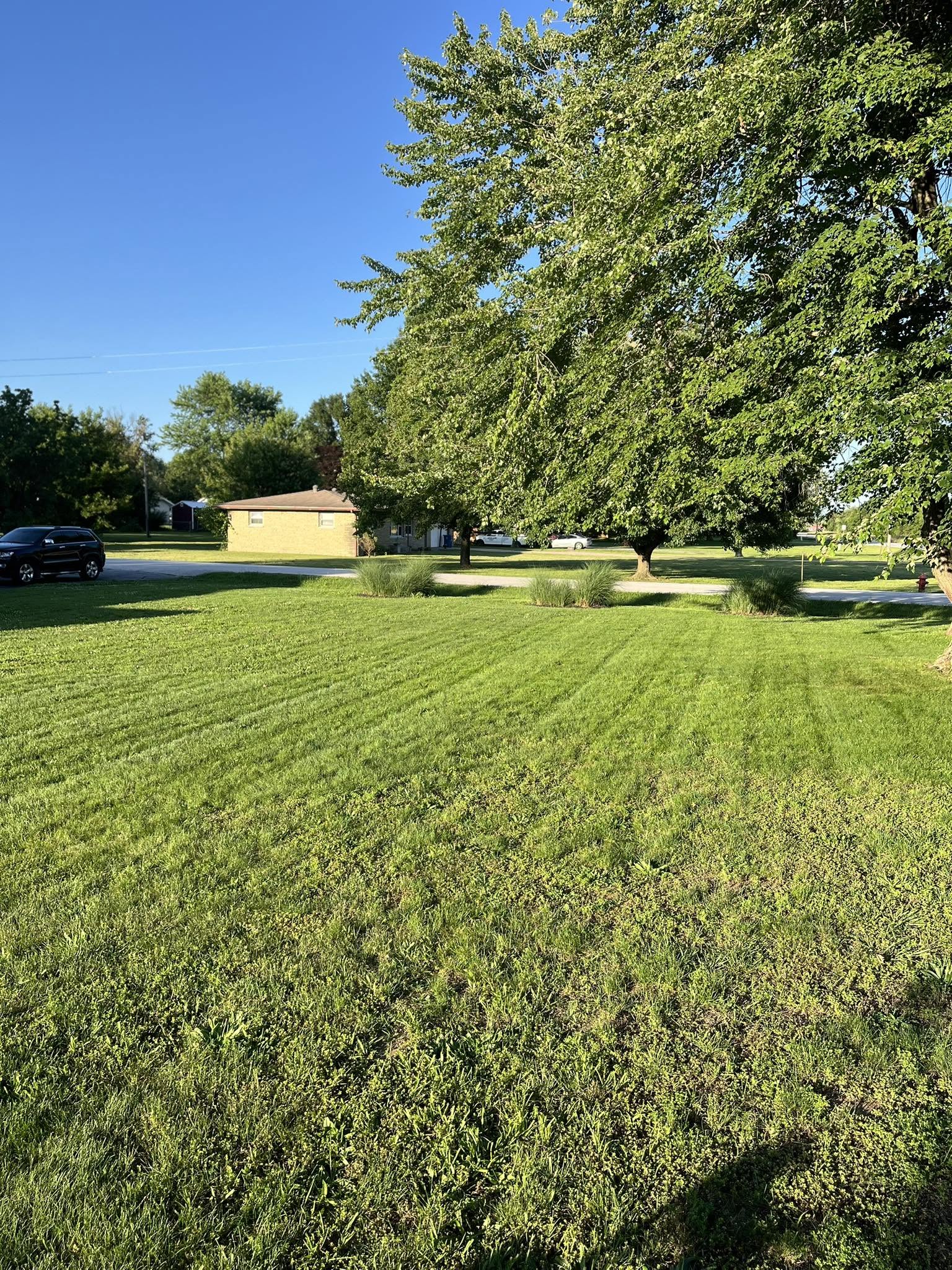
The first visit is too soon to learn anything useful. The lawn was cut, the property looks better than it did, and the customer is reasonably satisfied because there’s an obvious before-and-after. That’s not a meaningful data point — almost any service produces visible improvement on visit one.
Three months in is too late. If something is wrong with the schedule, the scope, or the result, three months is long enough for a customer to have quietly decided they’re unhappy and started looking elsewhere — or long enough for a soil or growth issue to have compounded into something more expensive to fix.
Two weeks is the window where the second cut has happened, the customer has had time to see whether the schedule is actually consistent, and — critically for Sudbury properties specifically — early signs of underlying soil or growth issues are starting to show without having had months to get worse.
Here’s what I’m actually checking for on that call.
Is the schedule holding the way I said it would? I tell every new customer what day their property will be cut and that the day stays consistent. The two-week call is when I ask directly: has that been true? If the crew was a day late once for a legitimate reason, did we communicate it in advance? This is the check that catches scheduling drift before it becomes a pattern. I’ve written about how much scheduling consistency actually matters to Sudbury homeowners in the annual contract article here — it’s consistently the thing people say they want most and notice fastest when it’s missing.
Is the scope what was discussed? Trimming, edging, blowing — every visit, as quoted. The two-week call is when I ask the customer to describe what the property looks like after each visit, specifically. If something is being skipped, this is when it surfaces — before it’s been happening long enough that the customer assumes it’s just how the service works.
Has anything changed about the lawn itself that wasn’t visible on day one? This is the part that’s specific to Sudbury soil and climate, and it’s the reason the two-week mark matters technically, not just relationally.
The Specific Problems This Call Has Caught
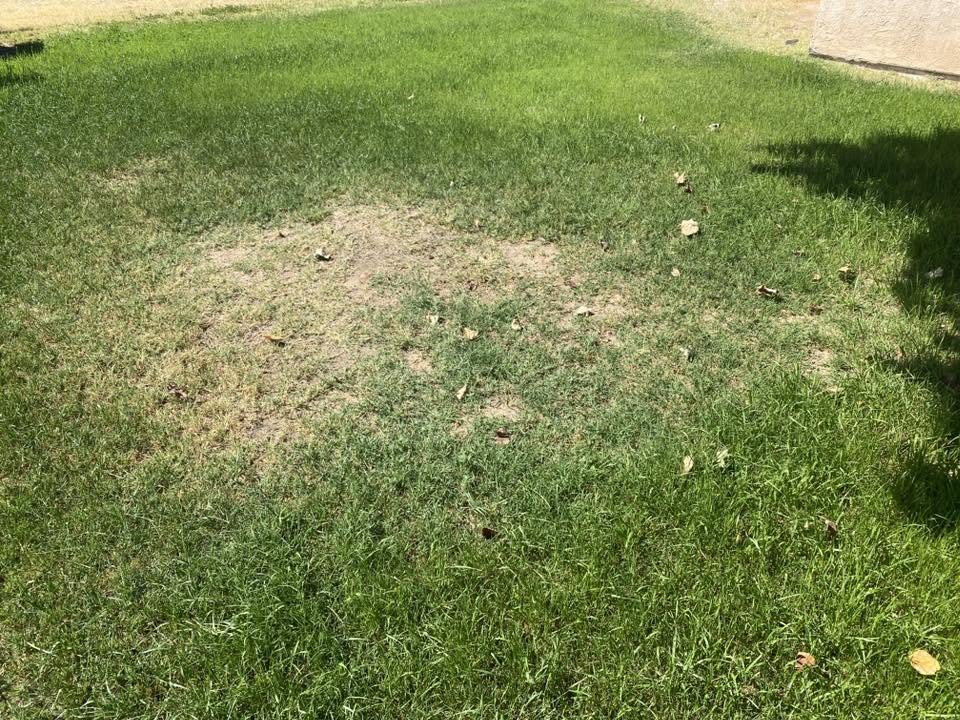
I want to give you real examples — not hypotheticals — of what this call has surfaced on actual Sudbury properties, because the pattern is consistent enough that it’s worth explaining.
A drainage problem that wasn’t visible on the first visit.
I started a new weekly customer in Val Caron in May. The first visit was straightforward — cut, trim, edge, done. The lawn looked fine. Two weeks later, on the follow-up call, the homeowner mentioned almost in passing that one corner near the back fence had been “a bit squishy” the last time she walked out there after rain.
That’s exactly the kind of detail a homeowner mentions casually and a service provider needs to treat seriously. I went out, did the screwdriver test, found standing moisture six inches down in that corner three weeks after the last rain. A drainage problem that wasn’t visible on day one because there hadn’t been a significant rain yet — but was becoming clear by week two. We addressed it with a grading correction that summer instead of letting it become the kind of multi-year recurring dead patch I’ve written about in the lawn I almost gave up on article here — a problem that took four years and $1,400 in failed treatments to finally diagnose on a different property because nobody had asked the right question early enough.
A grub problem starting to show in a section that looked fine at the first visit.
A new customer in Hanmer signed up in early June. First cut, everything normal. Two weeks later on the call, he mentioned a section near the side yard “felt a bit spongy when I walked on it yesterday.”
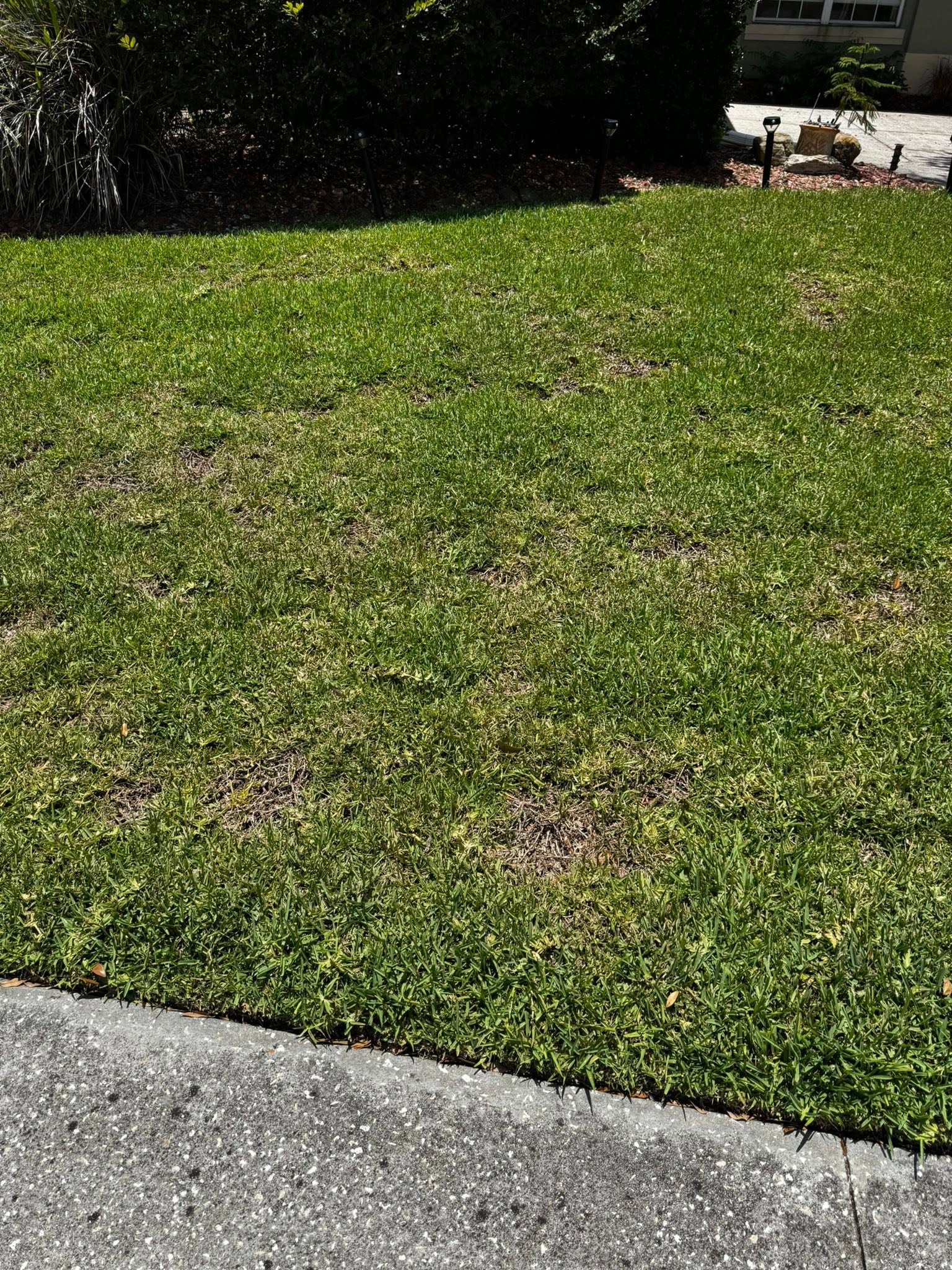
Spongy underfoot in early summer, before any visible dead patches, is sometimes an early indicator of grub activity beginning to affect the root system before the damage is visually obvious. I went out and checked — found early-stage grub presence in that section, caught before it had spread or produced the visible dead carpet-pull symptom that shows up once the damage is more advanced. Treated it that week instead of catching it in August when the section would have been fully dead and required sod rather than a treatment.
A watering gap the homeowner didn’t realize mattered.
A Garson customer who’d just had a small sod patch installed by another company before switching to us mentioned on the two-week call that she’d been “watering it most days, when I remembered.”
That phrase — “most days, when I remembered” — is exactly the gap that fails new sod on Sudbury clay. I explained the actual establishment requirement, walked her through the specific schedule, and the sod recovered. Without that conversation, “most days” would likely have continued until the sections that got missed too often had failed past the point of recovery — the exact pattern I described happening to other homeowners in the sod sourcing article here, where a missed day and a half on a busy weekend was enough to undo five days of perfect watering.
None of these problems were visible or askable at the first visit. All of them were catchable at two weeks — before they’d compounded into something expensive.
Why This Matters More on Sudbury Properties Than It Might Elsewhere
Sudbury’s specific soil and climate conditions are part of why this two-week window catches things that a generic service check-in wouldn’t.
The Canadian Shield bedrock close to the surface in many areas means drainage problems, shallow soil pockets, and rock interference don’t always show up until there’s been enough rain or enough heat to reveal them. I’ve written about this directly in the Canadian Shield guide here — a property can look uniform on day one and reveal meaningful variation by week two once weather conditions have tested different sections.
Grub activity in Sudbury tends to become visible gradually rather than all at once. The early “spongy underfoot” symptom can appear weeks before the dramatic carpet-pull dead patch that’s unmistakable. Catching it at the early stage is the difference between a treatment and a sod replacement.
New sod establishment on Sudbury clay is more sensitive to watering gaps than sod on deeper, loamier soil — because the clay’s slow absorption means there’s less margin for error in the first two to three weeks. A two-week check-in lands right in the middle of that critical establishment window, when a watering gap can still be corrected before it’s caused permanent damage.
I went into the broader pattern of why generic lawn care advice misses Sudbury-specific timing in the spring window article here — the same principle applies to service follow-up timing. A check-in scheduled on a generic calendar rhythm misses the window where Sudbury-specific issues are actually catchable. Two weeks isn’t an arbitrary number. It’s calibrated to when these specific problems become detectable but haven’t yet become expensive.
What the Call Actually Sounds Like
I want to demystify this because it’s genuinely not complicated. The call takes five to ten minutes. I ask four things, roughly in this order.
“How has the schedule been — same day every time, as discussed?”
“Has the crew been doing everything we talked about — trimming, edging, blowing — every visit?”
“Have you noticed anything different about the lawn since we started — any spots that look or feel different than the rest?”
“Is there anything that’s bothered you, even something small, that you haven’t mentioned?”
That last question is the one that surfaces the most. People are often hesitant to flag small things proactively — they don’t want to seem difficult, or they assume it’s not worth mentioning. Asking directly gives them permission to say the small thing that turns out to matter.
If everything’s fine, the call takes two minutes and we both move on. If something needs attention, I go out and look at it that week — not at the next scheduled visit, that week, specifically because of what I described above about how quickly Sudbury-specific problems can move from catchable to expensive.
What This Means for You as a Customer — Of Any Company, Not Just Mine
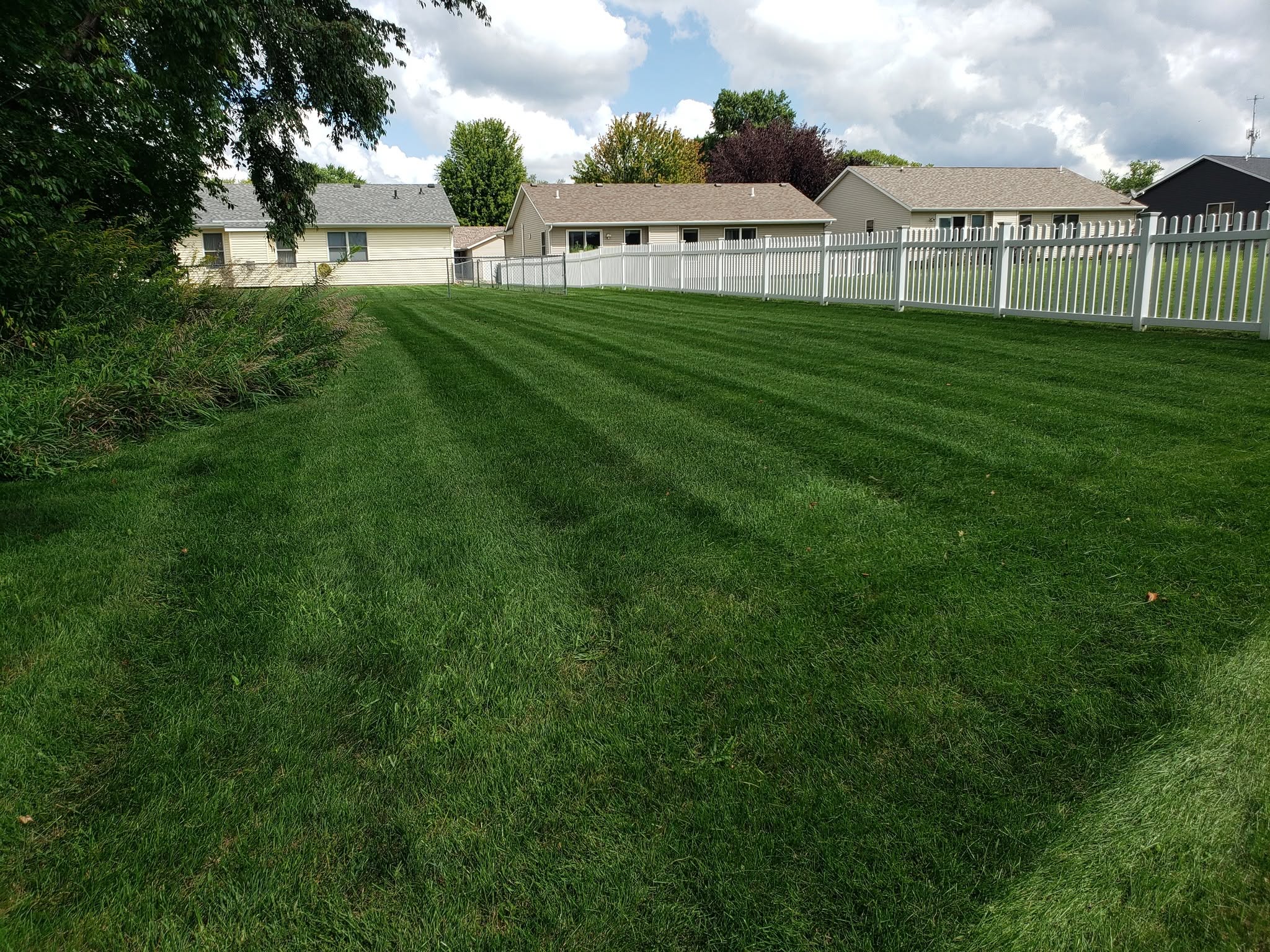
If you’re a new customer with any lawn care company in Sudbury — mine or someone else’s — here’s what I’d encourage you to do whether or not they call you.
Around two weeks into a new service, walk your property deliberately. Not just glancing at it after a cut — actually walk it, push your foot into a few spots, notice if anything feels different than it did before service started.
If you notice anything — a soft spot, a section that looks slightly off, a schedule that’s already drifted — say something. Don’t wait to see if it resolves on its own. The two-week window is when most Sudbury-specific issues are still cheap and fast to fix. By month two or three, the same issue is often a bigger job.
And if you’re evaluating lawn care companies and want to know whether the one you’re considering actually follows up — ask them directly. “Do you check in after the first couple of visits, or do I only hear from you if something goes wrong?” The answer tells you something about how the relationship is going to go for the rest of the season.
If you’re a new Sudbury homeowner or just switching services and want a company that actually does this — give me a call. I’ll walk you through exactly what to expect, including the two-week check-in, before you ever sign anything.
📞 Call or text me directly: 705-507-6787
Or fill out the free quote form here and I’ll get back to you same day.
We service Garson, Val Caron, Hanmer, Lively, Chelmsford, Azilda, Capreol, and all of Greater Sudbury.
— Ryan Lingenfelter
Owner, Cutting Edge Lawn & Landscaping
Garson, Ontario
Frequently Asked Questions
Why is the two-week mark important for new lawn care customers in Sudbury?
Two weeks is long enough for a second service visit to have happened — confirming whether the scheduled day is actually consistent — and long enough for early signs of underlying soil, drainage, or pest issues to begin showing without having had months to compound into expensive problems. On Sudbury’s clay-heavy, shallow-soil terrain, drainage and grub issues often aren’t visible at a first visit but become detectable within the first couple weeks once weather and growing conditions have tested the property.
What does a lawn care follow-up call actually check for?
A thorough two-week check-in covers whether the scheduled service day has stayed consistent, whether the full scope discussed at signup — trimming, edging, blowing — has actually been delivered on every visit, and whether the homeowner has noticed anything different about the lawn since service started, including soft spots, colour changes, or anything that felt off even if it seemed minor. Asking directly whether anything small has bothered the customer often surfaces issues people wouldn’t have raised unprompted.
How do I know if my lawn care company in Sudbury is actually checking in on quality?
Ask directly before signing: “Do you check in proactively in the first few weeks, or do I only hear from you if something goes wrong?” Companies that follow up specifically and proactively tend to catch problems — scheduling drift, scope gaps, early drainage or pest issues — before they compound. Companies that only respond reactively to complaints often let small issues become bigger ones before anyone addresses them.
What early signs of lawn problems can a two-week check catch in Sudbury?
A soft or spongy feeling underfoot in a specific section can indicate early grub activity before the visible carpet-pull dead patch appears. A section that stays wet or squishy days after rain can indicate a drainage problem before it’s caused a recurring dead zone. For properties with new sod, gaps in the watering schedule — even a missed day or two — can be caught and corrected during the critical two-to-three week establishment window before sections fail past the point of recovery.
Why does Sudbury’s soil make early problem detection more important than elsewhere?
Sudbury sits on the Canadian Shield with shallow, clay-heavy soil that behaves differently from deeper southern Ontario soils. Drainage issues, shallow rock pockets, and severe compaction don’t always reveal themselves immediately — they show up gradually as weather conditions test different sections of a property. Catching these issues at the two-week mark, while they’re still developing, is significantly less expensive than discovering them months later after they’ve produced visible dead patches or established themselves as a recurring seasonal problem.
What should I do if I notice something off with my lawn after the first couple weeks of service?
Say something right away rather than waiting to see if it resolves on its own. Walk the property deliberately around the two-week mark — push your foot into a few spots, look for soft or wet areas, compare the colour and density across different sections. If anything seems different from how it looked when service started, mention it to your lawn care provider immediately. On Sudbury properties, the window where a small issue is cheap and fast to fix is often weeks, not months.
Ryan Lingenfelter is the owner of Cutting Edge Lawn & Landscaping in Garson, Ontario. Since 2020, his crew has provided full lawn care and landscaping services across Greater Sudbury — Garson, Val Caron, Hanmer, Lively, Chelmsford, Azilda, and Capreol. Licensed, insured, BBB A+ rated, and ThreeBest Rated for lawn care services in Sudbury.
📞 Phone: 705-507-6787
📍 Service Area: Greater Sudbury, Ontario
🔗 Free Quote: cuttingedgelawn.ca/quote
Related Services
- Grass Cutting Services in Sudbury
- Core Aeration Services
- Sod Installation in Sudbury
- Property Cleanup Services
Continue Reading
- The Sudbury Lawn I Almost Gave Up On — I’m Glad I Didn’t
- A Capreol Homeowner Asked Me a Question I Couldn’t Answer
- Living on the Canadian Shield — What Sudbury Homeowners Should Know
- ‘Grass Sod Near Me’ in Sudbury — Where Locals Actually Buy It
- What Sudbury Lawn Care Companies Don’t Tell You About Annual Contracts