
By Ryan Lingenfelter · Cutting Edge Lawn & Landscaping, Garson, Ontario · June 2026
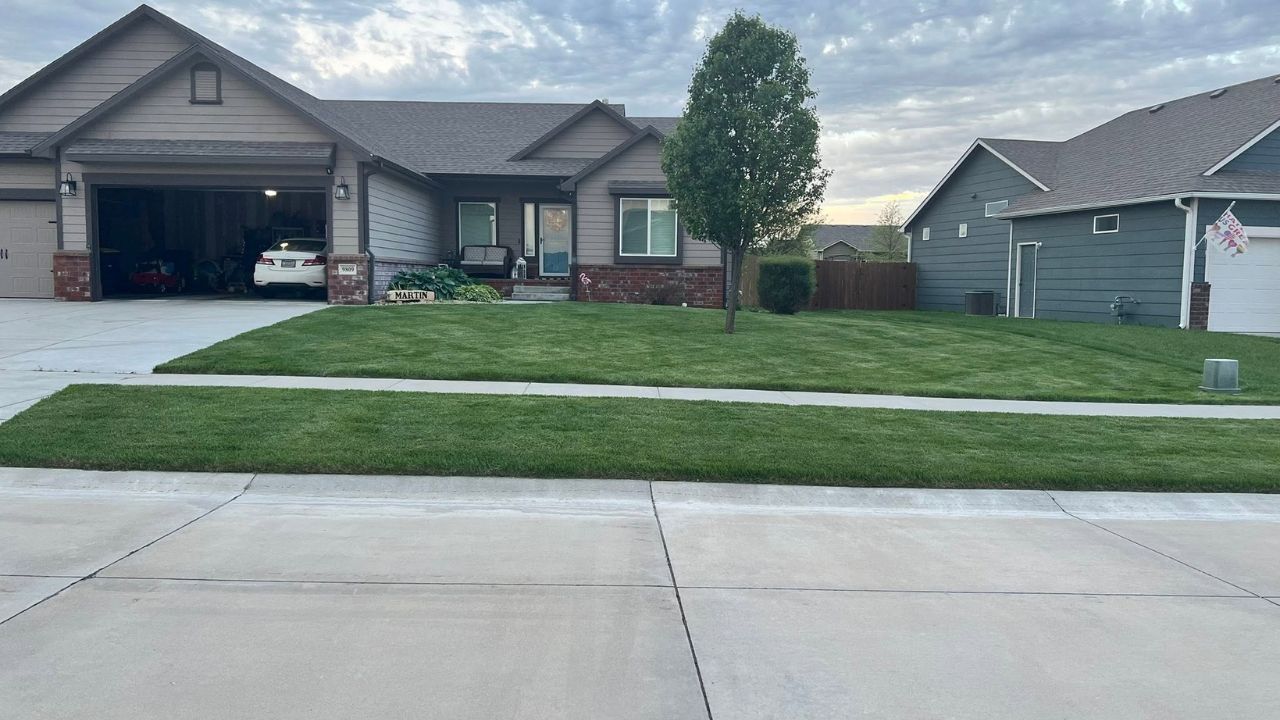
One of the more interesting parts of running a lawn care business across Greater Sudbury is that I sometimes end up maintaining two properties that sit directly next to each other — same street, same orientation to the sun, same soil composition, same exposure to whatever weather the season brings. As close to a controlled comparison as you can get in residential lawn care, where every variable except the management approach is held constant.
I’ve had this situation multiple times over six seasons. And every single time, the difference between the two properties after a season or two of my involvement still surprises me — not because the difference exists, but because of what actually causes it. It’s rarely what either homeowner assumes going in.
Here’s the most instructive version of this comparison, and what it taught me about what actually separates a thriving Sudbury lawn from a struggling one.
Two properties, identical conditions on paper — what I expected to find
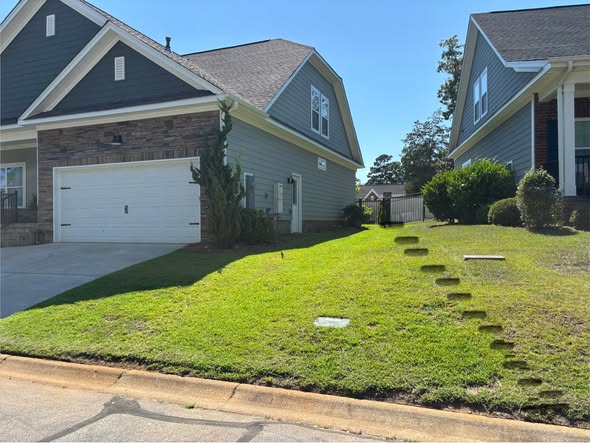
The two properties were on the same street in a Greater Sudbury neighbourhood, sharing a property line. Both houses had been built in the same development phase, meaning similar construction history and similar original topsoil conditions. Both lots faced the same direction, received the same sun exposure pattern through the day, and were exposed to identical weather conditions throughout every season — the same rain, the same heat stretches, the same winter.
I started maintaining one of the two properties first — a homeowner who called after seeing some of my work in the neighbourhood. The other homeowner, watching the visible improvement next door over that first season, called me the following spring to take over their lawn as well.
When I did the initial assessment on the second property, I expected to find conditions broadly similar to what I’d found on the first property when I started there — moderate compaction, some thatch buildup, the standard picture for an established Greater Sudbury residential lawn that had been getting basic maintenance but not the full annual treatment sequence. Given the identical soil, sun, and weather conditions, that’s what the physics of the situation suggested I should find.
I was wrong about how similar the starting points actually were. The differences I found were more significant than the shared conditions would predict — which told me something important before I’d even started the second property’s treatment program.
What was actually different — and why it wasn’t what I assumed
The first property — the one I’d already been maintaining for a season — had responded well to the standard treatment sequence. Annual aeration, correct cutting height, proper watering schedule. Root depth was approaching three inches by the time I assessed the second property the following spring. Thatch was managed. The lawn looked good and was performing as expected for one season into a proper maintenance program.
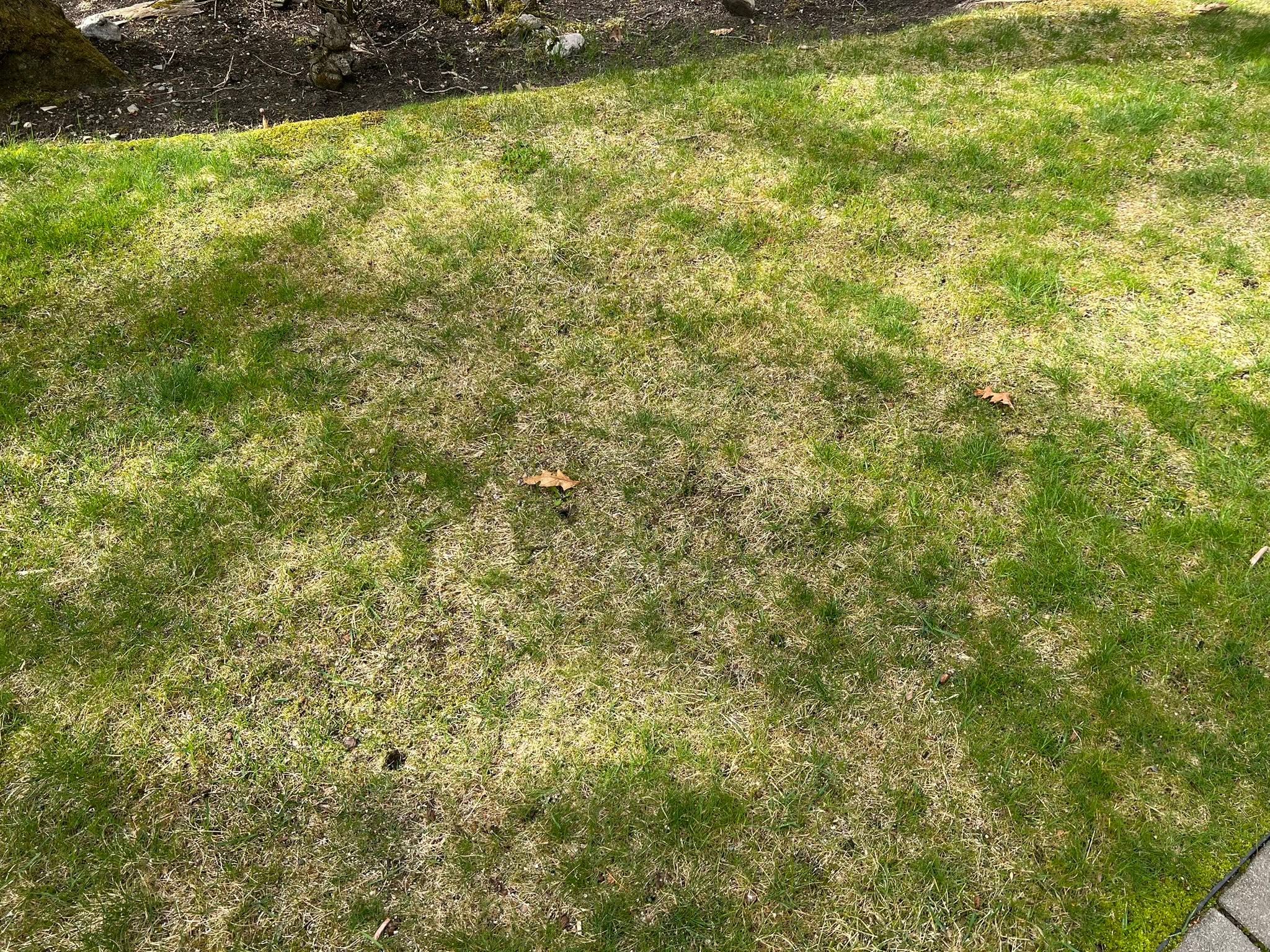
The second property, despite sharing every environmental condition with the first, was in noticeably worse shape than the first property had been when I’d started there a year earlier. Root depth at under an inch in several sections. Thatch approaching an inch and a half. Compaction severe enough that the screwdriver test stopped at under two inches in the open sun section. This wasn’t a property in similar condition to where the first one had started — it was meaningfully worse, despite the identical soil and weather.
The explanation wasn’t soil or climate, because those were genuinely identical. It was management history. The first homeowner — even before hiring me — had been doing a few things right by instinct or by previous research: cutting at a reasonable height, watering with some consistency, occasionally renting an aerator. Not optimal, but not actively harmful. The second homeowner, by their own description when I asked, had been doing the opposite of several key practices for years: cutting short because it “looked tidier,” watering briefly every evening because it felt thorough, and had never aerated because they didn’t know it was something residential lawns needed.
Two properties. Identical soil, sun, and weather. Years of divergent management decisions had produced soil conditions that were meaningfully different despite every environmental variable being the same. This was the first time I had such a clean comparison to confirm something I’d suspected but hadn’t been able to demonstrate this clearly: management history matters more than starting environmental conditions in determining how a Greater Sudbury lawn performs.
This connects directly to what I described in the article on what I found under a Sudbury lawn maintained for ten years — a lawn that had received regular cutting for a decade but never the right cutting, never aeration, and the soil told the complete story of what that history had produced. The neighbouring-property comparison gave me the same lesson with an even cleaner control: two properties, same everything except management, dramatically different outcomes.
The pattern I’ve seen repeat across dozens of side-by-side comparisons since
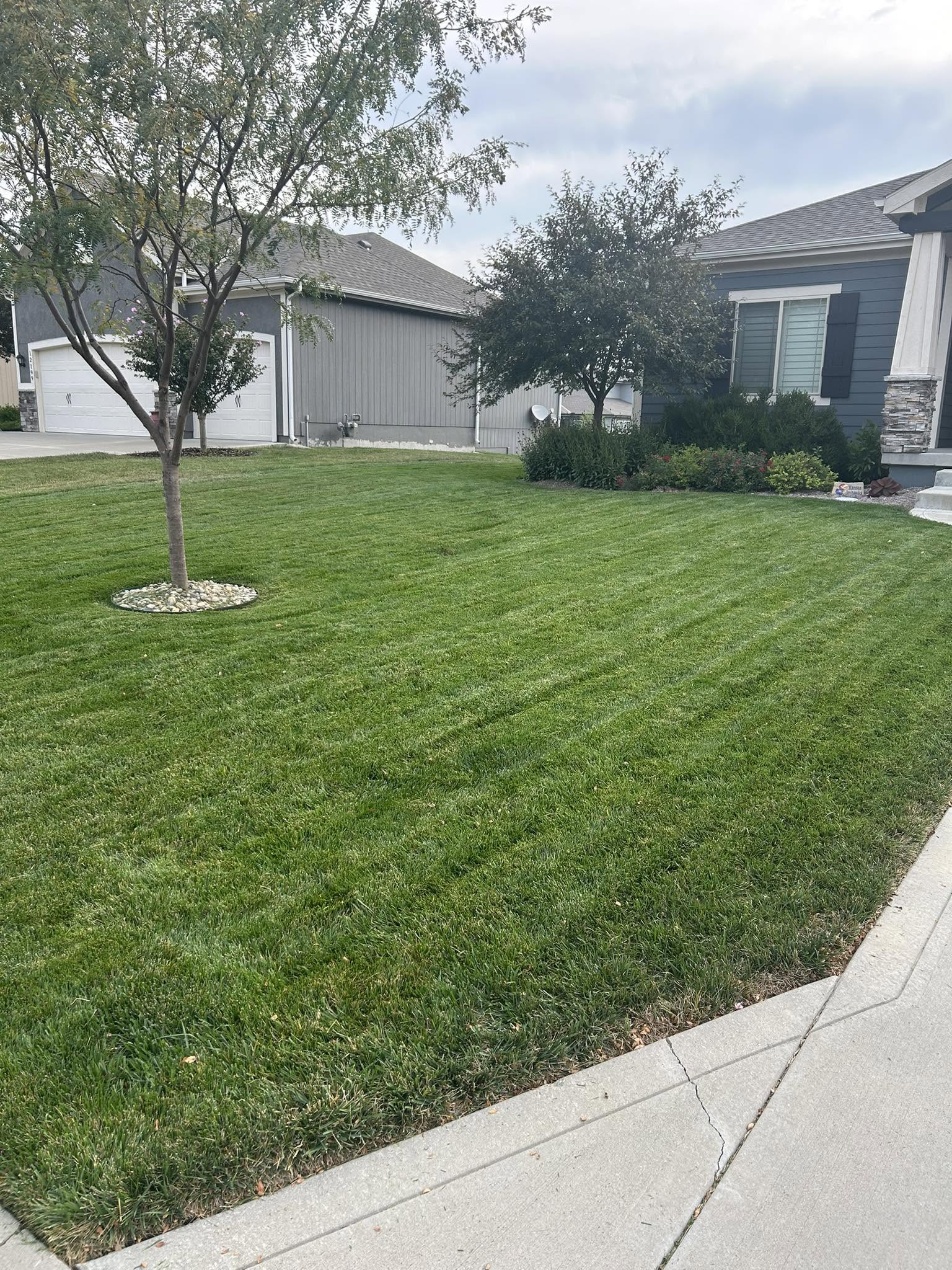
That first clean comparison wasn’t an isolated case. Once I started paying attention to this specific dynamic — properties on the same street, sometimes directly adjacent, with shared environmental conditions — I started noticing the pattern repeat across Greater Sudbury with enough consistency that I now consider it one of the most reliable diagnostic principles in my work.
The pattern: when two neighbouring properties show meaningfully different lawn performance, the explanation is almost always management consistency, not an environmental difference that isn’t visible. Homeowners sometimes assume their neighbour must have “better soil” or “a better spot” when their own lawn underperforms by comparison. In the dozens of side-by-side cases I’ve assessed, that explanation has held up only rarely — usually when there’s a genuine drainage difference from grade variation, or when one property has significantly more shade from mature trees that the other doesn’t have. Those are real environmental differences and they matter. But more often, when I dig into the actual cause, it traces back to cutting height, watering pattern, and aeration history — the same three variables, repeated across case after case.
I documented one of the clearest individual examples of this in the article on the Sudbury homeowner whose lawn problem was a 10-second fix — a mower deck setting that had been wrong for years, on a property where the neighbour’s lawn, cut correctly, looked completely different despite sharing the same block. The visual contrast between the two lawns made the homeowner emotional precisely because it was so stark relative to how similar the two properties should have looked given everything else being equal.
The compounding nature of this pattern is what makes the side-by-side comparisons so instructive. A single season of wrong cutting height or skipped aeration produces a modest difference — noticeable if you’re looking closely, not dramatic. Three or four years of consistent wrong management produces the kind of difference that’s visible from the street, the kind that makes a homeowner stop and ask what their neighbour is doing differently. The environmental conditions stayed the same the entire time. The management divergence compounded year over year into a visible gap.
I covered the mechanics of why consistent annual treatment compounds in value over time in the article on the Sudbury lawn care investment that pays you back every single year — the side-by-side property comparisons are the clearest real-world demonstration of that compounding principle. One property received the investment consistently. One didn’t. Same starting soil, same starting climate, dramatically different five-year trajectories.
What this means for any Sudbury homeowner looking at their neighbour’s lawn
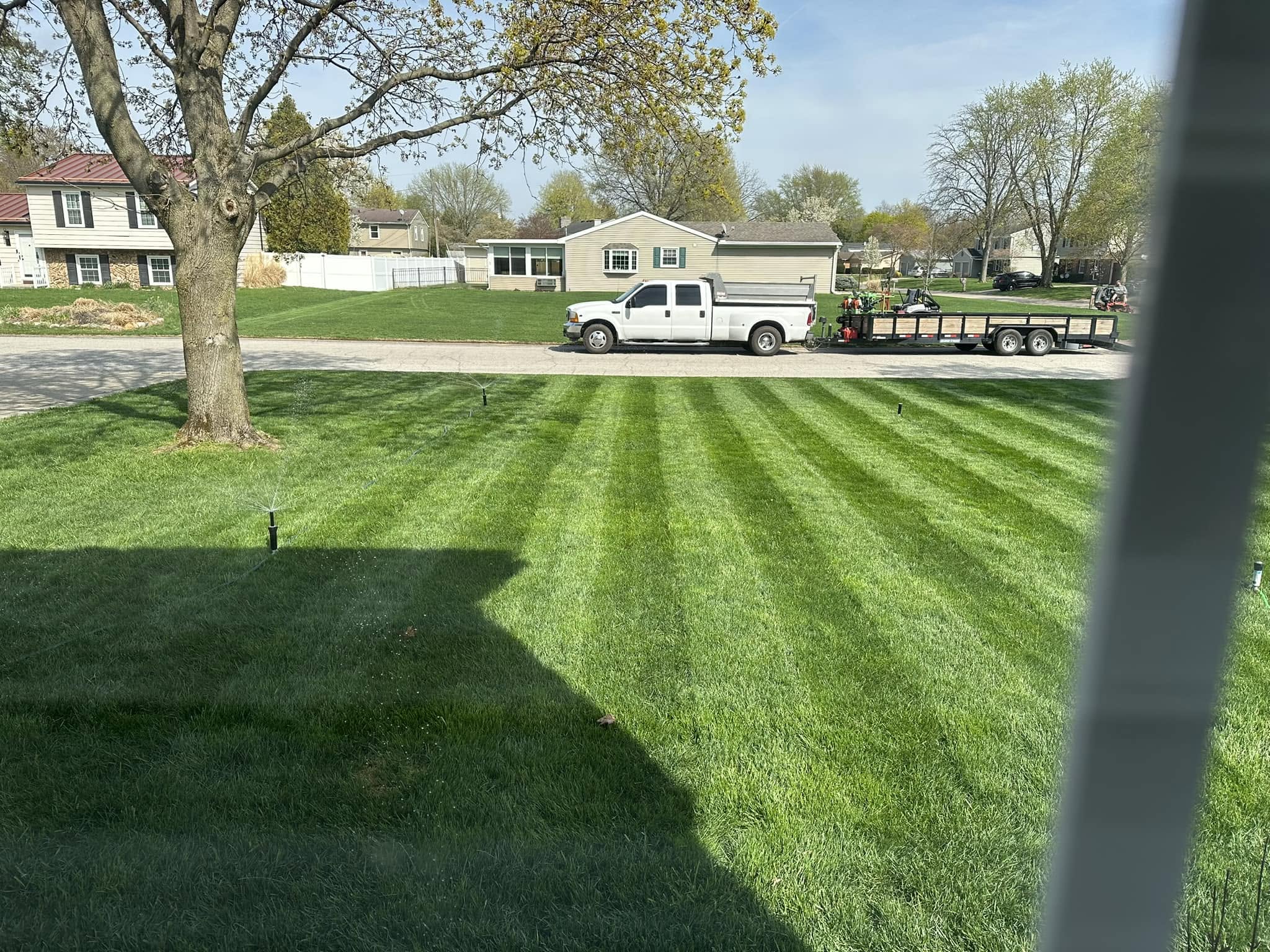
If you’ve ever looked at a neighbour’s lawn in Greater Sudbury and wondered why theirs looks better than yours despite what seems like identical conditions, here’s what I’d actually check before assuming it’s something about their property that yours doesn’t have.
Ask about their cutting height, not their fertilizer. Homeowners comparing their lawn to a neighbour’s almost always ask about products first — what fertilizer are they using, what seed did they put down. The more useful question is what height they cut at and how often. If your neighbour is cutting at three inches weekly and you’re cutting at two inches every ten to twelve days, that difference alone — with zero other changes — would produce the visible gap you’re seeing within a single season.
Ask about aeration history before assuming soil quality differs. Soil composition does vary somewhat even within a single Greater Sudbury neighbourhood, but the variation is rarely as dramatic as the visible lawn difference suggests. Before concluding that your neighbour simply has better soil, find out whether they’ve been aerating annually and you haven’t. That single difference, compounded over several years, produces soil structure differences that can look like a fundamental soil quality gap even when the underlying parent material is identical.
Watch their watering pattern, not just whether they water. Almost every homeowner waters their lawn in some fashion. The pattern — deep and infrequent versus shallow and daily — matters more than the simple fact of watering. If you’re both watering “regularly” but producing different results, the pattern difference is worth investigating.
If the environmental conditions genuinely differ, that’s worth knowing too. Sometimes the explanation really is environmental — a few extra hours of afternoon shade from a tree on their property, a slightly better natural grade that drains more effectively, or genuinely different soil from when the original development graded the lots. These differences exist and they matter. But in my experience across dozens of Greater Sudbury comparisons, they explain a minority of the visible performance gaps between neighbouring properties. Management explains most of it.
The reason this matters practically: if the gap between your lawn and your neighbour’s is environmental, there’s a ceiling on how much you can close it without significant intervention — regrading, tree removal, or accepting the constraint and working within it. If the gap is management — which it usually is — closing it is entirely within your control, starting with the cutting height check that costs nothing and the aeration booking that costs the same regardless of which side of the property line you’re on.
I still find this pattern surprising every time I see it clearly, even after six seasons of confirming it repeatedly. Identical soil, identical sun, identical weather producing such different lawns based entirely on the decisions made above the ground rather than anything different below it. It’s a useful thing to keep in mind any time you’re looking at your own lawn and wondering why it doesn’t match what’s next door.
If you want an honest comparison assessment — what’s actually different between your lawn and a neighbour’s, and what specifically would close the gap — give me a call. I’ll walk both properties if needed and tell you exactly what I find.
📞 705-507-6787 | Get a free quote online
— Ryan Lingenfelter
Owner, Cutting Edge Lawn & Landscaping
Garson, Ontario · 705-507-6787
