
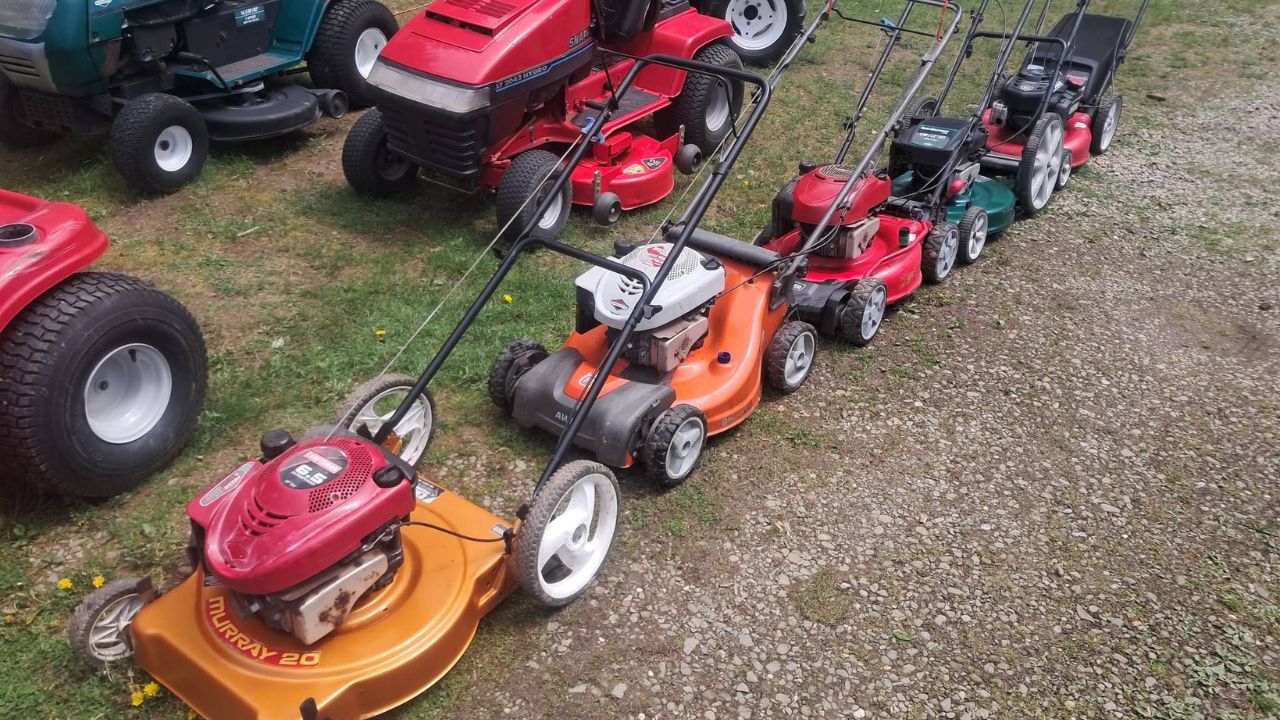
This question comes up more than I expected when I started paying attention to what people actually call about.
Not “which brand” or “how much horsepower” — those are the questions people think they should be asking. The real underlying question, which I hear in different forms about once a week, is: at what point does it make sense to have a riding mower instead of a push mower on a Sudbury property?
The generic answer is “when your lawn is big enough” — which is true but useless. Big enough by what measure? Compared to what? The answer is different depending on whether you’re talking about time, physical effort, budget, or the specific terrain conditions that Sudbury properties have in ways that most mowing advice doesn’t account for.
Here’s the actual answer, from someone who’s run both types on Sudbury properties for years and formed opinions about where the line really is.
The Question I Get More Than People Expect
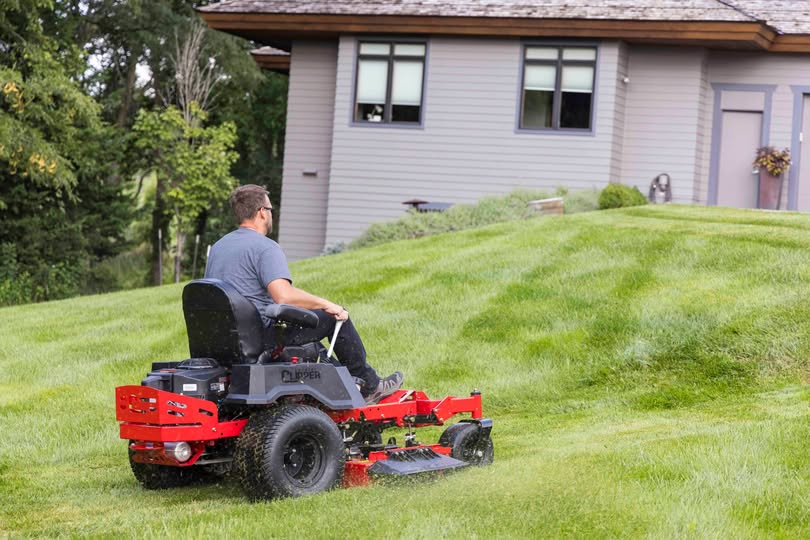
The call usually sounds like this: the person has been push mowing a property for years, it takes them somewhere between 45 minutes and two hours depending on the property, and they’re wondering at what point buying a riding mower stops being an indulgence and starts being a reasonable decision.
Sometimes it’s a physical capacity question — they’re getting older, or they’ve had a health issue, and push mowing has become genuinely difficult. Sometimes it’s a time question — the property is manageable with a push mower but mowing day takes up more of a weekend than they want to give to it. Sometimes it’s a pure curiosity question — they’re building a new house on a larger lot and they’ve never had a riding mower and they don’t know what size property actually warrants one.
I’ve written about the push mower and self-propelled mower calculation in the battery vs gas mower comparison, which covers the fuel type decision for push mowers specifically. This article is about the bigger decision: whether a riding mower makes sense at all, and specifically for Sudbury’s terrain and property conditions.
The short version of what I’m going to say: the line is lower than most people think — meaning riding mowers make sense at smaller property sizes than the generic “half an acre” advice suggests — but Sudbury terrain adds complications that make the decision more nuanced than a pure size calculation.
Where the Line Actually Is — The Real Factors
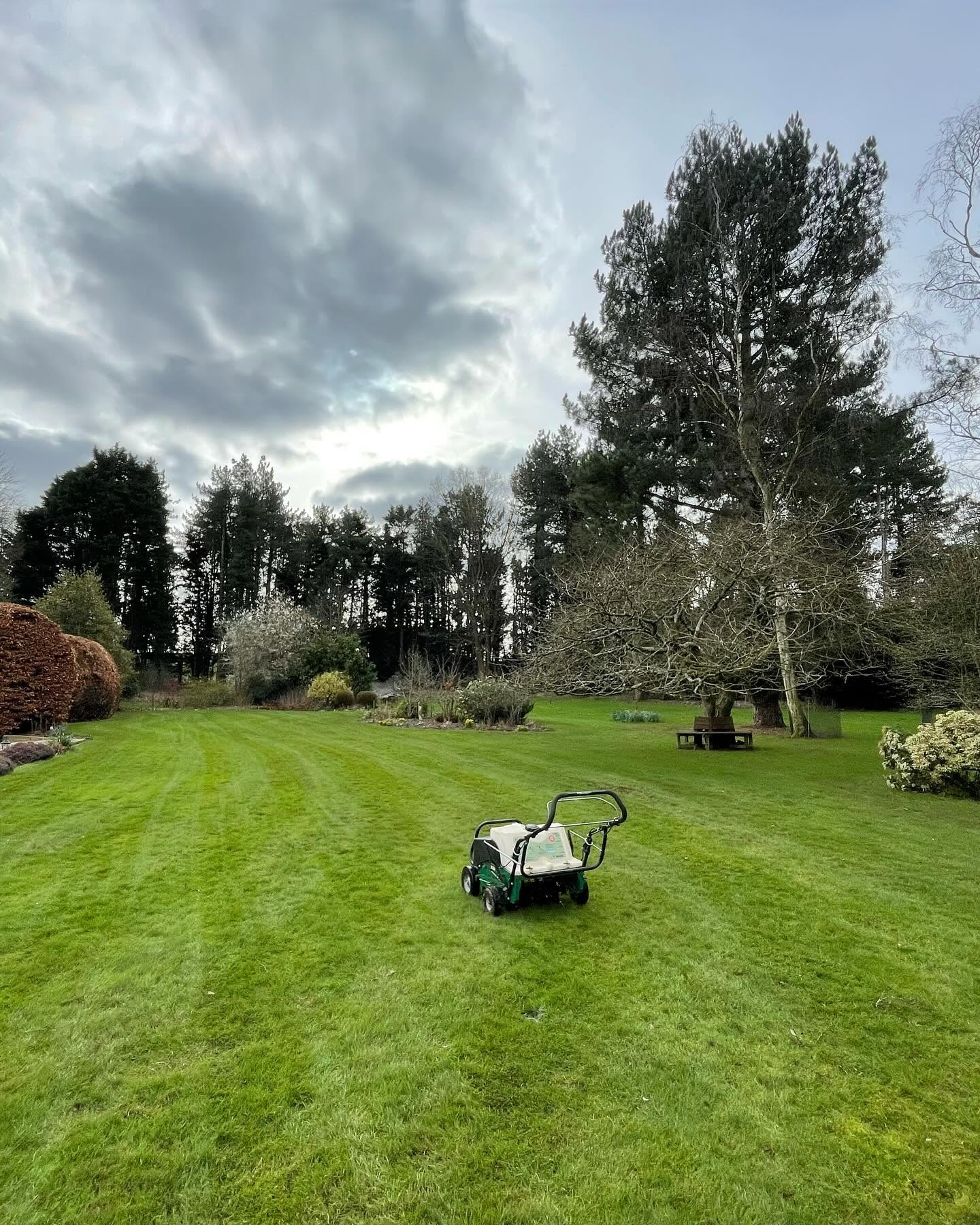
Let me give you the factors I’d actually use to make this decision, in order of how much they matter.
Mowing Time With a Push Mower — the Primary Driver
The clearest single signal that a riding mower makes sense is when push mowing takes more than 60 to 75 minutes consistently. Not including trimming, not including the time to drag the mower out and put it back — just the mowing itself.
Why that number? Because a riding mower on the same property would do it in 20 to 30 minutes. At 45 minutes of push mowing, the riding mower saves you maybe 20 minutes per mow. Over a Sudbury season of roughly 20 mowing sessions, that’s about 7 hours saved. Depending on your time and what a riding mower costs, that math might or might not work in favour of the purchase.
At 75 minutes of push mowing, the riding mower is saving you nearly an hour per session and almost 20 hours over the season. That math almost always favours the riding mower, even accounting for the higher purchase price — especially if you’re going to be on this property for more than a few years.
In terms of property size, 75 minutes of push mowing at a normal pace corresponds to roughly 8,000 to 12,000 square feet of lawn area, depending on obstacles. That’s significantly smaller than the half-acre threshold you’ll often see cited in generic mowing advice. The half-acre figure assumes more open, flat lawn than most Sudbury properties have.
Physical Capacity — Honest Assessment Required
This is the factor people are sometimes reluctant to name, but it matters more than any size calculation. If push mowing has become genuinely difficult — due to age, a health condition, or physical limitations — the right mower is one that can be used safely and sustainably, regardless of property size.
I’ve written about this in the context of lawn care on a fixed income for Sudbury retirees, where I noted that a self-propelled mower extends the years many people can comfortably manage their own mowing. A riding mower extends it further. The calculation for someone managing a property into their seventies is different from the calculation for someone in their forties, and there’s nothing wrong with the physical capacity factor being the primary one.
If a riding mower means you can keep mowing your own property safely instead of hiring it out, and the property is large enough to be awkward on foot but not so large as to require a commercial unit, the riding mower is almost certainly the better economic and practical choice.
Obstacle Density — Where Riding Mowers Lose Their Advantage
A riding mower’s time advantage over a push mower disappears on properties with lots of obstacles — trees, garden beds, structures, fences, anything that requires repeated stops and tight maneuvering. On a wide open lawn, a riding mower is dramatically faster. On a property with a dozen mature trees, multiple garden beds, and several structures, the time difference shrinks considerably because the riding mower spends a significant portion of its time backing up and repositioning.
For highly irregular or obstacle-heavy properties, a self-propelled push mower often remains the more practical choice even at sizes where you’d normally suggest a riding mower — because the riding mower’s time advantage doesn’t materialize when the layout doesn’t allow it to move freely.
Budget — New vs Used
A new mid-range riding mower in 2026 runs roughly $2,500 to $5,000 CAD depending on features and brand. A quality self-propelled push mower is $400 to $800. Used riding mowers in Sudbury are available and often represent good value — the main risk with used is maintenance history and parts availability, which matters more for older machines.
The budget consideration connects to the time calculation: a riding mower that saves you 18 hours of physical labour per season is worth more to someone who values that time highly than to someone who mows their property as a meditative hobby and genuinely doesn’t mind the hour it takes. That’s not a judgment — it’s just a real factor in whether the purchase price makes sense.
Where Sudbury Specifically Changes the Calculation
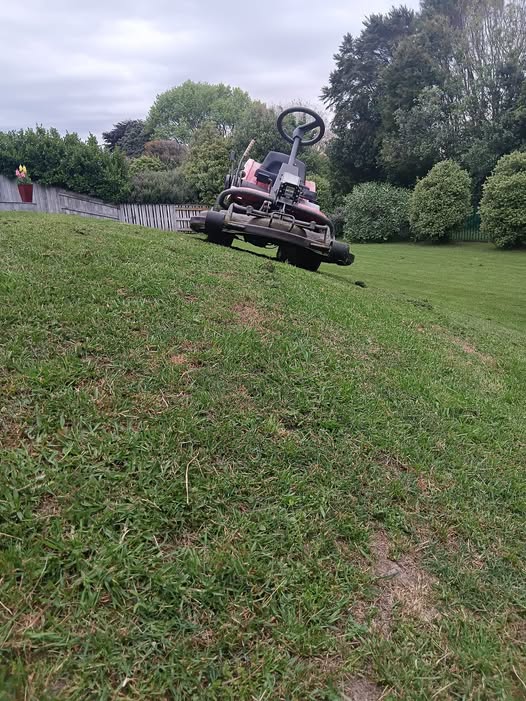
Everything I’ve said above applies generally. Here’s where Sudbury’s specific conditions add complexity that generic riding mower advice doesn’t account for.
Uneven Terrain and Rock Outcrops
Sudbury properties sit on the Canadian Shield. That means rock outcrops, uneven ground, and surface irregularities that don’t exist on the flat agricultural land that most riding mower advice is written for. A riding mower on flat terrain is smooth and efficient. A riding mower on uneven Shield terrain can be uncomfortable, slower than expected, and in some cases a safety consideration on steeper slopes.
Before deciding on a riding mower, honestly assess how much of your lawn area is genuinely flat versus sloped or uneven. Riding mowers — especially zero-turn units — are rated for specific slope percentages and operating outside those ratings is a real safety issue. If a significant portion of your property has slopes, a riding mower may not be able to access all of it safely, which means you’re still push mowing the slopes after you’ve ridden the flat sections.
On properties where rock outcrops are close to the surface or partially exposed, the risk of hitting rock with the mower deck is real. In my first year I described various mistakes I made — one of the less dramatic ones was hitting a subsurface rock outcrop with a mower deck on a property where the rock was closer to the surface than it appeared from above. Know your terrain before committing to equipment that operates closer to the ground than a standard push mower deck.
Frost Heaving and Spring Ground Conditions
Sudbury’s freeze-thaw cycles create ground conditions in early spring that matter for riding mower use. Freshly thawed ground — especially on heavier clay-based Sudbury soil — is softer than it looks and can be damaged by riding mower wheels in a way that push mowing doesn’t cause. A riding mower operating on soft spring soil can leave ruts that persist through the mowing season and create uneven ground going into the following winter.
The practical rule: don’t take a riding mower onto the lawn until the ground has firmed up adequately — usually by mid-May in most Sudbury areas, later in shaded or north-facing sections. This is a Sudbury-specific consideration that doesn’t come up in riding mower advice written for warmer climates with shorter freeze periods.
Storage and Winterization
This is a smaller consideration but worth naming. A riding mower requires more storage space than a push mower and has more winterization needs — fuel stabilizer, battery maintenance if it has a battery, and ideally a covered storage location. In Sudbury’s winter temperatures, a riding mower stored in an unheated shed or garage will have battery issues and fuel system problems if not properly prepared.
If your storage situation is limited or you’re a snowbird who leaves the property for five months, these logistics matter more than they would for someone who’s on the property all winter and has a proper garage.
The Decision Framework — How to Actually Make This Call
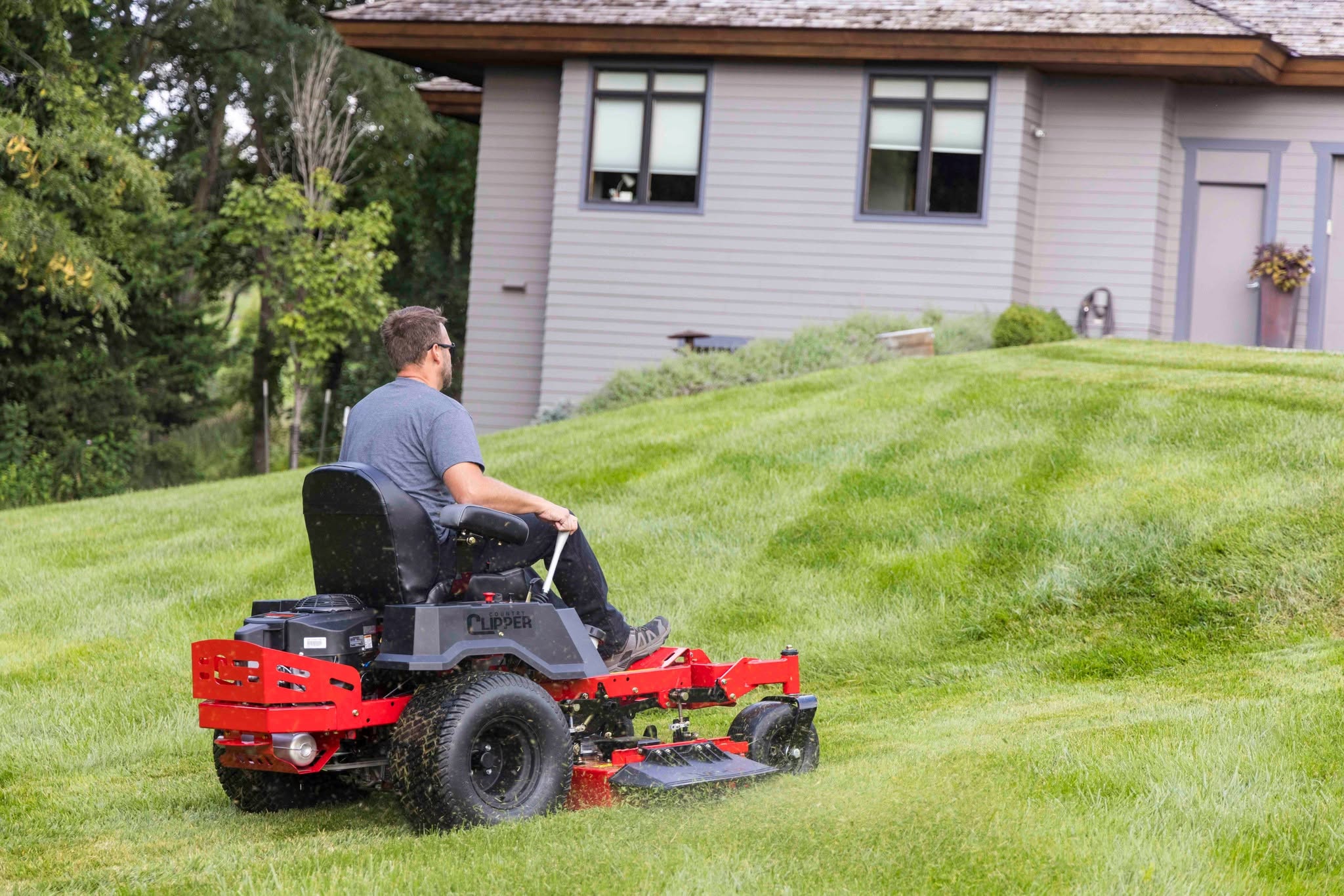
Here’s how I’d walk through the decision if someone called me and asked directly.
If Push Mowing Takes Under 45 Minutes
Stick with a push mower or self-propelled push mower. The time savings from a riding mower don’t justify the purchase price at this property size, and the maneuverability advantage of a push mower on a smaller property often outweighs the modest efficiency gain of a riding unit. If the push mowing is becoming physically difficult, upgrade to a better self-propelled model rather than jumping to a riding mower.
If Push Mowing Takes 45 to 75 Minutes
This is the grey zone where individual factors matter most. If the property is mostly flat and open, a used riding mower starts to make economic sense. If there are significant slopes, rock outcrops, or obstacle density, a high-quality self-propelled push mower is probably still the more practical choice. Physical capacity is the tiebreaker — if mowing has become physically difficult at this duration, go riding.
If Push Mowing Takes More Than 75 Minutes
A riding mower almost certainly makes sense if the terrain allows it. The time savings over a Sudbury season are significant, the physical benefit is real, and the purchase price amortizes well over multiple seasons of use. Assess your terrain for slope safety and obstacle density, buy accordingly — and don’t skip the spring ground condition check before the first use each season.
One Thing That Doesn’t Change Regardless of Mower
Mowing height. 3 to 3.5 inches, regardless of what powers the mower or what size it is. I mention this at the end of most mowing-related articles because it keeps coming up as the single most consistently mismanaged variable on Sudbury lawns — people cut short because it looks neater, and then spend the summer dealing with a lawn that’s more stressed, more weed-prone, and less resilient than it would have been at the right height. The mower decision matters. The height setting matters more.
I’ve described the full standards we hold our own mowing work to in the crew standards piece — those principles apply equally well to a homeowner making their own mowing decisions.
If you’ve been push mowing a Sudbury property and wondering whether the riding mower investment makes sense for your specific lot, I’m happy to talk through it. And if you’d rather have us handle the mowing entirely, that’s part of what we offer across the season — the full service breakdown covers it alongside everything else.
Call or text: 705-507-6787
Or fill out the free quote form on the site.
We cover Garson, Val Caron, Hanmer, Lively, Chelmsford, Azilda, Capreol, and surrounding areas.
— Ryan Lingenfelter
Cutting Edge Lawn & Landscaping
Garson, Ontario
705-507-6787
