
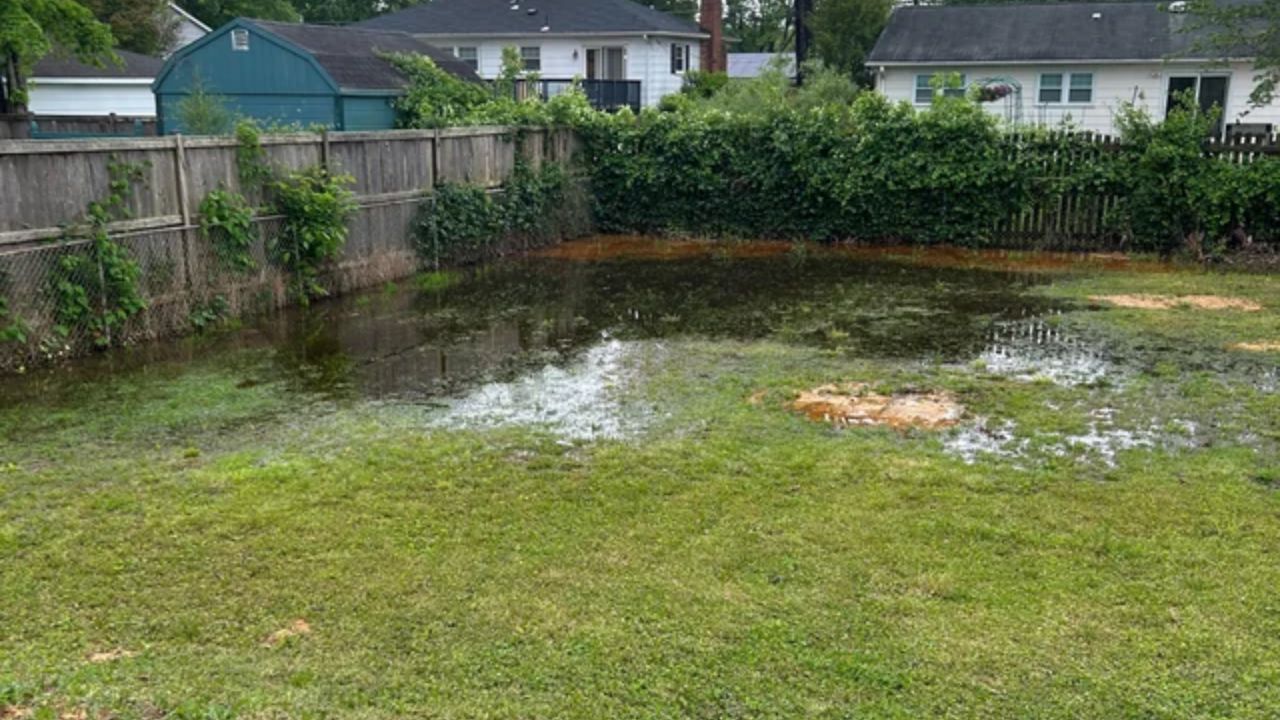
A homeowner in Lively called me a couple of summers ago, genuinely confused. They’d installed an above-ground pool the previous year, and the lawn surrounding it had developed a ring of dead and dying grass that kept getting wider every season. They’d tried watering it more. They’d tried reseeding it twice. Nothing held.
When I walked the property, the cause was obvious within a few minutes. It had nothing to do with watering or seed quality. It was the pool itself — specifically, a few habits around how it was being maintained that were quietly damaging the grass around it every single week without anyone realizing the connection.
I’m Ryan Lingenfelter, owner of Cutting Edge Lawn & Landscaping in Garson, Ontario. Since 2020, I’ve worked on a lot of Sudbury properties with pools — Garson, Val Caron, Hanmer, Lively, Chelmsford, Azilda, Capreol. The damage pattern I see around pools is specific and consistent, and most pool owners genuinely don’t know they’re causing it until I point it out.
Splash-Out and Pool Chemical Runoff
This is the most common cause I see, and it’s almost entirely invisible to the person dealing with it because it happens gradually, a little bit every time someone gets in or out of the water.
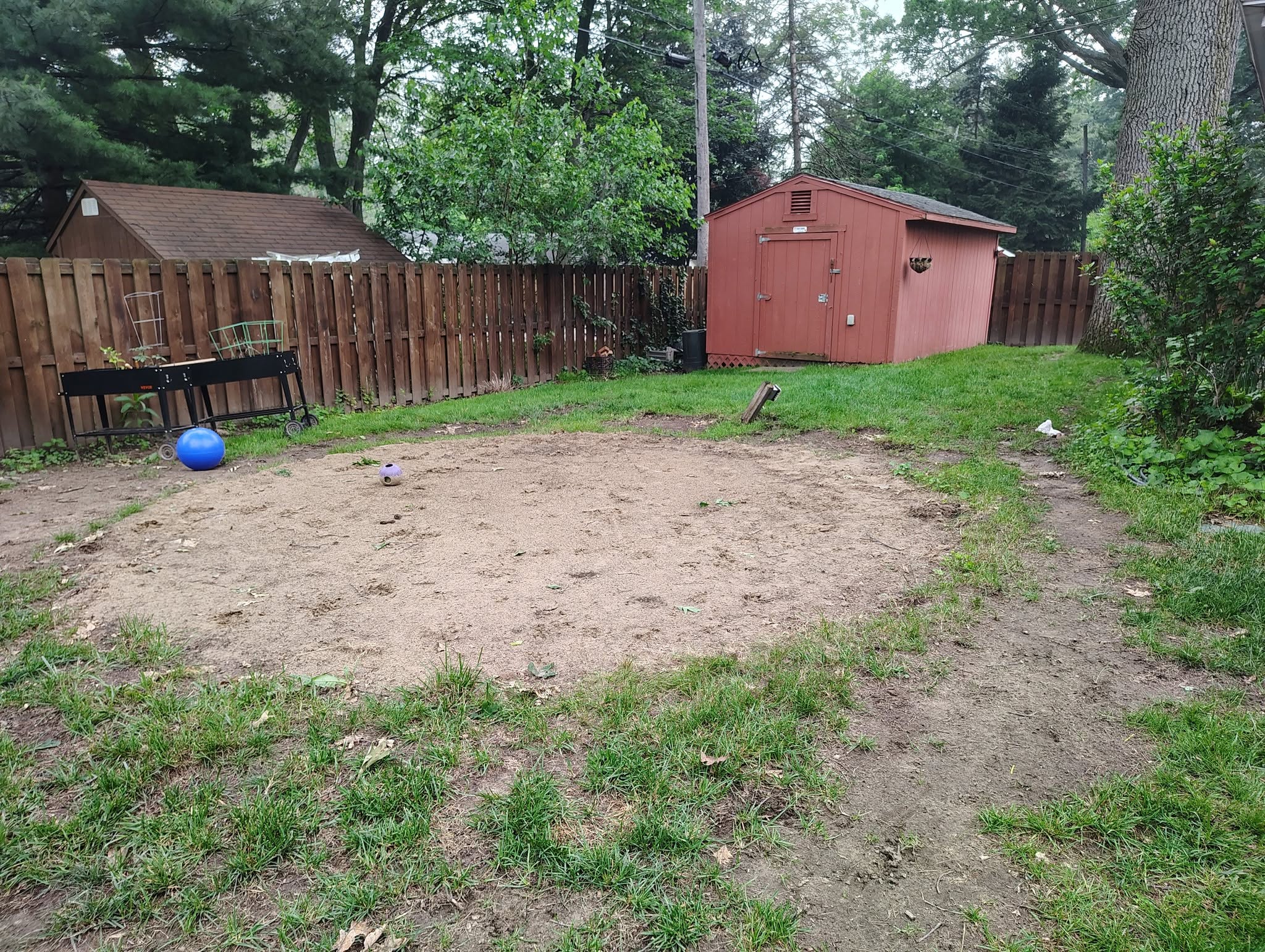
Every time pool water splashes out onto the surrounding lawn, it’s depositing chlorine and whatever other balancing chemicals are in the water at that moment — and pool water is typically more concentrated in chlorine right after a fresh chemical treatment. Grass can tolerate small amounts of chlorine, but repeated splash-out in the same areas, week after week through a Sudbury summer, builds up faster than the grass can recover between exposures.
The pattern this produces is distinctive: a ring of stressed or dead grass immediately surrounding the pool, usually worse on whichever side gets the most activity — typically the side with the ladder or steps where people are getting in and out repeatedly. The grass further from the pool, outside the splash radius, stays healthy. That contrast is the giveaway that splash-out is the cause rather than a general lawn problem.
The fix isn’t complicated, but it requires a habit change. Rinse splash-out areas with plain water after pool sessions, particularly after a chemical treatment when chlorine concentration is highest. A quick hose-down of the immediate splash zone dilutes the chemical exposure significantly. If the damage is already established, that section will likely need overseeding or small-area sod repair once the chemical exposure pattern is corrected — reseeding into a spot that’s still getting regular chemical splash won’t hold any better than it did the first time.
Backwash Water — The One That Catches People Off Guard
This one surprises pool owners almost every time I explain it, because backwashing feels like routine maintenance rather than something that affects the lawn at all.
When a pool filter system is backwashed — flushing built-up debris and contaminants out of the filter — that water has to go somewhere. On a lot of Sudbury properties, the backwash line runs out onto the lawn, often in a fairly concentrated area near where the filter equipment is located. That water carries a significant concentration of chlorine, filtered debris, and sometimes algaecide or clarifier residue, and it’s typically discharged in volume over a short period rather than gradually.
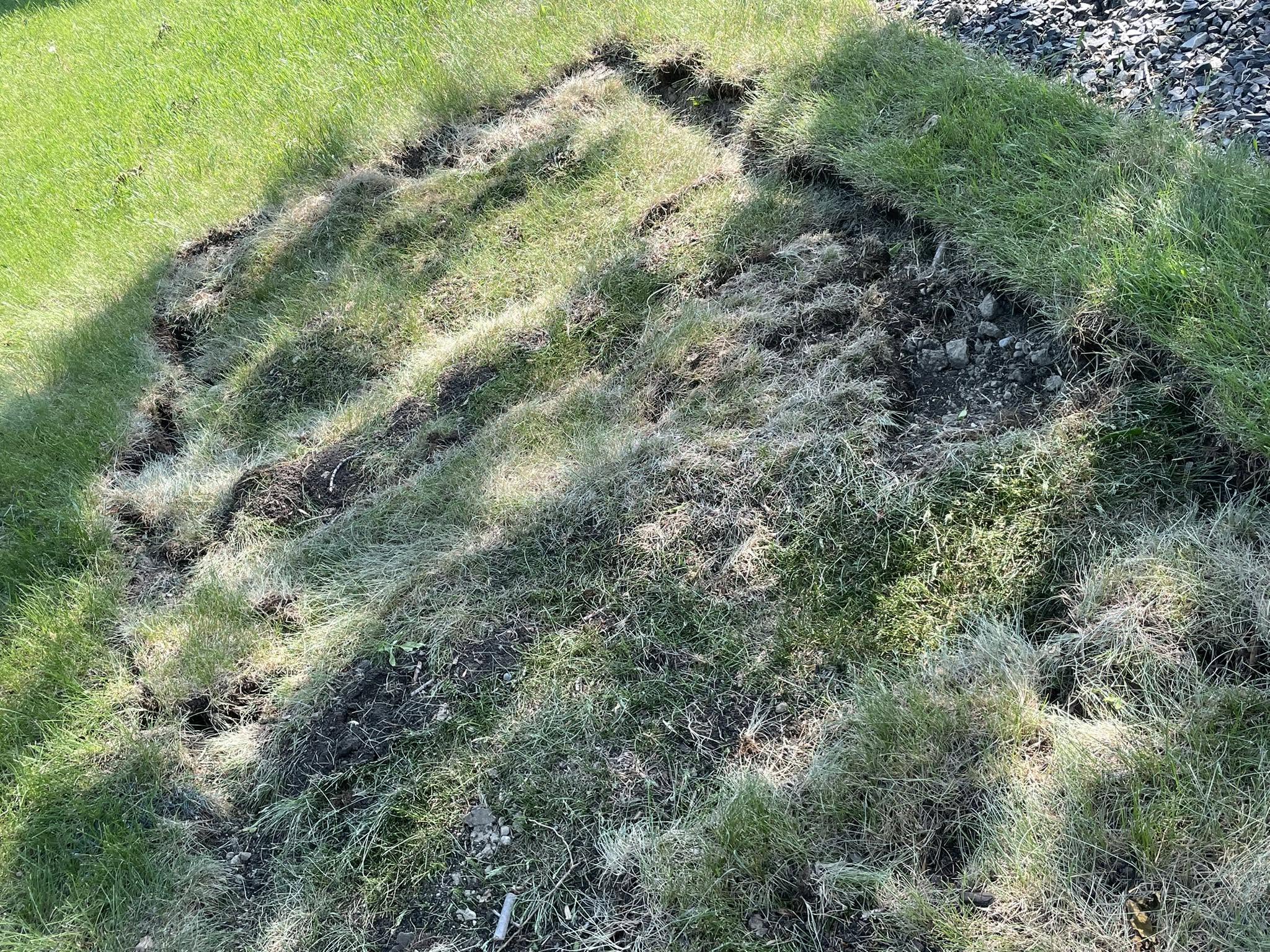
A homeowner in Hanmer had a consistent dead patch near their pool equipment pad every single season, despite reseeding it multiple times. The backwash line discharged directly onto that spot every time the filter was cleaned, and the chemical concentration in that volume of water was simply too much for new grass to establish, regardless of how many times it was reseeded.
The fix here usually involves redirecting where backwash water discharges — extending the line to a garden bed area rather than open lawn, or to a gravel dispersal area that can handle the chemical load without trying to support living grass. If redirecting isn’t practical, diluting heavily with a hose immediately after backwashing helps, though it’s a less reliable fix than simply moving the discharge point away from turf entirely.
Foot Traffic Compaction Around the Pool
This cause is less about chemicals and more about simple physics, but it compounds with the chemical issues to make the area around a pool one of the hardest places on a Sudbury property to keep grass healthy.
The path from the house to the pool, and the area immediately surrounding the pool deck or ladder, gets significantly more foot traffic than the rest of the lawn through a Sudbury summer — especially with kids running back and forth repeatedly on hot days. That concentrated traffic compacts the soil far more severely than normal walking patterns elsewhere on the property.
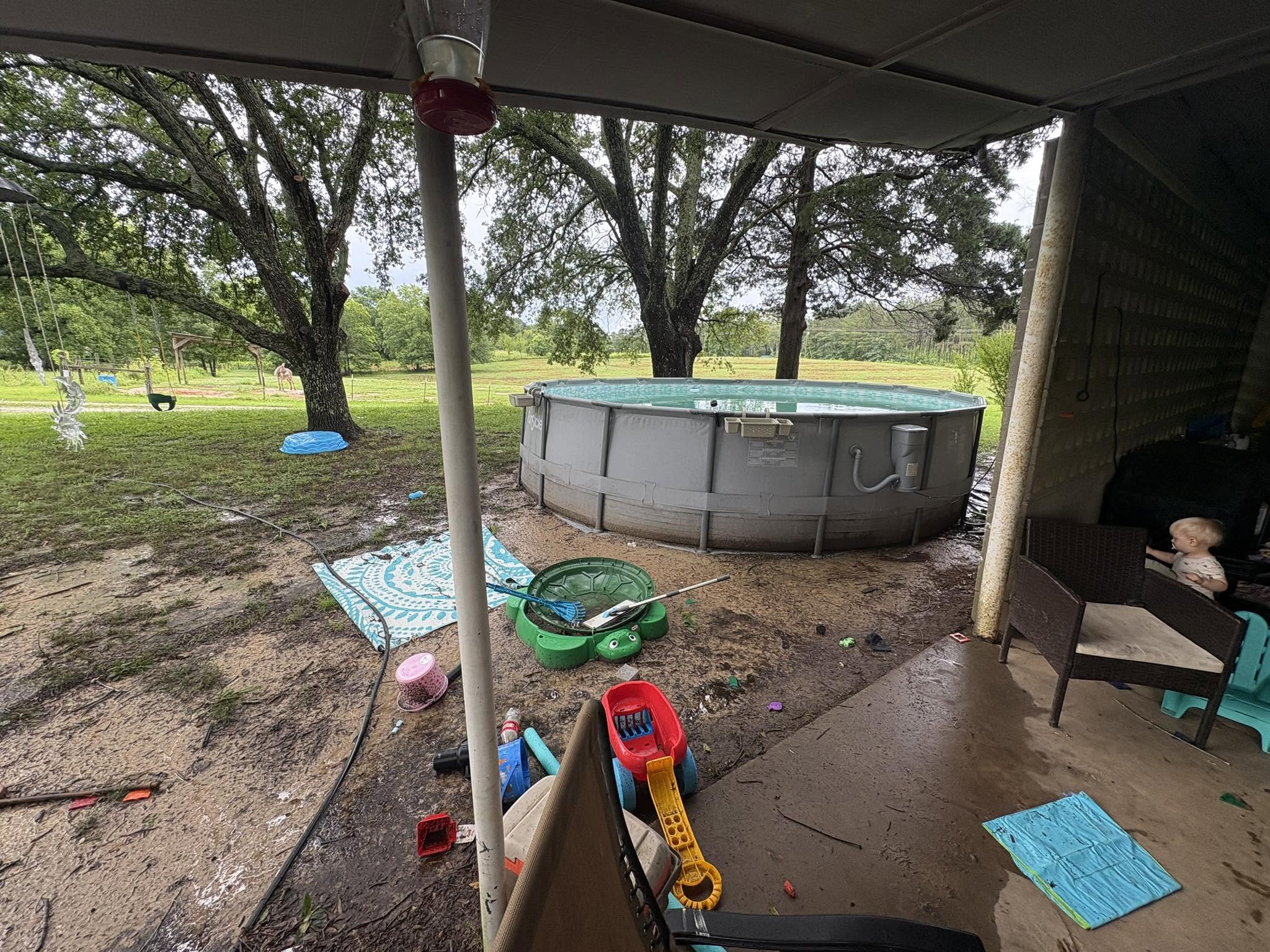
Sudbury’s clay soil already compacts hard under normal conditions — add concentrated high-traffic use around a pool and that area becomes one of the most compacted spots on the entire property. Compacted soil means shallow roots, poor water penetration, and grass that simply can’t compete with the wear it’s taking. Combined with chemical splash-out in the same zone, you get a section of lawn fighting two separate problems simultaneously.
The screwdriver test I use on every property tells the story clearly around pools — push it into the high-traffic pool perimeter and compare to how it goes into the rest of the lawn. The difference is usually dramatic. Targeted core aeration specifically around the pool area, more frequent than the rest of the property if needed, helps offset the extra compaction this zone takes on through the season.
Shade and Airflow Changes From Pool Structures and Decking
This one is less common but worth mentioning because it explains some patches that don’t fit the chemical or traffic pattern. Above-ground pools, pool decking, privacy screening, and the equipment sheds that often accompany a pool installation all change the light and airflow pattern on the section of lawn nearby.
An above-ground pool casts a shadow that moves through the day but consistently shades a portion of the lawn on one side, particularly in morning or evening depending on orientation. Privacy fencing or screening around a pool area restricts airflow, which on Sudbury’s already humid summer days can keep grass blades wet longer after dew or light rain — creating better conditions for fungal disease in that specific zone than the rest of an open lawn would have.
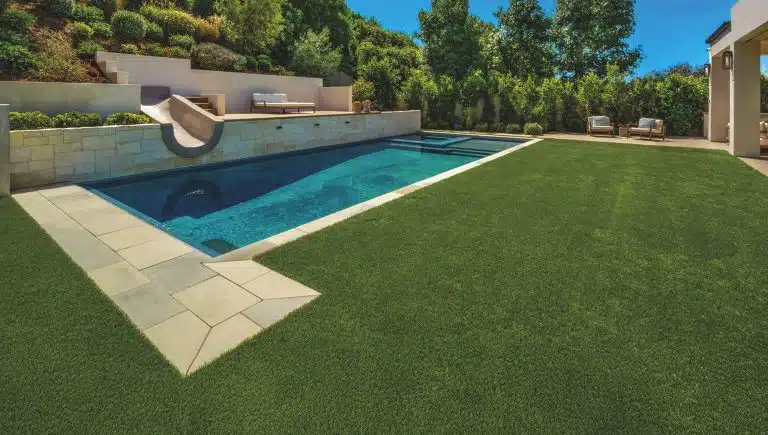
If you’ve got a patch near the pool that doesn’t match the splash-out or backwash pattern — not immediately adjacent to the water, not in the high-traffic path — check whether it’s in a shadow zone created by the pool structure or any decking and screening around it. The fix here is usually selecting a more shade-tolerant grass variety for that specific zone rather than trying to force standard turf to perform in conditions it’s not suited for.
What to Actually Do If You Have a Pool in Sudbury
None of this means you need to choose between a pool and a healthy lawn. It means the area immediately around a pool needs to be treated as its own zone with its own maintenance considerations, rather than expecting it to perform the same as the rest of the property under standard care.
Rinse splash-out zones with plain water regularly, especially after chemical treatments. Redirect or properly dilute backwash discharge so it isn’t concentrating chemical load onto living turf. Aerate the high-traffic pool perimeter more frequently than the rest of the lawn — this zone earns extra attention because it’s taking extra wear. And if a specific section is consistently shaded or poorly ventilated because of pool structures, consider a shade-tolerant seed blend for that zone specifically rather than fighting the conditions with standard grass.
For sections that are already damaged and need to be brought back, the right approach depends on how much live grass remains — the sod vs seed decision guide here covers exactly how to make that call, and it applies just as much to a pool-damaged section as it does to any other part of the lawn.
If you’ve got a Sudbury property with a pool and a lawn that’s been struggling in the same spots no matter what you try, give me a call. I’ll walk the area, identify which of these specific causes is actually responsible, and tell you exactly what it’ll take to fix it.
📞 705-507-6787
🔗 Get a Free Quote
📍 Serving Greater Sudbury — Garson, Val Caron, Hanmer, Lively, Chelmsford, Azilda, Capreol
— Ryan
Frequently Asked Questions
Why is the grass dying around my pool in Sudbury?
The most common causes are chlorine and chemical exposure from splash-out during pool use, concentrated backwash water discharge containing high chemical loads, and soil compaction from the heavy foot traffic that pool areas typically receive. Splash-out damage shows up as a ring of stressed grass immediately around the pool, while backwash damage tends to be a concentrated dead patch near the filter equipment discharge point. Identifying which pattern matches your situation determines the right fix.
How do pool chemicals damage lawns in Sudbury?
Chlorine and other pool balancing chemicals are toxic to grass in concentrated amounts. Splash-out during regular pool use deposits small amounts repeatedly over a season, which builds up faster than the grass can recover between exposures. Backwash water from filter cleaning carries a much higher concentration in a shorter discharge period, which is often enough to kill grass outright if it’s directed onto turf rather than a garden bed or gravel area designed to absorb the chemical load.
What should I do with pool backwash water to protect my Sudbury lawn?
Redirect the backwash discharge line away from open lawn areas if possible — toward a garden bed or a gravel dispersal area that can handle the chemical concentration without trying to support living turf. If redirecting isn’t practical, heavily dilute the discharge area with plain water from a hose immediately after backwashing to reduce the chemical concentration before it has time to damage the grass underneath.
Why is the soil so compacted around my pool in Sudbury?
Pool areas typically receive significantly more concentrated foot traffic than the rest of a lawn — the path from the house, the area around the ladder or steps, and the general perimeter where people gather. On Sudbury’s clay-heavy soil, which already compacts hard under normal use, this concentrated traffic produces noticeably worse compaction than the surrounding lawn. Targeted core aeration around the pool perimeter, done more frequently than the rest of the property, helps offset this extra wear.
Can I fix grass that’s already dead around my pool in Sudbury?
Yes, once the underlying cause is addressed. If the damage is from ongoing chemical exposure, fix the splash-out or backwash issue first — reseeding or sodding into a spot that’s still receiving regular chemical contact won’t hold. If the area is more than 50 percent dead, small-area sod repair establishes faster and more reliably than seed. If there’s still a reasonable grass base, overseeding after addressing the compaction and chemical issues works well. The right approach depends on the extent of the damage and whether the root cause has actually been corrected.
Ryan Lingenfelter is the owner of Cutting Edge Lawn & Landscaping in Garson, Ontario. Since 2020, his crew has provided full lawn care services across Greater Sudbury — Garson, Val Caron, Hanmer, Lively, Chelmsford, Azilda, and Capreol. Cutting Edge is licensed, insured, BBB A+ rated, and ThreeBest Rated for lawn care services in Sudbury.
📞 Phone: 705-507-6787
📍 Service Area: Greater Sudbury, Ontario
🔗 Free Quote: cuttingedgelawn.ca/quote
Helpful Lawn Care Services in Sudbury
- Sod Installation in Sudbury
- Core Aeration for Healthy Lawns
- Grass Cutting Services
- Property Cleanup Services
- Mulch & Decorative Stone
- Hedge Trimming Services
Continue Reading
- Sod vs Seed in Sudbury — Which One Is Right for Your Lawn?
- How to Fix Clay Soil in Your Sudbury Lawn (Without Replacing It)
- The Real Reason Sudbury Lawns Look Patchy by August
