
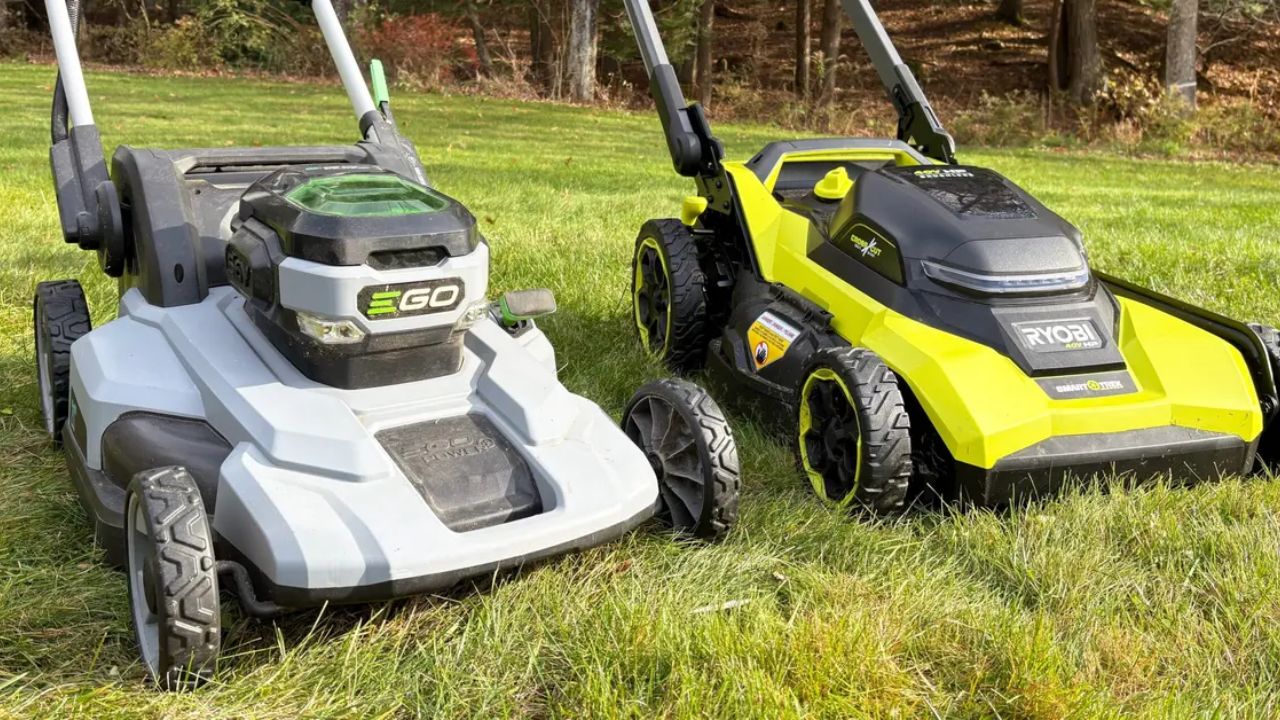
I’ve had a version of this question come up enough times now that I figured it was worth actually testing properly instead of just giving my gut answer.
“Should I get a battery mower or stick with gas? Everyone online says battery is the future but I don’t know if that’s true up here.”
The honest answer is: it depends on your property, and some of the things that matter most for that decision are specific to Sudbury conditions in ways that a lot of the general reviews and comparisons online don’t account for. So last season, I ran both — a battery mower and a gas mower — across a range of properties I service, paying attention specifically to the things that matter in our climate and our terrain.
Here’s what I found.
Why I Actually Tested This Instead of Just Guessing
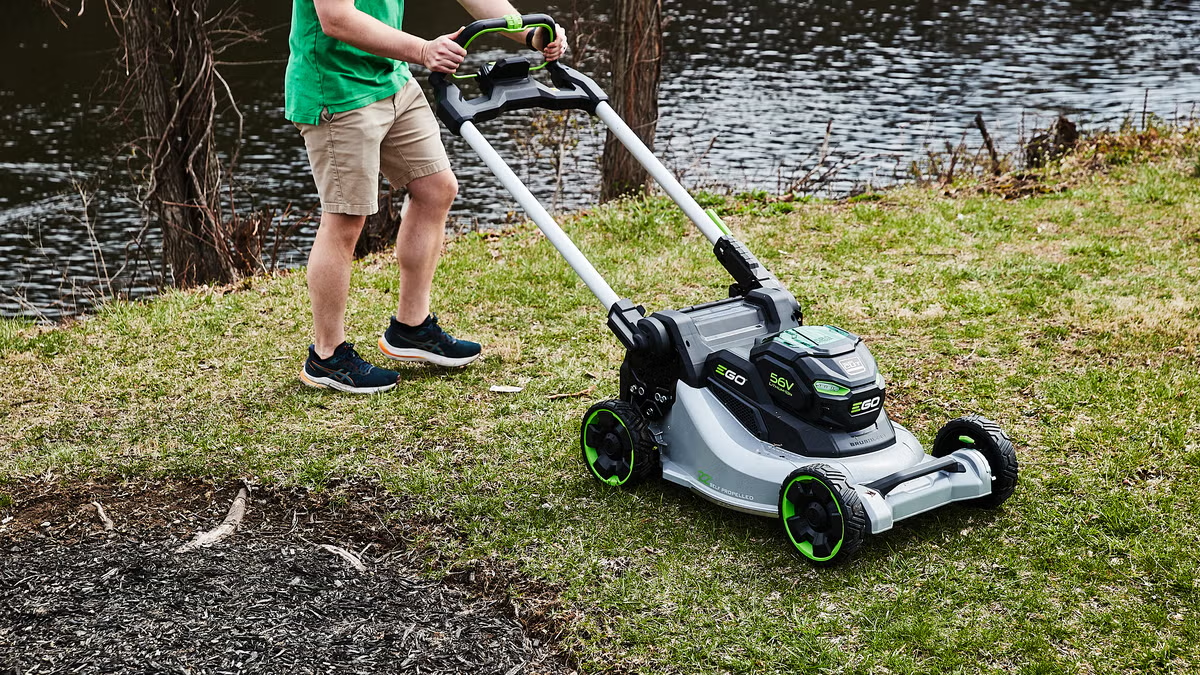
I’ll be upfront: before I did this, my assumption was that gas was still clearly better for anything beyond a small suburban lot, and battery was mostly for people with tiny lawns who wanted something quiet and low-maintenance. That assumption was based on older battery technology and general impressions rather than anything I’d actually tested recently.
But battery mower technology has changed a lot in the last few years — bigger batteries, more power, better cold-weather performance than older lithium-ion designs. And at the same time, a lot of the online comparisons I’d see were written by people testing in climates very different from ours — warmer winters, different grass types, smaller average lot sizes, and none of the considerations that come with Sudbury’s specific terrain and soil conditions.
So I picked up a quality battery mower — a mid-to-high-end model with a removable lithium battery — and ran it alongside one of my existing gas mowers across a full mowing season, on properties ranging from small in-town lots to larger rural properties with rougher terrain. I tracked runtime, performance on different grass conditions, how each handled our specific terrain, and — since storage and starting matter a lot here — how each performed at the start and end of the season when temperatures are cooler.
Here’s what actually came out of it.
Where the Battery Mower Won
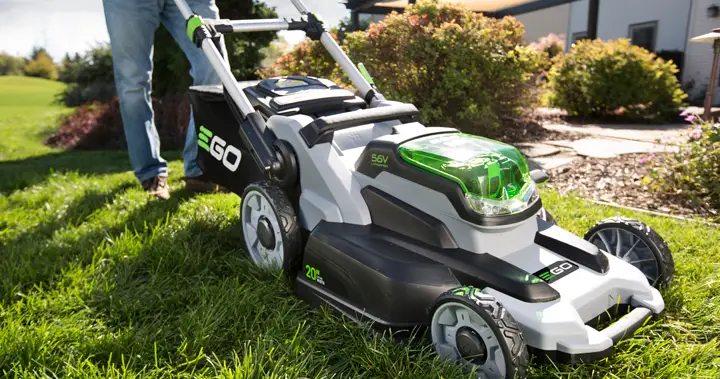
I want to give credit where it’s due, because the battery mower performed better than I expected in several areas — and for a meaningful number of Sudbury properties, it’s genuinely the better choice.
Starting, Every Single Time
This was the single biggest difference, and it matters more in our climate than people might think. Gas mowers, especially after sitting over winter, can be finicky to start — old gas, carburetor issues, pull cords that take several tries on a cold spring morning. The battery mower starts the same way every time: press a button. No choke, no priming, no pull cord, no worrying about whether the gas from last fall has gone stale.
For anyone who’s dealt with a gas mower that won’t start on the first nice mowing day of spring — which is a genuinely common Sudbury experience — this alone is a significant point in the battery mower’s favour.
Noise and Neighbours
Battery mowers are dramatically quieter than gas mowers. On smaller in-town lots in Garson and similar areas, where houses are closer together, this matters more than people expect. Early morning or evening mowing — which is sometimes the only window that works with a schedule — is much less likely to be a problem for neighbours with a battery mower.
Maintenance — There Basically Isn’t Any
No oil changes. No spark plugs. No air filters. No carburetor cleaning. No fuel stabilizer for winter storage. The battery mower’s maintenance over a full season was essentially: keep it charged, keep the blade sharp. That’s it.
For anyone managing lawn care on a fixed income or anyone who just doesn’t want to deal with small engine maintenance, this is a real, ongoing benefit — not just at purchase time, but every season going forward.
Smaller and Average-Sized Lots — No Compromise
For a typical Sudbury residential lot — a few thousand square feet of lawn, the kind of property most homes in Garson, Val Caron, and similar areas have — the battery mower I tested had more than enough runtime to complete the mow on a single charge, even with reasonably long grass. There was no point during the season where I felt limited by battery life on these properties.
Where the Gas Mower Still Wins in Sudbury
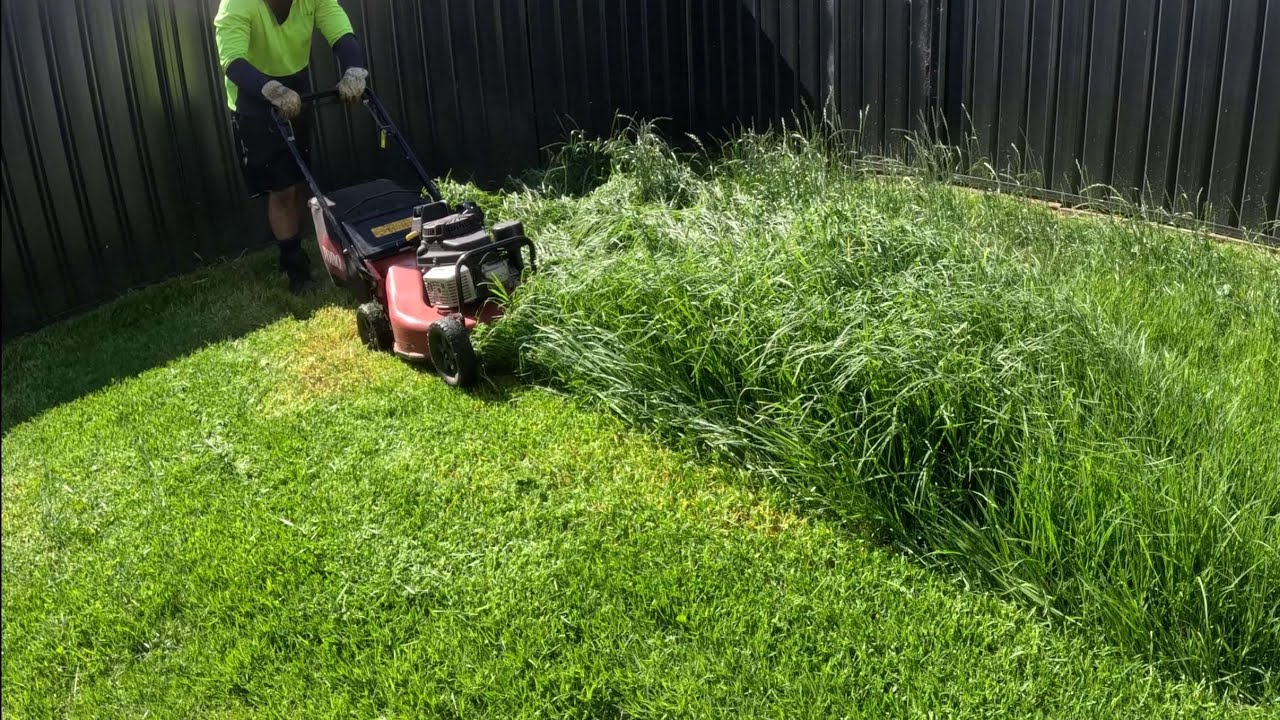
That said, there are specific situations — some of them quite common in Greater Sudbury — where the gas mower was clearly the better tool, and I don’t think it’s close in these cases.
Larger Properties and Rural Lots
A lot of properties around Sudbury — especially in Lively, Chelmsford, and rural parts of the other areas we service — have significantly more lawn than a typical in-town lot. On the larger properties I tested, the battery mower’s runtime became a real limiting factor. You either need to plan around recharging mid-job, or carry a spare battery, both of which add complexity and cost. The gas mower just keeps going as long as there’s fuel in the tank, and refueling takes two minutes regardless of how much lawn is left.
Thick or Tall Grass — Especially After a Missed Week
This is a real Sudbury consideration. Our growing season is short but can be intense — there are stretches in late May and June where grass grows fast, and if you miss a mowing week because of rain or being away, you come back to grass that’s noticeably taller and thicker than usual.
In testing, the gas mower handled thick, tall grass with more consistent power throughout the cut. The battery mower could handle it, but power dropped more noticeably in the toughest sections, and on a couple of occasions I needed to go over a section twice where the gas mower would have managed it in one pass. If you’re someone who’s not always able to mow on a strict weekly schedule — which describes a lot of people — this is worth factoring in.
Rough or Uneven Terrain
Given how much of Greater Sudbury sits on uneven, rocky terrain, a lot of properties here have lawns that aren’t perfectly flat — slopes, areas near rock outcrops, uneven ground from heaving over the years. Heavier gas mowers, generally, handle this kind of terrain with a bit more stability and the engines don’t bog down on inclines the way some battery motors can under sustained load.
Cold-Weather Storage Without Special Care
This is a smaller point but worth mentioning. Lithium batteries lose some capacity in extreme cold and ideally shouldn’t be stored in an unheated garage or shed through a full Sudbury winter without some consideration — either bringing the battery inside or accepting some capacity loss over time. A gas mower, properly winterized with fuel stabilizer, can sit in an unheated shed all winter without the same concern. If your only storage option is an unheated space and you don’t want to think about battery storage specifically, that’s a point in gas’s favour.
My Actual Recommendation Depending on Your Property
Here’s how I’d actually advise someone based on what I saw across the season.
If You Have a Typical In-Town Lot
Most properties in Garson, Val Caron, and similar areas — a lawn that takes well under an hour to mow — a quality battery mower is a genuinely good choice and arguably the better one. Easy starting, low maintenance, quiet for neighbours, and plenty of runtime for the size of lawn. The upfront cost is often higher than a comparable gas mower, but the lack of ongoing maintenance and fuel costs offsets that over a few seasons.
If You Have a Larger or Rural Property
If your lawn takes more than an hour to mow, or you’re dealing with thick grass, slopes, or uneven terrain regularly, gas is still the more practical choice — or a riding mower if the property is large enough to justify it. The runtime and power consistency matter more as the job gets bigger, and the gas mower’s ability to just keep going without planning around battery management is a real practical advantage.
If You Sometimes Miss a Mowing Week
If your schedule means grass sometimes gets longer than ideal before you get to it — which happens to almost everyone occasionally — gas handles that variability with less drop in performance. If you’re consistent about mowing on a regular schedule and rarely deal with overgrown grass, this matters less.
If You’re Mowing Around Rock Outcrops or Uneven Ground
Given how common this is on Sudbury properties, it’s worth factoring in even if your lawn is otherwise on the smaller side. If your lot has noticeable terrain variation, the stability and power consistency of a gas mower on inclines is a real consideration.
One More Thing — Mowing Height Matters More Than the Mower
Whichever mower you end up with, I want to come back to something I’ve written about before because it matters more than the battery-vs-gas debate for the actual health of your lawn: mowing height.
For Sudbury conditions, keep the deck at 3 to 3.5 inches. This is true regardless of what powers the mower. Taller grass shades the soil, retains moisture better through dry stretches, and competes more effectively against weeds. It also means slightly less frequent mowing is needed, which matters for both battery runtime and the physical effort of mowing.
This height recommendation comes up throughout the seasonal advice I give — it’s part of the recovery sequence after winter damage, it’s part of the fall prep before the ground freezes, and it applies whether you’re running battery or gas. The mower is a tool — how you use it matters as much as which one you choose.
If You’d Rather Not Deal With Mowing at All
All of this assumes you’re doing your own mowing, which is genuinely the right call for a lot of people — it’s one of the more manageable lawn tasks and a reasonable way to stay active outdoors during the season.
But if mowing isn’t something you want to take on — whether because of time, physical considerations, or just preference — it’s one of the services we offer regularly across Greater Sudbury, often as part of a broader maintenance arrangement that also includes things like annual core aeration and seasonal cleanups. The full service breakdown covers what regular mowing service looks like alongside everything else we do.
Either way — whether you’re picking out your next mower or deciding to hand mowing off entirely — happy to talk through what makes sense for your specific property.
Call or text: 705-507-6787
Or fill out the free quote form on the site.
We cover Garson, Val Caron, Hanmer, Lively, Chelmsford, Azilda, Capreol, and surrounding areas.
— Ryan Lingenfelter
Cutting Edge Lawn & Landscaping
Garson, Ontario
705-507-6787
