

I’ve been out on lawns across Greater Sudbury every spring since 2020. Five springs now. And every single year, without exception, I watch the same thing happen. A specific stretch of weather rolls through — the same pattern, give or take a week on the calendar — and a predictable chunk of the lawns I service take a hit.
Not a random hit. Not bad luck. The same damage, in the same types of spots, on the same kinds of properties, every year.
The homeowners who know what’s coming and prepare for it come through fine. The ones who don’t — and most don’t, because nobody talks about this — spend the first half of summer trying to recover from something that was completely preventable.
I want to tell you exactly what this weather pattern is, what it does to your lawn underground, and what you can do about it before it hits again this spring.
The Pattern: What Actually Happens to Sudbury Lawns in Late March and April

Here’s what the pattern looks like every year in Sudbury.
We get a warm stretch in late March — sometimes a week, sometimes just four or five days — where temperatures hit double digits. The snow melts fast. The ground starts to thaw on the surface. Homeowners walk outside, see the grass coming through, and feel like spring is actually here.
Then we get hit with a hard frost. Sometimes two or three of them back to back. Temperatures drop back below zero overnight, and the ground that had just started thawing refreezes. Then it warms up again. Then freezes again. This cycle — warm days, cold nights, repeated over two to four weeks — is completely normal for Sudbury’s shoulder season. It happens every year.
And every year it causes the same problem.
When the ground freezes and thaws repeatedly in a short period, the soil expands and contracts. On lawns with clay-heavy soil — which is a large percentage of properties in Sudbury, Garson, Val Caron, Chelmsford, and Azilda — this movement is significant. It breaks up the soil structure, disrupts root connections, and creates tiny pockets of air between the roots and the soil. Grass roots that were fine going into winter suddenly have nothing solid to hold onto.
The technical term is frost heave. But what it looks like from the surface is a lawn that looks okay in early April and then turns patchy, thin, and struggling by May — right when it should be coming back strong.
Add to this the fact that Sudbury’s springs are often wet. The ground is already saturated from snowmelt, and if it rains during the thaw cycle, you get standing water sitting on turf that’s too cold and wet to absorb it. Grass crowns sitting in pooled water during a freeze cycle are gone. I’ve watched entire sections of lawn die in a single cold overnight after a warm rainy day, and there was nothing wrong with those lawns in October.
Why Some Lawns Get Destroyed and Others Come Through Fine

This is the part I want you to understand because it’s not about luck. The lawns that handle Sudbury’s spring pattern well are not just random. They share specific characteristics.
Deep roots. A lawn with roots that go six to eight inches down is anchored through the freeze-thaw movement. The ground can shift at the surface and those roots hold. A lawn with shallow roots — two or three inches — gets pulled loose. Shallow roots are almost always the result of compacted soil, inconsistent watering, or mowing too short over time. The lawn was vulnerable going into winter even if it looked fine.
Good drainage. Lawns on properties with proper grade and decent soil drainage don’t hold standing water during the snowmelt and rain period. The water moves through and off the lawn rather than sitting on it. When a freeze comes, there’s no pooled water to freeze around the crowns. Properties with flat or sunken grades, or with clay soil that holds water, are the ones where I see the most crown kill every spring.
Loose, healthy soil going into fall. A lawn that was core aerated in late summer or fall goes into winter with soil that has space in it. When freeze-thaw cycles happen, that looseness gives the soil somewhere to move without tearing roots apart. Compacted soil has no give — when it heaves, it pulls everything with it.
Good thatch management. A thick thatch layer — the dead grass and organic matter that builds up between the soil and the green blades — holds moisture and insulates the soil surface inconsistently. In a wet spring with freeze-thaw cycles, thick thatch can actually trap moisture against the crown and contribute to crown rot. Lawns that had proper fall cleanup and thatch removal going in are more resilient.
The common thread in all of this: the condition the lawn was in going into fall determines how it handles spring. What looks like spring damage was often set up six months earlier.
What You Can Do Before the Pattern Hits — and While It’s Happening

Let me give you the practical side of this because that’s what actually matters.
The most important thing you can do is fall aeration. I say this every season and I’ll keep saying it because the data in my own work bears it out. Lawns I service that get core aerated in late August or September consistently come through Sudbury springs better than lawns that don’t. The aeration opens up the soil before the ground freezes, allows better water movement through the freeze-thaw cycles, and gives roots room to stay anchored. If you skipped aeration last fall, put it on the calendar now for this coming fall. Non-negotiable.
Don’t walk on the lawn during the thaw cycle. When the ground is soft and saturated in early spring, foot traffic compresses the already-vulnerable soil structure and breaks off frost-heaved roots. I tell every customer: stay off the lawn until the ground has dried and firmed up enough that you’re not sinking in. Two weeks of patience saves months of recovery.
Get a proper spring cleanup done early. Dead thatch and debris sitting on the lawn traps moisture and slows the surface from drying. A good spring cleanup — raking off the dead layer, clearing the edges, letting air and light reach the soil surface — helps the lawn dry out and warm up faster after snowmelt. Earlier warmth means earlier root activation and a stronger start to the growing season.
Don’t over-water in spring. The ground is already wet from snowmelt. One of the most common mistakes I see in early May is homeowners turning on irrigation too soon. The soil doesn’t need more moisture — it needs to drain and warm up. Hold off on watering until you’re into consistent above-zero nights and the lawn is actively growing.
Wait before you assess the damage. A lot of homeowners panic in late April when the lawn looks rough. Give it until the third week of May before you decide what needs intervention. Dormant-looking grass in April can green up on its own once temperatures stabilize. I’ve seen lawns that looked genuinely dead in late April come back to 80% coverage by late May without any help. Don’t start digging or seeding until you know what’s actually dead versus what’s just slow.
When You’ve Assessed and the Damage Is Real — Here’s the Recovery Path
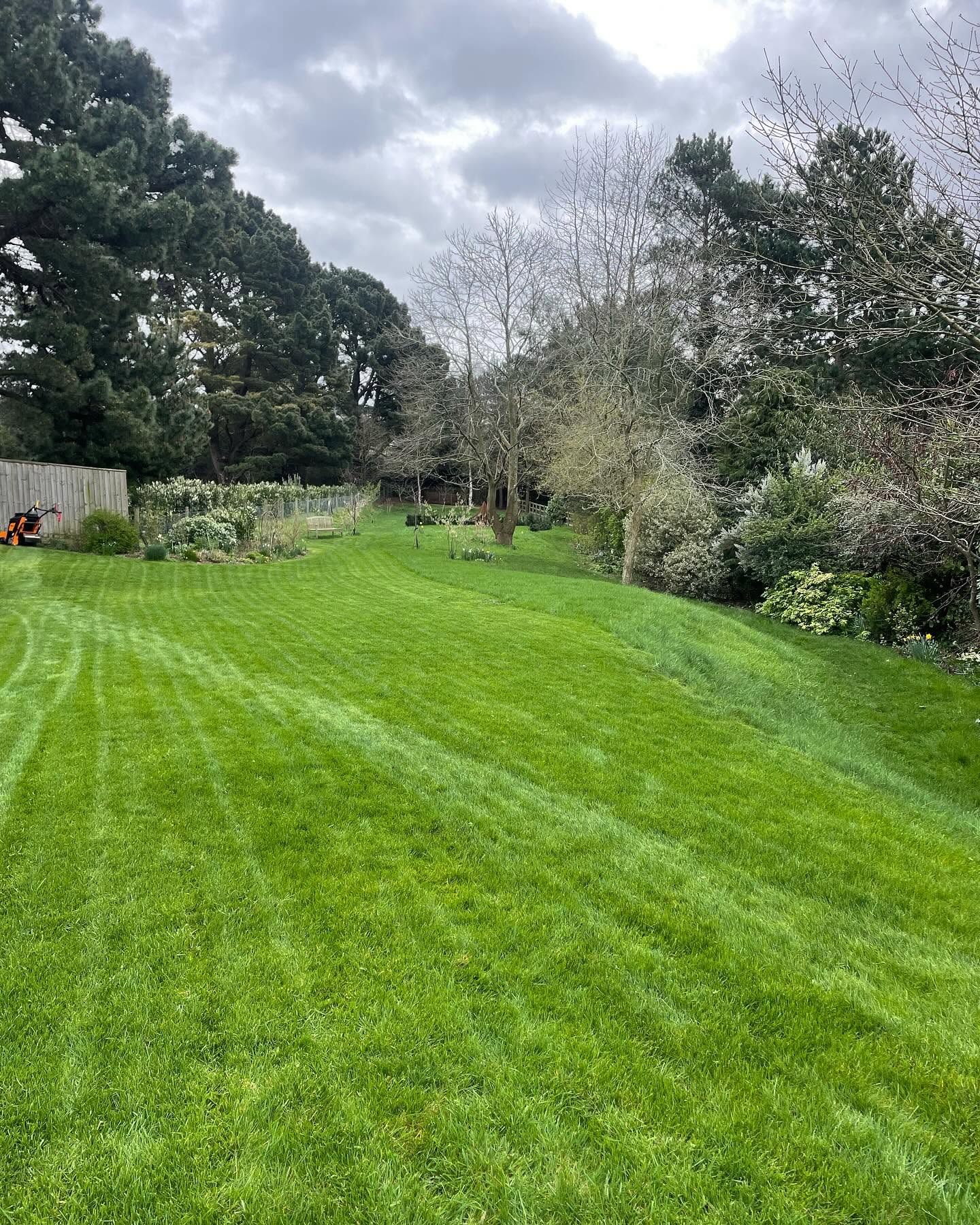
Okay. It’s the third week of May. You’ve waited. The lawn has come back in most places but there are sections — maybe 20%, maybe 40% of the yard — that are clearly not recovering. Bare patches, thin spots, areas where the grass feels loose and disconnected from the soil underneath.
Here’s how I’d think through the recovery depending on how much of the lawn is affected.
Under 30% damaged: overseeding is the right call. For smaller affected areas, overseeding in late spring can work well if you do it properly. Scratch up the soil surface in the bare areas, apply a quality seed blend suited to Sudbury’s climate, keep it consistently moist, and stay off it. You’ll see germination in two to three weeks under good conditions. The honest caveat: if the soil underneath is still compacted or has drainage problems, seed won’t establish well. Deal with the underlying issue first.
30–50% or more damaged: seriously consider sod. I’ve had this conversation a lot. When a large portion of the lawn is gone, seeding is a gamble — you’re spending a full season watering and babying something that might not fill in evenly, and if it doesn’t, you’re back to the same conversation next spring. A proper sod installation on a well-prepped base gives you full coverage almost immediately, and a lawn that’s properly rooted by fall is in a far better position to handle next year’s spring pattern.
Whatever the size of the damage — fix the soil, not just the surface. This is the point I come back to every time. If your lawn got hit hard by this spring pattern, the damage on the surface is showing you something about what was happening underground. Compaction. Poor drainage. Shallow roots. Addressing the soil properly — aeration, topsoil where needed, grading if drainage is a real issue — is what breaks the cycle. Patch the surface without fixing the underlying condition and you’ll be doing this same recovery next spring.
And the spring after that.
Want to Know Where Your Lawn Actually Stands This Spring?
Here’s what I offer that I think is genuinely useful: if you’re looking at your Sudbury lawn right now and not sure whether to wait it out, overseed, or call someone — I’ll come out and give you a straight read.
I’ll look at what’s dormant versus dead, check the soil condition, assess your drainage situation, and tell you honestly what the recovery path looks like for your specific property. No charge for the visit. No obligation to hire me.
Five springs in, I’ve seen enough Sudbury lawns come through this pattern — and enough that didn’t — to know pretty quickly what a lawn needs. Might as well use that.
📞 Call or text me directly: 705-507-6787
Or fill out the free assessment request here.
— Ryan Lingenfelter
Owner, Cutting Edge Lawn & Landscaping
Garson, Ontario
