

We’re at the halfway point of the Sudbury growing season. Somewhere between the spring work wrapping up and the fall cleanup that’s still two months away. This is the time of year when lawns are either proving out the work that went into them in May — or quietly telling you something went wrong that you haven’t addressed yet.
I’m Ryan Lingenfelter, owner of Cutting Edge Lawn & Landscaping in Garson, Ontario. We service residential and commercial properties across Greater Sudbury — Garson, Val Caron, Hanmer, Lively, Chelmsford, Azilda, Capreol. Every July I walk properties across this city and I see the same patterns play out the same way on lawn after lawn. Some are tracking well. Some are behind in ways the homeowner hasn’t noticed yet. A few are already in trouble they don’t know about.
Here’s how to read what your lawn is actually telling you right now — and what to do about it before the second half of the season runs out.
What a Healthy Sudbury Lawn Looks Like at This Point in the Season

Before we get into the warning signs, it helps to know what you’re comparing against. A Sudbury lawn that’s on track at the halfway point looks like this:
Colour: Deep green to medium green across the majority of the lawn. Some variation is normal — areas with more shade hold colour differently than full-sun sections. What you should not be seeing is large sections of yellow, pale grey-green, or straw-coloured grass that isn’t recovering between rain events.
Density: Grass blades close enough together that you can’t see much soil through the turf when you look straight down. Thin turf — where you can clearly see soil between blades — is a sign the lawn didn’t thicken properly in spring and is more vulnerable to everything that summer brings.
Recovery speed: After a dry stretch, a healthy lawn with adequate root depth and aerated soil will start greening back up within a few days of rain. A lawn that stays yellow or brown for a week or more after rain has either gone into full dormancy — which is fine, as long as it was intentional — or has root damage that’s preventing recovery.
Blade height uniformity: Grass growing at a relatively even pace across the whole lawn. Patchy fast growth in some areas and slow or no growth in others usually signals inconsistent soil conditions — often shallow rock shelf, drainage variation, or areas where the compaction wasn’t properly addressed in spring.
If your lawn matches most of that description, the spring work paid off and the second half of the season is about maintenance. If it doesn’t — keep reading, because the next sections are for you.
Warning Sign 1: The Same Spots Are Struggling Again
This is the pattern I see most often on Sudbury properties in July, and it’s the one that frustrates homeowners the most — because they’ve usually already tried to fix those spots at least once.
Three or four areas going thin, yellow, or bare. Same locations as last summer. Maybe the summer before that too. Seed was put down. Maybe sod on one section. It held through spring and then faded again as soon as July heat arrived.
Recurring failure in the same spots is almost never a grass problem. Grass doesn’t randomly fail in identical locations season after season unless something underneath is causing it. The two most common drivers I find on Sudbury properties:
Shallow rock shelf. The Canadian Shield sits close to the surface across much of Greater Sudbury, and it doesn’t sit at uniform depth across a single property. Areas where the rock is two to three inches below the surface have almost no moisture buffer during dry stretches. The thin soil layer dries out completely and the grass above it dies. Seed or sod laid on top of that will fail every summer on the same schedule until the soil depth is built up. I documented exactly this on a Hanmer property that failed for four years: The Sudbury Lawn I Almost Gave Up On — And Why I’m Glad I Didn’t.
Drainage pooling. Areas where water collects after rain stay wet longer, which stresses cool-season grass differently than dry areas but just as reliably. The wet-dry cycle in a low spot — saturated after rain, then baked dry in heat — is hard on root systems and creates conditions where disease and bare patches develop predictably year after year. A drainage or grading correction before any further planting is the only fix that holds.
If you’ve got sections failing in the same spots for the second or third season, the right move is a proper diagnosis before spending another dollar on seed or sod for those areas. Push a screwdriver into the ground in the centre of each problem zone. Under three inches of penetration — likely shallow soil over rock. Check whether those areas pool visibly after rain. Find the cause first. The fix after that is usually straightforward.
Warning Sign 2: The Lawn Is Thin Everywhere, Not Just in Patches
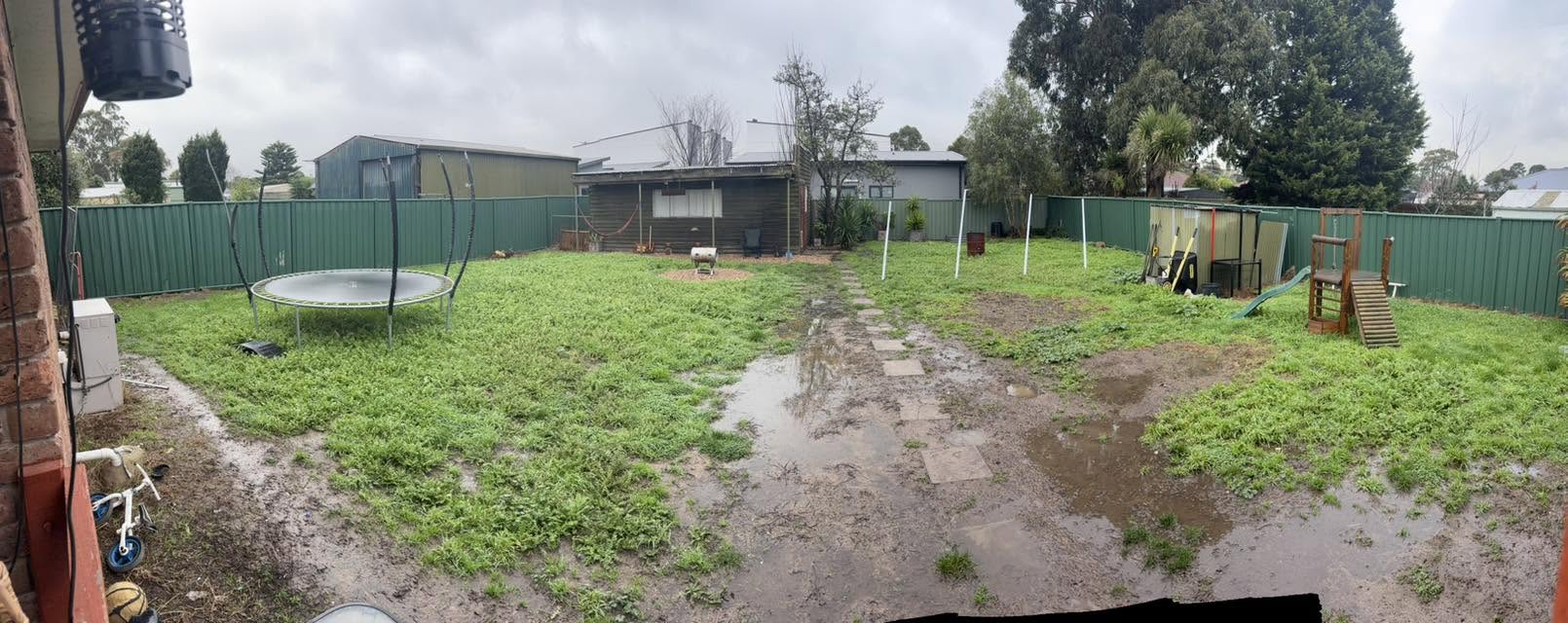
Uniform thinness across the whole lawn — not patches, just overall sparse coverage where you can see soil through the turf — almost always points to one of two things: compaction that was never addressed, or a lawn that’s been cut too short through the season.
Compaction prevents the root system from developing the depth and density needed to support thick top growth. Grass on heavily compacted soil doesn’t thicken up the way it should through spring and early summer because the roots can’t access the water and nutrients below the surface compaction layer. The lawn looks permanently thin — surviving but never actually filling in. If your lawn has looked like this for two or more seasons and hasn’t had core aeration in that time, that’s almost certainly what’s happening. The window for aeration this season is still open in July — it won’t produce the same dramatic improvement as May aeration, but it opens the soil for fall overseeding to establish properly and sets the lawn up significantly better for next spring.
Mow height is the other thing I check when I see thin turf across a whole property. Grass cut consistently below 2.5 inches can’t photosynthesize efficiently enough to maintain density under summer stress. It also exposes the soil surface to direct sun, which dries it out faster and creates the conditions where weeds establish. If your mower has been set low all season, raise it to 3 to 3.5 inches now and leave it there. You won’t see dramatic improvement in two weeks, but you’ll stop the damage from continuing and the lawn will be noticeably better going into fall. I’ve watched this single change — mow height — make a visible difference on properties where everything else was already being done right.
For the full picture of what the right spring setup looks like to avoid uniform thinness through summer: I’ve Fixed 200+ Sudbury Lawns — This Is the #1 Mistake I See Every Spring.
Warning Sign 3: Brown Areas That Aren’t Recovering After Rain
There are two very different things that look the same from the driveway: a lawn that’s gone dormant, and a lawn with actual root damage.
A dormant lawn is fine. Cool-season grass goes dormant in heat and drought as a survival mechanism — the blades turn brown, growth stops, but the crown and root system stay alive. Given consistent rain or one inch per week of irrigation, a dormant lawn greens back up within 10 to 14 days. It looks dead. It isn’t. I wrote the full explanation of why this is normal and why you should sometimes let it happen: I Let a Customer’s Lawn Go Brown on Purpose. Here’s Why It Was the Right Call.
Root damage is different. A lawn with damaged roots doesn’t recover after rain on the normal timeline. It stays brown or pale for two or three weeks after rain that should have revived it. The blades may partially green up and then go brown again quickly. In severe cases, sections simply don’t come back at all.
Root damage at this point in the season usually comes from one of three causes: repeated light watering that kept stressing the lawn instead of maintaining or resting it; compaction severe enough that roots never developed adequate depth and couldn’t survive drought; or disease — particularly if the summer has had wet stretches followed by heat, which creates the conditions for fungal issues on already-stressed turf.
The test is simple: after meaningful rain — at least half an inch — wait 10 to 14 days. If brown areas haven’t shown any greening at all, you likely have root damage rather than dormancy. Those sections may not fully recover this season. The right approach is to document them, keep the surrounding lawn healthy through fall, and plan aeration plus overseeding or sod for those areas before next spring. Trying to force recovery in August on damaged roots almost always makes it worse.
What You Can Still Do in the Second Half of the Season

The growing season in Sudbury is short — roughly 120 to 130 frost-free days in a good year. The second half runs from mid-July through mid-September before the risk of first frost starts appearing. That’s still eight weeks of viable growing conditions if you use them correctly.
If you haven’t aerated yet this season: Book it now. July aeration doesn’t provide the same full-season benefit as May aeration, but it opens the soil going into fall — which is when cool-season grass does some of its strongest growing. Aeration in late July or early August followed by overseeding in mid-August is a legitimate recovery path for a lawn that missed the spring window. The fall growing window in Sudbury — roughly mid-August through late September — is one of the best times of year for grass to establish, and aeration before that window is what makes overseeding perform.
If you have bare zones larger than a dinner plate: Sod is still viable through late July in Sudbury with proper watering commitment during establishment. After that, as soil temperatures start dropping in August, the establishment period gets longer and the risk increases. If the sod window closes, those areas go on the fall plan: aerate, topdress, overseed by mid-August, water consistently through September.
If the lawn is thin everywhere: Raise the mow height immediately, continue or start a consistent deep-watering schedule, and plan an aeration plus overseed for mid-August. That’s the right second-half sequence for a lawn that didn’t get the spring treatment it needed. You won’t have a perfect lawn by September but you’ll have a noticeably better one that’s set up properly for next spring.
If recurring problem spots are showing the same pattern as previous years: Do the screwdriver test and the drainage assessment I described above. Don’t put more seed or sod into those areas without understanding what’s driving them. The diagnosis is free. Continuing to spend money on the wrong fix is not. I can walk any property across Greater Sudbury and tell you honestly what I see — no charge for the assessment.
For full detail on what this specific summer is putting Sudbury lawns through and the exact preparation checklist for the second half: July Is Coming. Here’s Why Your Sudbury Lawn Is Already Behind.
The Properties That Always Look Good in August

Every August I drive past properties in Garson, Val Caron, Chelmsford, and the rest of Greater Sudbury and the pattern is consistent. Some lawns look genuinely good — dense, green, holding colour through the heat. Some look stressed and thin. The difference between them almost never comes down to luck or better grass or a better neighbourhood.
It comes down to three things, done consistently:
Aeration in spring that opened the soil and let roots go deep. A mow height of 3 to 3.5 inches maintained through the whole season. A watering approach that either commits to one inch per week or lets the lawn go dormant properly — not the half-measure of occasional light watering that stresses the lawn without maintaining it.
That’s it. Properties where those three things happened look good in August. Properties where one or more of them was skipped or done wrong are the ones I get calls from in August asking why the lawn looks the way it does.
If yours is in the second category right now, the second half of the season is still enough time to change what next spring looks like. Use it.
For the full explanation of how watering decisions specifically affect a Sudbury lawn through the summer stress period: I Let a Customer’s Lawn Go Brown on Purpose. Here’s Why It Was the Right Call.
And for the latest on what the 2026 Ontario summer is doing to Sudbury lawns and what to watch for through the rest of the season: Sudbury Lawn Care News — Mid-2026 Updates Every Homeowner Should Know.
Want Me to Walk Your Property?
Cutting Edge Lawn & Landscaping handles core aeration, sod installation, property cleanup, and weekly grass cutting across Greater Sudbury — Garson, Val Caron, Hanmer, Lively, Chelmsford, Azilda, and Capreol.
— Ryan Lingenfelter
Owner, Cutting Edge Lawn & Landscaping
Garson, Ontario
📞 705-507-6787
🌐 Free Quote — No Obligation
Licensed & Insured | Owner-Operated | BBB A+ Rated | Serving Greater Sudbury Since 2020
Frequently Asked Questions
What should a Sudbury lawn look like in July?
A healthy Sudbury lawn at the halfway point of the season should be medium to deep green across most of its surface, dense enough that you can’t clearly see soil through the turf when looking straight down, and recovering to green within 10 to 14 days after any meaningful rain. Uniform colour is less important than density and recovery speed. Some variation between shaded and full-sun sections is normal. Large areas of yellow, grey-green, or straw-coloured grass that don’t recover after rain are worth investigating — either the lawn has gone into dormancy intentionally, or there’s root damage or a soil problem driving it.
Why does my Sudbury lawn have the same bare spots every summer?
Recurring failure in the same locations season after season almost always means there’s a site condition driving those failures — not bad grass or bad luck. The two most common causes on Sudbury properties are shallow rock shelf close to the surface, which leaves too little soil depth for roots to survive summer drought, and drainage problems where water pools and then dries out rapidly, creating a stress cycle the grass can’t sustain. The fix for either requires identifying the cause first. Continuing to seed or sod those areas without addressing the underlying condition produces the same result every season. A property walk and screwdriver test in those areas will tell you which problem you’re dealing with.
Is it too late to aerate in July in Sudbury?
No — but the benefit is different from spring aeration. July aeration doesn’t give the lawn a full growing season to respond the way May aeration does. What it does do is open the soil going into the fall growing window — which runs roughly mid-August through late September in Sudbury and is one of the best times for cool-season grass to establish and thicken. Aeration in late July or early August followed by overseeding in mid-August is a legitimate recovery path for a lawn that missed the spring window. It won’t look perfect by September, but it will be noticeably improved and set up properly for the following spring.
My lawn is brown in July — is it dead or dormant?
Most likely dormant — which is a normal, healthy survival response in cool-season grass during heat and drought. The blades turn brown and growth stops, but the crown and root system stay alive. A dormant lawn will green back up within 10 to 14 days of consistent rain or irrigation. If brown areas haven’t shown any recovery after two full weeks of rain, you may have root damage rather than dormancy — those areas may not recover fully this season and are candidates for fall overseeding or spring sod. The full explanation of dormancy versus damage, and when letting the lawn go brown is the right call: I Let a Customer’s Lawn Go Brown on Purpose. Here’s Why It Was the Right Call.
What’s the best mow height for a Sudbury lawn in summer?
3 to 3.5 inches minimum for the entire summer — no exceptions. Taller grass shades the soil surface, reduces moisture evaporation from the root zone, and handles heat stress significantly better than a short-cut lawn. A lawn cut consistently at 2.5 inches or below through a Sudbury summer is being set up to thin out and stress. Raise the blade now if it’s been set low and leave it there for the rest of the season. Never remove more than one-third of the blade height in a single cut — if the lawn got long during a wet stretch, bring it back to height gradually over two or three mows rather than scalping it in one pass.
Should I fertilize my Sudbury lawn in July?
No — not in July heat. Fertilizing a lawn that’s under heat stress or has gone dormant pushes growth at exactly the wrong time and can burn roots that are already stressed. The right windows for fertilizing in Sudbury are spring — once the ground has firmed up and growth has started — and fall, in late August or September when the lawn is actively growing again and building root reserves for winter. Fertilizing in the middle of summer on a stressed lawn does more harm than good in most cases. If the lawn is healthy and actively growing with consistent irrigation, a light balanced fertilizer in early July can be done carefully — but when in doubt, wait for fall.
Ryan Lingenfelter is the owner of Cutting Edge Lawn & Landscaping in Garson, Ontario. Since 2020, his crew has provided full lawn care and landscaping services across Greater Sudbury — Garson, Val Caron, Hanmer, Lively, Chelmsford, Azilda, and Capreol. Licensed, insured, BBB A+ rated.
📞 Phone: 705-507-6787
📍 Service Area: Greater Sudbury, Ontario
🔗 Free Quote: cuttingedgelawn.ca/quote
Related Services
- Core Aeration — Greater Sudbury
- Sod Installation — Greater Sudbury
- Spring & Fall Property Cleanup
- Weekly Grass Cutting
- Mulch & Decorative Stone
Continue Reading
- I’ve Fixed 200+ Sudbury Lawns — This Is the #1 Mistake I See Every Spring
- I Let a Customer’s Lawn Go Brown on Purpose. Here’s Why It Was the Right Call.
- July Is Coming. Here’s Why Your Sudbury Lawn Is Already Behind.
- The Sudbury Lawn I Almost Gave Up On — And Why I’m Glad I Didn’t
- A Sudbury Homeowner Called Me About a Sprinkler System — I Told Her to Wait
