

Last July, I got a call that I get a version of every single summer.
A homeowner in Val Caron. Good customer — we’d been cutting his lawn since spring, property was in solid shape. He called me on a Thursday afternoon, voice somewhere between frustrated and worried: “Ryan, the lawn’s going brown. What’s wrong with it? Should I be watering more?”
I drove by that evening. Looked at the property. Looked at the forecast. And I told him something that surprised him.
“Don’t water it. Let it go.”
I’m Ryan Lingenfelter, owner of Cutting Edge Lawn & Landscaping in Garson, Ontario. We’ve been servicing properties across Greater Sudbury since 2020 — Garson, Val Caron, Hanmer, Lively, Chelmsford, Azilda, Capreol. And every summer, the same conversation happens on properties across this city. Homeowners see brown grass and assume something is wrong. Most of the time, nothing is wrong. And doing the wrong thing to fix it can actually cause the damage they were trying to prevent.
Here’s what was actually happening on that Val Caron property — and why my call to let the lawn go brown was the right one.
What Brown Grass in Summer Actually Means

First, the biology — because this is the part most homeowners have never been told.
The grass on your Sudbury lawn is almost certainly a cool-season blend — Kentucky bluegrass, perennial ryegrass, fine fescue, or a mix of all three. These grasses evolved to handle exactly two things: cold winters and hot dry summers. When heat and drought hit, they don’t die. They go dormant.
Dormancy is a survival mechanism. The grass pulls all its energy away from the blades — the visible green part — and concentrates it in the crown, which is the compressed growing point just above the root system. The crown stays alive. The blades turn brown and stop growing. To the homeowner standing on their driveway looking at the lawn, it looks like the grass is dying. It isn’t. It’s protecting itself.
The Ontario Ministry of Agriculture confirms this directly: a dormant lawn can stay in that state for up to six weeks with no permanent damage. The crown stays viable. When moisture and cooler temperatures return, the grass greens up within 10 to 14 days — no reseeding, no sod, no intervention required.
On that Val Caron property last July, we were two weeks into a dry stretch with more heat in the forecast. The grass was going dormant on schedule, doing exactly what it was designed to do.
Why I Told Him Not to Water
Here’s where the counterintuitive part comes in — and why the advice I gave that customer was different from what most people expect to hear.
When a lawn has already started going dormant, inconsistent watering is more damaging than no watering at all.
Think about what dormancy involves: the grass has actively reduced its leaf blade function and concentrated its resources in the crown and root system. It has made a physiological commitment to survival mode. If you then run the sprinkler for an hour every couple of days — not enough to maintain full active growth, but enough to keep waking the plant up — you’re forcing the grass to keep breaking dormancy and re-entering it. Every time it tries to green up and then dries out again, it burns through the energy reserves stored in the crown.
Do that enough times through a hot July and you can genuinely kill a lawn that would have come through a full dormant period completely fine.
A lawn in full dormancy is like an animal in hibernation. You don’t half-wake a hibernating bear every few days and expect it to come out of winter healthy. You either commit to keeping it active, or you let it sleep.
The rule I follow: if you’re going to water through a drought, commit to it. One inch per week, consistently, applied in a single deep session early in the morning. That’s enough to maintain active growth. Anything less than that — especially the every-other-day light sprinkle approach — is usually worse than nothing.
That customer didn’t have irrigation. He had a hose and a sprinkler he’d been moving around for twenty minutes at a time. That wasn’t enough to maintain active growth. It was enough to keep stressing a lawn that was trying to protect itself.
So I told him to stop.
What the Lawn Looked Like Six Weeks Later
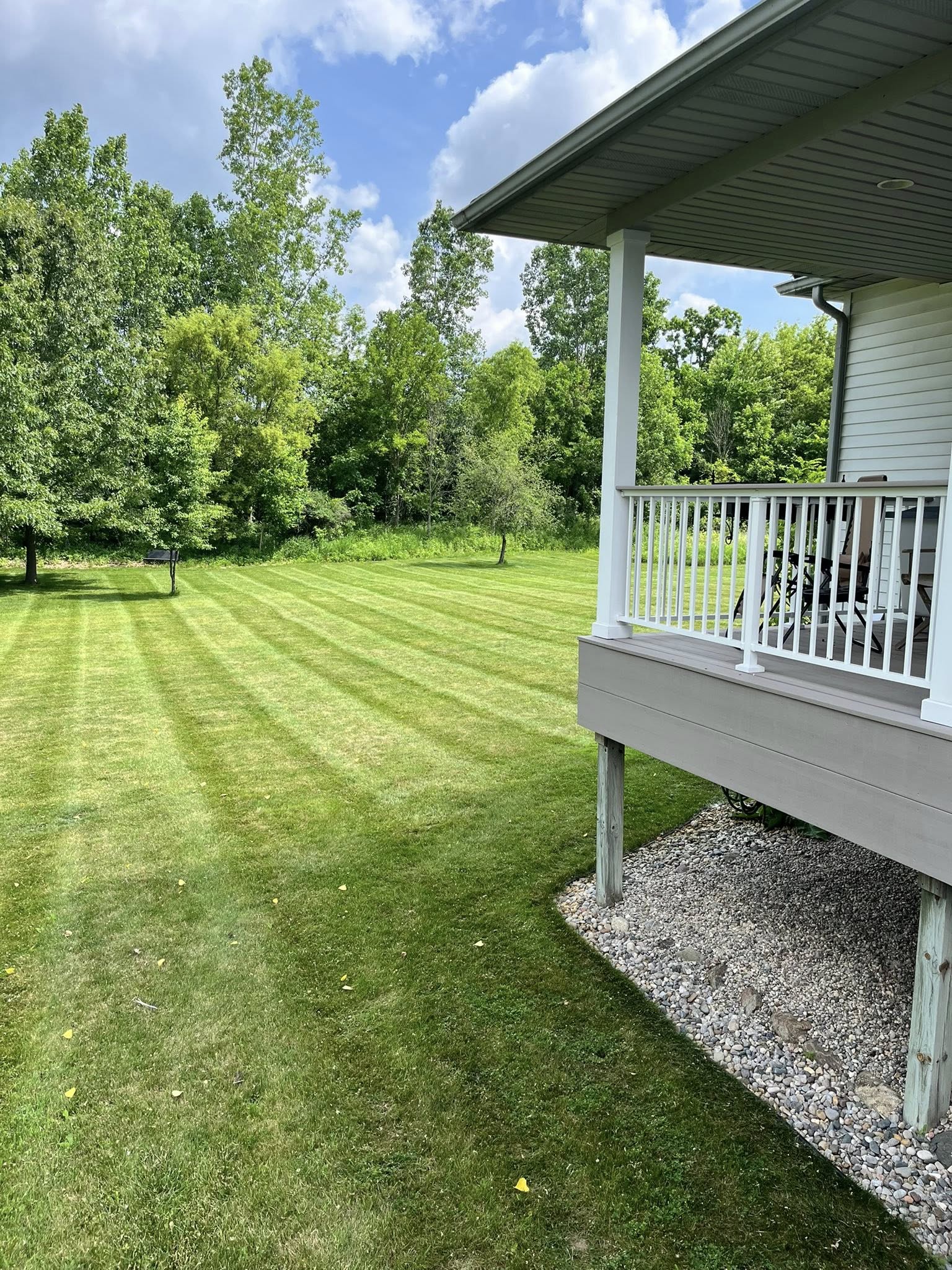
We had rain in mid-August. Not a lot — maybe an inch and a half over a week. But it was consistent, and the temperatures dropped slightly overnight.
Within twelve days of that first rain, the lawn had greened up almost completely. The crown had stayed alive through the whole dormant period exactly as it was supposed to. The grass came back thick, uniform, with no bare patches.
He sent me a message on a Saturday morning: “Looks better than it did in June.”
That’s what a properly managed dormant lawn looks like coming out the other side. It’s not damaged. It’s not thin. It went through a natural cycle and came back stronger for it — partly because the dormancy period had given the root system time to go deep in search of moisture, which made it more drought-resistant for the rest of the season.
Compare that to the properties I’ve seen where homeowners watered inconsistently through the same dry stretch. Some of them were patchy and thin heading into fall. A few needed sod work on sections that had been stressed repeatedly instead of allowed to rest.
When You Should Water — And When You Shouldn’t

This isn’t a blanket “never water your lawn in summer” argument. There are situations where maintaining active growth through a drought is the right call. Here’s how I think about it:
Let the lawn go dormant if:
- You don’t have irrigation and can’t commit to one inch per week consistently
- The dry stretch is forecast to last two weeks or more
- The lawn has been properly aerated in spring — deep roots handle dormancy significantly better than shallow compacted roots
- You’re in a water restriction period or trying to keep your bill down
Maintain active growth with consistent watering if:
- You have an irrigation system that can reliably deliver one inch per week
- The lawn was recently sodded or overseeded — new grass doesn’t have established roots and can’t survive dormancy the way mature turf can
- You have specific areas with very shallow soil over the Canadian Shield where dormancy stress can cause permanent loss
The one thing you should never do: water lightly and irregularly. Twenty minutes with a sprinkler every two or three days is the worst outcome. It stresses the lawn without maintaining it, interrupts dormancy without sustaining growth, and burns through crown energy reserves that the grass needs to recover.
If you’re not sure which category your lawn falls into, that’s worth a conversation before July gets here. This summer’s Ontario forecast is calling for a dry stretch in July and August — the window to make the right call is now, not when the lawn is already browning and you’re panicking.
I covered what this summer’s weather forecast means for Sudbury lawns in detail here: Sudbury Lawn Care News — Mid-2026 Updates Every Homeowner Should Know.
The Bigger Lesson From That Val Caron Property
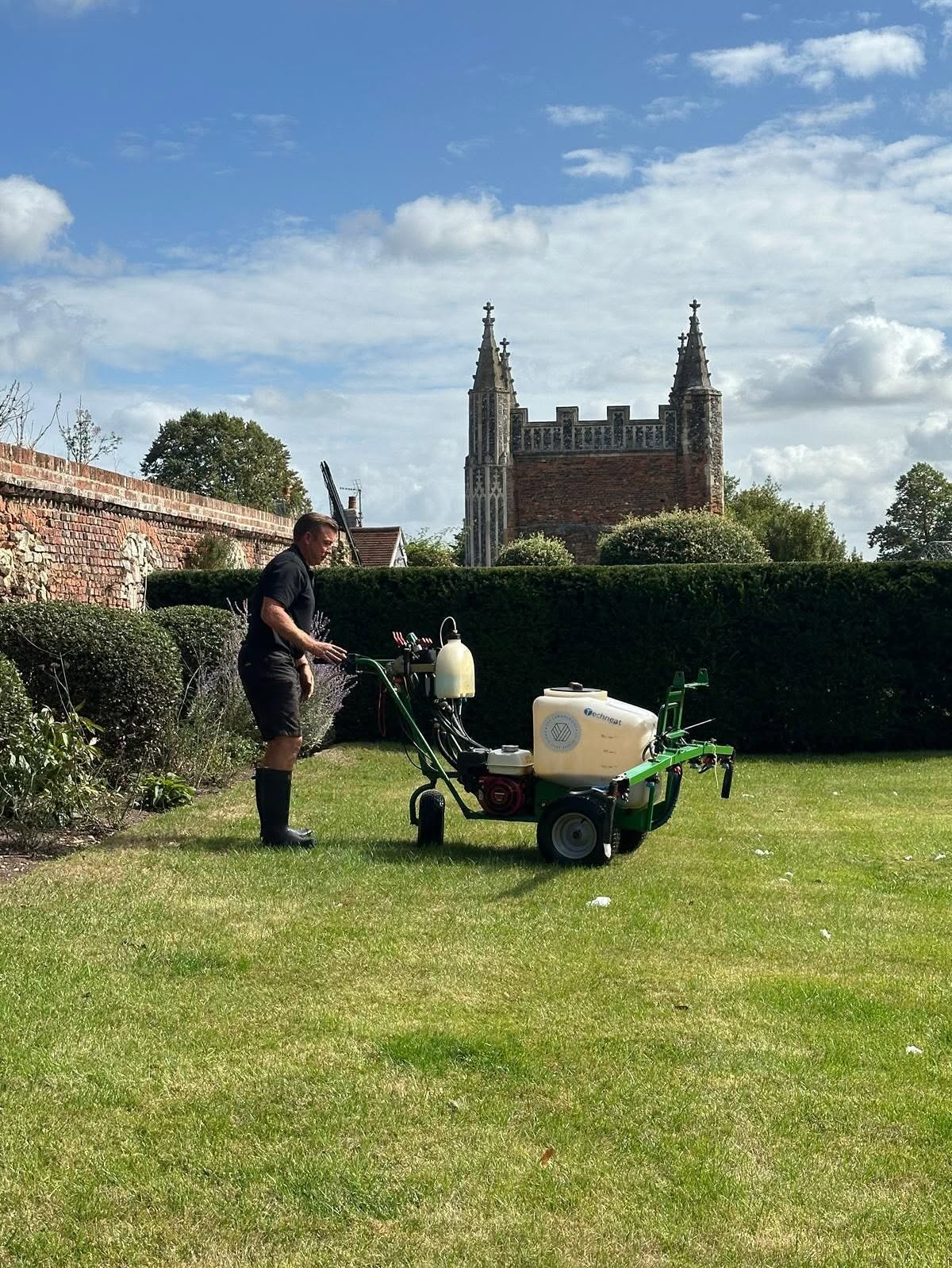
Most of the lawn problems I get called in to fix in late summer and fall trace back to decisions made in June and July. Over-watering. Under-watering. Watering inconsistently. Cutting too short during heat stress. Fertilizing a dormant lawn and burning it.
The pattern is almost always the same: a homeowner sees something they don’t like, makes a reactive decision without understanding what’s actually happening, and creates a problem that didn’t exist before they intervened.
Knowing when to act and when to leave something alone is most of this job. The Val Caron lawn didn’t need intervention. It needed to be left alone to do what it was designed to do. My job in that situation wasn’t to fix anything — it was to stop a customer from fixing something that wasn’t broken.
If your lawn has been struggling through previous summers and you want to make sure it’s set up properly before the dry weather arrives, the most important thing you can do right now is make sure the root system is in good shape. A lawn that went into summer with deep aeration and proper spring cleanup handles dormancy significantly better than one that didn’t.
And if you’ve got questions about your specific property — whether it should be watered through July, whether there are areas too shallow to handle dormancy, whether the bare spots from last summer were dormancy damage or something else — I’m easy to reach. I’d rather answer those questions in June than get the panicked call in August.
For more on the mistakes I see Sudbury homeowners make that create these exact summer problems, this is worth reading: I’ve Fixed 200+ Sudbury Lawns — This Is the #1 Mistake I See Every Spring.
Questions About Your Sudbury Lawn This Summer?
Cutting Edge Lawn & Landscaping handles core aeration, sod installation, property cleanup, and weekly grass cutting across Greater Sudbury — Garson, Val Caron, Hanmer, Lively, Chelmsford, Azilda, and Capreol.
📞 Call or text Ryan directly: 705-507-6787
🌐 Free quote: cuttingedgelawn.ca/quote
Licensed & Insured | Owner-Operated | BBB A+ Rated | Garson, Ontario | Serving Sudbury Since 2020
