
By Ryan Lingenfelter · Cutting Edge Lawn & Landscaping, Garson, Ontario · June 2026
Every May and June I start getting a particular kind of question from homeowners in Greater Sudbury. Not about lawn health or soil conditions or aeration timing. About eyes. About whether there’s anything they can do with their lawn to make allergy season less miserable.
I’m a lawn care professional, not a medical professional — I want to be clear about that distinction upfront. If your allergies are severe, the conversation about treatment belongs with your doctor. What I can speak to is the lawn side of the equation: the specific lawn care decisions that directly affect how much pollen and plant material is in the air around your property, and what changes are actually worth making versus what makes no practical difference.
There are genuine lawn care choices that affect how much pollen a property produces. They’re not complicated. Most of them don’t cost anything extra. And several of them improve the lawn’s health at the same time as they reduce pollen output — which means there’s rarely a trade-off between doing what’s right for your lawn and doing what’s better for your allergies.
The lawn decisions that make allergy season worse — what’s producing the pollen you’re breathing
Before talking about what helps, it’s worth being specific about what’s causing the problem — because the pollen sources in a typical Greater Sudbury residential yard are more varied than most homeowners realise, and fixing the wrong one produces no benefit.
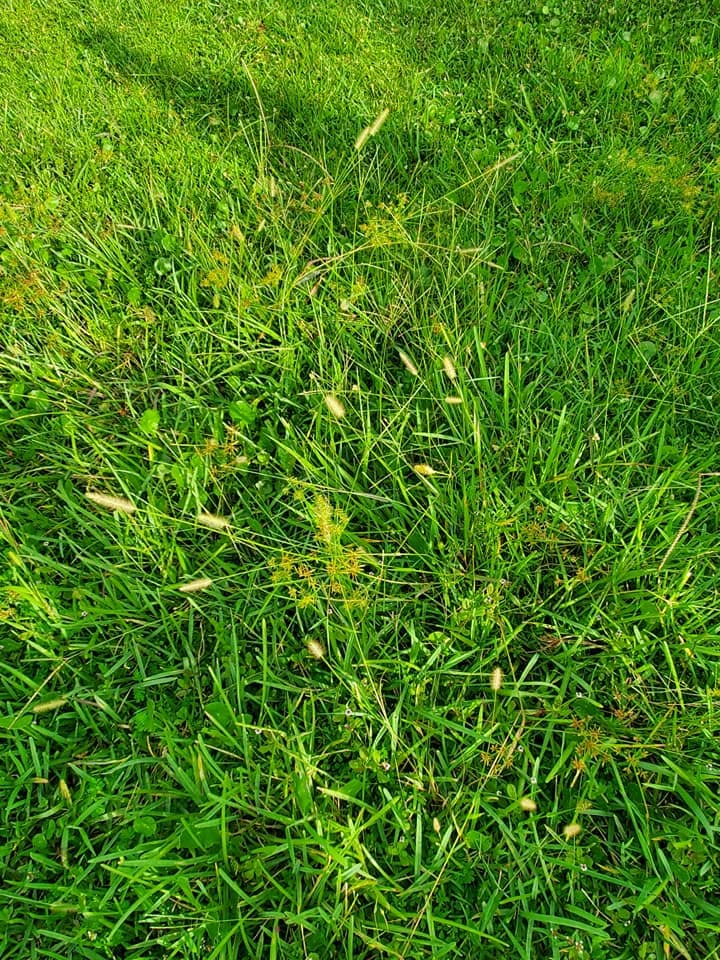
Grass that’s allowed to go to seed. This is the biggest contributor to grass pollen production on residential properties, and it’s entirely within the homeowner’s control. Grass plants produce pollen when they send up seed heads — the tall flowering stalks that emerge above the grass canopy when the lawn isn’t cut on a regular schedule. A lawn cut every seven to ten days at a consistent height almost never produces seed heads because the mowing removes them before they develop. A lawn cut every fourteen to twenty-one days almost always does, because the grass has time to push up seed stalks between cuts.
In Greater Sudbury, grass pollen season runs roughly from late May through mid-July depending on the variety. During that period, a mowed lawn at three inches produces minimal pollen. An unmowed lawn — or a lawn cut on a long interval — produces pollen in proportion to how many seed heads have developed. The lawn care connection is direct: consistent cutting on a seven to ten day schedule is the single most effective lawn-related thing an allergy sufferer can do to reduce grass pollen exposure from their own property.
This connects to what I covered in the article on the 4-step weekly routine for Sudbury lawns — the seven-day cutting schedule isn’t just about lawn health, it’s the schedule that prevents seed head development consistently through the peak pollen window. The routine serves multiple purposes simultaneously.
Tall grass along the perimeter and in edges. Even if the main lawn body is cut regularly, many properties have grass growing tall along the fence line, in the corners, and under obstacles where the mower doesn’t reach and the string trimmer only gets to occasionally. These tall edge sections produce seed heads even when the main lawn doesn’t. Thorough trimming of edges on the same schedule as the main lawn cut — not a secondary task done occasionally — eliminates this secondary pollen source.
Weeds in seed. Dandelions, plantain, and other common lawn weeds in Greater Sudbury are significant pollen producers, and many of them produce pollen at different times than grass does — extending the allergy window beyond grass pollen season. A lawn with 20 to 30 percent weed coverage is producing meaningfully more total pollen than a dense turf lawn with the same total surface area, both because the weeds themselves produce pollen and because thin weed-invaded turf tends to be cut less consistently than dense grass.
Cutting timing and frequency — the scheduling decisions that make the biggest difference

Given that consistent cutting is the primary pollen control mechanism, the timing of cuts matters for allergy sufferers in ways that aren’t relevant to homeowners without pollen sensitivity.
Time of day for cutting. Grass pollen is released primarily in the morning — most studies of grass pollen dispersal show peak release between 6am and 11am on warm, dry, slightly breezy days. Cutting the lawn during this window disturbs the grass plants and the seed heads (if any have developed) when they are actively releasing pollen. For homeowners who are personally cutting their own lawn and are pollen-sensitive, cutting in the late afternoon — after 3pm and preferably after 5pm — reduces exposure during the cutting itself because pollen release has slowed by that time of day. The cut grass produces some pollen disturbance regardless of timing, but cutting in the morning when pollen is already at its peak is the worst combination for someone who reacts to grass pollen.
If you’re hiring a lawn care service, requesting an afternoon visit rather than a morning one during the peak pollen weeks — late May through mid-July in Greater Sudbury — is a reasonable accommodation that most operators can work with depending on their schedule. It won’t eliminate exposure entirely, but it avoids the combination of high ambient pollen and additional disturbance pollen from cutting simultaneously.
Cutting frequency — seven days, not ten or fourteen. The pollen case for a seven-day cutting schedule is separate from and additional to the lawn health case. At seven days in the active growth period of May through July in Greater Sudbury, the grass doesn’t have time to push up seed stalks between cuts. At ten days it sometimes does, depending on growth conditions. At fourteen days it almost always does during peak season. The difference between a seven-day and a fourteen-day schedule in terms of pollen production from the lawn is significant — not a marginal difference, a meaningful one.
During the No Mow May participation period — which Greater Sudbury now accommodates in the grass height bylaw, as I covered in the article on Sudbury lawn care news mid-2026 — allergy sufferers face a direct trade-off. Allowing the lawn to grow unchecked through May produces significant grass seed head development, which produces pollen during exactly the period when pollen counts are first building in the season. If you participate in No Mow May and have grass pollen allergies, this is worth weighing explicitly rather than participating by default.
Cutting height — three inches reduces pollen production versus shorter cuts. This one is less obvious but worth understanding. At three inches, the grass is in a vegetative growth state — producing blade, extending root, spreading laterally. At two inches or below, the grass is under chronic stress and responds by putting more energy toward reproductive activity — which means more seed head production in the gaps between cuts. A stressed two-inch lawn produces seed heads faster than a healthy three-inch lawn. This is another case where the allergy recommendation and the lawn health recommendation are the same: cut at three inches.
Grass variety selection for allergy sufferers — what to seed and what to avoid in Sudbury
Different grass species produce meaningfully different amounts of pollen, and some produce pollen that is more allergenic than others. When you’re overseeding or establishing a new lawn in Greater Sudbury, variety selection can reduce the lawn’s total pollen output over its lifetime.
Lower-pollen varieties for Sudbury conditions:
Creeping red fescue is both the shade-tolerant component I recommend for Sudbury blends for lawn performance reasons and one of the lower-pollen-producing cool-season grasses. Its fine blade structure produces less pollen per square foot than coarser varieties, and its growth habit — spreading rather than bunch-forming — tends to maintain a consistent height that discourages seed head development. For allergy sufferers who also have significant shade areas on their property, creeping red fescue serves both purposes simultaneously.
Kentucky Bluegrass, despite being the backbone of most Sudbury lawn blends for performance reasons, is a moderate pollen producer — not the worst option, but not the best for allergy sufferers either. Its main advantage in the allergy context is that it maintains a dense turf that resists weed encroachment, which matters for total pollen production across the property when weeds are factored in. A dense Kentucky Bluegrass lawn with few weeds may produce less total pollen than a thinner lawn with less allergenic grass but significant weed coverage.
Higher-pollen varieties to avoid or minimise:
Perennial ryegrass is one of the most allergenic cool-season grasses — it produces a high volume of small, easily airborne pollen particles during its pollination period. I already recommend minimising perennial ryegrass in Sudbury seed blends for performance reasons — it winter-kills in our climate, produces poor second-season results, and suppresses Kentucky Bluegrass establishment. The allergy case adds another reason to keep it below 10 to 15 percent of any seed blend. I covered the full variety performance comparison in the article on the 2 grass types that work in Sudbury and the 3 that don’t — the ryegrass performance problem and the allergy problem are aligned in the same direction.
Tall fescue, which I also recommend avoiding in Sudbury residential blends for texture and performance reasons, is another higher-pollen producer. Its coarser blade and bunch-growth habit produce more pollen per plant than fine-bladed varieties, and its tendency to develop dead sections when clumps die creates bare spots where weeds — themselves significant pollen producers — establish readily.
Weed management for allergy sufferers — the weeds causing more problems than your grass
For many allergy sufferers in Greater Sudbury, the grass on their own property isn’t the primary lawn-related allergen. The weeds are. And weed pollen often extends the allergy season beyond the grass pollen window — before it in spring in the case of some early-blooming weeds, and well into summer and fall for others.
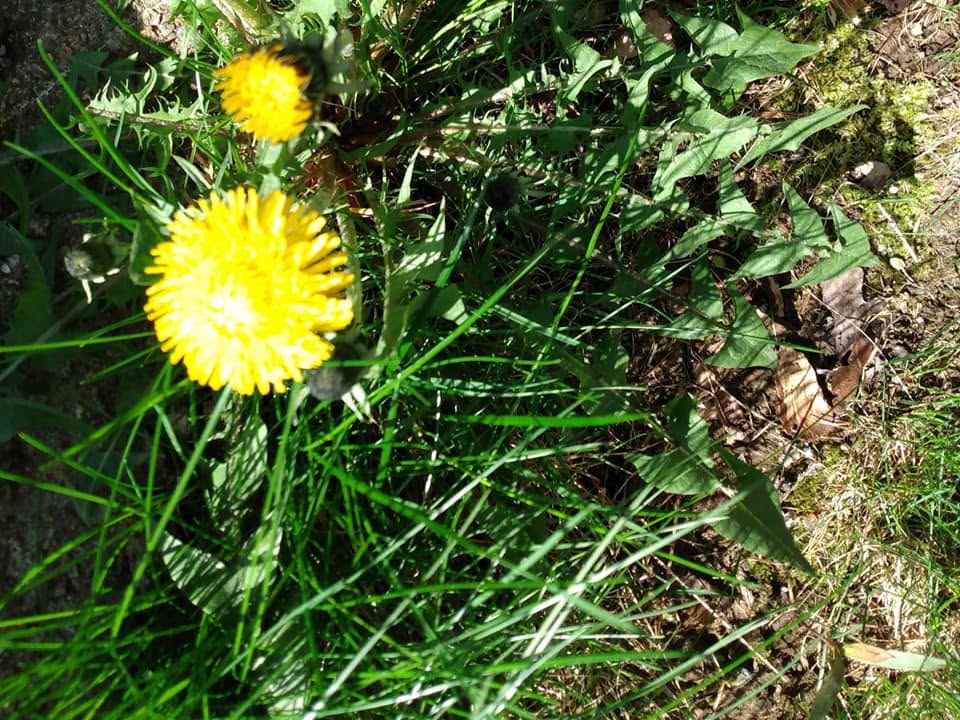
Dandelions. The most visible weed in Greater Sudbury lawns blooms in May and June, producing the yellow flowers that are familiar to everyone and then going to seed in the white puffball stage that disperses seeds on the wind. The seed dispersal phase releases both seeds and attached fine fibers that can irritate airways even in people who aren’t specifically allergic to dandelion pollen. A lawn with significant dandelion coverage distributes seed and particulate through the yard every day during the seed dispersal period.
The management approach for dandelions in an allergy context is different from the management approach purely for aesthetics. For aesthetics, you might pull the heads or spot-treat with herbicide when the plants are visible. For allergy reduction, you want to prevent the flowering stage from completing — which means either keeping the lawn dense enough that dandelions can’t establish in significant numbers, or spot-treating before flowering rather than after seed head development.
Dense turf is the most effective long-term dandelion suppression strategy. Dandelions establish in bare soil and thin turf — they can’t push through dense, well-managed grass. The aeration and overseeding sequence I covered in the article on the 4-hour spring window that determines your Sudbury lawn all year produces the turf density that prevents dandelion establishment from year to year. A lawn that goes through annual aeration and overseeding for three or four consecutive springs develops the density that makes dandelion management almost self-sustaining.
Plantain (Plantago major). This broadleaf weed is so common in Greater Sudbury lawns that many homeowners assume it’s a type of grass. It has flat, oval leaves with prominent parallel veins, grows in rosettes close to the ground, and sends up slender seed stalks from midsummer onward. Plantain pollen is a significant allergen for many people — in some allergy panels it tests with comparable reactivity to grass pollen. A lawn with moderate plantain coverage is producing meaningful plantain pollen from mid-July through September while the grass pollen season is winding down.
Plantain establishes most aggressively in compacted soil — it tolerates the hard soil that grass roots struggle with. This makes it particularly common along driveways, in high-traffic path areas, and in spots where compaction has not been addressed by aeration. Annual aeration that keeps the soil open enough for grass roots to compete effectively is the long-term plantain management strategy. Spot herbicide treatment removes what’s there. Aeration prevents what returns.
Creeping charlie (Glechoma hederacea). This spreading vine-like weed blooms in May and June in Greater Sudbury, producing small purple flowers that release pollen during the same window as grass. It spreads rapidly in shaded and partially shaded areas where grass is thin, and in wetter conditions where its moisture tolerance outcompetes stressed turf. Its pollen is less studied than grass pollen but it’s a member of the mint family, which has known allergenic properties for some individuals.
Creeping charlie control in Greater Sudbury requires addressing the conditions that allow it to spread — shade and moisture — rather than just treating the weed itself. In shaded areas where grass consistently struggles, the creeping red fescue variety I discussed earlier has the best chance of competing with creeping charlie. In wetter spots, the drainage assessment I covered in the article on the Sudbury property where I found drainage problems underground addresses the root cause. Herbicide knocks it back. Dense turf in the right conditions keeps it from returning.
The practical summary for allergy sufferers: a well-managed, dense, properly-cut lawn produces less pollen than a thin, weed-invaded, irregularly-cut one. Almost everything that’s good for the lawn’s health is also good for reducing pollen production. The scheduling and variety decisions I’ve described here don’t require separate effort or additional cost — they’re the same decisions that produce the best lawns in Greater Sudbury. If your allergies are making this season difficult, the lawn-side improvements that help are also the improvements that produce the best lawn by October.
If you want help implementing any of this on your specific property — variety-appropriate overseeding, weed management, a cutting schedule that fits the allergy season — give me a call.
📞 705-507-6787 | Get a free quote online
— Ryan Lingenfelter
Owner, Cutting Edge Lawn & Landscaping
Garson, Ontario · 705-507-6787
