

You walk out of your house at 2pm on a hot July afternoon and your lawn looks different. Not brown — not yet. But the colour has shifted. What was a medium green this morning now looks dull, blue-grey, almost metallic in certain light. The grass blades look slightly curled or folded at the edges.
Most Sudbury homeowners who notice this either assume it’s normal or assume the lawn is dying. It’s neither. It’s your lawn sending a very specific distress signal — one that has a clear meaning, a clear cause, and a clear action window before it becomes something worse.
I’m Ryan Lingenfelter, owner of Cutting Edge Lawn & Landscaping in Garson, Ontario. We service residential and commercial properties across Greater Sudbury — Garson, Val Caron, Hanmer, Lively, Chelmsford, Azilda, Capreol. I see this on Sudbury properties every summer during heat stretches, and I see the aftermath on lawns where homeowners either didn’t notice it or didn’t act on it. Here’s exactly what it means and what you should do about it in the next 24 hours.
What the Blue-Grey Colour Actually Means
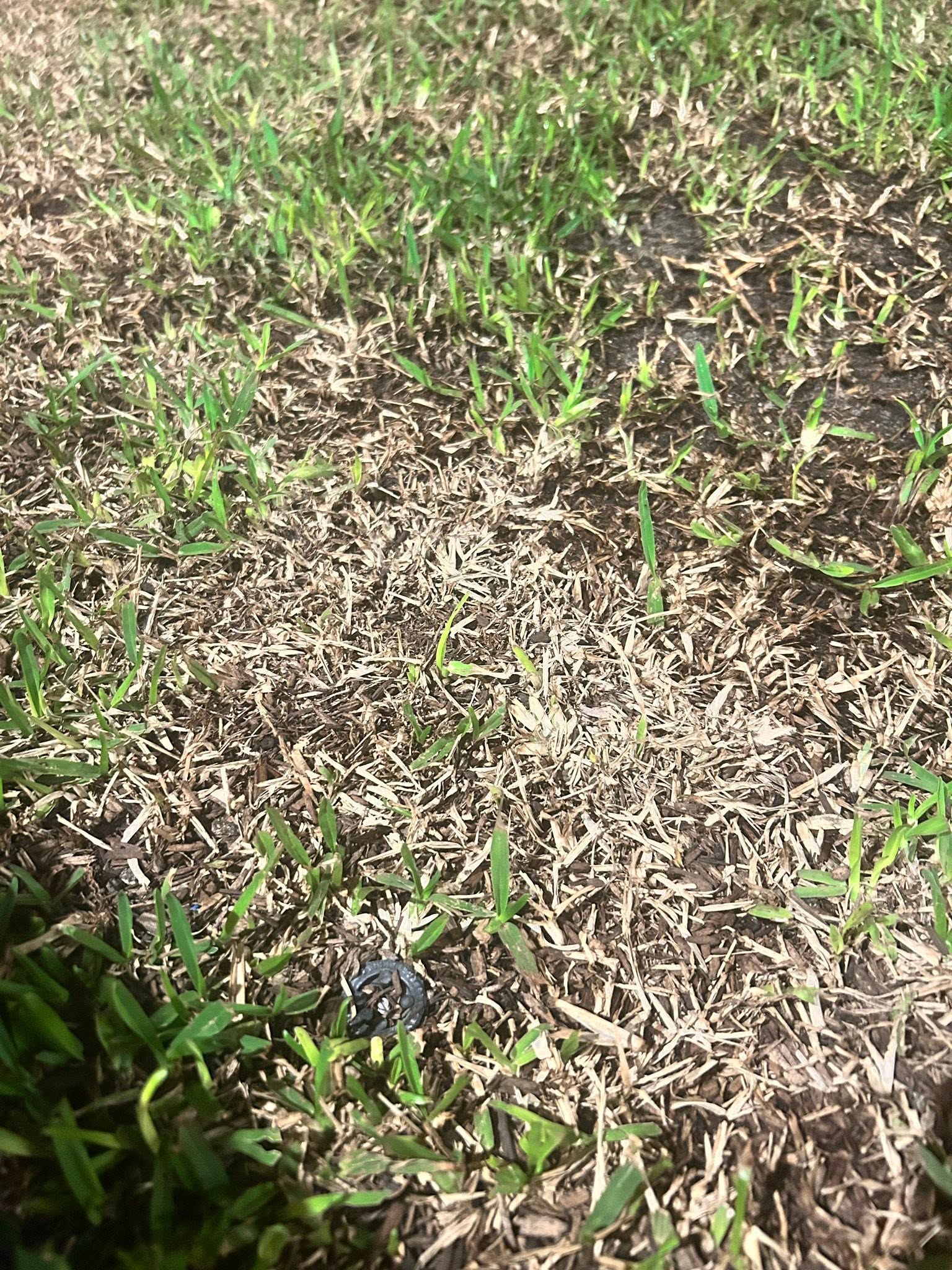
The blue-grey colour shift is called wilt. It’s not a disease, it’s not a deficiency, and it’s not the beginning of permanent damage — not yet. It’s a physiological response that cool-season grass makes when it’s losing water faster than it can replace it.
Here’s what’s happening at the blade level. Cool-season grasses — Kentucky bluegrass, perennial ryegrass, fine fescue, which make up most Sudbury lawns — have small pores in their blades called stomata that open to exchange gases during photosynthesis. When the plant is losing water rapidly through those pores faster than the roots can supply it, the grass does two things: it reduces water pressure in the blade cells, and it folds or rolls the blade slightly to reduce the surface area exposed to sun and wind.
That folding changes the angle at which light reflects off the blade surface. Instead of reflecting the full green spectrum back to your eye, the folded blade reflects more of the grey-blue end of the spectrum. That’s the colour shift you’re seeing. It’s the visual signature of a plant under water stress — not dead, not dormant, but actively struggling to maintain itself right now.
The footprint test confirms it: walk across the lawn in the afternoon when you see the blue-grey colour. Look back at your footprints. If they stay visible for more than a minute or two without springing back, the turf is wilting. A healthy well-hydrated lawn springs back immediately. A wilting lawn holds the impression.
On its own, afternoon wilt is not an emergency. Cool-season grass wilts in afternoon heat and recovers overnight when temperatures drop and transpiration slows. You may notice the colour looks better again in the morning. That cycle — wilt in the afternoon, recover overnight — can continue without permanent damage for several days.
The problem is what happens to Sudbury’s specific soil when that cycle repeats too many times.
Why Sudbury Clay Makes This More Urgent Than It Would Be Elsewhere
On a property with deep, well-structured loam soil, afternoon wilt is usually a manageable signal. The soil has moisture reserves at depth, the roots can reach them, and the cycle of afternoon stress and overnight recovery continues without the lawn degrading significantly.
On Sudbury’s Canadian Shield clay, the equation is different in two ways that matter.
First: compacted clay dries unevenly. The top inch or two dries out fast — much faster than deeper soil — and once it’s dry it becomes hydrophobic. Water applied to dry compacted clay doesn’t soak in the way it does on healthy soil. It beads up and runs off, or soaks only into the top half-inch while the root zone below stays dry. A lawn that has gone through several days of afternoon wilt on compacted clay has surface soil that is now actively resisting rehydration. Watering at that point takes longer to actually reach the roots than most homeowners expect, and light watering — a twenty-minute sprinkler run — may wet only the surface while leaving the root zone dry.
Second: shallow rock shelf limits root depth. A significant portion of Greater Sudbury properties have bedrock close to the surface — two to four inches down in some areas. Grass roots on those sections literally cannot go deeper in search of moisture. The entire moisture reserve available to that grass is whatever is held in two to four inches of clay. When that thin layer dries out, the grass above it has nothing left to draw from. The wilt-to-damage progression is faster on shallow-soil sections than anywhere else on the property.
Both of these factors mean that afternoon wilt on a Sudbury lawn — especially one that hasn’t been properly aerated — progresses to genuine root damage faster than the same signal would on better soil. The 24-hour action window I’m describing in this article is real. It’s not alarmist. It’s specific to how Sudbury clay behaves under heat stress.
Afternoon wilt on a well-aerated Sudbury lawn is a yellow light. Afternoon wilt on a compacted, unaerated Sudbury lawn in a dry stretch is a red one. The difference is whether the roots have depth to draw from when the surface dries out.
What to Do in the Next 24 Hours
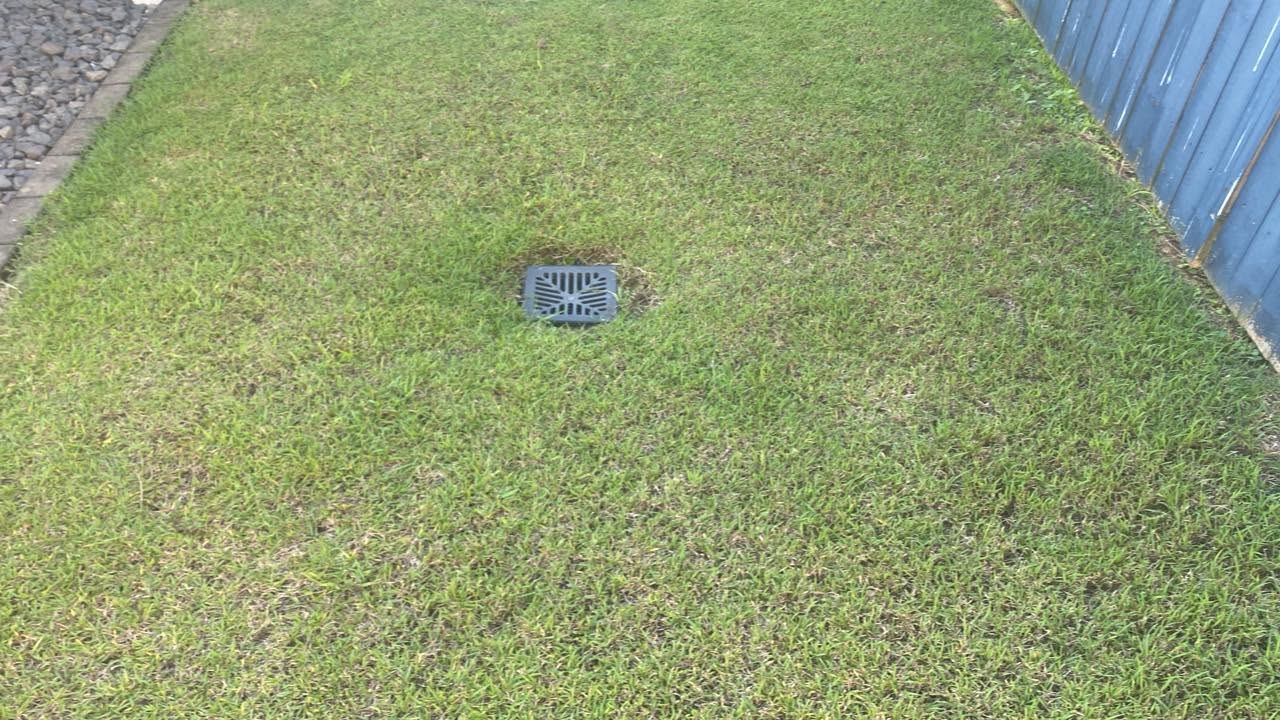
If you’re seeing blue-grey colour in the afternoon and the footprint test confirms wilt, here is the exact sequence I’d follow.
Tonight or very early tomorrow morning — water deeply.
Not a twenty-minute run. Deep watering on a wilting lawn means applying enough water to penetrate the dry surface layer and reach the root zone — which on compacted Sudbury clay takes longer than you’d expect. The target is one inch of water delivered slowly enough that the soil can absorb it rather than running off. On a compacted lawn that’s been dry for several days, the first fifteen minutes of watering may be largely wetting the surface before penetration actually starts.
Water in the early morning — before 7am if possible. Morning watering gives the soil time to absorb moisture before afternoon heat drives evaporation. Evening watering can work in a dry-hot stretch but increases disease risk if the blades stay wet overnight in humid conditions.
You should see meaningful recovery — return of green colour, footprints springing back — within 12 to 24 hours of a proper deep watering. If you water properly and still see significant blue-grey and persistent footprints the following afternoon, the root system may already be damaged in those sections. That’s a different problem requiring a different response.
Raise the mow height immediately if it’s been set low.
If the lawn has been cut at 2.5 inches or below, raise it to 3 to 3.5 inches for the rest of the season. A lawn under heat stress does not recover well when it’s also being cut short. Taller grass shades the soil surface — which directly reduces the rate at which surface moisture evaporates and slows the soil drying cycle that’s driving the wilt.
If the lawn was recently cut and is already short, do not cut it again until it has fully recovered and you’re ready to cut at the right height. Cutting a wilting lawn is one of the most reliably damaging things you can do to it.
Do not fertilize.
This is a common mistake. Some homeowners see a stressed lawn and reach for fertilizer thinking it will help. Fertilizer on a heat-stressed wilting lawn pushes growth demand at exactly the wrong time — when the plant is already struggling to maintain itself — and can burn roots that are already dehydrated. Hold fertilizer until the lawn has fully recovered and temperatures have moderated. Fall is the right window for fertilizing in Sudbury.
Check the sections that went blue-grey first.
The areas that show wilt earliest and most severely are almost always the sections with the shallowest soil or the worst compaction. Take note of which parts of the lawn wilted first. Those are the priority areas for aeration — either now in the remaining summer window or at the top of the list for next spring. If the same areas keep showing wilt first every summer, you likely have shallow rock shelf underneath and the fix requires building the soil depth up before the pattern changes. I documented exactly how that plays out on a Hanmer property: The Sudbury Lawn I Almost Gave Up On — And Why I’m Glad I Didn’t.
The Difference Between Wilt, Dormancy, and Actual Damage
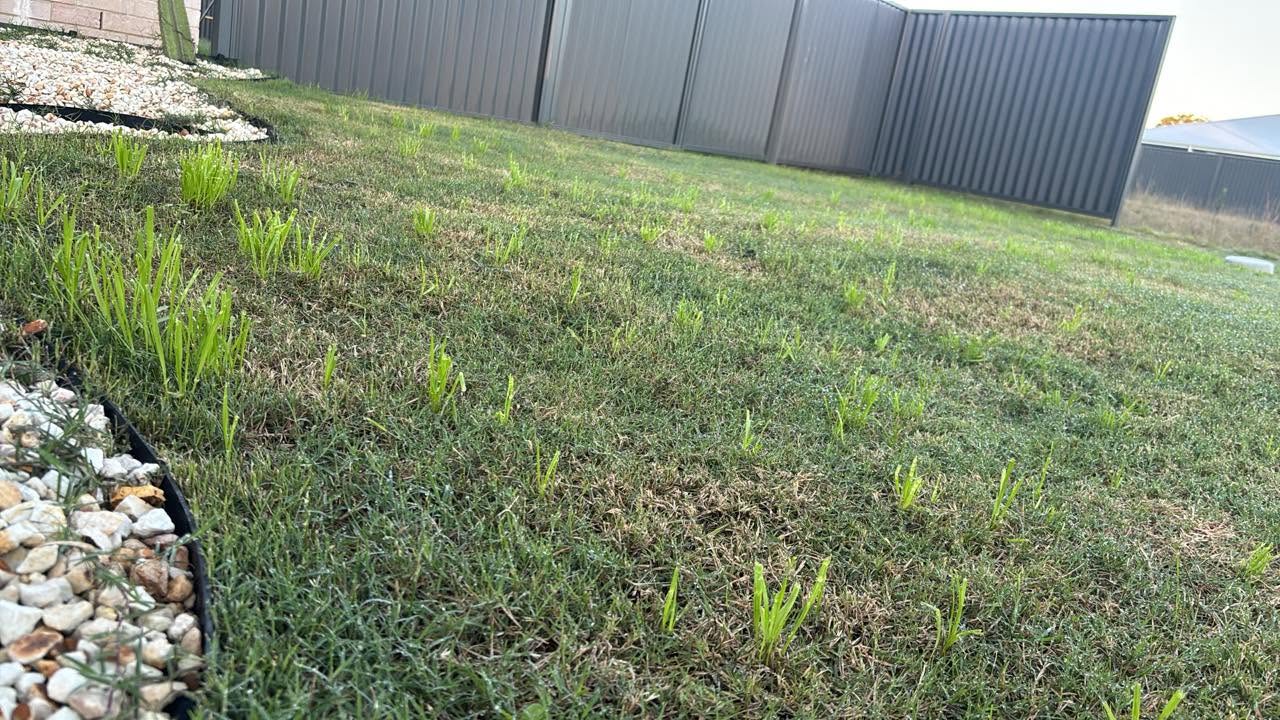
These three conditions look similar from a distance and get confused regularly. Here’s how to tell them apart — because the right response is different for each one.
Wilt — blue-grey colour in the afternoon, footprints staying visible, but green colour returning in the morning. The lawn is stressed but actively recovering overnight. Root system is intact. The fix is consistent deep watering and correct mow height. Wilt that gets proper water intervention usually clears up within 48 hours.
Dormancy — uniform brown colour across most of the lawn, growth stopped, but the crown and root system stay alive. Dormancy is intentional and healthy — cool-season grass has evolved to survive summer drought this way for up to six weeks. A dormant lawn doesn’t show the afternoon wilt colour-shift because it has already shut down blade activity entirely. It recovers to green within 10 to 14 days of consistent rain. I covered the full detail of why dormancy is sometimes the right call and how to manage it: I Let a Customer’s Lawn Go Brown on Purpose. Here’s Why It Was the Right Call.
Root damage — sections that stay brown or pale after rain, don’t recover on the normal dormancy timeline, and may show dead blades that pull out easily with no root attached. Root damage is what happens when wilt goes unaddressed long enough that the root system in shallow-soil sections actually dies — or when the wilt-and-recover cycle repeated so many times on compacted soil that the roots couldn’t sustain it. Root-damaged sections won’t recover on their own this season. They need sod or fall overseeding after proper soil preparation.
The progression from wilt to dormancy to damage is not inevitable — it’s a function of how the lawn is managed through the stress period. Wilt caught and watered properly stays as wilt and recovers. Wilt on compacted shallow soil that doesn’t get water intervention moves toward damage faster than most homeowners expect. That’s what the 24-hour window in this article is about.
For the full mid-season picture of what different lawn conditions mean and what to do about each one: What a Sudbury Lawn Looks Like at the Halfway Point of the Season — And What It’s Telling You.
What Happens to Lawns That Don’t Get Watered After Wilt

I want to give you a concrete picture of what I see on properties in August and September where the afternoon wilt signal was either missed or ignored through July.
The pattern is consistent. The sections that wilted first — usually the areas over shallow rock shelf or worst compaction — progress from wilt to root damage within seven to ten days of dry heat without adequate water. By the time they turn visibly brown, the damage is done. Those sections don’t recover from rain the way the rest of the lawn does. They stay tan or straw-coloured while surrounding areas green back up. By August they’re fully bare in the worst spots.
The homeowner then faces a fall repair job on sections that didn’t need to fail. Overseeding into previously damaged soil with weeds already establishing in the bare spots. Or sod installation after addressing whatever soil condition drove the failure — shallow rock shelf, compaction, drainage — that should have been handled before the summer heat arrived.
The cost of getting water on the lawn properly in a 24-hour window when wilt appears is essentially zero. The cost of repairing the sections that go from wilt to damage because no action was taken is real — in money, in time, and in another growing season spent recovering rather than maintaining.
The 24-hour window exists because Sudbury clay behaves differently from better soil. On this soil, in this climate, afternoon wilt is a signal worth acting on the same day. Not panicking — acting. Deep watering, correct mow height, note the sections that wilted first for aeration follow-up. That’s the whole response. It takes less time than writing this article.
For the full preparation picture — what should have been done in spring to prevent the worst of this, and what’s still possible in the second half of the season: July Is Coming. Here’s Why Your Sudbury Lawn Is Already Behind.
Concerned About Your Sudbury Lawn Right Now?
Cutting Edge Lawn & Landscaping handles core aeration, sod installation, property cleanup, and weekly grass cutting across Greater Sudbury — Garson, Val Caron, Hanmer, Lively, Chelmsford, Azilda, and Capreol.
— Ryan Lingenfelter
Owner, Cutting Edge Lawn & Landscaping
Garson, Ontario
📞 705-507-6787
🌐 Free Quote — No Obligation
Licensed & Insured | Owner-Operated | BBB A+ Rated | Serving Greater Sudbury Since 2020
Frequently Asked Questions
Why does my grass look blue-grey or silver in the afternoon in Sudbury?
The blue-grey colour is the visual signature of wilt — a physiological stress response cool-season grass makes when it’s losing water through its blades faster than the roots can replace it. The grass blades fold slightly to reduce surface area exposed to sun and wind, which changes the angle of light reflection and produces the blue-grey or metallic colour you’re seeing. It’s not a disease or a deficiency. It’s a distress signal that the lawn needs water — specifically deep water that reaches the root zone, not a light surface sprinkle. On Sudbury’s compacted clay soil, this signal is worth acting on within 24 hours because the progression from wilt to root damage is faster on this soil than on deeper, better-structured soil elsewhere in Ontario.
How do I know if my Sudbury lawn is wilting or dying?
The footprint test tells you. Walk across the lawn in the afternoon when you see the blue-grey colour. Look back at your footprints. A wilting lawn holds the impression for a minute or more — the compressed turf doesn’t spring back because the blade cells lack the water pressure to recover quickly. A healthy lawn springs back almost immediately. If you water properly and see green colour return and footprints springing back again within 24 hours, the lawn was wilting and has recovered. If colour doesn’t return after deep watering and meaningful rain, the root system may be damaged — those sections may need fall overseeding or sod repair.
What’s the fastest way to fix a wilting Sudbury lawn?
Deep watering early in the morning — before 7am — with enough water to penetrate the dry surface layer and reach the root zone. On compacted Sudbury clay that’s been dry for several days, this takes longer than a standard sprinkler run. The target is one inch of water applied slowly enough for the soil to absorb it. You should see meaningful recovery within 12 to 24 hours. Raise the mow height to 3 to 3.5 inches if it’s been set lower. Do not fertilize a stressed lawn. Do not cut a wilting lawn. Those two actions extend the recovery window significantly.
Does afternoon blue-grey grass in Sudbury mean I need to aerate?
Very likely yes — especially if the wilt is severe, if it’s appearing in the same spots every summer, or if the footprint impression stays visible for several minutes rather than recovering in under a minute. Wilt is more severe and progresses faster on compacted soil because the roots can’t access moisture below the compaction layer. Core aeration opens channels through the compaction that allow roots to go deeper and water to penetrate further. A lawn that has been aerated consistently handles afternoon heat stress significantly better than one that hasn’t — the roots simply have more depth to draw from when the surface dries out.
Is blue-grey grass the same as dormancy in Sudbury?
No — they’re different stages of stress. Wilt is the afternoon blue-grey shift with morning recovery. The lawn is stressed but actively recovering overnight. Dormancy is a full shutdown — uniform brown across most of the lawn, growth stopped, no overnight recovery, but the crown and root system alive and waiting for moisture. Wilt often precedes dormancy if the dry conditions continue without water intervention. A lawn that wilts daily for a week without water eventually stops trying to recover overnight and enters full dormancy instead. That’s not necessarily bad — dormancy is a natural survival mechanism — but it’s a different state than wilt, with a different recovery timeline.
How long can a Sudbury lawn stay wilted before it gets damaged?
On deep well-structured soil, cool-season grass can cycle through daily wilt and overnight recovery for a week or more without permanent damage. On Sudbury’s shallow Canadian Shield clay — especially in areas with less than four inches of soil over bedrock — that window is shorter. Sections with very shallow soil can progress from wilt to root damage in five to seven days of dry heat without adequate water. The sections that wilt first and most severely are almost always the shallow-soil areas, and those are the ones that need water intervention fastest. Consistent deep watering within the first 24 to 48 hours of seeing wilt prevents most of the damage that would otherwise develop in those vulnerable sections.
Ryan Lingenfelter is the owner of Cutting Edge Lawn & Landscaping in Garson, Ontario. Since 2020, his crew has provided full lawn care and landscaping services across Greater Sudbury — Garson, Val Caron, Hanmer, Lively, Chelmsford, Azilda, and Capreol. Licensed, insured, BBB A+ rated.
📞 Phone: 705-507-6787
📍 Service Area: Greater Sudbury, Ontario
🔗 Free Quote: cuttingedgelawn.ca/quote
Related Services
- Core Aeration — Greater Sudbury
- Sod Installation — Greater Sudbury
- Weekly Grass Cutting — Greater Sudbury
- Spring & Fall Property Cleanup
- Mulch & Decorative Stone
Continue Reading
- I Let a Customer’s Lawn Go Brown on Purpose. Here’s Why It Was the Right Call.
- What a Sudbury Lawn Looks Like at the Halfway Point of the Season — And What It’s Telling You
- The Sudbury Lawn I Almost Gave Up On — And Why I’m Glad I Didn’t
- July Is Coming. Here’s Why Your Sudbury Lawn Is Already Behind.
- I’ve Fixed 200+ Sudbury Lawns — This Is the #1 Mistake I See Every Spring
