
Most sod installation advice talks about what happens after the sod goes down — how to water it, when to mow, how long before you can walk on it. What almost nobody talks about is what happens to the sod between the time it leaves the farm and the time it goes into the ground.
That gap — the window between harvest and installation — matters more than most homeowners or even some companies realize. And in Sudbury’s summer heat, it matters more than it does in cooler parts of Ontario.
Here’s the rule I work by, where it comes from, and why ignoring it produces sod failures that get blamed on watering when the problem actually happened before installation started.
Why Rolled Sod Deteriorates Faster Than Most People Realize

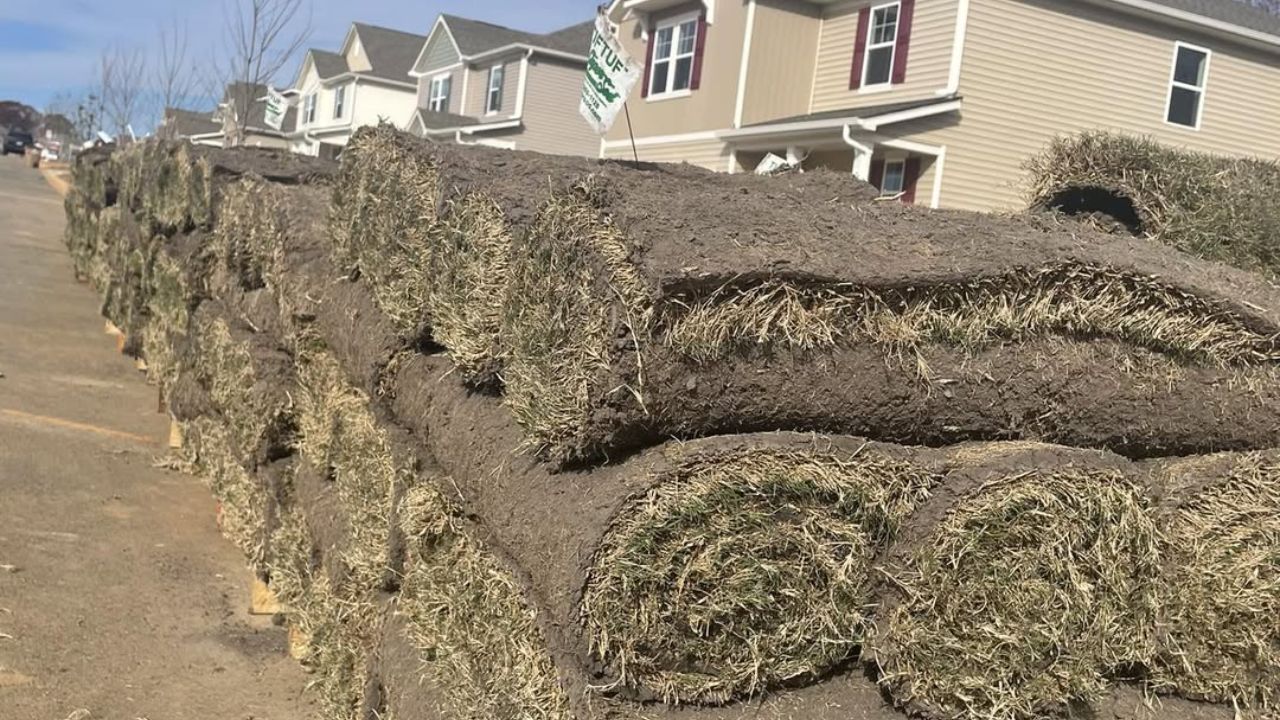
When sod is harvested, it comes off the field as a living system — grass blades, roots, and a thin layer of soil, rolled into a compact cylinder. That roll is roughly 4 to 6 inches in diameter when fresh, and it contains a lot of living biological material packed tightly together.
Here’s the problem: living biological material generates heat. The grass continues to respire after harvest — consuming oxygen, producing carbon dioxide and heat as byproducts of cellular metabolism. In a flat sheet in a field, this heat dissipates harmlessly. In a tightly rolled cylinder stacked on a pallet with other tightly rolled cylinders on a hot summer day, it doesn’t dissipate. It builds.
The interior of a sod roll on a hot Sudbury afternoon can reach temperatures significantly higher than the air temperature around it. I’ve measured interior temperatures in freshly delivered sod rolls in late July that were well above 40 degrees Celsius inside the roll while the ambient air was in the high twenties. That internal heat is what kills sod — not sun exposure on the surface, but heat building from the inside of the compressed roll outward.
The deterioration sequence goes like this: the cells in the grass begin to lose function as temperatures rise above the viability threshold. The grass starts to yellow from the inside of the roll first — the part with the highest heat concentration. By the time you see yellowing on the outside of the roll, the inside has typically been compromised for some time. Sod that looks acceptable on the outside of the roll may have interior sections that are already dead before a single piece has been laid.
This is why the timing between sod delivery and sod installation is not a scheduling convenience — it’s a quality variable with direct consequences for the installation outcome.
The 6-Hour Rule — Where It Comes From and What It Actually Means

Six hours is the maximum window I work with between sod delivery and complete installation on a hot Sudbury summer day — specifically any day where afternoon temperatures are above 28 degrees Celsius or where the sod is sitting in direct sun.
I want to be precise about what this means, because “6 hours” sounds like a hard rule when it’s actually a guideline calibrated for specific conditions.
Six hours assumes: sod delivered in the morning, stored in shade or at least out of direct afternoon sun, and installed in a continuous work session that doesn’t involve long breaks. Under those conditions, quality sod from a reputable supplier will still be in good shape when the last roll goes down.
The window shrinks with temperature. On a day that’s 33 degrees with direct sun on the sod pile, I’d be working faster — closer to 4 hours. On an overcast day with temperatures in the low twenties, fresh sod can hold quality for 8 to 10 hours if stored properly in shade.
The window also shrinks with pallet stacking. A single layer of sod rolls in shade holds better than a three-pallet stack in sun. The stacking creates insulation that traps heat — the bottom rolls in a tall stack are the warmest and the first to deteriorate.
Where does the 6-hour number specifically come from? A combination of supplier guidance, the physics of heat buildup in biological material, and the specific conditions I’ve observed on Sudbury job sites over several seasons of paying attention to this. Different suppliers in different markets use slightly different guidelines — some say 4 hours in hot weather, some say up to 24 hours for cool weather harvests — but for Sudbury summer conditions, 6 hours is the number I trust.
I’ve written about the full sod installation day sequence in the sod installation walkthrough. What that article describes — arriving early, working efficiently, having the soil prep complete before the sod arrives — exists partly to protect this timing window. We’re not just working fast because it’s efficient. We’re working within a biological deadline that the sod doesn’t negotiate.
What Happens to Sod That Sits Too Long — Stage by Stage

Here’s the progression of what heat damage looks like in sod rolls, and what you’ll see in the installed lawn if compromised sod goes down.
Hours 1 to 4 in Normal Summer Heat: Acceptable
Fresh sod from a good supplier in the first few hours after delivery — assuming reasonable storage conditions — is in the condition it should be. The rolls feel slightly warm to the touch but not hot. The grass on the outside of the roll is still green and turgid. The roots are viable and will establish when the sod goes into prepared soil and gets water.
This is the window I want to be working in for most of the installation. Good installations start with sod in this condition going into well-prepared soil, which gives the roots the best possible environment to begin establishing immediately.
Hours 4 to 7 in Hot Conditions: Marginal
The interior of the rolls is getting warm. The grass at the innermost layer of each roll may be starting to yellow — you won’t see this until you unroll the sod, but it’s happening. The rolls feel distinctly warm when you handle them. The grass on the outside is still acceptable but beginning to show stress.
Sod installed from this stage will often establish — the exterior of the roll, which is what contacts the soil and what the surviving roots are attached to, may still be viable. But the success rate drops, and sections of installed sod from this window are more likely to show patchy establishment with dead spots in the sections that were most heat-affected.
Beyond 7 Hours in Hot Conditions: Compromised
The rolls are hot to the touch. The grass has shifted from green to yellow-green to yellow on the outside. When you unroll a piece, the interior may be brown or showing the beginning of breakdown. The roots are losing viability.
Installing sod in this condition produces an outcome that looks like a post-installation watering failure — sections die, seams open up, establishment is patchy. But the problem happened before installation, not after. The homeowner will water correctly and still see sections fail, because the sod’s ability to root was compromised before it ever touched the soil. They’ll blame the watering. The real cause was the timing.
This is a failure mode I’ve seen in jobs I didn’t do — properties where I’ve been called in after an installation hasn’t gone well. When I ask about the installation day, the timeline often reveals that the sod sat significantly longer than it should have in warm conditions. The post-installation care was fine. The pre-installation timeline was the problem.
I described in the 200 sod installs piece that watering failure is the most common reason sod installations go wrong. That’s still true. But pre-installation heat damage is the second most common reason, and it’s the one that’s hardest to diagnose after the fact because it looks identical to watering failure on the surface.
How to Work Within the 6-Hour Rule on a Sudbury Job

Here’s how I structure a sod installation day specifically to protect the timing window.
Schedule Delivery for Early Morning
I request sod delivery for the earliest available window — usually 7 or 8am. Early delivery means the sod arrives before the day’s peak heat and is being installed during the cooler morning hours. Even in July, morning temperatures in Sudbury are often 8 to 12 degrees cooler than afternoon peak. That temperature difference extends the viable window meaningfully.
If the delivery can only happen in the afternoon — which occasionally happens due to supplier scheduling — I either push the installation to the following morning with the sod stored in the coolest possible location overnight, or I have the conversation with the supplier about whether the timing is workable for the specific day’s weather. Afternoon delivery on a hot Sudbury day into a late-starting installation is a timeline I’m not willing to work with.
Complete Soil Prep Before the Sod Arrives
Every minute spent on soil prep after the sod is delivered is a minute of the installation window being consumed. The prepared surface needs to be ready — tilled, graded, topsoil placed, watered — before the first roll comes off the truck. This is not optional padding. It’s the structural requirement that protects the timing.
I’ve described this sequence in the sod installation day article — the reason soil prep comes first isn’t just about doing things in the right order. It’s about having the window to install cleanly once the biological clock starts.
Store Sod in Shade If There’s Any Waiting Time
If for any reason the installation can’t start immediately after delivery — an unexpected soil prep issue, a delay in any part of the job — the sod goes into the shade. Not in a pile in direct afternoon sun. In shade, ideally laid out flat rather than stacked, with the rolls kept as cool as the environment allows.
On sites with no available shade, I’ll use tarps or blankets to cover the sod pile — not the same as shade, but significantly better than direct sun on a warm day. Any reduction in heat input extends the viable window.
Check Sod Quality as You Install
As each roll gets laid, I unroll it and check the interior briefly before it goes into the ground. A roll with visible browning or heat damage on the interior face — the part that will be going against the soil — doesn’t go down. It gets set aside and the supplier gets a call.
This quality check adds seconds per roll. It’s worth every second, because sod that goes in the ground compromised is sod that fails on a schedule I can already predict. Better to identify it before it’s installed than to explain to a homeowner six weeks later why sections of their new lawn didn’t establish.
Adjust the Timeline for Cooler Months
The 6-hour rule is summer-specific. The August vs September timing piece describes how sod installation changes across the late summer window — and one of the genuine advantages of September installation is that cooler temperatures give the sod significantly more shelf life, which provides more scheduling flexibility and reduces the heat-damage risk that makes August installations more demanding to execute well.
This is one reason I’m more comfortable scheduling September sod installations at a wider range of times than August ones. The biological deadline is less pressing in cooler conditions, and the execution pressure that comes with a hot-day 6-hour window isn’t present to the same degree.
Why This Matters When You’re Hiring Someone to Do Your Sod
If you’re hiring a company to install sod on your Sudbury property, the 6-hour rule is worth asking about — not because you need them to pass a quiz, but because how they answer tells you whether they’ve thought about this or not.
A company that has a clear answer about their delivery and installation timing — that schedules delivery for morning, has soil prep done in advance, and works efficiently to install within a specific window — is a company that understands the biological reality of what they’re installing.
A company that talks about sod installation as if it’s a product that can be delivered Monday and installed Thursday doesn’t understand what happens to sod in the days between delivery and installation in Sudbury summer conditions. That misunderstanding produces failures that get blamed on post-installation care when the problem happened before the first roll was laid.
Every sod job I do is property-specific in the ways I described in the never the same plan piece — including how the timing is managed based on the specific day’s weather conditions and the specific site’s prep status. The 6-hour rule is the time constraint that structures everything else on installation day. Getting it right is part of the job. Getting it wrong is part of why installations fail.
If you’re planning a sod installation in Sudbury and want to talk through timing, delivery, and what the installation day looks like, call me before you book. The conversation is free and it’ll tell you more about whether a company will execute the job well than the quote alone will.
For the full picture of what we offer, the complete service breakdown covers everything.
Call or text: 705-507-6787
Or fill out the free quote form on the site.
We cover Garson, Val Caron, Hanmer, Lively, Chelmsford, Azilda, Capreol, and surrounding areas.
— Ryan Lingenfelter
Cutting Edge Lawn & Landscaping
Garson, Ontario
705-507-6787
