
By Ryan Lingenfelter — Owner, Cutting Edge Lawn & Landscaping · Garson, Ontario · Serving Greater Sudbury since 2020
I’ve walked a lot of properties in Greater Sudbury. Most initial visits follow a similar rhythm — I arrive, introduce myself, walk the lawn, ask a few questions, form an assessment. The homeowner tells me what they want and what hasn’t worked before. I tell them what I see and what I’d recommend. We talk through the details and I put together a quote.
This visit didn’t follow that rhythm.
I knocked on the door and the homeowner — a man in his seventies who’d lived in the house since 1994 — answered holding a notebook. Not a fresh one. A worn one with a cracked spine and pages that had been turned enough times that the edges had started to soften. He said: “Before we go outside, I want to show you something.”
He opened the notebook on the kitchen table. Thirty years of handwritten yard observations. Dates, weather conditions, what he’d done, what he’d noticed, what worked and what didn’t. Every season since he moved in, recorded in the same small careful handwriting.
I sat down. We didn’t go outside for forty minutes.
What Was in the Notebook
He walked me through it section by section. Not all of it — thirty years of notes would take longer than an afternoon — but the parts he thought were relevant to why he was calling me now.
The first thing he showed me was a map he’d drawn of the property in 1995. Hand-drawn, reasonably to scale, with sections labelled by what he’d observed happening in each area. The section along the south fence — “always best in June, always worst in August.” The northwest corner — “first to recover in spring, last to go green.” The area near the back gate — “compacts under foot traffic, needs attention every few years.”
The map had been updated multiple times. Lines crossed out, new notes added, dates beside observations that changed or were confirmed over subsequent seasons. It was a working document, not a record. He’d been using it to track what the property actually did, season by season, for three decades.
He showed me entries from three specific droughts — 2001, 2012, and 2020 — where he’d recorded which sections went dormant first, which recovered fastest, and what he’d done differently each time. The 2020 drought section had a note in the margin: “Deep watered northwest corner twice a week — held colour ten days longer than south section. Try this approach from June next time.”
He showed me a section from the early 2000s when he’d had a contractor do drainage work in the backyard. He’d recorded the before and after soil conditions, the change in how water moved across the surface after rain, and his observation that the section adjacent to the drain had actually gotten drier rather than wetter — a counterintuitive result he’d eventually traced to the drain pulling moisture laterally from the surrounding soil.
He showed me a decade of fertilization records — what products, what timing, what weather conditions at the time of application, and his assessment of whether each application had produced visible improvement. His conclusion, written in 2015: “Spring fertilizer after aeration makes visible difference. Fall application — unclear benefit, possibly minimal. Summer application — negative. Lawn worse the following August in years I fertilized in July.”
That last observation is something I’ve seen confirmed on enough properties to consider it reliable — fertilizing heat-stressed grass in summer adds stress rather than helping. He’d figured it out empirically, by recording what he saw year over year, with no lawn care background at all.
What It Changed About How I Approached the Job
By the time we went outside, I wasn’t starting from scratch the way I normally do on a first visit. I had a thirty-year picture of the property — its patterns, its problem areas, what had worked, what hadn’t, and what the homeowner had already figured out through observation that no first-visit assessment could replicate.
What I normally read from the first moments on any property is real but shallow — surface conditions, current colour, visible compaction, obvious drainage problems. What he’d given me from that notebook was depth. The kind of understanding of a specific piece of land that usually only comes from years of working it or watching it.
Walking the property, I looked at it differently than I would have otherwise. The south fence section — he’d noted it was “always worst in August.” Standing there, looking at the soil, the sun exposure, the proximity to the fence — I could see why. The fence trapped heat, the soil there was slightly shallower over what looked like an old construction disturbance, and the combination produced a section that dried out and stressed faster than the adjacent areas. I’d have noticed the condition eventually. His notes told me the pattern before I’d even arrived.
The northwest corner — “first to recover in spring, last to go green.” Walking it, I found slightly deeper topsoil there and better moisture retention. His seasonal observation mapped directly to a soil difference I could feel underfoot. His notes were accurate in ways that thirty years of careful attention made possible.
The back gate area — “compacts under foot traffic, needs attention every few years.” He’d last aerated that section in 2019. Five years without aeration in a high-traffic area in Sudbury’s climate — it felt like it. The most compacted section of the property, exactly where the notebook said it would be.
What the notebook gave me was a map of the property’s actual behaviour, not just its current state. That’s a completely different starting point for recommending what needs to happen. Rather than guessing at patterns from a single visit, I could work from confirmed observations across three decades of the same conditions, the same seasons, the same soil.
What He Wanted — And What We Did
After thirty years of managing the property himself, he’d reached the point where he wanted someone else to take over the physical work. Not because the lawn had deteriorated — it was actually in decent shape by Greater Sudbury standards — but because the maintenance was becoming more than he wanted to manage at his age.
What he wanted was someone who would continue what he’d figured out over three decades, not override it with generic advice. He’d been through two previous services that had ignored his observations and applied standard approaches that didn’t account for the property’s specific patterns. Both had produced mediocre results. The south fence section had suffered under both of them because neither service had treated it differently from the rest of the lawn.
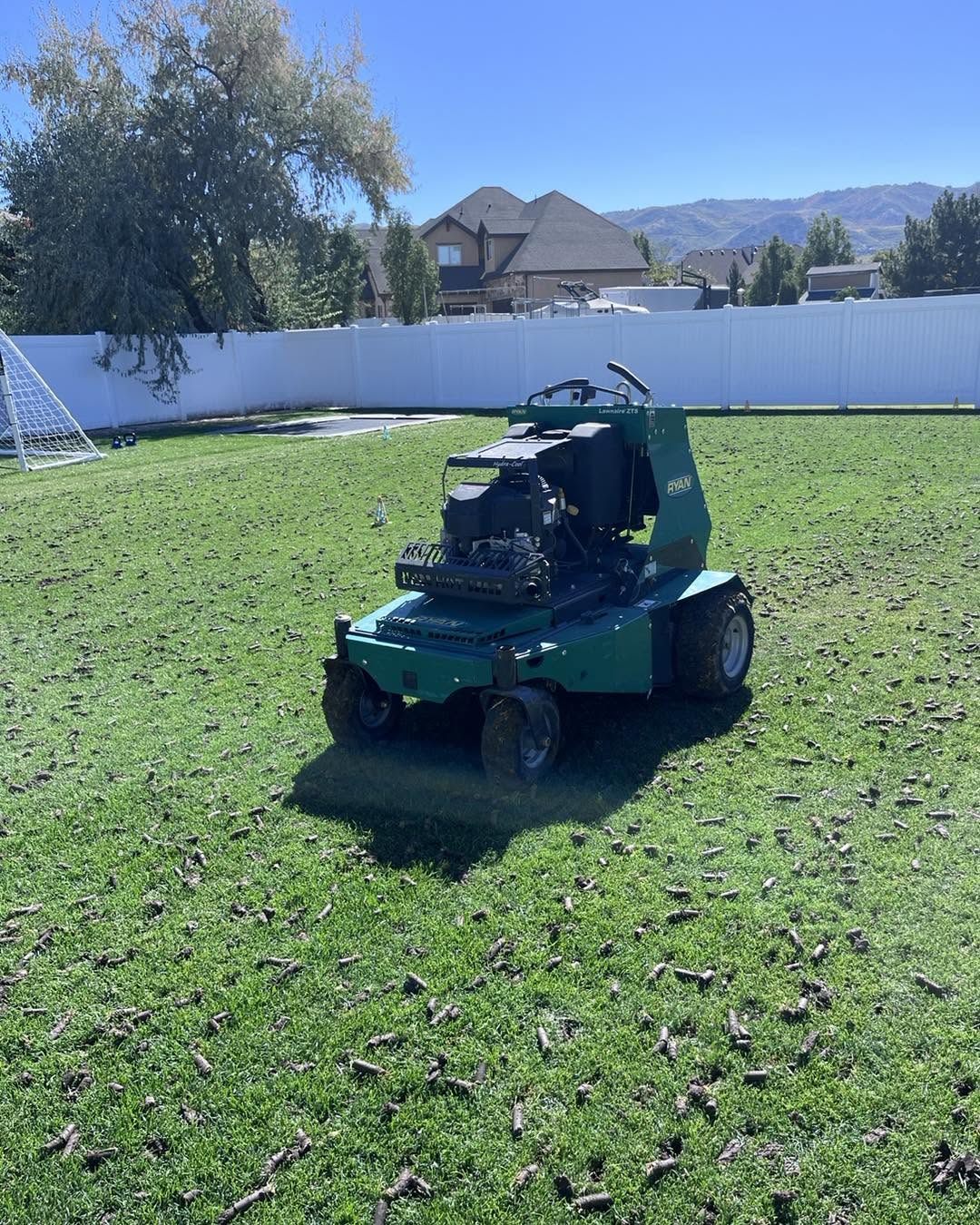
We started with a proper spring cleanup that addressed the thatch buildup in the sections his notes identified as historically problematic. Then core aeration with a specific focus on the back gate area he’d flagged. Overseeding timed to his thirty-year observation about which sections established best and when. And a cutting schedule that held three inches minimum through summer — consistent with what his notes showed produced the best outcomes through the July stress period.
The south fence section got a different approach through July — no supplemental watering there regardless of what I was doing elsewhere on the property, consistent with what he’d noted about that section performing worse with extra moisture. His decades of observation had identified a microclimate difference that my standard approach would have missed entirely.
By September the property looked excellent. The south fence section held its colour better than it had in the years his notes covered. The northwest corner, true to his map, had responded fastest to the aeration. The back gate area, properly aerated after five years, felt different underfoot — more give, better drainage through the summer.
What This Story Is About Beyond the Notebook
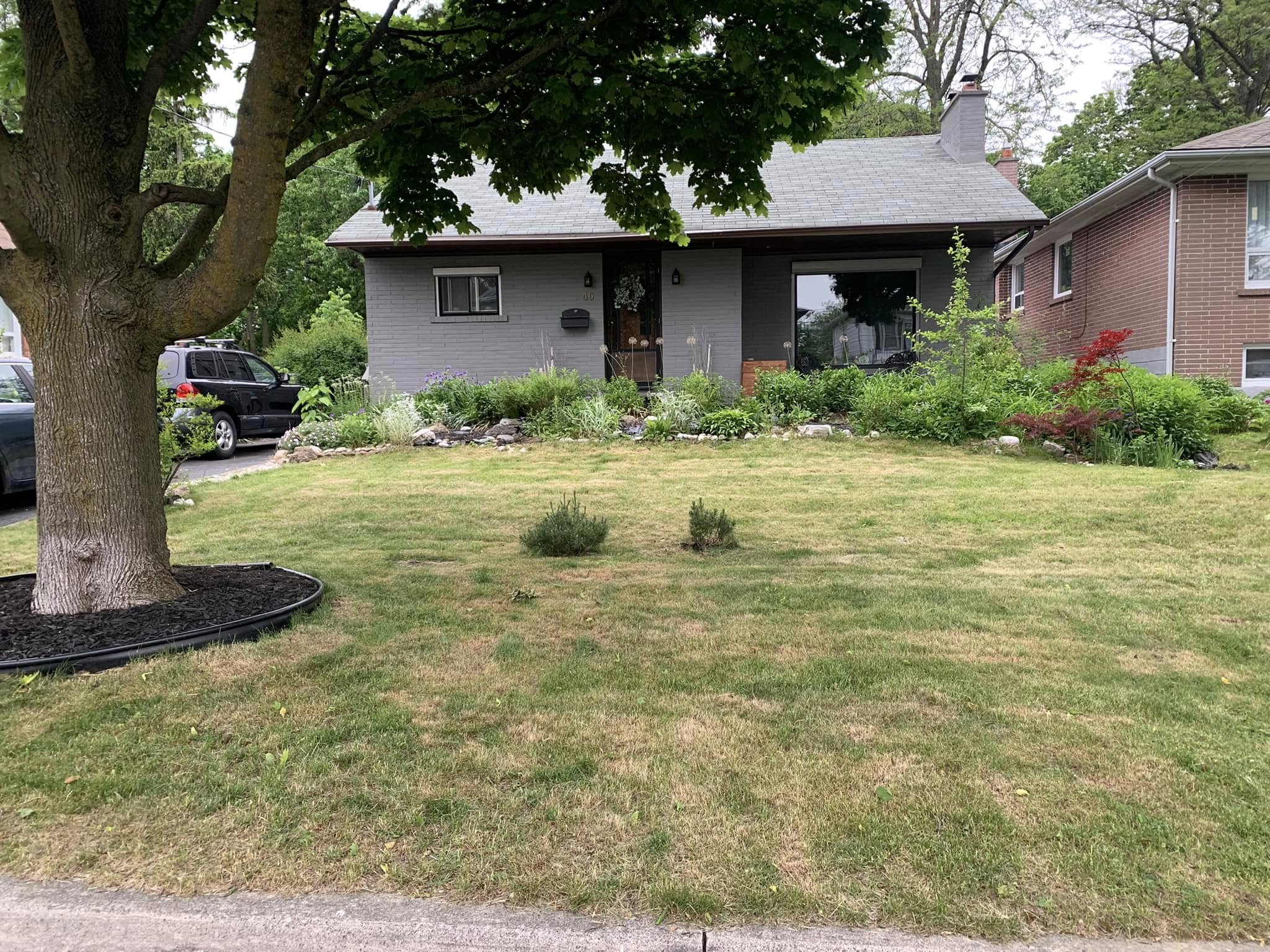
The notebook is the memorable detail of this story, but the principle it represents applies to every property I work on.
Every homeowner who’s lived in their house for more than a few seasons has observations about their property that no professional assessment can fully replicate from a first visit. Some of those observations are recorded carefully, like this one. Most are just things people know — the section that always goes brown, the corner that takes longest to dry out, the area where nothing ever seems to establish properly.
That knowledge is more valuable than it usually gets credit for in lawn care. When a service provider comes and immediately starts forming their own assessment without asking what the homeowner already knows, they’re working with less information than they could have. Sometimes the resulting recommendations are still correct. Sometimes they miss things that thirty years of observation would have caught in ten minutes.
I wrote about a similar situation with the retired teacher who walked me through her property before I’d formed any impressions of my own. The principle is the same. Homeowner knowledge, taken seriously and incorporated into how the work is approached, produces better outcomes than professional expertise applied without it.
The drainage issue I describe when I write about the one Sudbury lawn I still think about every time it rains might have been identified sooner if I’d asked more directly about what the homeowner had noticed over time. The Garson property where something kept going wrong — the rotting fence posts I eventually identified — would have been found faster if the homeowner’s observations about when the problem started and where it was most concentrated had been part of my initial assessment.
The notebook is an unusual version of something every homeowner has. Ask what they know before you decide what they need. The answer usually makes the work better.
If you have a Sudbury property and observations about it that previous services never asked about — reach out. Tell me what you know. I’ll listen before I start forming my own picture.
— Ryan Lingenfelter
Cutting Edge Lawn & Landscaping, Garson, Ontario
📞 705-507-6787
Serving all of Greater Sudbury — Garson, Hanmer, Val Caron, Lively, Chelmsford, Azilda, Capreol, and Sudbury proper. We offer grass cutting, core aeration, property cleanup, sod installation, and full lawn maintenance. Free quotes, no pressure.
Get a Free Quote |
Call 705-507-6787
