
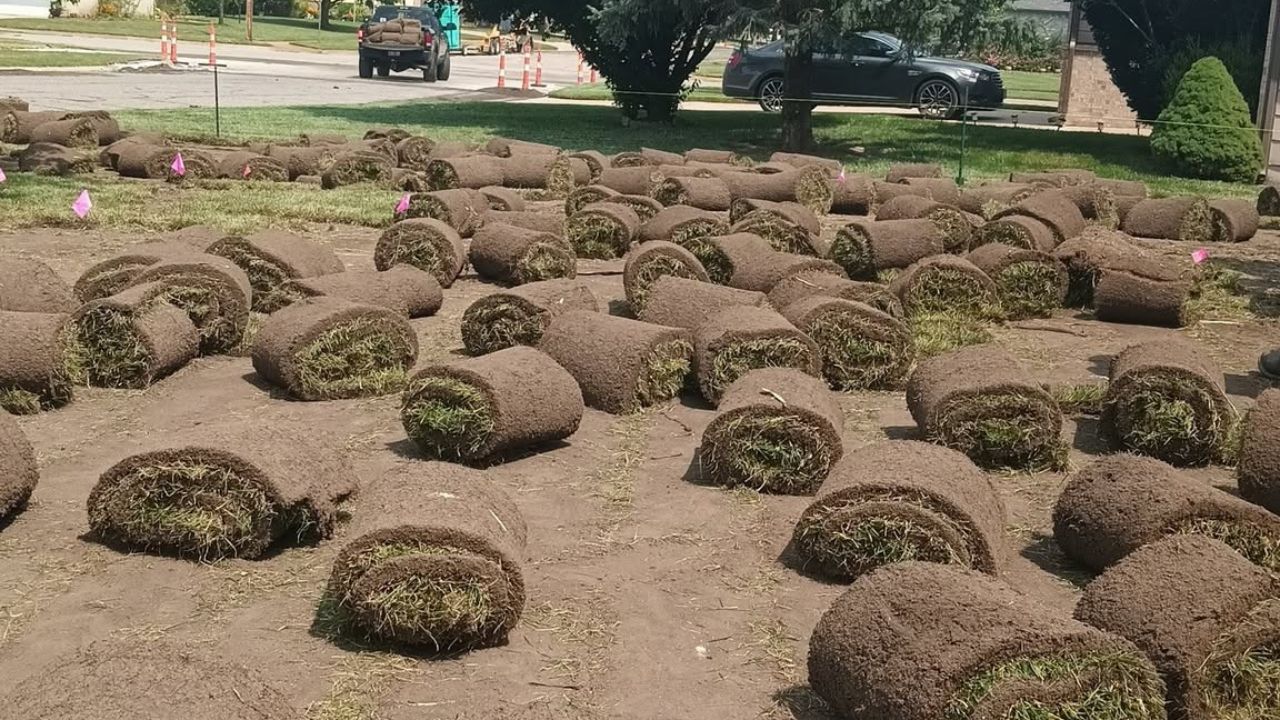
Every spring and summer I get calls from homeowners who bought sod, laid it themselves, and are calling me two weeks later because it’s not taking. The problem is almost never how they laid it. The problem is almost always what they loaded into the truck at the farm — sod that was cut too long ago, sod that was the wrong variety for Sudbury soil, sod with a root mat too thin to survive our conditions, or sod that looked fine when they picked it up but had already been compromised in ways that aren’t visible until it’s down and failing.
Buying sod is not complicated if you know what you’re looking at. Most people don’t, because nobody tells them. The farm wants to sell it, the bags of soil amendment at the checkout want you to believe the product will be fine, and the online advice about buying sod is written for people shopping in southern Ontario markets where the selection and conditions are different from what’s available and appropriate near Sudbury.
Here’s exactly what to look for before you drive out, what to check when you get there, and what to do the moment the sod is loaded — because from that point on, the clock is running.
Why Sod Quality Matters More in Sudbury Than Most of Ontario
Sod installed in southern Ontario has a forgiving environment to establish in. Deep soil, moderate temperatures, longer frost-free season, more consistent moisture. Sod that’s slightly past its best-by window, or cut a little thin, or not quite the ideal variety for the conditions, will often establish anyway because the environment is accommodating enough to compensate for the quality gap.
Sudbury is not that environment. The thin topsoil over Canadian Shield bedrock that characterizes most of Greater Sudbury gives sod a shallow, limited root zone to establish into. The compressed seasonal window between late frost and early fall means sod that doesn’t establish quickly runs out of time. The clay-heavy soil in communities like Chelmsford holds moisture in ways that can drown newly laid sod if the root mat isn’t healthy enough to manage it, and the shallow bedrock in areas like Val Caron creates dry pockets that will kill sod with a thin root system before it’s had time to anchor. I described the specific soil conditions that make Sudbury different from the rest of Ontario in the why Sudbury is different piece and the specific neighbourhood variation that affects how sod performs across different parts of the city in the Val Caron vs Chelmsford piece.
The margin for quality error on Sudbury sod is smaller than in most of the province. Sod that would survive and establish despite minor quality issues in Mississauga or Barrie will fail in the thin-soil, compressed-season conditions of Greater Sudbury. This is why what you check at the farm matters more here than it would elsewhere — the environment is less forgiving of the quality gap, and you’re going to find that out two weeks after installation rather than at the farm.
What to Check at the Farm Before You Load a Single Roll
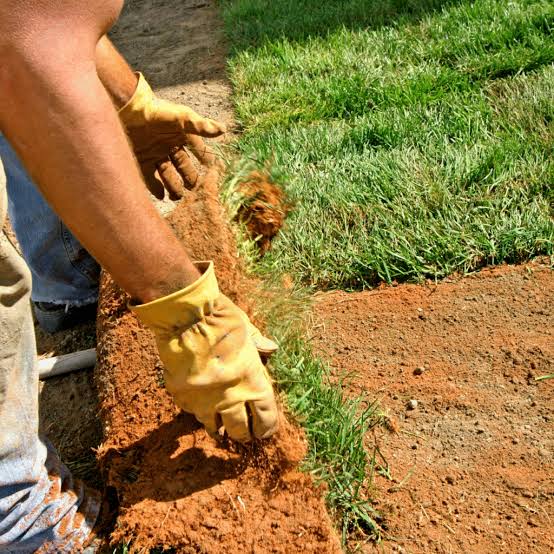
There are five things to check at any sod farm before you commit to loading. Not five things to look at quickly from the truck — five things to actually examine with your hands before you agree to take the product. A reputable farm won’t object to this. If a farm objects to you examining the product before purchasing, that is information.
Check one: The cut date
Ask when the sod was cut. Fresh cut is within 24 hours of your pickup. Acceptable is within 48 hours if it has been stored correctly — kept cool, not stacked more than two pallets high, not sitting in direct sun. Beyond 48 hours, sod begins to degrade in ways that aren’t always visible on the surface but significantly reduce establishment rates. The grass blades may still look green. The root mat underneath is already beginning to lose viability.
In summer heat — which is when most Sudbury homeowners are buying sod — the acceptable window is shorter than in spring or fall. At 25 degrees Celsius, sod that’s been sitting in a pallet for 36 hours in sun is already compromised. At 30 degrees, the viable window after cutting shrinks to under 24 hours for sod stored outdoors. Ask the cut date directly. If the farm staff can’t tell you, or gives you a vague answer, load accordingly — assume the worst and buy only what you can install same-day.
Check two: The root mat depth
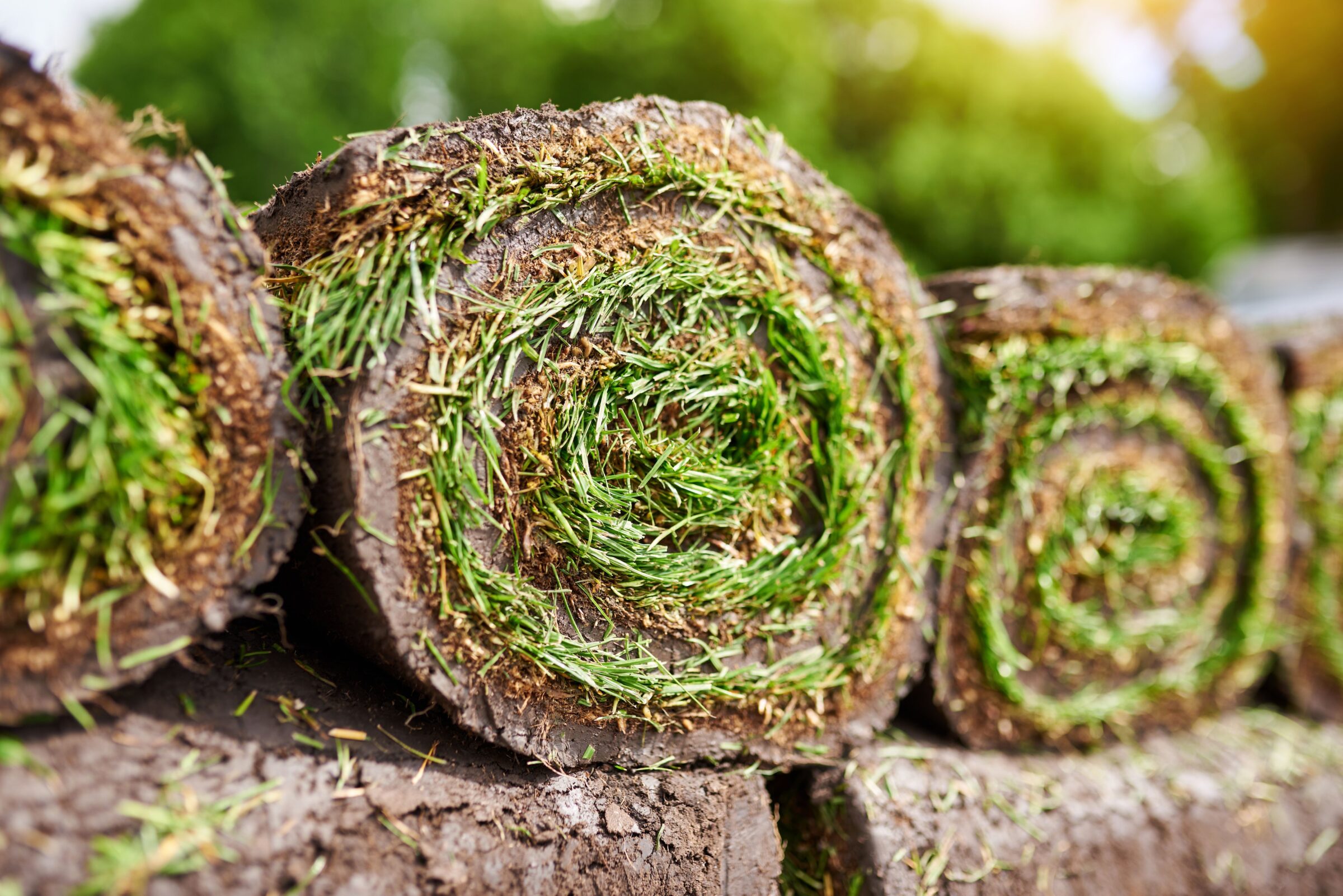
Unroll one piece from the middle of a pallet — not from the top where the best pieces tend to be placed, from the middle or bottom where the quality is more representative. Look at the root mat on the underside. The root mat is the layer of soil and roots that holds the grass together. On healthy fresh sod, the root mat should be at least three quarters of an inch deep, ideally an inch to an inch and a half, with visible white root tips throughout and a consistent density that doesn’t pull apart easily when you flex the roll.
On Sudbury properties specifically, root mat depth matters more than it does in more forgiving environments. Sod with a thin root mat — under half an inch — has a smaller moisture reserve in the mat itself and a smaller initial root mass to anchor into the soil below. On a thin-topsoil Val Caron property or a clay-draining Chelmsford property, a thin-mat sod roll is starting from a deficit that the installation conditions will make worse rather than better. The three-quarter-inch minimum is the threshold below which I don’t recommend purchasing for Sudbury installation regardless of how good the surface looks.
Check three: The colour in the middle of the roll
Unroll the same piece you checked for root mat depth and look at the colour in the centre of the roll, where the grass blades have been folded against each other during transport and storage. On fresh healthy sod, this section should be green — slightly lighter than the outer surface blades because of reduced light exposure, but genuinely green. On sod that’s been sitting too long or stored in heat, the blades in the centre of the roll will be yellow, pale, or brown. That yellowing is cell death in the blade tissue from heat accumulation and lack of photosynthesis during storage. It is not recoverable after installation. The lawn you lay will include those yellow sections, and they will stay yellow until the grass is replaced by new growth from the crown — if the crown survived the storage conditions, which is not guaranteed.
Check four: The grass variety
Ask what grass variety the sod is. Most sod farms near Sudbury sell Kentucky bluegrass, Kentucky bluegrass blend, or a tall fescue mix. For full-sun sections with deeper soil, Kentucky bluegrass establishes well in our climate. For sections with shallower soil, partial shade, or drainage challenges, a fine fescue blend or a turf-type tall fescue performs significantly better on Sudbury properties because of the deeper, more drought-tolerant root systems those varieties develop.
The variety conversation is the one most homeowners skip because they assume sod is sod. It isn’t. The sections of a Sudbury property that are going to challenge the sod most — shallow bedrock sections, shaded areas, drainage problem zones — are exactly the sections where variety selection matters most. Installing Kentucky bluegrass in a shaded section with shallow soil because that’s what the farm had on the pallet is a predictable failure. Ask what varieties are available and match the variety to the conditions on the section you’re installing. If the farm only carries one variety and it’s not right for your specific installation conditions, that’s worth knowing before you load.
Check five: The weed content visible in the roll
Look at the surface of several rolls for visible weed growth. A small amount is unavoidable and acceptable. Significant weed coverage — dandelion rosettes, broadleaf clusters, or grass weed colonies in the sod itself — means the farm’s production quality is low and you’re installing a weed problem directly into your lawn. The weeds in that sod will establish at least as well as the grass will, and in challenging Sudbury conditions where the sod is already working hard to root in, the weeds have a competitive advantage over a stressed grass plant that you don’t want to give them from day one.
The Questions to Ask Before You Pay
Beyond the physical checks, four questions to ask the farm staff directly before committing to a purchase. The answers tell you as much about the farm’s practices as about the specific product.
First: when was this cut and how has it been stored since cutting? A farm that tracks cut dates and can answer this specifically is a farm that manages its product seriously. A farm that gives a vague answer or tells you all sod is fresh is a farm that doesn’t differentiate — which means their quality control is inconsistent and you’re accepting whatever condition the pallet happens to be in.
Second: what preparation does my soil need before installation? A farm that answers this question with specific, honest advice — soil must be graded, topsoil depth should be at minimum two to three inches, existing vegetation must be removed and not just tilled in, the surface should be level to within an inch across any ten-foot run — is a farm that wants the sod to succeed. A farm that says “just put it down and water it” is a farm that’s finished caring about the outcome the moment the sod leaves the pallet.
Third: what’s the minimum topsoil depth I need under this sod for it to establish on a Sudbury property? This is the question that reveals whether the farm staff understands Northern Ontario installation conditions or is giving you advice calibrated for southern Ontario. The honest answer is a minimum of two inches of prepared topsoil above whatever is underneath — bedrock, clay subgrade, or construction fill — and ideally three to four inches. On the new build properties in Sudbury’s newer subdivisions, getting this topsoil depth right before laying sod is the same foundational issue I described in the new subdivisions piece — thin imported topsoil over compacted subgrade is not a sufficient base for sod regardless of how good the sod quality is.
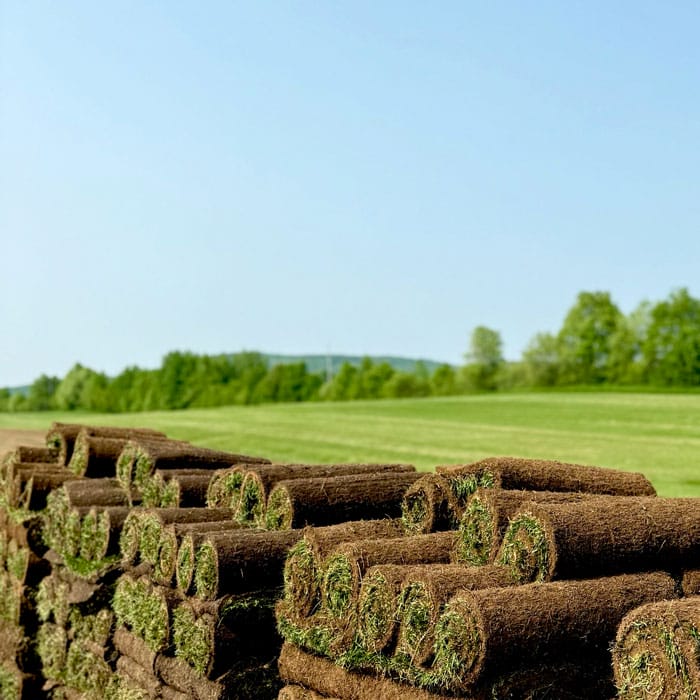
Fourth: do you deliver, and what is the longest you recommend between delivery and installation? This question confirms the farm’s understanding of the time-sensitivity of their product. The correct answer is same-day installation, period. Any farm that tells you sod can sit in the truck or on the driveway overnight is giving you bad advice that will cost you establishment failures. From the moment sod is cut, every hour of delay reduces establishment rate. In Sudbury summer heat, overnight storage on a pallet or in a truck bed can render a batch of sod significantly less viable than when it left the farm.
What Happens the Moment the Sod Is in Your Truck
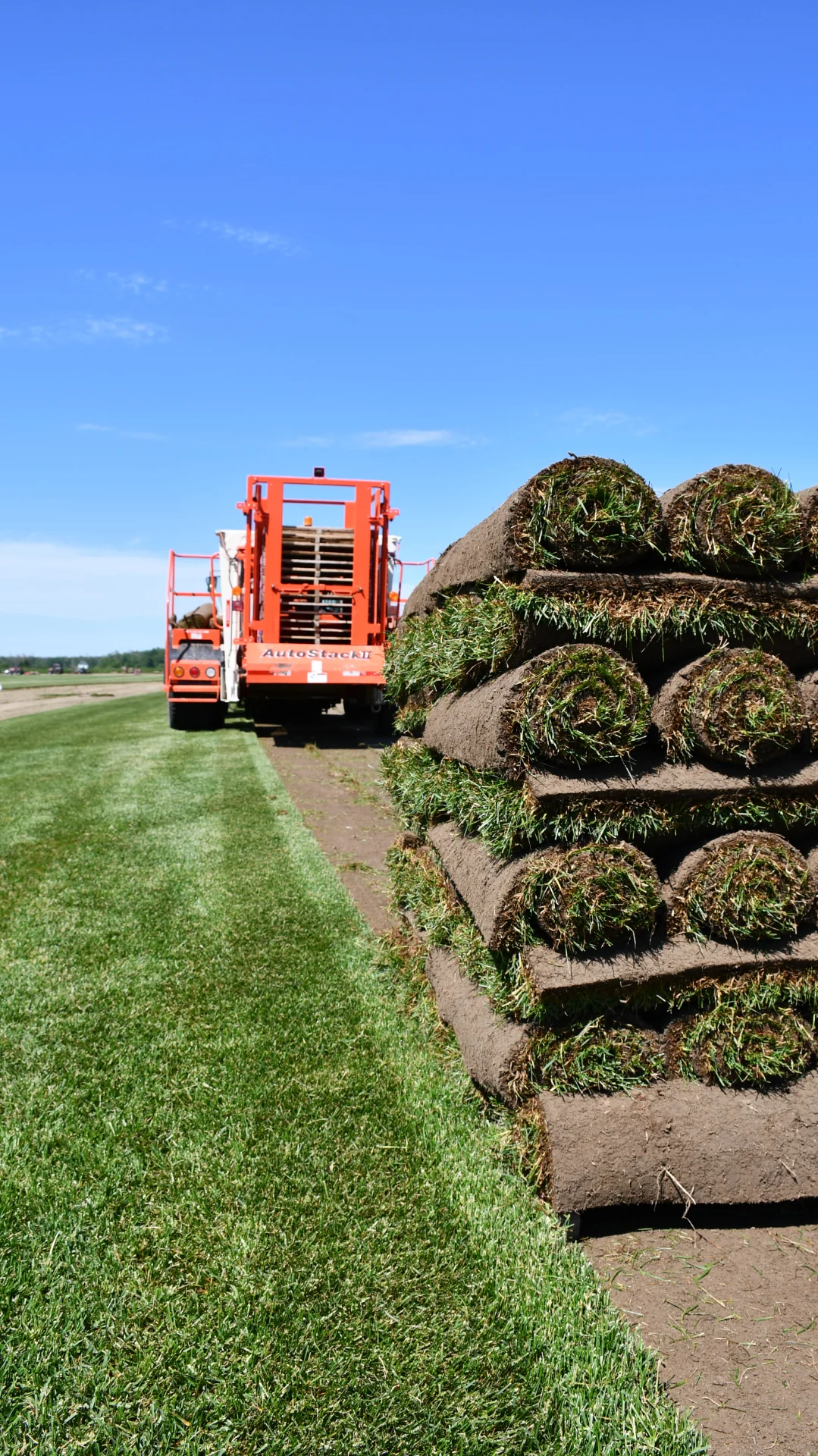
The moment the sod is loaded, the installation clock starts. Not a metaphorical clock — a literal one. Sod in a truck bed in summer heat is losing viability every hour it sits there. The single most important thing you can do after loading is install it. Not today-ish. Today, immediately, before anything else.
If you can’t install it the same day it’s cut and loaded, cover the rolls with a tarp to reduce direct sun exposure, keep them in shade where possible, and mist them lightly if the day is hot. This buys hours, not days. If circumstances prevent same-day installation — weather, unexpected time constraints, delivery timing — understand that you are accepting a quality reduction that will show up in establishment rate, and plan your installation expectations accordingly.
The preparation your soil needs before the sod goes down is a separate conversation from the sod quality itself, but both have to be right for the installation to work. Aeration of the receiving soil before laying sod opens the surface for root penetration and removes the compaction barrier that stops roots from anchoring below the sod mat. I described why aeration is specifically critical on Sudbury soil in the core aeration page and why sequencing that aeration before the sod rather than after it matters in the 4 services in one week piece. Good sod laid on unprepared compacted soil fails for the same reason bad sod laid on perfectly prepared soil fails — the interface between the sod root mat and the receiving soil needs to be right on both sides.
Once the sod is down, the first 21 days are the establishment window that decides whether the installation holds. I covered that window in full in the 21 days after sod installation piece — it’s the piece to read before the sod goes down so you know exactly what the first three weeks require before you’re in the middle of them. The tug test at day 15 to 18 that tells you whether the roots have locked in, the watering schedule that keeps the root mat moist without saturating the soil underneath, the first mow timing and height — all of it is there.
And if a section of the sod fails to establish despite good quality and correct installation — which happens on Sudbury properties where shallow bedrock or drainage problems create a zone the roots can’t penetrate — the diagnostic process is the same as for any persistent bare patch on an established lawn. I described how that diagnosis works in the contractor missed 3 years piece. Sometimes sod fails not because of sod quality or installation error but because the ground underneath has a condition that wasn’t visible before the sod went down. Finding that condition is the step that comes before trying again.
If you’re planning a sod installation in Greater Sudbury and want a professional to handle the full process — site preparation, sod sourcing, installation, and the establishment monitoring that makes the difference between a sod job that holds and one that has to be redone — that’s exactly the kind of job we do. For everything we offer, the complete 2026 service breakdown is the right starting point.
Call or text: 705-507-6787
Or fill out the free quote form on the site.
We cover Garson, Val Caron, Hanmer, Lively, Chelmsford, Azilda, Capreol, and surrounding areas.
— Ryan Lingenfelter
Cutting Edge Lawn & Landscaping
Garson, Ontario
705-507-6787
