

By Ryan Lingenfelter · Cutting Edge Lawn & Landscaping, Garson, Ontario · June 2026
Every spring across Greater Sudbury, I assess properties where the strip of lawn running along the road edge is brown, thin, or completely dead — while the rest of the lawn is recovering normally. The homeowner usually has a theory about what caused it. In my experience, that theory is wrong about half the time.
The most common misdiagnosis is winter kill — the assumption that the grass died because of frost, ice, or freeze-thaw damage from the winter. Sometimes that’s accurate. But on properties along streets that receive heavy municipal road salting — which in Greater Sudbury means a significant portion of the residential road network given our winters — the actual cause is sodium chloride toxicity, and the treatment for that is completely different from the treatment for winter kill.
Getting the diagnosis wrong means spending money on the wrong fix. Here’s what road salt actually does to lawns, how to tell it apart from winter kill, and what the correct recovery sequence looks like.
What road salt actually does to soil — the chemistry in plain language

Road salt — sodium chloride, the same compound as table salt but in bulk industrial form — works as a deicer by lowering the freezing point of water. Effective on roads. Problematic for the lawns beside them.
The damage pathway is threefold.
Direct sodium toxicity to grass plants. When salt spray from passing vehicles or salt-laden snowplow discharge lands on grass blades, the sodium disrupts the plant’s cellular water balance. Grass cells lose water through osmosis — the salt draws moisture out of the plant tissue and into the higher-concentration salt solution surrounding it. In severe cases this produces direct desiccation damage. In more moderate cases it stresses the plant enough that it’s significantly more vulnerable to the freeze-thaw damage that would otherwise only affect weakened or improperly maintained turf.
Soil sodium accumulation and structural damage. Salt that reaches the soil — through direct application, snowmelt runoff, or repeated spray — replaces calcium and magnesium ions in the soil structure with sodium ions. Calcium and magnesium keep clay particles aggregated in clusters that produce the soil structure — the spaces between particles where air and water move. Sodium disperses those clay particles, collapsing the aggregated structure and producing dense, compacted soil with severely reduced permeability. On Greater Sudbury’s already clay-influenced soil, this process accelerates compaction beyond what would occur from traffic and freeze-thaw alone, and it happens specifically in the road-adjacent zones where salt exposure is highest.
Root-zone toxicity from sodium and chloride ions. Once salt enters the soil profile, both the sodium and chloride components affect grass roots directly. Chloride accumulates in grass tissue at levels that interfere with photosynthesis. Sodium in the root zone raises the osmotic potential of the soil solution — meaning roots have to work harder to extract water from the soil, eventually reaching a point where the soil is chemically “dry” even when physically moist. This is called physiological drought — the grass shows drought stress symptoms not because water is absent but because the salt concentration prevents root uptake.
The combined result on a heavily salted Greater Sudbury roadside: grass that was alive going into winter dies during the salt application season — not from cold, but from the accumulation of sodium toxicity and structural soil damage. By spring, it looks brown and dead. But the cause and the fix are different from winter kill, and the distinction matters for what you do about it.
The properties most affected in Greater Sudbury — and why some streets are worse than others
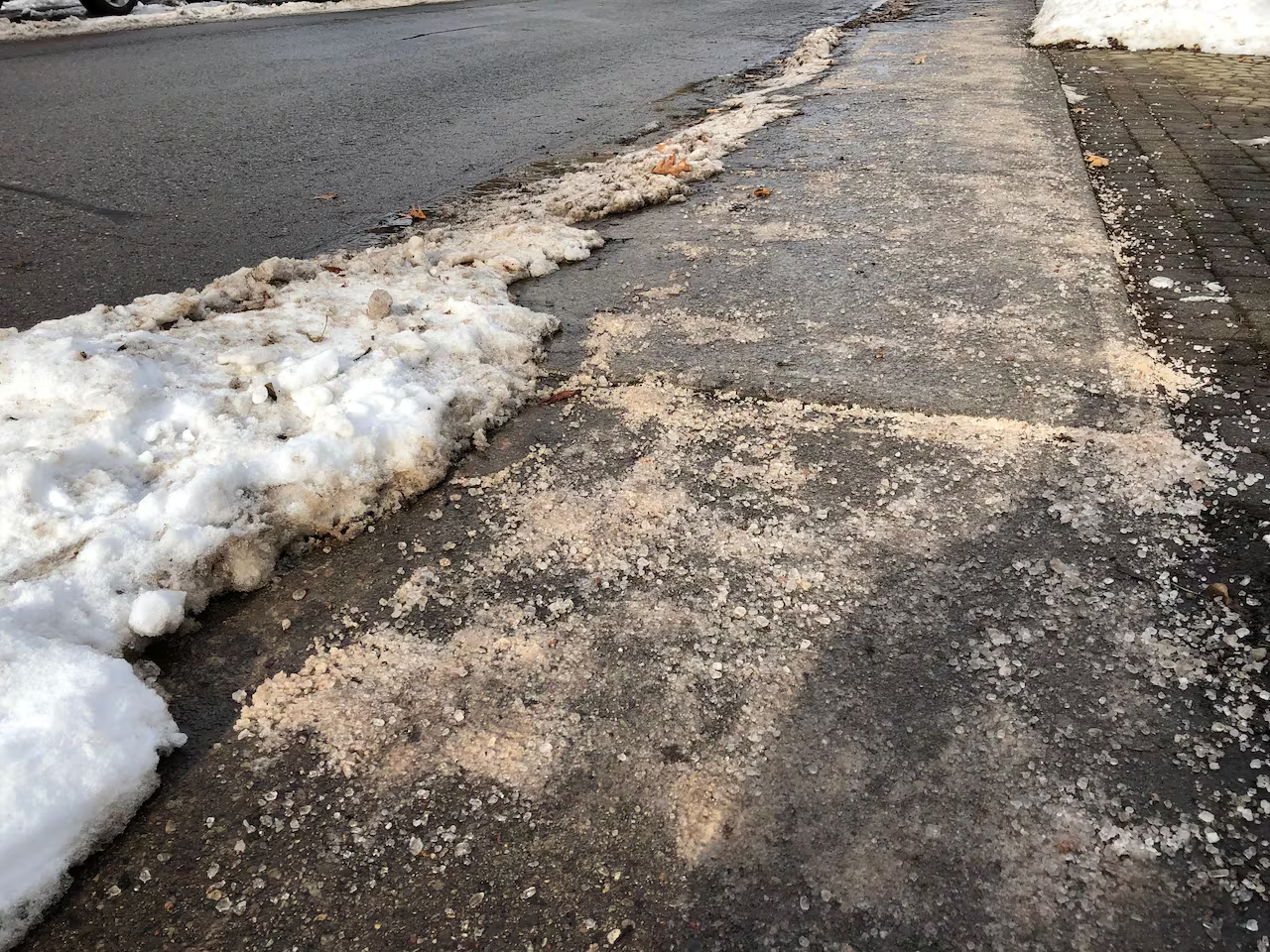
Not all streets in Greater Sudbury receive the same salt loading, and not all roadside lawns experience the same level of damage. Understanding which properties are at higher risk helps you assess whether road salt is likely to be a factor on your specific property.
Higher-volume roads with frequent plowing. The city’s main arterial roads — Lasalle Boulevard, Barrydowne Road, Regent Street, the major connector roads in each community — receive more salt applications per winter than quiet residential side streets, because they’re plowed and treated more frequently to maintain safe conditions for higher traffic volumes. Properties directly fronting on these roads experience more total salt exposure through the season than properties on side streets. I’ve seen consistent roadside strip damage on properties along busy corridors in Val Caron and Garson that the same homeowners never experienced when they lived on quieter streets.
Corner lots and properties near intersections. Intersections receive heavy salt application — the road surface stays wet longer at corners where vehicles are stopping and turning, requiring more frequent treatment. Corner lots accumulate salt exposure from two road frontages rather than one. Properties near bus stops, where heavy vehicles decelerate and accelerate repeatedly, show above-average salt exposure patterns.
Properties on a downhill grade from the road. Salt-laden runoff from roads follows grade. Properties where the road is slightly higher than the adjacent lawn allow meltwater with elevated salt concentration to drain toward the property rather than away from it. This directs the salt load directly into the root zone of the roadside grass rather than leaving it at the road surface where it would eventually dilute and drain into the storm system. The drainage principles I described in the article on the Sudbury property where I found drainage problems underground apply here too — grade affects where salt-laden water goes just as it affects where any runoff goes.
Properties with no buffer between road edge and lawn. Lawns that start immediately at the road edge — no sidewalk, no boulevard strip, no raised curb — have no barrier between road salt application and the grass. Properties with a concrete or asphalt boulevard between the road and the grass have some degree of physical separation that reduces direct salt contact with the lawn.
Greater Sudbury’s winter maintenance approach uses significant salt volumes given the length and severity of our winters. This is not a criticism — road safety requires it. But the lawn care implications for properties on frequently treated roads are real and worth planning for specifically rather than treating as general spring cleanup issues.
Why most homeowners misdiagnose salt damage — and what they do wrong as a result

Salt damage and winter kill look nearly identical in spring — brown, dead-looking grass in a strip along the road edge. The visual appearance doesn’t distinguish between them. What does distinguish them is the pattern, the timing, and the soil conditions in the affected zone.
Pattern differences. Winter kill tends to be irregular — patches in low-lying areas where ice and standing water accumulated, sections under tree canopies where shade and temperature inversions create unusual conditions, occasional random spots related to drainage or micro-terrain. Salt damage is characteristically linear — a strip of damage that follows the road edge, uniform in width, ending abruptly at the point where salt exposure diminished. If the dead zone is a consistent strip parallel to the street, salt is the more likely explanation than general winter kill.
The wrong response to a misdiagnosis. When homeowners assume the strip damage is winter kill, the typical response is to reseed or resod the affected area — rake out the dead grass, add some topsoil, put down seed or sod, water it in. This works for actual winter kill because the soil in the damaged area is physically fine — the grass died from cold or ice damage but the soil can support new growth. Applied to a salt-damaged area where sodium has accumulated in the soil profile, this approach produces poor or failed results because the new seed or sod is going into soil with elevated sodium concentration that produces physiological drought stress in the new plants. The grass germinates or transplants acceptably, grows slowly and poorly, and often fails to establish properly — or establishes thin and deteriorates quickly. The homeowner concludes they had bad seed or bad sod. The actual problem was that they fixed the surface without addressing the soil chemistry.
I’ve seen this sequence play out on multiple properties across Greater Sudbury — repair attempts that fail not because the technique was wrong but because the diagnosis was wrong. One property in Val Caron had been reseeded three consecutive springs with poor results before the homeowner called me. The damaged area was a perfect linear strip along their entire road frontage. The first thing I did was water the affected zone heavily and check whether the soil was holding it or repelling it — sodium-affected soil has noticeably different water infiltration behaviour than normal soil. The soil confirmed the diagnosis immediately.
This connects to the broader diagnostic principle I described in the article on the 4 sounds a Sudbury lawn makes when something is wrong — what you observe from the surface doesn’t always tell you what the cause is, and matching the repair to the actual cause rather than the observed symptom is what produces results. Salt damage looks like winter kill. The treatment is completely different.
How to fix salt-damaged lawn in Sudbury — the correct sequence and realistic timeline
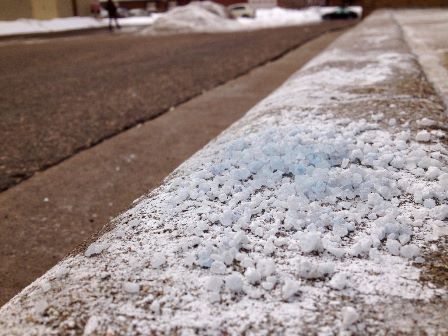
The correct treatment for salt-damaged soil addresses the soil chemistry first, then the surface. Here’s the sequence I follow on affected properties, and what the realistic timeline looks like for each component.
Step one — flush the affected zone with water. The goal is to dilute the sodium concentration in the soil profile and encourage it to leach deeper — below the root zone — where it’s less immediately harmful to grass. This requires significant water volume applied over time, not a single heavy irrigation. On a strip that’s been accumulating salt for several winters, I recommend three to five deep watering sessions in the first two weeks of spring — enough water each time to push well past the root zone — before any other treatment. The bylaw watering schedule that applies from June 1 in Greater Sudbury, as I covered in the article on Sudbury lawn care news mid-2026, is less restrictive in May, which makes early spring the right window to do this flush treatment before the restrictions take effect.
Step two — apply gypsum to the affected zone. Gypsum (calcium sulphate) is the specific amendment that addresses sodium-affected soil. It works by introducing calcium ions that displace the sodium from the soil particles — essentially reversing the structural damage that sodium caused by replacing it with calcium, which restores normal clay aggregation and soil permeability. Gypsum is widely available at garden centres and is applied as a broadcast granular amendment at roughly 10 to 20 pounds per 1,000 square feet of affected area. It’s not expensive and it’s not harmful to plants — if you apply it before reseeding, it improves the soil conditions the new grass will be growing into. If you apply it after reseeding, it improves the conditions for the seedlings already in the ground.
Step three — wait for a confirming read before reseeding. After flushing and gypsum application, give the soil two to three weeks before checking conditions. The confirming read is a simple water infiltration test — water a small section of the treated area and observe whether water soaks in readily or beads up and runs off. Normal soil absorbs water within seconds. Sodium-saturated soil resists it. If water is infiltrating normally after the flush and gypsum treatment, the soil is ready for seed or sod. If it’s still showing resistance, another flush cycle is warranted before planting.
Step four — reseed or patch with sod into treated soil. Once the soil confirms readiness, the restoration follows the standard process. For narrow strips under about two feet wide, overseeding with a fescue-dominant blend works well — fescue has moderate salt tolerance compared to Kentucky Bluegrass and is the better choice for roadside restoration specifically. For wider damage areas, sod gives you faster establishment and better visual result, but it’s more expensive and only worth it once the soil chemistry is corrected. Putting quality sod into untreated salt-affected soil is a waste. The variety selection principles I described in the article on the 2 grass types that work in Sudbury and 3 that don’t apply here — fescue’s broader stress tolerance makes it the better variety choice for the salt-exposed roadside zone even in a lawn that uses a primarily bluegrass blend elsewhere.
Step five — manage the following winter differently if possible. Prevention is more effective than annual repair. If your property has a history of salt damage along the road edge, there are a few options worth considering. Applying gypsum in fall, before salt season begins, builds calcium reserves in the soil that partially buffer the incoming sodium. Installing a low ground-cover planting or decorative stone border in the worst-affected strip replaces a high-maintenance grass zone with a lower-maintenance surface that isn’t damaged by salt. Contacting the city about your specific property if the salt application seems unusually heavy for your street type — municipal operators have some flexibility in application rates and the city has a responsibility to balance road safety with environmental impact.
Realistic timeline. With correct treatment in spring — flush, gypsum, confirmed soil recovery, reseeding in the late May window — a salt-damaged roadside strip can be in reasonable condition by mid-July of the same season. Full recovery to match the density and colour of the undamaged lawn typically takes one full growing season. Properties where multiple winters of salt accumulation have significantly degraded the soil profile may need two seasons of the treatment cycle to fully reverse the chemistry.
If the strip along your road edge has been dying or performing poorly every spring despite repair attempts, and you haven’t specifically checked for salt damage — this is worth investigating before you spend another year reseeding into soil that can’t support what you’re planting. Give me a call and I’ll come look at it.
📞 705-507-6787 | Get a free quote online
— Ryan Lingenfelter
Owner, Cutting Edge Lawn & Landscaping
Garson, Ontario · 705-507-6787
