I need to be upfront about something before I start.
I run a lawn care company. I’ve maintained hundreds of properties across Greater Sudbury since 2020. I write articles about what happens to lawns when they don’t get proper care. And then, two summers ago, I let my own lawn go for an entire season.
Not because I forgot. Not because I was testing anything deliberately. Life got complicated — a family situation that took over from June through September, a schedule that was already stretched maintaining customer properties, and my own yard sitting at the bottom of every priority list for four months straight.
By October I had a front-row seat to everything I’d been telling customers would happen. The damage was real and it was specific and some of it surprised even me.
I’m Ryan Lingenfelter, owner of Cutting Edge Lawn & Landscaping in Garson, Ontario. This is the honest damage report from that summer — what the lawn looked like in October, what I found underneath, what it cost to fix, and what I’d do differently if I had the summer over again.
What the Lawn Looked Like in May — Before It All Went Wrong
Context matters here, so let me tell you what I was starting with.
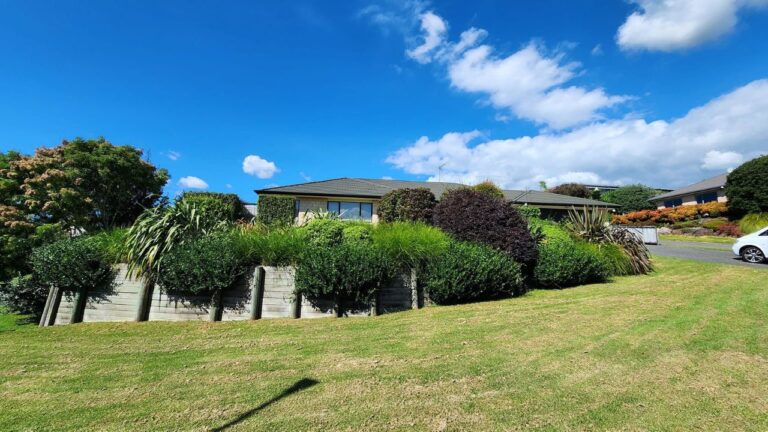
My property in Garson is a standard residential lot — maybe 6,000 square feet of turf area including front and back. The lawn going into that summer was in decent shape. It had been aerated the previous fall, overseeded in late August the year before, and maintained on a proper mowing schedule through the previous season. The soil is Sudbury clay, same as most properties in the area — compacts hard without annual attention, but manageable with consistent care.
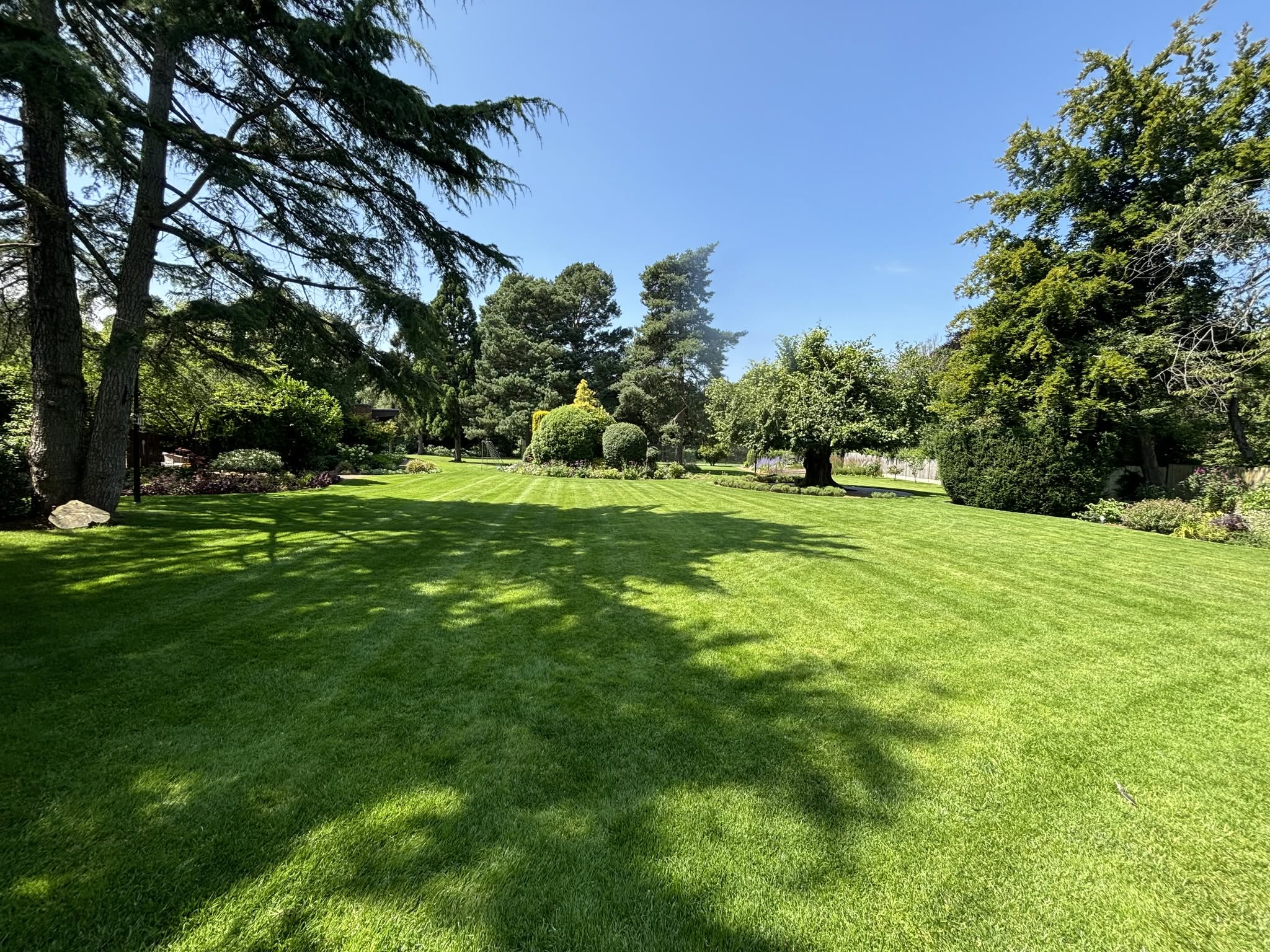
I did one cut in early May. Edges were clean. The lawn had come out of winter in reasonable shape — a couple of small snow mould patches that were already filling back in, no significant vole damage. Going into June it looked like it was going to be a normal year.
Then June happened and I stopped cutting.
I want to be specific about this because the timeline matters. I didn’t miss the whole season from day one. I got three cuts in — early May, mid-May, and one in early June. Then nothing from June 10 through to the first week of October. That’s roughly 17 weeks of no maintenance on a lawn that had been in decent condition going in.
The July Assessment — What I Saw When I Finally Looked
I drove past my own property every day through that summer. There’s a particular kind of discomfort in watching something you know how to fix get worse while you don’t fix it. By mid-July it was bad enough that my neighbour left a note. Politely worded. But a note.

Here’s what the property looked like in mid-July:
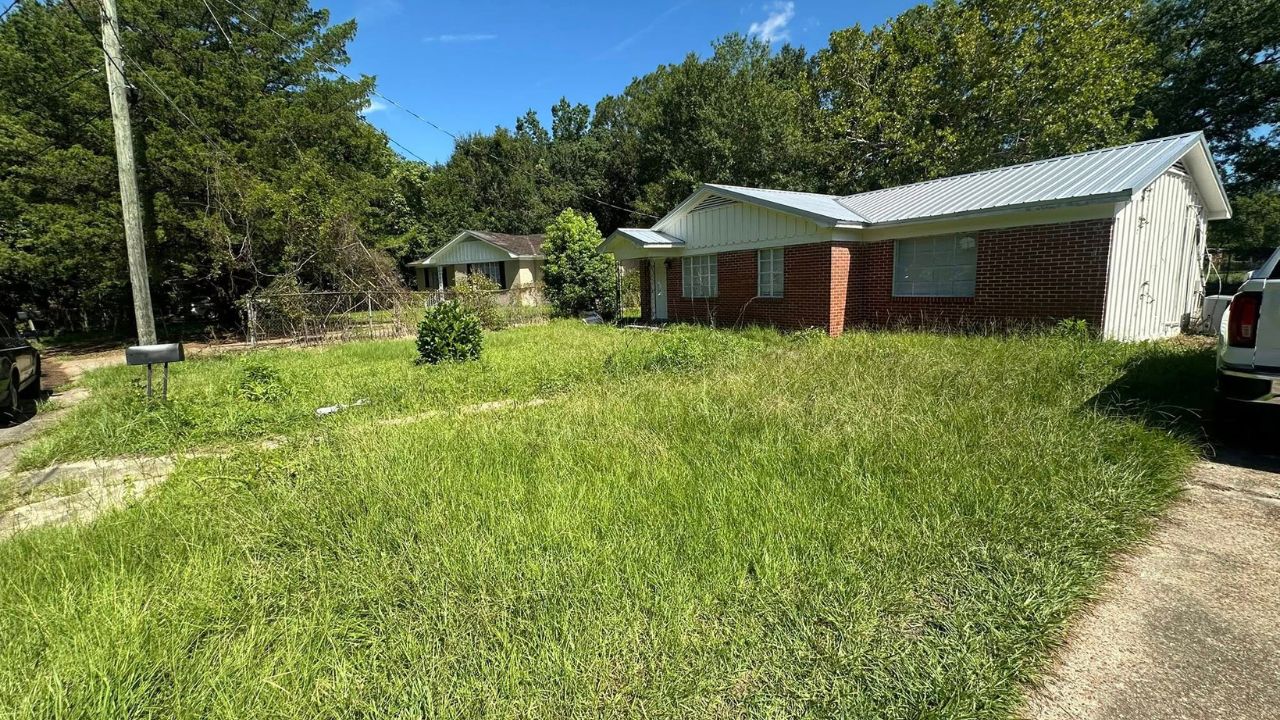
Grass height: The sections that still had grass were running 8 to 10 inches in the front yard. The back was closer to 12 in spots. Not uniform — more like uneven tufts of tall grass interspersed with areas that had gone brown or been taken over entirely.
Weed coverage: Approximately 40 to 45 percent of the front lawn was weeds by mid-July. Dandelions had gone through two full seed cycles. Creeping Charlie had expanded from the shaded corner along the fence where it had always been present and was now covering a strip about 4 feet wide along the entire fence line. Crabgrass was coming up in the thin areas along the driveway edge where the pavement heats the soil and the grass was already stressed.
Brown patches: Three distinct areas had gone completely brown. One was the section along the south-facing front edge of the property — full sun, clay soil, shallow roots from the mowing that had stopped in June. The roots had never gone deep enough to handle the July dry stretch we had that year. One was a section in the back corner that I suspected had a drainage issue I’d been ignoring. One was a roughly 3-foot circular patch near the driveway that I didn’t recognize until I looked closer.
That circular patch near the driveway was grub damage. I pulled the grass back and found the turf lifting like a carpet with no resistance — roots completely gone, white C-shaped grubs visible in the soil underneath. I’d been telling customers about this exact scenario for years. Here it was on my own property.
The grub damage article I wrote covers exactly what this looks like and how to identify it — I was looking at a textbook case in my own backyard.
The October Walk — Full Damage Inventory
When I finally had time to properly assess the property in early October, I spent an hour walking it with a clipboard. I wanted an honest inventory before I started any recovery work so I understood exactly what one neglected summer had produced.

Here’s what the full damage inventory showed:
Live grass remaining: Roughly 55 percent of the total turf area still had viable live grass. The back yard fared better than the front — more shade meant less heat stress through July, slower weed germination, and grass that held better through the dry stretch.
Weed coverage: About 35 percent of the total lawn area was dominated by weeds — dandelion, creeping Charlie, crabgrass. The remaining 10 percent was bare soil, primarily in the grub-damaged area and the brown section along the south face.
Thatch layer: I measured the thatch in several spots. Where the grass had grown tall and then been cut down by weather-related flattening, the thatch was running 1.5 to 2 inches thick. That’s well past the half-inch where it starts causing problems with water penetration and root development.
Soil compaction: The screwdriver test showed what I expected. The sections that had been maintained in previous years and then neglected this summer were compacting back toward where they’d started. The areas with heavy weed coverage were worst — dandelion taproots had disturbed the surface but the surrounding soil was hard. I was pushing the screwdriver to about 2.5 inches in most spots, down from the 4 to 5 inches I’d had after the previous fall’s aeration.
Grub damage area: About 25 square feet near the driveway, completely dead with active grub population. This needed to be treated and reseeded rather than just overseeded — the grubs had to go before any recovery work would hold.
Drainage corner: The brown section in the back corner confirmed what I’d suspected. The grading there directs water toward the corner, it sits wet in spring and dries out fast in summer because the roots can’t establish in the saturated spring soil. This was a drainage problem I’d been ignoring for two years and the neglected summer had made it obvious.
The Recovery Plan — What It Took and What It Cost
I approached the recovery the same way I approach a customer restoration project. Diagnosis first, then fix the causes in the right order, then maintain properly. I walked through this exact sequence in the lawn restoration article — I was now applying it to my own property.
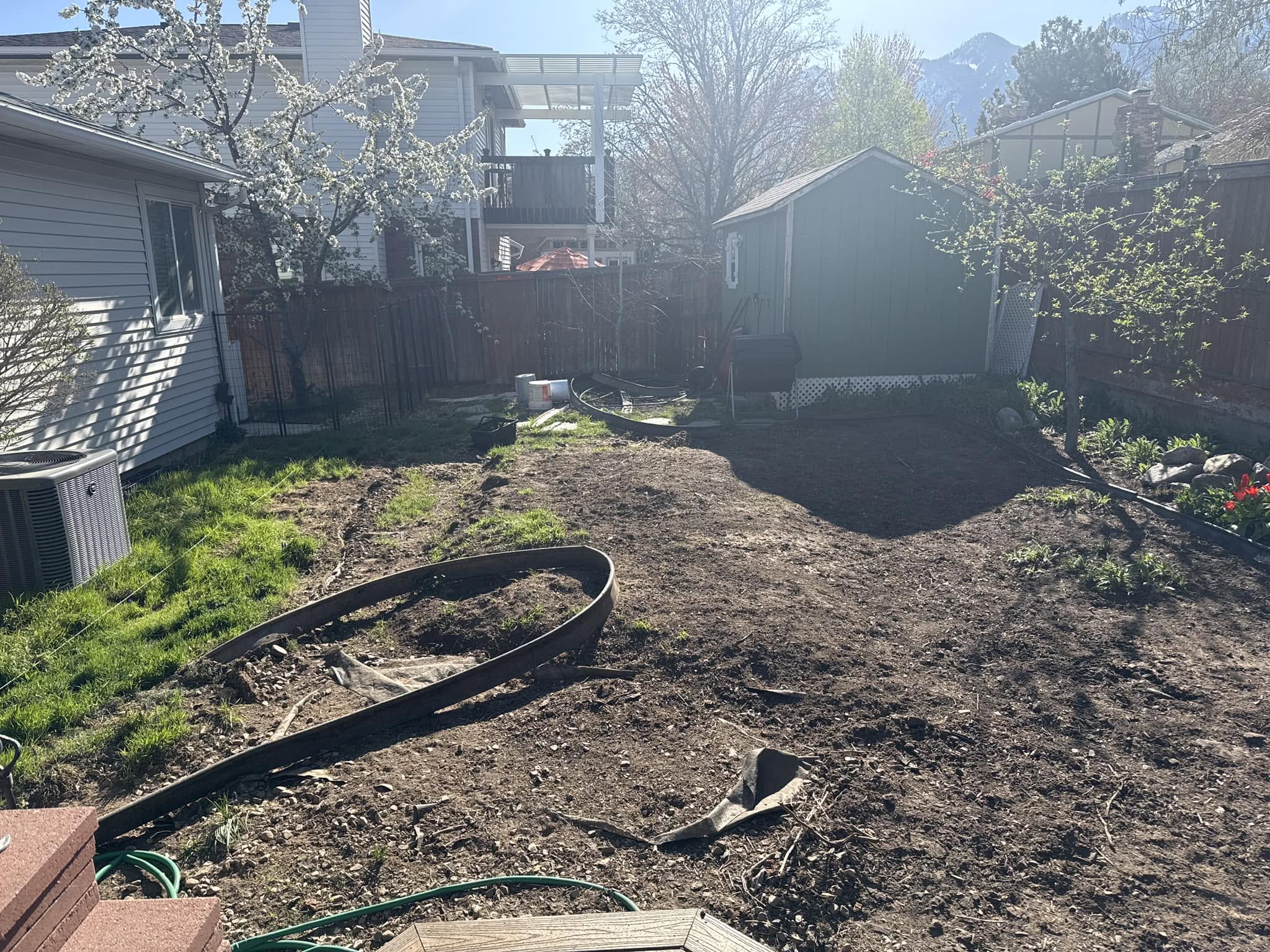
Here’s the recovery sequence and what it involved:
First cut — multi-pass at reducing heights: You can’t take an 10-inch lawn down to 3 inches in one pass without scalping it. I did three cuts over six days — first at 6 inches, then at 4.5 inches, then at 3 inches. Each pass was slower than a normal maintenance cut because of the volume of material. Total time: about 4 hours across the three sessions, versus the 45 minutes a normal maintained cut takes.
Grub treatment: Applied nematodes to the grub-damaged area and the surrounding 10-foot radius in late September — timing matters, nematodes need to go in when soil is still warm and grubs are near the surface. Waited two weeks before any seeding in that area.
Property cleanup: Full debris removal, thatch raking, edge cleanup. The kind of thorough property cleanup that clears the surface for everything else to work. This took a full afternoon — significantly more work than a standard spring cleanup because of the matted grass and accumulated debris from the whole summer.
Core aeration: A full pass in early October while the soil was still workable. The compaction had progressed significantly through the neglected summer — the aeration was pulling dense plugs that looked like they hadn’t been touched in years, not the looser plugs I’d gotten after the previous fall’s aeration on the same property. Aeration is always the foundation — I cover the full reasoning in the aeration timing guide here.
Overseeding: Quality cool-season blend spread immediately after aeration while the plug holes were open. The grub-damaged area got its own overseeding two weeks after the nematode application.
Drainage corner: Brought in topsoil, regraded the corner so water drains toward the side of the property rather than pooling. This was the fix I’d been putting off. One afternoon of work that would have cost maybe $300 if I’d done it two years earlier instead of ignoring it.
Total time investment in recovery work: Roughly 14 hours over three weeks in September and October. Compare that to the approximately 2 hours per month of maintenance cuts through the season — 8 hours total if I’d just kept up with it.
Material costs: Nematodes ($45), grass seed ($60), topsoil for drainage corner ($80), nematode applicator ($15). About $200 in materials. Plus my own labour time, which I won’t price out but was significant.
What the Lawn Looked Like the Following Spring
The overseeding in October established reasonably well — better in the areas with good aeration and direct soil contact, patchier in the spots with heavy thatch that I hadn’t cleared as thoroughly. The grub-treated area came in thin but present by the following May.
The drainage corner looked right for the first time in two years. Fixing the cause instead of reseeding over it actually worked — I know, I tell customers this constantly, and it still took me longer than it should have to do it on my own property.
The weed pressure in spring was noticeably higher than the year before the neglected summer. All those dandelion seed cycles through July and August had added to the weed seed bank. I spent more time on weed control in May and June than I had in previous years. This is the compounding effect of one neglected season — the weeds you let go to seed come back to haunt you the following spring.
By July of the recovery year, the lawn looked acceptable. Not the way it had looked going into the neglected summer, but definitely maintained and heading in the right direction. Full recovery to where it had been took about eighteen months from when I started the October restoration work.
What I Actually Learned — From My Own Lawn
A few things from this experience that I hadn’t fully internalized from working on other people’s properties:
The compounding effect is faster than I expected. Seventeen weeks of no maintenance didn’t produce a lawn that was 17 weeks behind — it produced a lawn that needed 18 months of recovery. The weed seed bank, the compaction reversal, the thatch buildup, the grub damage that went unchecked — all of these compounded in ways that multiplied the recovery time.
The drainage problem became unmissable. I’d known about that back corner for two years and kept reseeding over it. One neglected summer made the underlying cause so obvious that I finally couldn’t avoid fixing it. Sometimes it takes things getting visibly bad before you address the actual cause rather than the symptom.
The grub damage timing was critical. I caught it in July by accident. If I hadn’t noticed that circular patch and looked closely, I would have discovered it in October when the treatment window was essentially closed. Early identification matters — and it only happens if someone is actually looking at the lawn regularly. I cover the identification signs in the grub damage article here.
My neighbour’s note was justified. I mention this not as self-flagellation but because it’s the practical reality of lawn care on a residential street. A neglected property affects the neighbourhood. I knew this professionally. Experiencing it personally is different.
If your lawn is in rough shape right now and you’re not sure where to start — give me a call. I’ll walk the property the same way I walked mine in October, tell you exactly what I see, and give you a straight number before anything is scheduled.
📞 705-507-6787
🔗 Get a Free Quote
📍 Serving Greater Sudbury — Garson, Val Caron, Hanmer, Lively, Chelmsford, Azilda, Capreol
— Ryan
Frequently Asked Questions
What actually happens to a Sudbury lawn if you ignore it for a whole summer?
Based on direct experience: weed coverage increases to 35 to 45 percent of the lawn area, thatch builds to 1.5 to 2 inches, soil compaction reverses significantly, grub damage goes undetected and expands, and existing drainage problems become severe. The lawn that was 55 percent viable grass going in was 55 percent viable coming out — but the remaining 45 percent was significantly worse than it would have been with consistent maintenance, and the weed seed bank was dramatically larger for the following spring.
How long does it take to recover a lawn that was neglected for one summer in Sudbury?
Based on my own property: approximately 18 months from when recovery work started to get back to where the lawn had been before the neglected season. With proper October restoration — cleanup, aeration, overseeding, grub treatment, drainage correction — significant improvement was visible by the following July. Full recovery to pre-neglect condition took through the following fall. The weed seed bank added by one neglected summer affects weed pressure for two to three seasons afterward.
Is it worth trying to recover a neglected Sudbury lawn or just starting over?
If more than 50 percent of the lawn still has viable grass — as mine did — recovery is almost always worth attempting before replacement. The recovery process costs significantly less than full lawn replacement and produces good results within one to two seasons when done properly. If the lawn is below 50 percent viable grass, the calculus changes — sod replacement in the worst sections becomes a serious option. The sod vs seed comparison guide covers this decision in detail.
What should I do first when starting to recover a neglected Sudbury lawn?
Multi-pass height reduction first — never take a tall neglected lawn down to maintenance height in one cut. Then a thorough property cleanup to remove debris and thatch. Then core aeration while the soil is workable. Then overseeding immediately after aeration. Then address any specific problems — grubs, drainage issues — that become visible during the recovery process. This sequence, started in late September or early October in Sudbury, gives the best results for a spring recovery.
How do I know if my neglected Sudbury lawn has grub damage?
The key sign is turf that lifts like a carpet with no root resistance — you can roll it back and the soil underneath has no grass roots attached. Secondary signs are small circular brown patches that spread outward and increased bird activity on the lawn (robins dig for grubs actively). If you find the carpet-lifting symptom, dig down a few inches and look for white C-shaped grubs about the size of your thumbnail. The full grub identification and treatment guide here covers everything you need to know.
Ryan Lingenfelter is the owner of Cutting Edge Lawn & Landscaping in Garson, Ontario. Since 2020, his crew has provided full lawn care services across Greater Sudbury — Garson, Val Caron, Hanmer, Lively, Chelmsford, Azilda, and Capreol. Cutting Edge is licensed, insured, BBB A+ rated, and ThreeBest Rated for lawn care services in Sudbury.
📞 Phone: 705-507-6787
📍 Service Area: Greater Sudbury, Ontario
🔗 Free Quote: cuttingedgelawn.ca/quote
Helpful Lawn Care Services in Sudbury
- Property Cleanup Services
- Core Aeration for Healthy Lawns
- Grass Cutting Services
- Sod Installation in Sudbury
- Mulch & Decorative Stone
- Hedge Trimming Services
Continue Reading
- What Happens to Your Lawn If You Skip One Full Season of Maintenance in Sudbury
- The Worst Sudbury Lawn I’ve Seen — Restored in One Season
- Lawn Grubs in Sudbury — How to Spot Them Before They Kill Your Lawn