
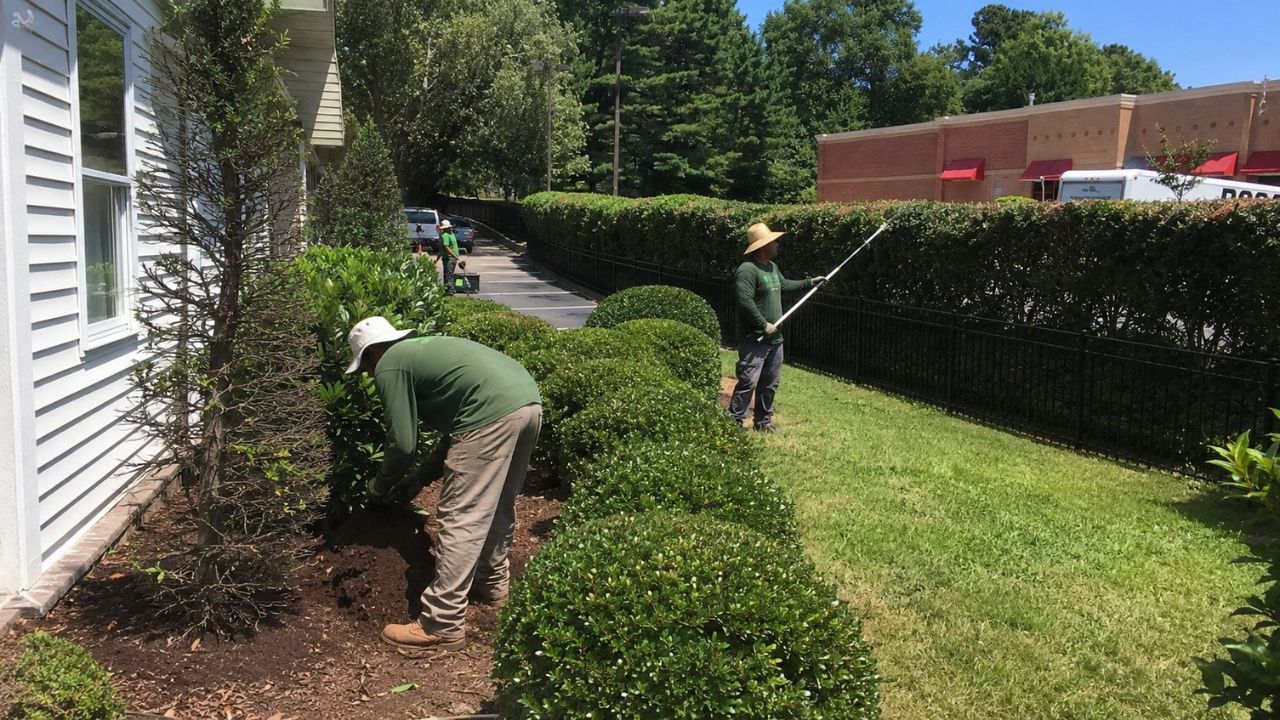
Hey, I’m Ryan Lingenfelter — owner of Cutting Edge Lawn & Landscaping in Garson, Ontario. Since 2020, my crew and I have been trimming hedges on properties all across Greater Sudbury — Garson, Val Caron, Hanmer, Lively, Chelmsford, Azilda, Capreol. And one thing I can tell you for sure after five springs of doing this work?
Hedges are where homeowners hurt their property value the fastest without realizing it.
I’m not exaggerating. I’ve shown up to plenty of Sudbury properties where the lawn is in decent shape, the gardens look fine, the house is well-maintained — and then there’s this giant, brown, half-dead cedar hedge along one side that’s been screaming for help for two years.
The owner usually doesn’t even know it’s a problem until I point it out. Hedges are weird like that. They die slowly. The damage from a bad trim two years ago doesn’t show up until this spring when half the hedge fails to green up.
So let me walk you through this the way I would if you called me asking about your hedge. When to cut it, how often, what it should cost, and the specific mistakes I see destroying cedar hedges across Sudbury every single year.
When to Trim Hedges in Sudbury — The Timing That Matters
Most homeowners ask me this question wrong. They ask “when should I trim my hedge?” — like there’s one answer. The real answer depends on what kind of hedge you have and what you’re trying to accomplish.

For the typical Sudbury property — which is mostly cedar hedges, plus some lilac, caragana, and the occasional spruce hedge — here’s the schedule I follow on every property I maintain.
First trim: Late May to early June. This is the big one. The hedge has finished its main spring growth flush by this point, and the new growth is soft enough to cut cleanly without stressing the plant. Trim too early — like in April — and you’re cutting before the plant has stored energy back in its new growth. Trim too late — like July — and you’ve let the hedge get shaggy and uneven, which means a harder cut and more stress.
Second trim: Mid to late July. A lighter touch-up cut. By July the hedge has put on another flush of growth and is starting to look uneven again. This trim is shorter and faster than the first one. We’re shaping, not reducing.
Third trim (optional): Early September. Some hedges, especially fast-growing ones or hedges that need to stay perfectly tight for property line definition, benefit from a final fall trim. This goes in before the hedge starts hardening off for winter — usually by mid-September in Sudbury at the latest.
What I tell every homeowner: skip the late fall trim. I see people trying to “tidy up” their hedge in October before winter, and that’s actually one of the worst things you can do. A late trim forces the plant to push new soft growth right when it should be going dormant. That new growth freezes solid the first hard frost, and you’ll see the brown burned tips all over the hedge by April.
How Often Should Your Sudbury Hedge Actually Be Trimmed?
The honest answer? It depends on how fast it’s growing and what you want it to look like.
A well-maintained cedar hedge in Sudbury typically needs two trims a year — the late May/June cut and a July touch-up. That keeps it dense, healthy, and looking sharp through the growing season.

A hedge that’s used as a privacy barrier, where you want it tight and uniform, often needs three trims a year — late May, late July, and early September.
A hedge that hasn’t been touched in two or three years is a completely different conversation. We’re not talking about regular maintenance anymore. We’re talking about renovation. And that’s where most Sudbury homeowners run into trouble.
Here’s the rule I tell every customer: the longer you wait between trims, the more it costs and the more likely you are to damage the plant.
A small cedar hedge that gets trimmed twice a year? Maybe $150 a visit. Same hedge ignored for three years? You’re looking at $400 minimum, plus a real risk that the deep cuts we have to make will expose dead interior wood that never greens back up. That dead patch becomes permanent.
I’d rather come out twice a year for $300 total than once every three years for $400 and a damaged hedge.
The Cedar Hedge Mistake That Kills Sudbury Properties
This is the one I see more than any other across Greater Sudbury, and it’s the one that destroys hedges permanently. So I want you to really pay attention here.
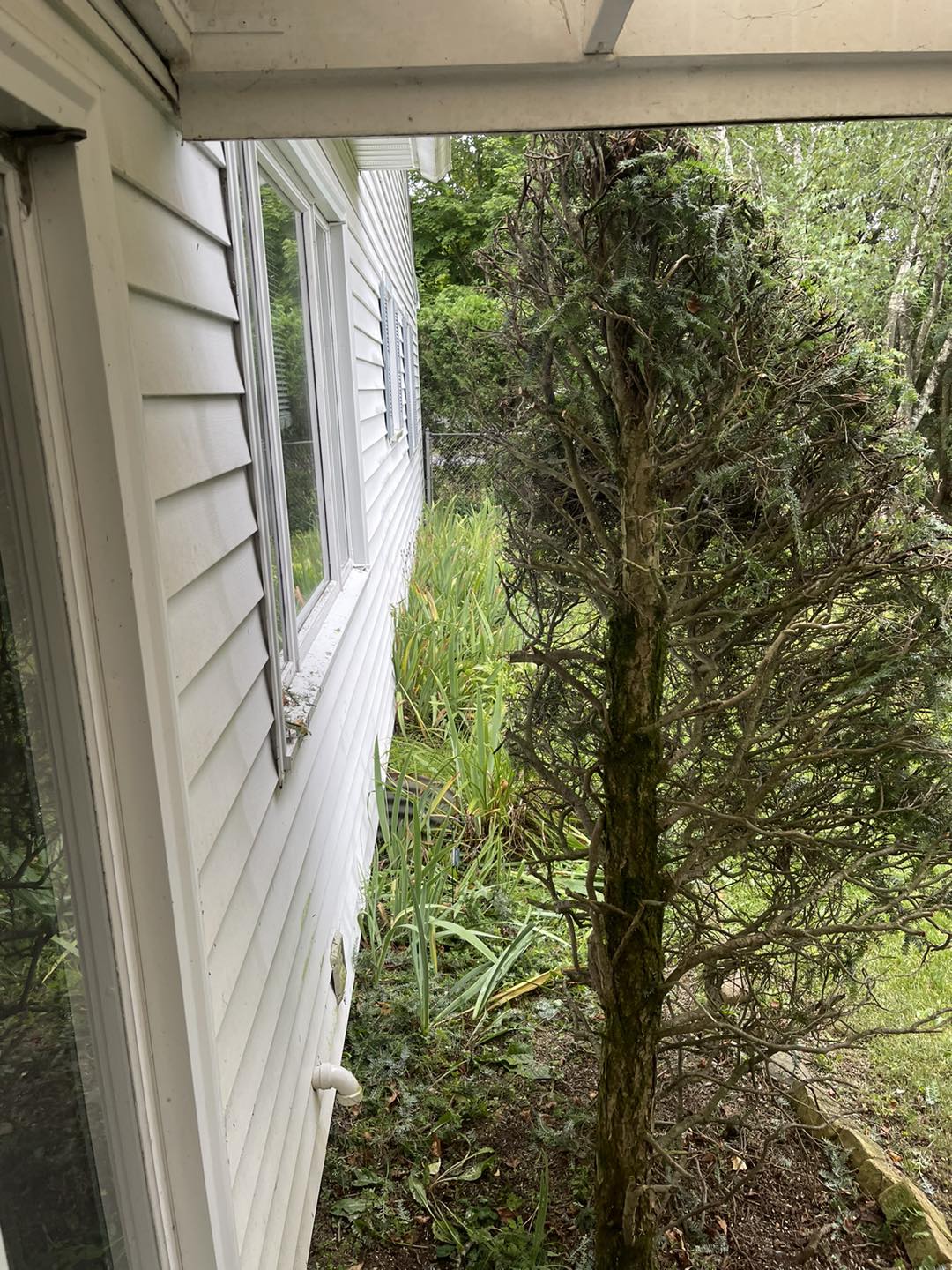
Cutting cedar hedges back into the old wood.
Cedar has a strange biology that most homeowners don’t know about. The green growth you see on the outside of the hedge — that’s where all the photosynthesis happens, where new growth comes from, where the plant lives. Underneath that green outer layer, there’s a thick layer of older brown wood that looks dead but is actually structural.
Here’s the catch. Cedar does not regenerate from old wood.
If you cut a cedar hedge back so far that you expose that brown interior, you’ve created a permanent brown patch. The plant cannot push new green growth out of that bare wood. It stays brown forever. Sometimes for years. I’ve seen homeowners try to “fix” a brown patch by feeding the hedge, watering it more, even spraying it green. Nothing works. Once you cut into old cedar wood, the damage is done.
This is why a cedar hedge that’s been ignored for three years can’t just be cut back to a reasonable size in one pass. We have to renovate it slowly, taking off no more than a third of the green growth each year, letting the plant push new growth, and then cutting again the following year. It’s a two or three year project to bring an overgrown cedar hedge back into shape without permanent damage.
If a contractor tells you they can take your 8-foot overgrown hedge down to 4 feet in one trim, find a different contractor. They either don’t understand cedar or they don’t care about your property. Either way, you don’t want them touching your hedge.
What Happens When You Let a Hedge Go Too Long
I get this call constantly. “Ryan, I haven’t trimmed my hedge in three years, can you just clean it up?”
The honest answer is “yes, but it’s not going to be the conversation you want to have.”
Here’s what happens when a Sudbury hedge goes untrimmed for too long:
The outer growth gets bigger and bigger, while the interior — which is no longer getting any sunlight — slowly dies. So you end up with this thick green shell on the outside and a hollow brown interior underneath. The hedge looks “full” from a distance but is structurally compromised.
Then snow load becomes a problem. Heavy Sudbury snow piling on top of a tall, top-heavy hedge causes branches to split. You’ll see your hedge bending sideways or breaking apart in spots after a heavy snowstorm.
Then there’s the renovation cost. Bringing an overgrown hedge back into shape is more expensive than maintaining it would have been. We’re talking $400 to $600+ for the kind of work a $150 annual trim would have prevented.
And worst case? Permanent dead patches where we have to cut deep enough to expose old wood. Those don’t come back.
The fix is simple if you start now: get on a regular trimming schedule before the hedge gets out of control. Two trims a year, every year. That’s all most Sudbury hedges need to stay healthy and look good for decades.
DIY vs Professional Hedge Trimming — Honest Talk
Can you trim your own hedge? Yes, absolutely. Should you? That depends on a few things.
If your hedge is small — under 5 feet tall and not too wide — and you’ve kept up with it, DIY is totally reasonable. A decent battery-powered hedge trimmer runs around $200, and you can do a clean trim on a small hedge in under an hour.
Here’s where it gets tricky in Sudbury:
Tall hedges (over 6 feet). You need a ladder or extension trimmer, and you’re working with the hedge at eye level or above. The risk of an uneven cut goes way up, and so does the safety risk. I’ve seen plenty of DIY tall-hedge jobs where one side is wavy and the top is angled the wrong way — and you can’t unsee it once it’s done.
Renovation cuts. If your hedge has been ignored and needs more than light maintenance, this is a job for someone who understands the species. A homeowner cutting into cedar old wood is the most common cause of permanent hedge damage I see across Sudbury.
Large properties. A 50-foot run of hedge is a different job than a 10-foot run. Volume matters. By the time you’ve rented equipment, hauled away clippings, and spent your whole Saturday on it, the math often works out in favour of just hiring it done.
What I tell people is this: if your hedge is small, healthy, and you enjoy yard work, do it yourself. If it’s tall, overgrown, or you’ve never trimmed it before, get a quote. The cost of a professional trim is almost always cheaper than fixing a botched DIY job.
What Hedge Trimming Actually Costs in Greater Sudbury (2026 Pricing)
I covered this in detail in my honest pricing guide for Sudbury lawn care, but let me break out the hedge numbers specifically here.
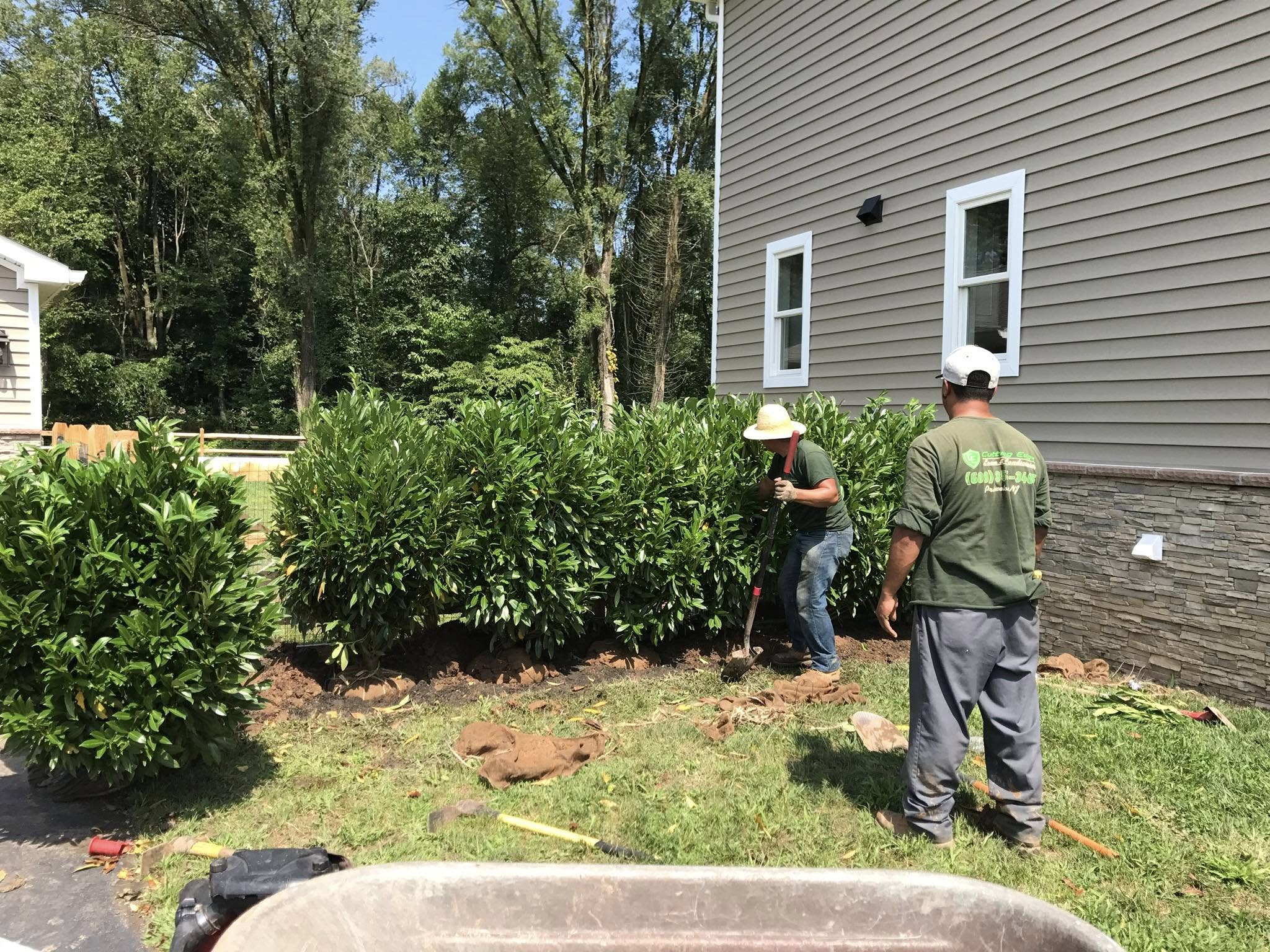
For a typical Sudbury residential property, hedge trimming pricing breaks down like this:
- Basic trim on a small, well-kept hedge: starting at $99
- Average residential hedge job: $150 to $250
- Overgrown or large hedge work: $300 and up
- Multi-year renovation projects: custom quote, usually $400 to $600+ per visit
What drives the price up:
- Hedge height (anything over 6 feet adds time and equipment)
- Total length of hedge (50 feet costs more than 10 feet)
- Condition (overgrown hedges take longer and require more careful work)
- Access (hedges in tight spaces or with limited equipment access)
- Disposal (we haul all clippings — included in our pricing)
One thing I always tell homeowners: be careful of quotes that are way below average. Hedge trimming is hard physical work, and the disposal alone takes real time. A $50 quote for a job that should be $200 usually means the contractor is going to rush it, leave clippings behind, or cut corners on the actual trim. The cheap quote ends up being expensive when you have to call someone else to fix it.
Sudbury-Specific Hedge Issues You Won’t Find in General Guides
There are a few things about hedges in Sudbury specifically that don’t come up in generic landscaping advice. This is the stuff I’ve learned from five years of working on properties in this region.
Winter burn on cedars. Sudbury winters are brutal on cedar hedges. Cold dry winds combined with bright sun on a snow-covered ground reflect light back onto the hedge, drying out the foliage at a time when the roots can’t pull water from frozen soil. The result is the brown tips you see across half of Sudbury’s cedar hedges every April. Most of this damage is cosmetic and will grow out by July, but heavy winter burn can kill entire sections.
The fix isn’t a spring trim — that just removes damaged foliage that was going to push new growth anyway. The real protection is fall preparation: deep watering through October before the ground freezes, and on exposed properties, a burlap wrap on the windward side of the hedge for the first two winters after planting.
Snow load damage. Heavy Sudbury snow piles on the top of tall hedges and splits them apart. I see this every spring — hedges that were upright in November are bent over or split by April. The prevention is a properly shaped hedge: wider at the bottom than the top, so snow slides off instead of piling on. A flat-topped hedge is a snow magnet. A slightly tapered hedge sheds it.
Salt damage on roadside hedges. Hedges close to driveways and streets take a beating from winter road salt. The salt spray dries out the foliage and the runoff poisons the soil at the base of the hedge. If your hedge is within 10 feet of a salted surface, it needs extra watering in spring to flush the salt out of the soil, and the side facing the road will always need more attention.
Heaving from frost. Younger hedges sometimes get pushed sideways by frost heave during freeze-thaw cycles. If you see your hedge leaning more this spring than last fall, that’s usually the cause. Push them back into position in May while the ground is still soft and stake them if needed for a season.
National hedge care advice doesn’t cover any of this. These are Sudbury-specific problems that come from working on properties in this region year after year.
Book Your Hedge Trim Before It’s a Renovation Project
Here’s the bottom line. Regular hedge trimming is one of the cheapest, easiest ways to maintain your property value in Sudbury. Skip it for three years and you’ve got a $500 renovation problem plus the risk of permanent damage. Stay on a two-trim-a-year schedule and your hedge will look sharp for decades.
If your hedge is small and you’ve kept up with it, you can probably handle the trims yourself. If it’s tall, overgrown, or you’ve never trimmed it before — call before you cut. The wrong cut on a cedar hedge isn’t fixable.
Cutting Edge Lawn & Landscaping handles hedge trimming across all of Greater Sudbury — Garson, Val Caron, Hanmer, Lively, Chelmsford, Azilda, and Capreol. We work on cedar, lilac, caragana, and most common Sudbury hedge species. Licensed, insured, BBB A+ rated.
Call 705-507-6787 for a free on-site quote, or send your property details through the Get A Free Quote page. Late May and June book up fast for hedge work, so sooner is better than later this season.
Hope this helped clear things up. If you’ve got a hedge question I didn’t answer here, just call. Happy to walk through it with you.
Helpful Related Reading for Sudbury Homeowners
- How Much Does Lawn Care Actually Cost in Sudbury? (2026 Honest Pricing Guide)
- What to Ask Before You Hire a Lawn Care Company in Sudbury
- How to Water Your Sudbury Lawn Through the Summer
- The One Thing Sudbury Homeowners Do in May That Kills Their Lawn by July
Frequently Asked Questions
When is the best time to trim hedges in Sudbury?
The main hedge trim in Sudbury should happen late May to early June, after the spring growth flush has finished. A second trim in mid to late July keeps the hedge tidy through summer. Avoid trimming after mid-September, as late-season cuts force new soft growth that won’t survive Sudbury winter.
How often should I trim a cedar hedge in Sudbury?
Twice a year for most cedar hedges — once in late May or early June, and a lighter touch-up in mid to late July. Hedges used as tight privacy barriers may benefit from a third trim in early September. Skipping years between trims leads to overgrowth, permanent damage, and much higher renovation costs.
What is the biggest mistake people make trimming cedar hedges?
Cutting back into the old brown wood. Cedar does not regenerate from old wood — once you cut past the green outer growth and expose the brown interior, those areas stay brown permanently. This is the single most common cause of permanent hedge damage on Sudbury properties.
How much does hedge trimming cost in Greater Sudbury?
Basic trims on small well-maintained hedges start at $99. Average residential hedge jobs in Sudbury run $150 to $250. Overgrown or large hedge work starts at $300 and goes up from there. Multi-year renovation projects on neglected hedges typically run $400 to $600+ per visit.
Can I trim my own hedge or should I hire someone?
DIY hedge trimming works well for small hedges under 5 feet that have been regularly maintained. Hire a professional for tall hedges over 6 feet, overgrown hedges that need renovation, large hedge runs over 30 feet, or any cedar hedge where you’re not confident about how deep to cut. The risk of permanent cedar damage from a bad DIY cut is significant.
Ryan Lingenfelter is the owner of Cutting Edge Lawn & Landscaping in Garson, Ontario. Since 2020, his crew has provided full lawn care services across Greater Sudbury — Garson, Val Caron, Hanmer, Lively, Chelmsford, Azilda, and Capreol — including hedge trimming for cedar, lilac, caragana, and other common Sudbury hedge species. Licensed, insured, BBB A+ rated, and ThreeBest Rated for lawn care services in Sudbury.
📞 Phone: 705-507-6787
📍 Service Area: Greater Sudbury, Ontario
🔗 Free Quote: cuttingedgelawn.ca/quote
