
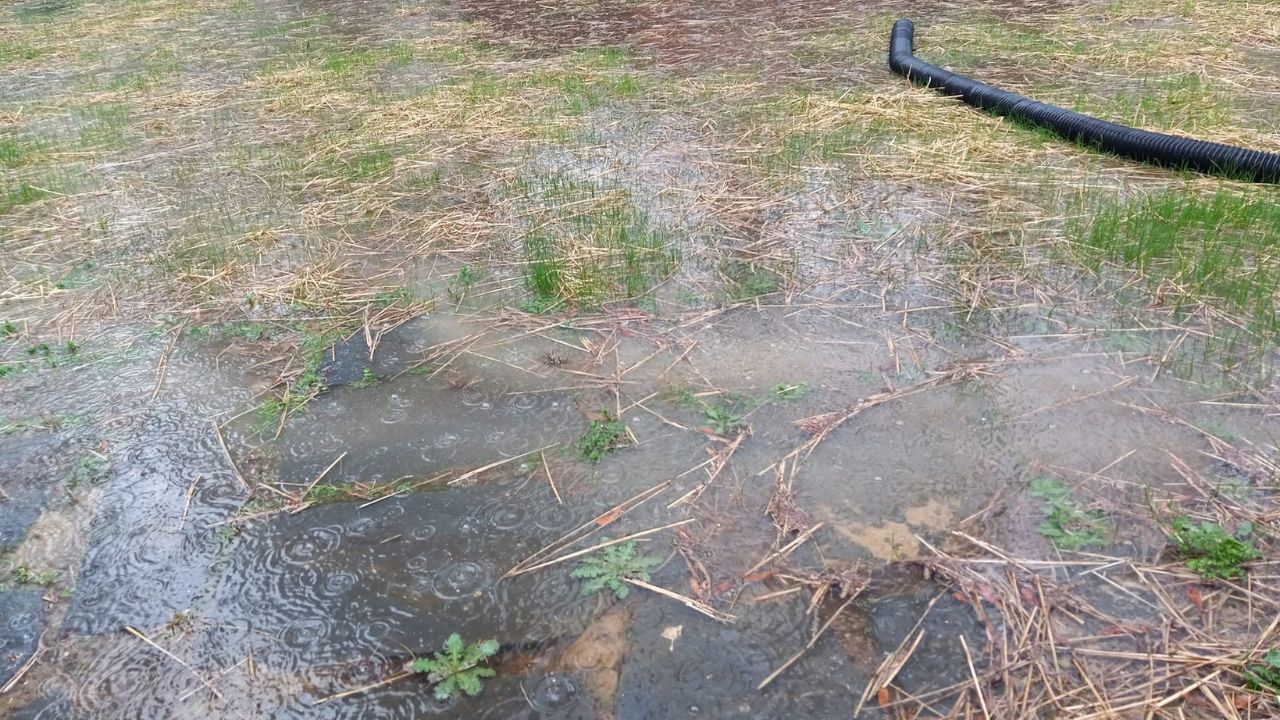
I have a habit that every new client notices eventually, usually on the first property walk. Before I look at the lawn in any detail — before I check mowing height, before I look at the edges, before I walk the bare patches — I look at the neighbour’s downspout. Sometimes both neighbours. Sometimes the downspouts on the client’s own house that point toward the lawn rather than away from it. I look at where they terminate, what the ground around the outlet looks like, and which direction the water flows when it leaves the spout.
People ask me why I do this before I’ve even looked at their lawn properly. The answer is that a misdirected downspout is one of the most common causes of persistent lawn problems in Greater Sudbury, it’s one of the least obvious causes because the source is off the property or on a part of the property the homeowner never thinks about, and it’s the one cause that makes every other intervention fail until it’s addressed. You can aerate, overseed, fertilize, and adjust your watering schedule perfectly, and a neighbour’s downspout that deposits eight hundred litres of water onto your lawn every time it rains will undo all of it in the same section, every season, indefinitely.
Here’s exactly why I check it, what I find, and what the options are when the problem is coming from next door.
Why the Neighbour’s Downspout Is My Business Before I Touch Your Lawn
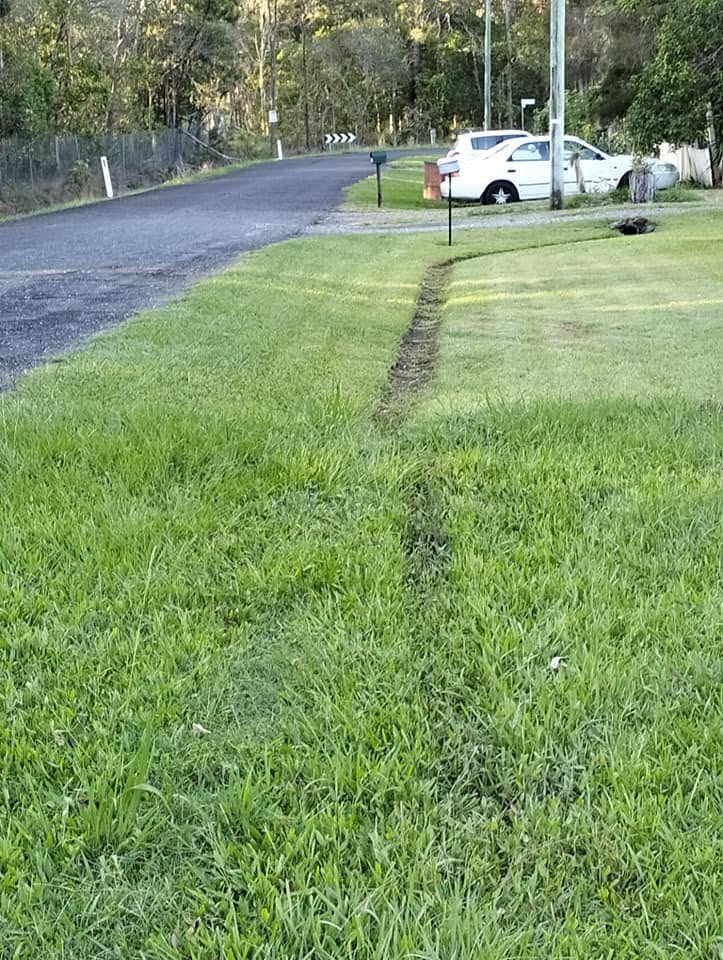
The initial assessment I do on every property before starting any work is built around finding the cause of problems rather than just describing the symptoms. I described the three things I check first on every property in the 300 Sudbury quotes piece — mowing height, edges, and the persistent problem spot. The persistent problem spot is where the downspout check becomes critical, because a section that keeps failing despite repeated intervention is almost always being driven by something that isn’t on the lawn surface. It’s either underground — shallow bedrock, compaction, drainage — or it’s coming from outside the property boundary, which is exactly what a misdirected neighbour downspout produces.
In Sudbury specifically, the drainage consequences of a misdirected downspout are more severe than in most of Ontario. The thin topsoil over Canadian Shield bedrock that characterises most of Greater Sudbury has limited capacity to absorb rapid water input. When a downspout directs concentrated roof runoff onto a section of lawn with three to five inches of topsoil over bedrock or clay, that section saturates almost immediately during any rain event. The water has nowhere to go — the bedrock below doesn’t absorb it and the soil volume above is too thin to hold it — so it sits at the surface or just below it, creating the oxygen-depleted root conditions that damage grass regardless of everything else being done correctly. I described this soil dynamic in detail in the why Sudbury is different piece. A downspout problem on a southern Ontario deep-soil property is an inconvenience. The same downspout problem on a Sudbury shallow-soil property creates conditions that kill grass and keep killing it until the water source is redirected.
The reason I check the neighbour’s downspout rather than just my client’s is that the problem frequently originates off the property. A downspout on a semi-detached or closely spaced property that terminates at the foundation wall and slopes toward the property line sends its water onto the adjacent lawn. The homeowner on the receiving end has no control over it, didn’t create it, and has often never connected it to the lawn problem they’ve been dealing with for years. Three contractors in, nobody has looked at where the water is actually coming from.
What a Misdirected Downspout Does to a Sudbury Lawn Over Time
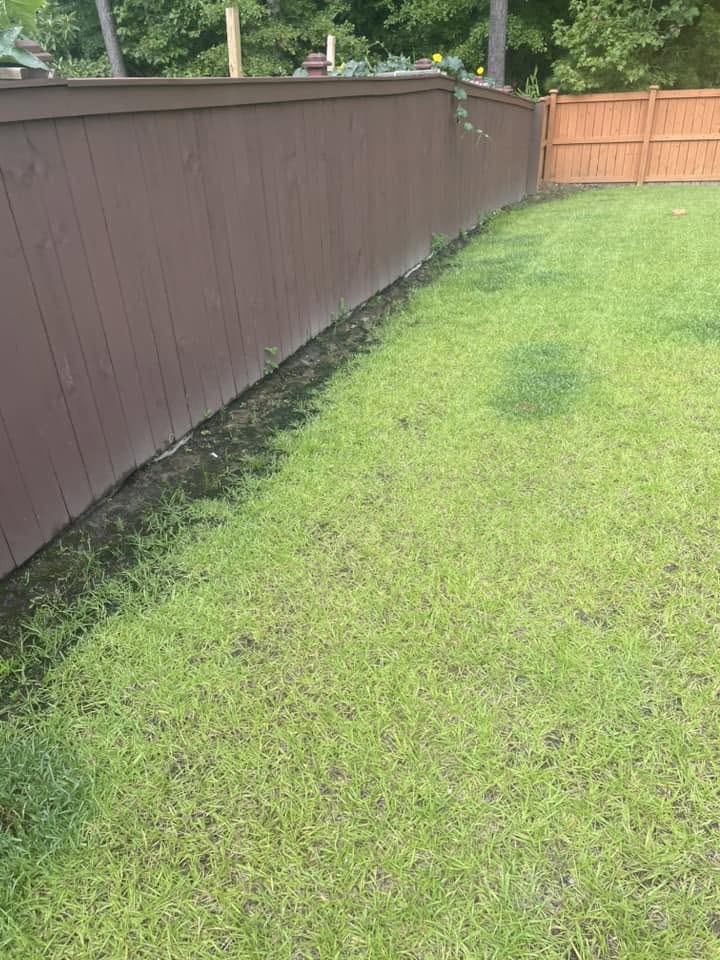
The damage pattern from a misdirected downspout is specific and recognizable once you know what you’re looking at. It almost never affects the entire lawn. It affects a strip or a section — the area where the water consistently deposits — and that section behaves differently from the rest of the lawn in ways that look like a grass problem but are actually a water problem.
In spring, the affected section stays wet longer than the surrounding lawn after snowmelt. The ground in that section is soft and spongy underfoot when the rest of the lawn is firm. This is because the downspout has been concentrating snowmelt runoff from the roof in addition to whatever snowpack accumulated on the ground — the water load in that section through the spring melt is significantly higher than anywhere else on the property.
Through summer, the affected section shows one of two patterns depending on the soil profile underneath. On a property where the soil has enough depth to hold some drainage capacity, the section stays wetter than surrounding areas and develops the pale, thin grass and fungal susceptibility that come with persistent saturation — the same pattern I described in the daily watering piece, except in this case the homeowner isn’t doing the overwatering, the neighbour’s roof is. On a property with very shallow soil over bedrock or clay, the section alternates between saturated after rain and severely dry between rain events, because the thin soil saturates completely and then loses moisture rapidly once the rain stops, with no depth to buffer either extreme.
The result in either case is a section that looks like a persistent grass problem — bare patches, thin growth, colour that doesn’t match the surrounding lawn — and behaves like one, returning the same way every season regardless of what’s done to it. I’ve described this exact pattern in the piece about the lawn a previous contractor missed for three full years. The mechanism was different in that case — shallow bedrock rather than downspout runoff — but the diagnostic principle is identical. A section that keeps failing despite correct treatment is being driven by something that hasn’t been found yet, and finding it requires looking beyond the lawn surface.
The variation between how this plays out on different Sudbury properties — clay-heavy soil holding water differently than thin Shield-derived topsoil — is the same neighbourhood-level variation I described in the Val Caron vs Chelmsford piece. A downspout problem on a Chelmsford property with clay soil produces persistent saturation. The same downspout problem on a Val Caron property with thin soil over bedrock produces rapid saturation followed by extreme drying. Both damage the lawn. The specific damage pattern differs, and the solution needs to account for which soil condition the water is landing on.
The Three Downspout Situations I Find Most Often
After checking downspouts on over three hundred properties across Greater Sudbury, the situations I find fall into three recognizable categories. Each one has a different owner and a different solution.
Situation one: The neighbour’s downspout terminates at the property line
This is the most common situation and the most straightforward to identify. The neighbour’s downspout runs down the side of their house and terminates with a flexible elbow that points directly toward the shared property line, or ends at the foundation and the grade slopes toward the adjacent property. Every rain event sends the neighbour’s roof water straight onto my client’s lawn in the section closest to the shared line.
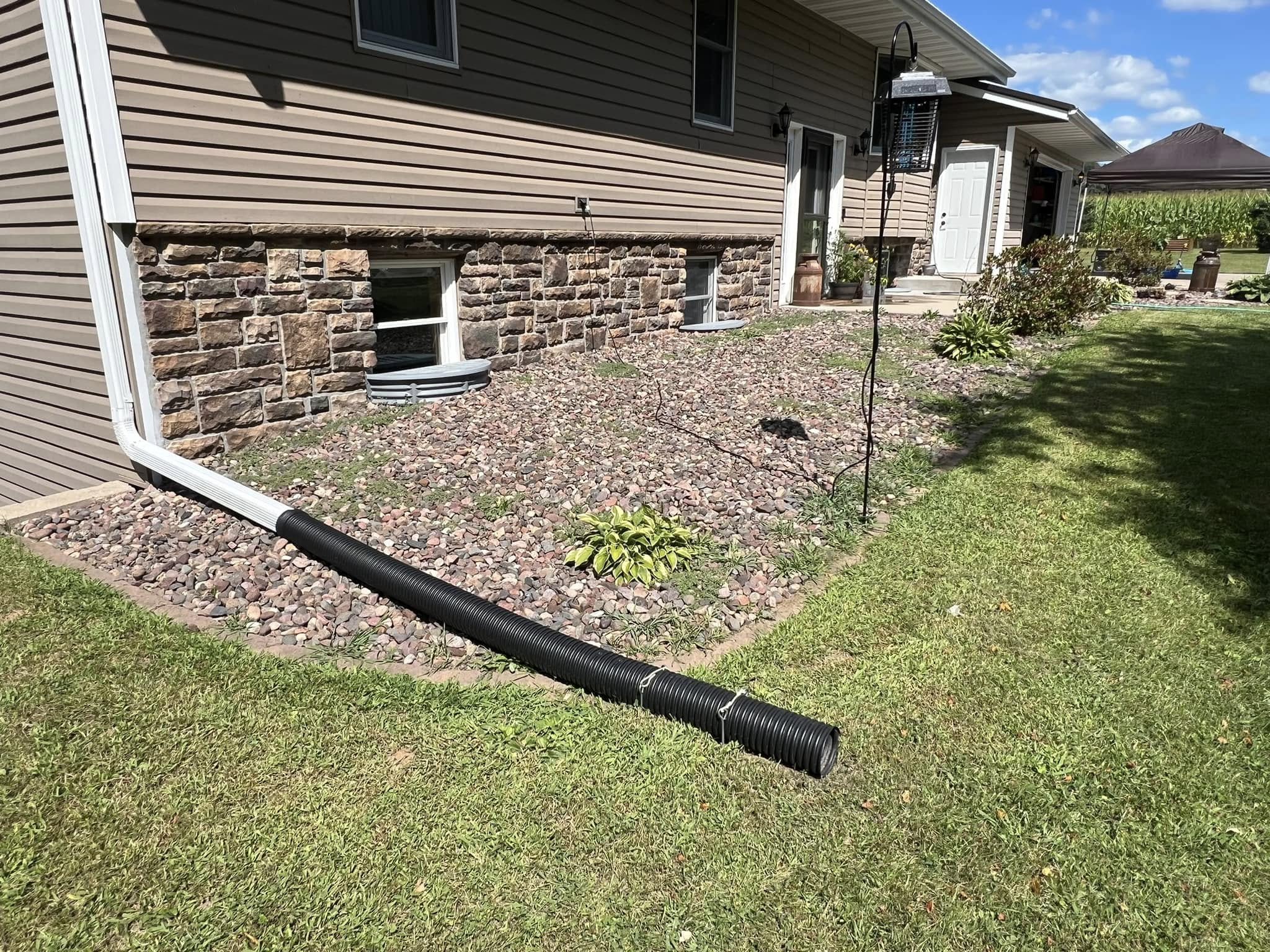
The solution requires the neighbour’s cooperation — a downspout extension that carries the water at least six feet away from the property line, ideally toward the street or the neighbour’s backyard rather than toward the shared boundary. Most neighbours are receptive to this conversation when it’s framed as a shared drainage issue rather than a complaint, particularly if you can show them what the water pattern looks like after a rain event. The extension itself is inexpensive — a few metres of corrugated pipe and an elbow fitting — and the installation is straightforward. The challenge is always the conversation, not the fix.
Situation two: The client’s own downspout is pointed at their lawn
This one is easier to address because it’s entirely within the client’s control and they’re often genuinely surprised to discover it’s been happening. A downspout that terminates at the foundation wall with a short splash block pointing toward the lawn rather than away from it, or a downspout on a corner of the house where the grade naturally slopes toward the main lawn area, can deposit significant water volumes onto the lawn during any rain event without the homeowner ever noticing because they’re not outside watching where the water goes during a storm.
The fix is the same as with the neighbour situation — extend the downspout, redirect the outlet, or in some cases install an underground drain line that carries the water away from the lawn area entirely. On Sudbury properties where the grade is constrained by bedrock or the lot doesn’t have a clear outlet direction, the underground option is sometimes the only one that works, and that’s a more involved project than a simple extension. But it’s a defined project with a defined cost, and once it’s done the persistent wet section that’s been failing every season stops being wet and starts being manageable.
Situation three: A shared drainage channel that neither neighbour owns
The third situation is the most complicated and least common, but I see it regularly on older Sudbury properties where the lots were graded decades ago and the drainage patterns have shifted as tree roots have grown, soil has compacted, and original grading has settled. There’s a channel or low area along the property line that both properties drain toward, and during heavy rain events it holds water in a way that affects both sides of the line. Neither downspout is the primary culprit — the grading of both lots and the combined runoff from both roof surfaces is creating a shared drainage problem.
This situation doesn’t have a simple single-step fix. It usually requires a conversation with both neighbours about shared grading, potentially a French drain or catch basin installation along the property line that handles the combined runoff, and sometimes a municipality conversation if the drainage ultimately needs to connect to a storm system. It’s the situation most likely to require professional assessment beyond lawn care — a grading contractor or drainage specialist who can evaluate the full drainage picture rather than just the section of lawn that’s showing the symptoms.
When I find this situation on a property I’m assessing, I tell the homeowner directly that the lawn problem they’re dealing with is a drainage problem that falls outside the scope of lawn care services and that the right next step is a drainage assessment before any lawn work makes sense. Taking money for lawn work on a property with an unresolved shared drainage problem is taking money for work I know won’t hold. I described this kind of honest scope conversation in the piece about turning down one in ten quote requests — sometimes the most useful thing I can do is tell a homeowner that their problem isn’t a lawn problem before they spend another season trying to treat it like one.
What to Do When the Problem Is Coming From Next Door
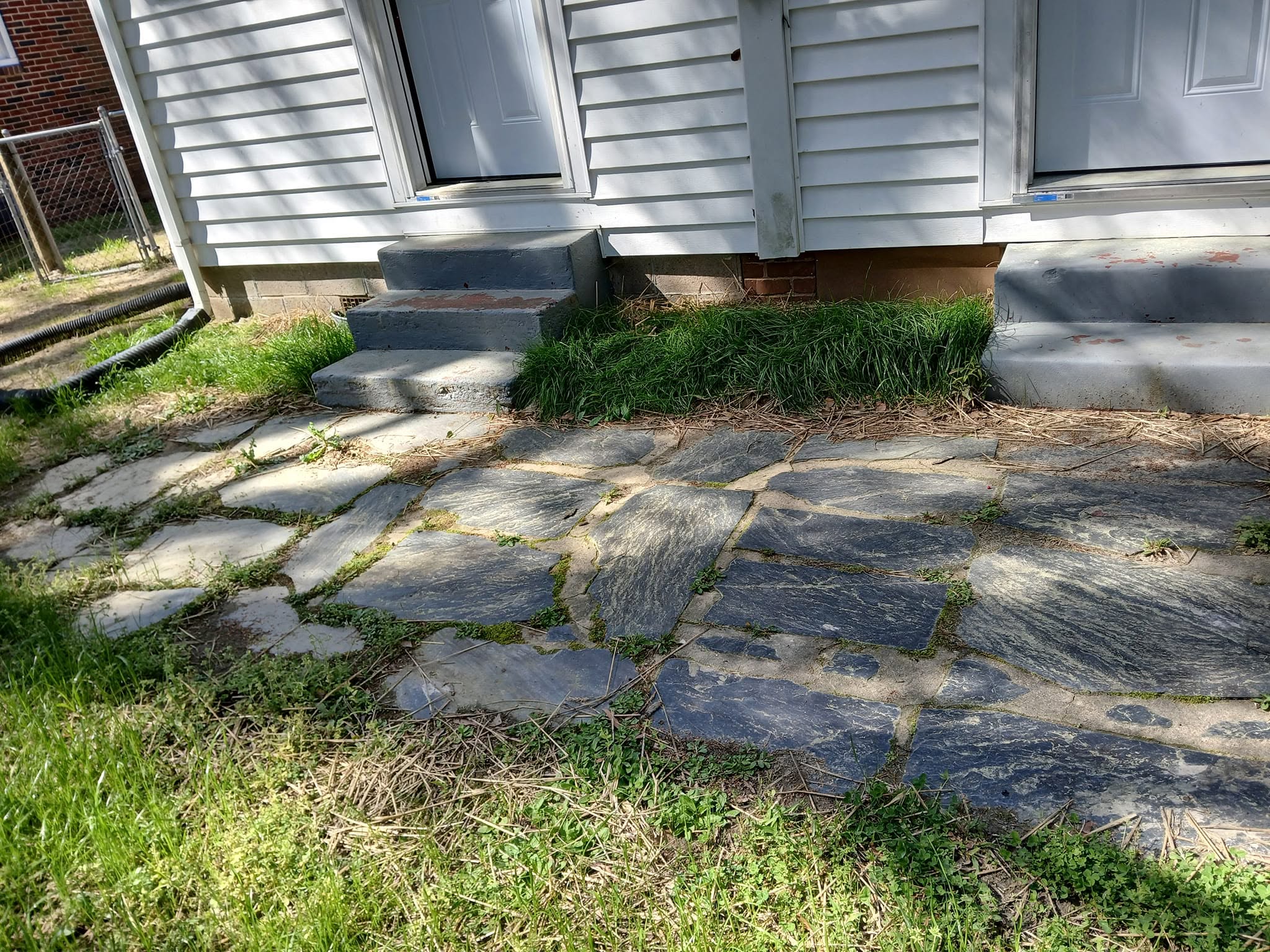
The hardest part of the neighbour downspout situation is not the fix. It’s the conversation. Most people are uncomfortable telling a neighbour that something they’re doing is damaging their lawn, particularly if the neighbour has been in the area longer, particularly if the relationship is cordial and they want to keep it that way, particularly if there’s any uncertainty about whether the downspout is actually the cause.
Here’s the approach I suggest to clients who are facing this conversation for the first time. Start by confirming the connection before raising it with the neighbour — watch what happens to that section of your lawn during the next rain event. If water is visibly flowing from the downspout outlet toward your property line, you have something specific to show rather than an accusation to make. A photograph of water flowing from the neighbour’s outlet toward your property after a normal rain is a much more productive starting point for a conversation than a claim that their downspout is damaging your lawn.
When you raise it with the neighbour, frame it as a shared problem rather than their fault. The water coming off their roof has to go somewhere — they didn’t design the downspout to damage your lawn, it just happens to terminate in a direction that does. Suggesting a fix that resolves the shared problem rather than assigning blame keeps the conversation productive. Most neighbours will cooperate with a simple downspout extension request when it’s framed this way, because it costs them almost nothing and resolves what is, for them, a minor inconvenience in terms of where a few metres of flexible pipe points.
If the neighbour is unresponsive or the conversation doesn’t lead to a fix, the practical alternative is to address the drainage on your own property rather than waiting for the source to be corrected. A French drain or swale along the property line that intercepts the neighbour’s runoff before it reaches your lawn area, combined with a redirect toward the street or a lower section of your own property, keeps the water from sitting on the problem section regardless of where the neighbour’s spout is pointed. It’s more work and more cost than a downspout extension, but it’s entirely within your control and it permanently resolves the problem on your side of the line.
Once the drainage source is addressed — whether through the neighbour’s cooperation or through your own property intervention — the lawn section that was failing needs the same recovery approach as any section that’s been under persistent stress. Aeration first to relieve the compaction that waterlogging produces, then overseeding into the open channels, then a corrected watering schedule. I described the full sequencing of that recovery in the 4 services in one week piece — the order matters as much on a drainage-damage recovery as on any other multi-service job, and skipping the aeration step before overseeding on a waterlogged section is the most common reason the recovery seeding fails to hold.
The difference between a Sudbury lawn that keeps failing in the same section every season and one that holds is almost always something that hasn’t been found yet. Sometimes it’s bedrock. Sometimes it’s compaction. Sometimes it’s a neighbour’s downspout that nobody thought to check. The finding-it step is the one that makes every subsequent intervention actually work. If you have a persistent section that’s outlasted multiple rounds of treatment and you’re not sure what’s driving it, that’s the conversation worth having before the next round of seed goes down. For everything we offer, the complete 2026 service breakdown is the right starting point.
Call or text: 705-507-6787
Or fill out the free quote form on the site.
We cover Garson, Val Caron, Hanmer, Lively, Chelmsford, Azilda, Capreol, and surrounding areas.
— Ryan Lingenfelter
Cutting Edge Lawn & Landscaping
Garson, Ontario
705-507-6787
