
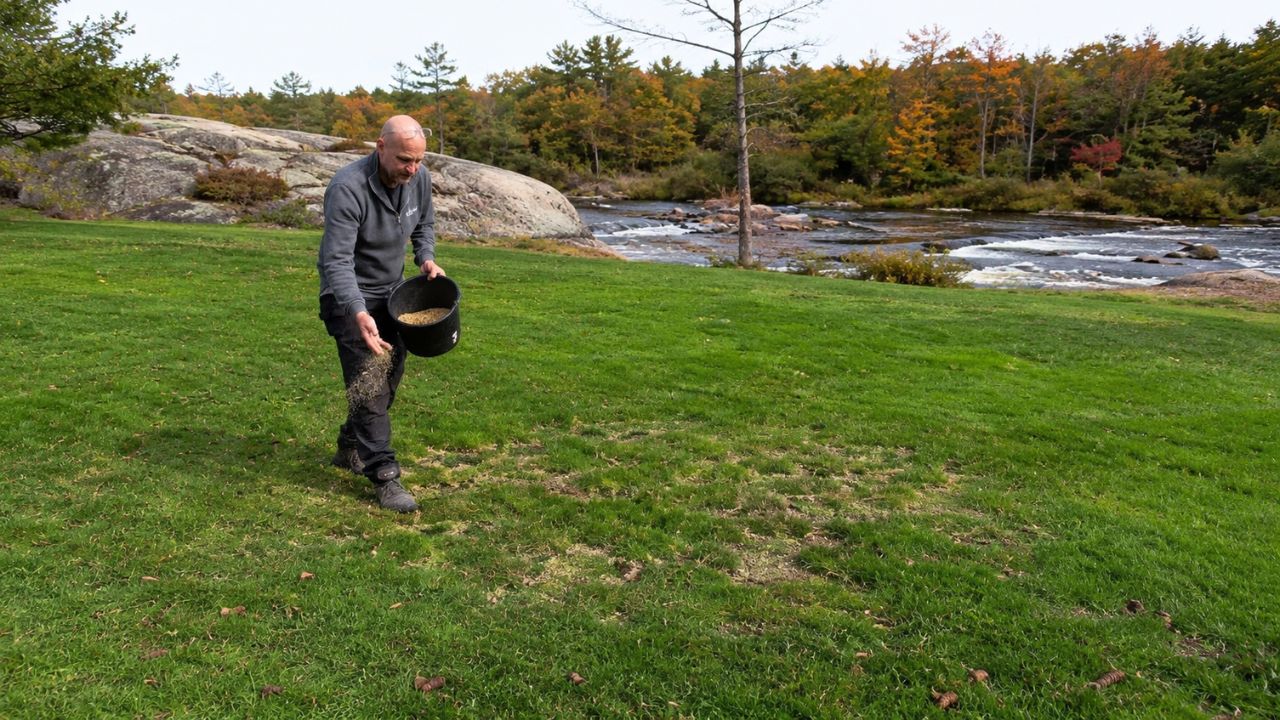
Walk into any hardware store or garden centre in Sudbury and you’ll find a wall of grass seed. Bags with pictures of thick green lawns, marketing terms like “fast germinating” and “all-purpose” and “sun and shade mix.” Most of it will grow. Some of it will grow well. And a surprising amount of it is simply not the right choice for what we deal with here in Greater Sudbury — our winters, our soil, our Canadian Shield conditions.
I’ve overseeded a lot of lawns across Garson, Hanmer, Val Caron, Chelmsford, and the rest of Greater Sudbury. I’ve seen what holds up and what doesn’t. And I’ve had enough conversations with homeowners who bought the wrong seed — put it down, got decent germination, watched it thin out by August or die back over winter — to know that this question is worth answering properly.
Here’s what I actually recommend, and why.
Why Sudbury Is Different — And Why Generic Seed Advice Doesn’t Apply Here

Most grass seed advice — on YouTube, in gardening blogs, on the back of seed bags — is written for southern Ontario or the US Midwest. Milder winters, longer growing seasons, deeper topsoil, less acidic conditions. That’s not what we have here.
Sudbury sits on the Canadian Shield. Our soil is naturally more acidic. Our topsoil is often shallow — sometimes very shallow, especially on properties where construction stripped it during development. Our winters are long and hard, with significant snow load, repeated freeze-thaw cycles, and a spring that can arrive late and leave fast. And our growing season is shorter than most of Ontario — you’re working with roughly May through October, and not all of that is ideal growing conditions.
As I’ve written before, Sudbury is genuinely one of the harder places in Ontario to maintain a lawn. That doesn’t mean you can’t have a great lawn here — plenty of properties across Greater Sudbury do. But it means the seed you choose needs to be matched to what we’re actually dealing with, not to what works in Mississauga.
Grass that establishes well in milder conditions but isn’t cold-hardy will thin out significantly over our winters. Grass that needs deep, rich topsoil won’t perform on Shield-influenced properties with shallow, acidic soil. Getting the variety right is the foundation of everything else.
The Varieties That Actually Work in Sudbury

There are three grass types I consistently recommend for Sudbury properties, and one I tell people to be careful with. Here’s my honest breakdown of each.
Creeping Red Fescue — My Most Recommended for Sudbury. This is the variety I reach for most often when overseeding Sudbury properties, and for good reason. Creeping red fescue is cold-hardy, tolerates acidic soil, handles shade better than almost any other cool-season grass, and establishes well in our shorter growing season. It doesn’t need the deep, rich topsoil that other varieties demand — which makes it well-suited to the Shield-influenced, sometimes shallow soils that are common across Greater Sudbury.
It’s particularly valuable for the shaded sections of Sudbury yards — under mature trees, along north-facing fence lines — where other grasses consistently thin out. If you have a shaded corner that won’t grow grass, creeping red fescue is your best option before you consider alternatives.
The tradeoff: it spreads more slowly than some other varieties and doesn’t produce the dense, dark green look that Kentucky bluegrass does. It’s a quieter, more understated grass. But it stays alive through our winters and comes back reliably, which matters more than appearance in Sudbury’s climate.
Hard Fescue — For Difficult Spots and Low-Maintenance Areas. Hard fescue is even more tolerant of poor conditions than creeping red fescue — dry, acidic, low-fertility soil that would struggle other varieties doesn’t faze it. It’s a good choice for areas of the yard that are hard to reach for watering, slopes that dry out quickly, or sections where the topsoil is genuinely thin.
It’s not the variety to use if you want a lush, manicured look across the whole lawn. But for problem areas and difficult spots, it establishes where other grasses won’t.
Kentucky Bluegrass — In the Right Conditions. Kentucky bluegrass produces a genuinely beautiful lawn — dense, deep green, the look most people picture when they imagine a perfect lawn. It’s in a lot of the premium seed mixes you’ll see at garden centres, and it does grow in Sudbury.
The catch is that it’s more demanding. It needs better soil than fescues, more consistent moisture, more fertility. On a property with good topsoil depth and a reliable watering routine, it performs well in Sudbury. On a property with shallow, Shield-influenced soil and limited watering — which describes a lot of Greater Sudbury — it thins out under summer stress and doesn’t winter as reliably as the fescues.
I’ll include Kentucky bluegrass in a seed mix for Sudbury properties that have the right conditions for it. I won’t recommend a pure Kentucky bluegrass mix for a property that can’t support it — it’s setting up for disappointment.
Be Careful With: Perennial Ryegrass-Heavy Mixes. Perennial ryegrass germinates fast — faster than almost anything else — which is why it shows up in “quick fix” and “emergency lawn repair” seed products. It looks good initially. The problem is that it’s not particularly winter-hardy in Sudbury, and a mix that’s heavy in perennial ryegrass will look good in the fall of the year you plant it and thin significantly the following spring.
Use it sparingly as part of a mix if you want faster visible germination, but don’t rely on it as your primary component in Sudbury’s climate.
What to Look for on the Bag — And What to Ignore

When you’re standing in the garden centre looking at seed bags, here’s how to cut through the marketing.
Read the analysis tag — not the front of the bag. The front of any seed bag is marketing. The analysis tag — usually on the back or side — is the actual information you need. Look at the percentages of each grass type. You want to see creeping red fescue, hard fescue, or fine fescue as the primary components for most Sudbury properties. If Kentucky bluegrass is the primary component and it’s going onto a property with thin soil and no reliable watering, think twice.
“Germination rate” vs “establishment.” A high germination rate means the seed sprouts quickly. That’s not the same as the grass establishing and surviving. Perennial ryegrass has an excellent germination rate and mediocre establishment in Sudbury winters. Don’t confuse fast with lasting.
“Sun and shade mix” means something. If a significant portion of your lawn is shaded, make sure the seed you’re buying has meaningful shade-tolerant varieties — primarily fescues. A mix that’s 70 percent Kentucky bluegrass and labeled “sun and shade” because it has 30 percent fescue isn’t going to perform well in genuinely shaded areas.
Buy quality seed. This is not the place to save money. The difference in price between a mid-range seed mix and a quality one is usually $15 to $30 per bag. The difference in results over two or three seasons is significant. Cheap seed often has higher weed seed content, lower germination rates, and inferior variety selection. I’ve seen homeowners spend $500 on labour and soil prep and then undermine the whole investment with $20 bargain seed. Don’t do that.
When and How to Put Seed Down in Sudbury
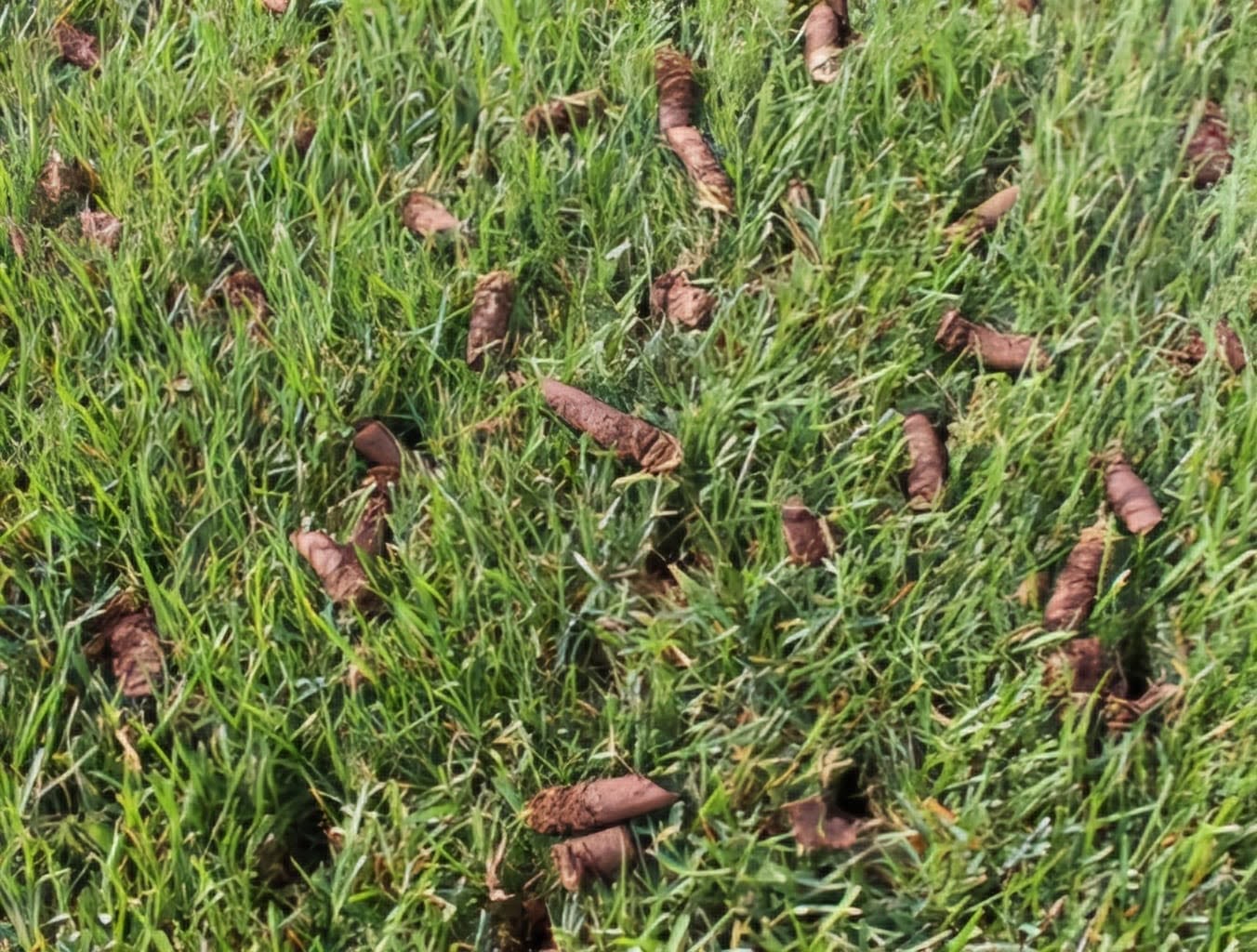
Choosing the right seed is only half the equation. Putting it down in the right conditions matters just as much.
The best timing in Sudbury: late May after aeration, or early September. Spring overseeding after core aeration gives seed direct soil contact and the full growing season ahead to establish. Early September is actually excellent for overseeding in our climate — the soil is still warm from summer, air temperatures are cooler which reduces stress on new seedlings, and fall rains help with consistent moisture. Both windows work well. Midsummer overseeding is harder because of heat stress on new seedlings.
Soil contact is everything. Seed sitting on top of thatch or compacted surface soil won’t establish well regardless of variety. This is why I always recommend overseeding right after aeration — the holes give seed direct contact with the soil underneath. Without that contact, you’ll get patchy germination and poor establishment.
Consistent moisture for the first two to three weeks. New seed needs to stay moist until germination and early establishment. In Sudbury’s summer, this can mean watering lightly once or twice a day during dry stretches. After germination, back off gradually and shift to the deep, infrequent watering routine that builds root depth.
Don’t mow until the new grass reaches three inches. This is one of the most common mistakes after overseeding. New grass seedlings are fragile — mowing too early tears them out before they’ve properly rooted. Wait until the new growth hits at least three inches before the first mow, and keep that first cut high.
If you follow the full approach — right seed variety for your specific conditions, aeration first, proper timing, consistent early moisture — Sudbury lawns respond well. The full seasonal lawn calendar gives you the complete picture of when each of these steps fits into the year.
If you want someone to take a look at your specific property and tell you what seed mix would work best — or to handle the overseeding as part of a spring or fall program — reach out. That assessment is always free.
— Ryan Lingenfelter
Cutting Edge Lawn & Landscaping, Garson, Ontario
📞 705-507-6787
Serving all of Greater Sudbury — Garson, Hanmer, Val Caron, Lively, Chelmsford, Azilda, Capreol, and Sudbury proper. We offer core aeration, property cleanup, grass cutting, sod installation, and full lawn maintenance. Free quotes, no pressure.
Get a Free Quote |
Call 705-507-6787
