
If you’ve ever Googled “spring lawn care schedule” and followed what you found, there’s a reasonable chance you’ve been working against your own lawn without knowing it. Almost all of the mainstream lawn care timing advice online — the guides from big box stores, the articles from national lawn care brands, even some of the advice from Ontario-based sources — is calibrated for Southern Ontario’s climate. Toronto. Hamilton. London. The Niagara region.
Greater Sudbury is not those places. The spring here runs on a completely different calendar, and applying the Southern Ontario schedule to a Sudbury lawn often means doing the right things at the wrong time, which can be almost as damaging as not doing them at all.
I’m Ryan Lingenfelter, owner of Cutting Edge Lawn & Landscaping in Garson, Ontario. I’ve been working specifically on Greater Sudbury lawns since 2020. Here’s exactly what’s different about our spring and what the right schedule actually looks like in this region.
The Generic Spring Lawn Care Advice — And Why It Doesn’t Match Our Calendar

Most generic Ontario spring lawn care guides suggest something like this:
Late March to early April: apply pre-emergent weed control and begin fertilizing as the lawn comes out of dormancy. Late April to mid-May: dethatch and aerate. Mid-May onward: overseed thin areas, continue fertilizing.
This schedule assumes a spring that arrives in earnest in late March, with soil temperatures warm enough for meaningful grass root activity by April and solid growing conditions established by early May.
In Greater Sudbury, that timeline is off by roughly four to six weeks. Here’s what our spring actually looks like.
In a typical Sudbury year, meaningful snow is still possible through the last week of April. Frost is reliably possible through the second or third week of May. Soil temperatures — which matter far more than air temperatures for seed germination and root activity — don’t reach the threshold for active cool-season turf growth until the end of May in most years, sometimes into early June depending on that specific year’s conditions.
Applying pre-emergent weed control in late March in Sudbury accomplishes almost nothing because the weeds it’s targeting aren’t germinating yet. Aerating in early April in Sudbury means aerating soil that may still be partially frozen at depth, producing shallow plugs and none of the deep compaction relief the work is supposed to achieve. Overseeding in late April in Sudbury puts seed down onto soil that isn’t consistently warm enough for reliable germination, exposing that seed to cold nights and slow, uneven establishment instead of the strong germination you’d get two to three weeks later.
What Sudbury’s Spring Actually Looks Like — The Real Timeline

Here’s the honest Sudbury spring timeline, based on five years of working in this specific region and the patterns I’ve documented in the notes I’ve kept on every Sudbury lawn I’ve worked on.
Late April to Early May — Cleanup Window, Not Treatment Window
Once the snow has melted and the lawn is accessible, this is the right time for cleanup work: raking snow mould patches, clearing any debris that accumulated over winter, removing leaves that weren’t cleared before snowfall. It’s not the right time for soil intervention because the ground is still too cold and often too wet for meaningful aeration or overseeding.
This is also the right time to walk the property carefully and note what needs attention — but not to act on most of it yet. The assessment I described in the single question I ask every homeowner before touching their lawn happens in this window, so the plan is ready to execute when conditions allow.
Snow mould treatment — raking the affected areas thoroughly — should happen in this window. I’ve covered exactly what to do and what to look for in the full snow mould guide for Sudbury.
Mid to Late May — The Real Action Window
This is when the meaningful spring work happens in Greater Sudbury — typically a two to three week period starting around the third week of May in most years, sometimes the second week in a warm year. Soil temperatures in this window are consistently above 10°C, frost risk is genuinely low, and the lawn is in active growth mode rather than just waking up.
Core aeration in this window produces deep, clean plugs rather than shallow ones — the soil is workable at depth, not still partially frozen or waterlogged from snowmelt. Overseeding immediately after aeration in this window produces strong, reliable germination because soil temperatures support it. Fertilizer applied in this window gets taken up by actively growing roots rather than sitting on cold soil.
This is the window I book solid every year — if you want spring work done at the right time in Sudbury, booking in advance matters because this window is short and demand is concentrated in it.
June — Transition and Observation
By early June, the spring establishment work is done and the lawn is transitioning toward summer conditions. June is when you shift from spring mode to summer mode: mowing at 3 inches consistently, watering deeply rather than shallowly, watching for early signs of summer stress before it peaks in July.
It’s also worth noting that Greater Sudbury’s outdoor watering bylaw activates June 1 — so any heavy watering or establishment work involving new sod or freshly overseeded areas needs to account for that schedule change. I’ve covered the bylaw in detail in the mid-2026 Sudbury lawn care updates, including the new sod exemption that allows more frequent watering during establishment.
The Three Tasks That Are Timed Completely Differently Here

Three specific spring tasks are most significantly affected by the timing difference between Sudbury and Southern Ontario.
Core Aeration
In Southern Ontario, spring aeration can begin in mid-April. In Sudbury, late May is the earliest I’d recommend it in a typical year — and I’d rather wait until the last week of May than rush it two weeks early on soil that isn’t fully workable at depth yet. The outcome difference is meaningful: plugs pulled when the soil is properly workable are two to three inches deep and relieve compaction properly. Plugs pulled on partially frozen or waterlogged spring soil are shallow and inconsistent.
The importance of proper aeration depth on Sudbury’s clay-heavy soil, and why it matters particularly in our region, is covered in detail in what to expect from lawn aeration in Sudbury.
Overseeding
Generic guides suggest overseeding in early to mid-May. In Sudbury, seed put down before soil temperatures are consistently above 10°C germinates slowly and unevenly, sits exposed to cold nights, and often produces thin, patchy establishment compared to seed put down two to three weeks later when conditions actually support it. The difference in germination rate and establishment quality between early May seeding and late May seeding in our climate is significant enough that I wait consistently rather than rushing.
First Fertilizer Application
This is the timing error I see most often on properties that have been following generic advice. Fertilizer applied in late March or early April in Sudbury largely goes to waste — the grass isn’t actively growing and taking up nutrients yet, and the application window for meaningful uptake is weeks away. Worse, fertilizer sitting on cold, wet soil can be lost to runoff before the grass is able to use it.
The right timing for the first spring fertilizer application in Greater Sudbury is coincident with the aeration and overseeding work — late May — when the grass is actively growing and can immediately take advantage of the nutrients. Applied at that point, through the holes left by aeration, it’s the most efficient fertilizer application timing of the year.
What Happens When You Follow the Wrong Schedule
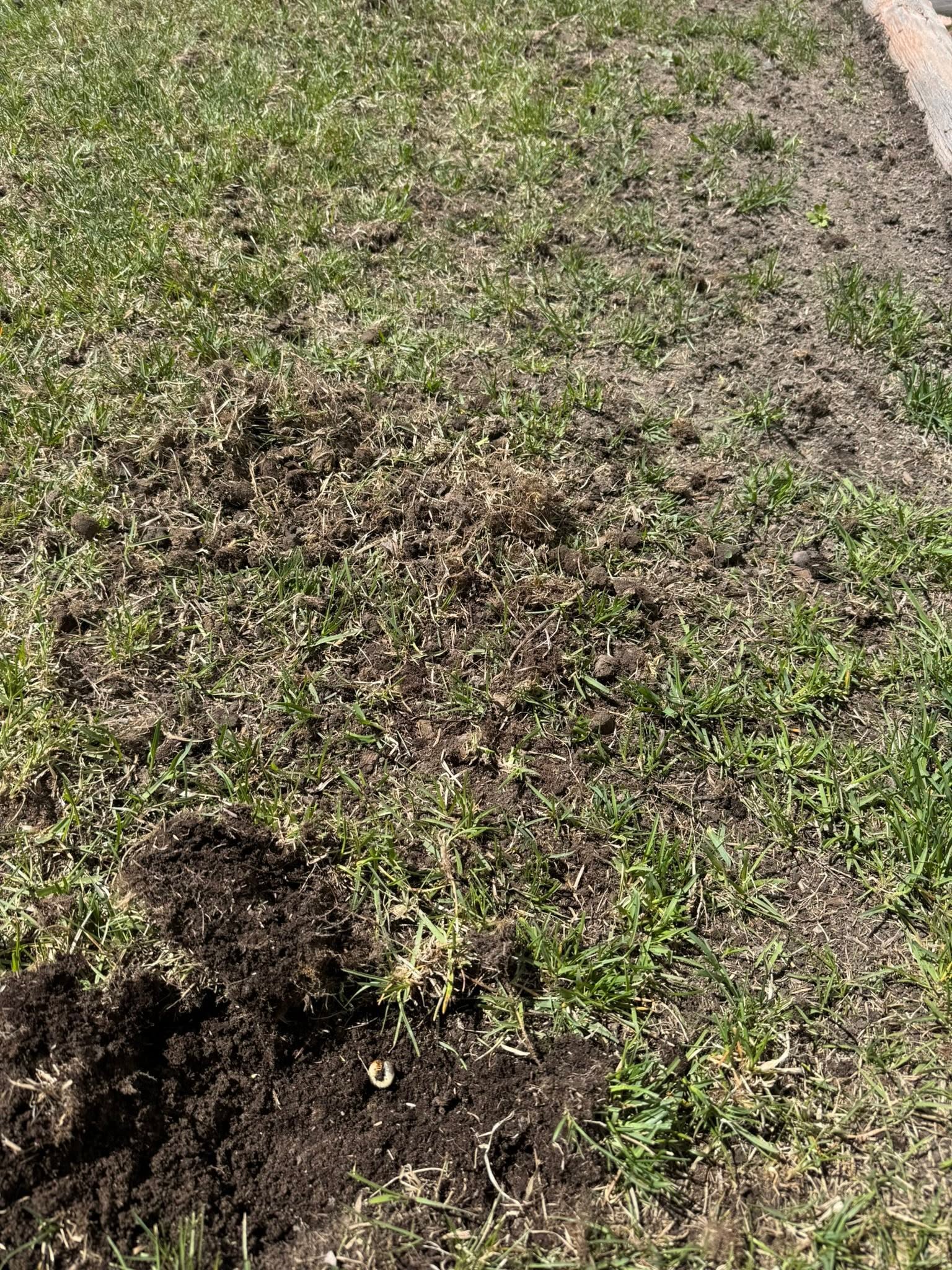
The consequences of following a Southern Ontario schedule in Sudbury are usually subtle enough that homeowners don’t directly connect them to timing errors — which is part of why this keeps happening.
Early aeration on partially frozen or waterlogged soil produces shallow plugs that don’t meaningfully relieve deep compaction. The homeowner checks “aeration” off their spring list, the compaction issue doesn’t actually improve, and when the lawn struggles in summer they don’t connect it to an aeration job done six weeks earlier that looked fine on the surface but didn’t achieve what it needed to achieve at depth.
Early overseeding produces thin, patchy germination. The homeowner puts seed down in late April, sees some germination but not as much as expected, adds more seed in May, and ends up with an uneven lawn they can’t explain — not realizing that the first application would have performed much better if it had gone down three weeks later when soil temperatures actually supported it.
Early fertilizer runs off or goes unused. The lawn doesn’t get the spring boost the homeowner was trying to give it, and by the time the grass is actively growing enough to benefit, the fertilizer is long gone from the soil surface.
The cumulative effect of following the wrong seasonal schedule is a lawn that’s always a step behind where it could be — not dramatically failing, just never quite performing as well as the same effort applied at the right time would produce.
The Adjusted Sudbury Spring Schedule — The Short Version
Here’s the practical translation of everything above into a simple schedule you can actually follow in Greater Sudbury:
- Late April to early May: Cleanup only. Rake snow mould. Clear debris. Walk the property and note what needs attention. No soil intervention yet.
- Mid to late May: Core aeration. Overseeding immediately after. Starter fertilizer applied same day. This is the window — don’t rush it and don’t miss it.
- Early June onwards: Switch to summer mode. Mow at 3 inches. Water deeply and infrequently on bylaw-permitted days. Monitor for summer stress beginning in late June.
- Fall (late August to mid-October): Second aeration window — arguably more impactful than spring on Sudbury clay. Overseeding. Winter preparation. Full sequence in the October winter preparation checklist.
Want to Make Sure the Timing Is Right This Season?
If you want spring work done at the right time for Sudbury’s actual climate — not a Southern Ontario schedule applied four to six weeks too early — reach out now to get on the late-May schedule before it fills. This window books up faster than most people expect.
📞 Call or text me: 705-507-6787
Or fill out the free quote form here — I get back to everyone same day.
— Ryan Lingenfelter
Owner, Cutting Edge Lawn & Landscaping
Garson, Ontario
Related Articles
- Why I Keep Notes on Every Sudbury Lawn I Work On — And What 5 Years Has Taught Me
- The One Question I Ask Every Sudbury Homeowner Before I Touch Their Lawn
- Snow Mould in Sudbury — What It Is and What to Do About It
- Lawn Aeration Near Me in Sudbury — Cost, What to Expect, and What to Ask
- Sudbury Lawn Care News — Mid-2026 Updates Every Homeowner Should Know
