

By Ryan Lingenfelter · Cutting Edge Lawn & Landscaping, Garson, Ontario · June 2026
Most homeowners in Greater Sudbury know there’s a watering schedule in summer. Fewer know about the phosphorus fertilizer ban. Almost none are aware of the grass height bylaw — until they receive a notice.
These aren’t obscure regulations. They’re active bylaws that apply to every residential property in Greater Sudbury, enforced by bylaw officers, with real fines for violations. I manage properties subject to all of them every week. Here’s a plain-language breakdown of what’s in effect right now, what the rules actually say, and what they mean practically for how you care for your lawn this season.
The watering schedule — what’s in effect right now and what the fines are
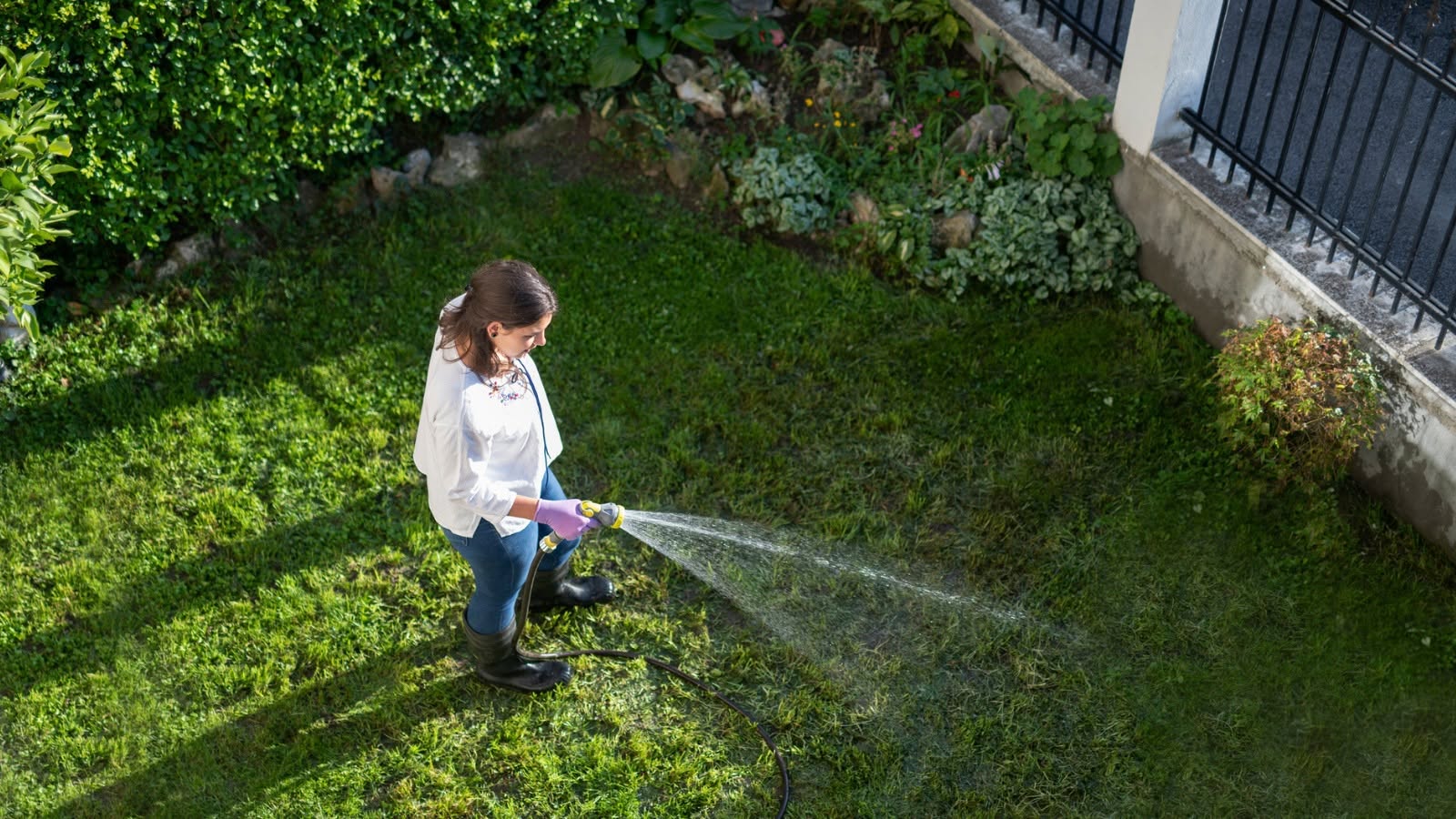
Greater Sudbury’s outdoor watering bylaw runs from June 1 through September 30 every year. It’s been in place for years but the violation notices pick up every summer because homeowners either forget it resets on June 1 or have automated systems running on last year’s settings.
The rule is straightforward. Odd-numbered addresses water on odd-numbered dates. Even-numbered addresses water on even-numbered dates. The restriction applies around the clock — not just daytime. It covers all outdoor water use including automated irrigation systems, hand watering, and hose-end sprinklers.
The fines are real. A first violation is a $300 ticket. Repeat violations can escalate to charges under the Provincial Offences Act with fines up to $5,000. The city has active bylaw enforcement through summer. The most common violation I hear about from clients is an automated controller that was never updated after last season — it runs on whatever schedule it was left at, regardless of the calendar date, and the homeowner is away at work when it fires.
If you have an automated irrigation system: check the controller today. Confirm it’s set to water only on your permitted days. This takes two minutes. A $300 fine from a controller running on the wrong schedule is entirely avoidable.
Exceptions that matter for lawn care: New sod and new seed installations in May and September are typically allowed more frequent watering for establishment purposes. Outside those months, new plantings fall under the standard odd-even schedule. If you’re planning a sod installation in summer — July or August — the establishment watering requirements are constrained by the bylaw from day one. I covered how this affects sod installation timing in the article on buying sod in Sudbury and in the article on how long sod can stay on a pallet — the watering window matters for when you schedule the installation.
A total outdoor watering ban can be put in place by the city during severe drought conditions, superseding the odd-even schedule entirely. This has happened in previous years during unusually dry summers. If a total ban is issued, it applies to everyone regardless of address.
Working with the bylaw rather than around it: The odd-even schedule is actually compatible with good lawn care practice when you use it correctly. One deep watering session on your permitted day — long enough to wet the soil four to five inches down — is more beneficial for your lawn than light daily watering. The bylaw, by limiting watering frequency, naturally pushes homeowners toward the deep infrequent schedule that produces deeper roots and more drought-resilient grass. I covered why deep infrequent watering produces better results than daily light sessions in the article on the Lively homeowner whose lawn looked worse every September — the same principle applies everywhere in Greater Sudbury.
The phosphorus fertilizer ban — what you can and can’t apply to your lawn in Sudbury
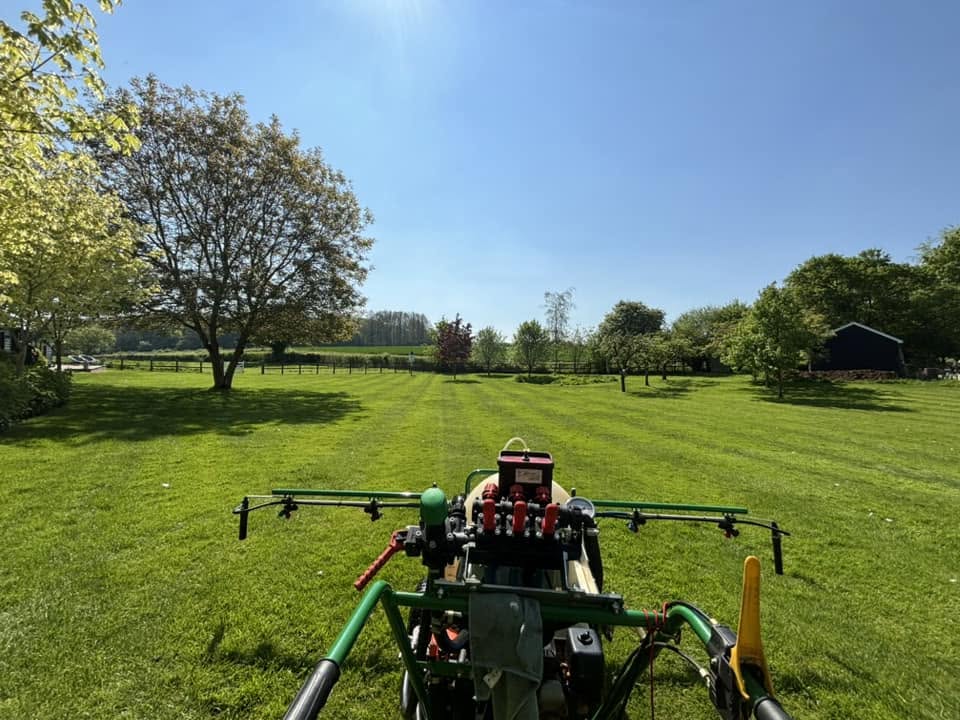
This one surprises more homeowners than any other bylaw I mention. Greater Sudbury has a bylaw that restricts the use of lawn fertilizers containing phosphorus. You may not apply general-use lawn fertilizers containing phosphorus to your lawn. The bylaw was introduced to protect the health of Greater Sudbury’s lakes — too much phosphorus in a water body can be detrimental to the aquatic environment.
Check the middle number of the fertilizer formula — it should read zero. Phosphorus is the middle number in the standard N-P-K formula printed on every fertilizer bag. A fertilizer labelled 20-0-10 is compliant. A fertilizer labelled 20-5-10 is not — the 5 in the middle is phosphorus.
When phosphorus is still permitted: Phosphorus is still permitted when starting a new lawn from sod or seed during the first growing season, or when a test performed by an accredited soil testing service shows the soil’s phosphorus level is not sufficient to support a lawn. This matters practically for sod installations and new seeding projects — starter fertilizers that contain phosphorus are legally permitted in the first growing season. After that first season, you need to switch to a zero-phosphorus lawn fertilizer for ongoing maintenance.
This has a direct practical implication for the fertilizing approach I described in the article on what I tell Sudbury homeowners about fertilizing. The starter fertilizer I recommend applying right after aeration and overseeding in late May — the one with higher phosphorus for root development — is permitted in that context because it’s supporting new grass establishment from overseeding. For the mid-June maintenance application and the late August winterizer, the products need to have zero in the middle number. Check the bags before you buy. Most major-brand lawn fertilizers sold in Sudbury are already formulated with zero phosphorus, but some products designed for specific purposes still contain it.
The practical check: before buying any fertilizer for your Sudbury lawn, look at the three numbers on the bag. If the middle number is anything other than zero, it’s not compliant with the city bylaw for general lawn use. Return it and find a product with a zero in the middle. This is not complicated once you know what to look for — it just requires knowing to look.
The grass height bylaw — what counts as a violation and when No Mow May applies
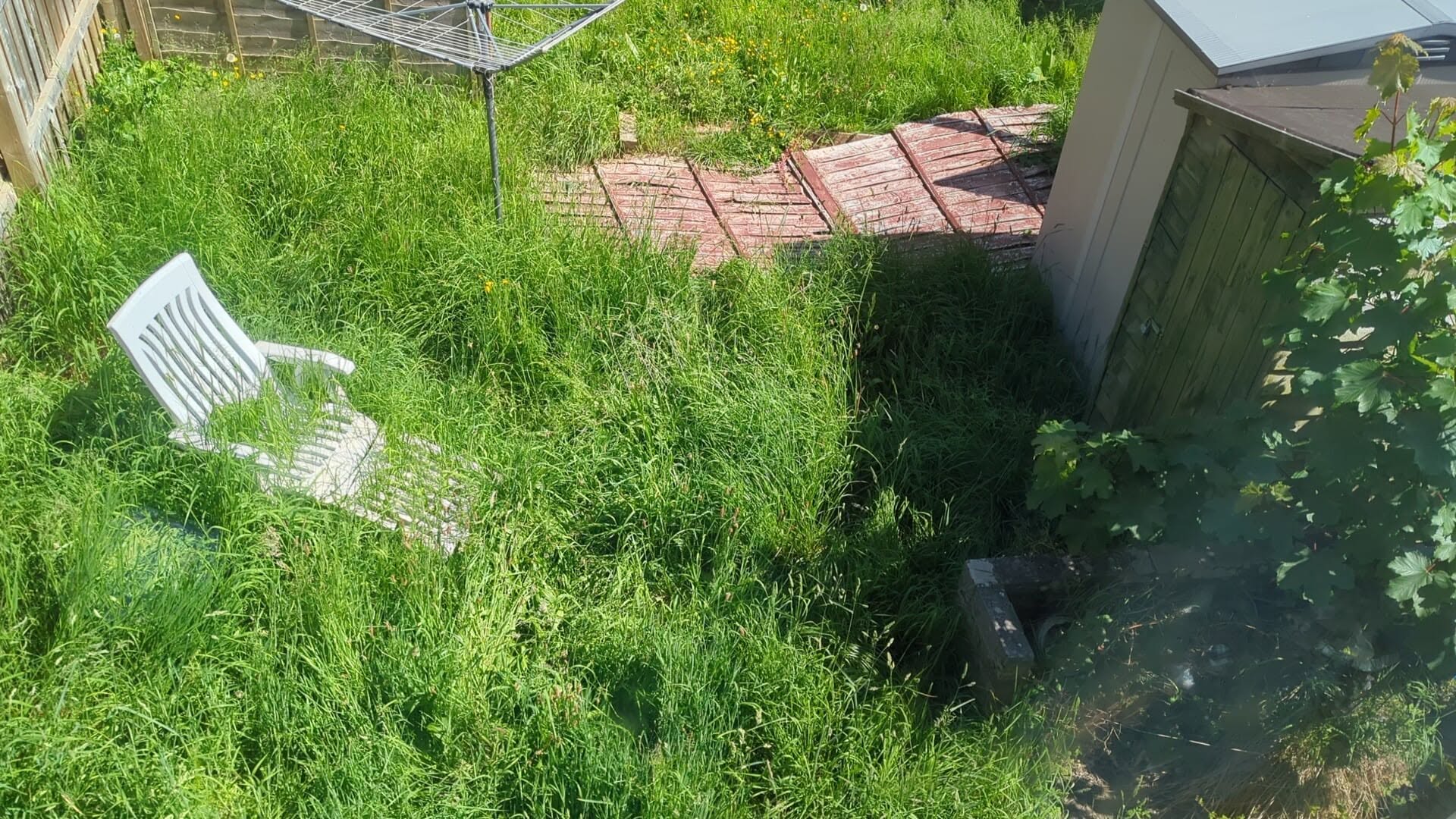
Greater Sudbury has a Clearing of Yards bylaw that requires owners to cut any grass, weeds or wild vegetation growing on their yard that exceeds 20 centimetres in height. Twenty centimetres is roughly eight inches. That’s considerably higher than any cutting height I’d recommend for a maintained lawn — a lawn getting regular cuts at three inches will never approach that threshold.
Where the bylaw becomes relevant is on properties that go uncut for extended periods — a vacation absence that stretches too long, a property between owners, or a homeowner who has let maintenance lapse through the season. At six or seven weeks without cutting in good growing conditions, a lawn can approach or exceed the 20-centimetre threshold. Bylaw officers respond to complaints and issue notices requiring compliance within a specified timeframe. Failure to comply leads to city-contracted remediation and the cost charged back to the property owner.
No Mow May — what it means and what it doesn’t. Greater Sudbury has made allowances for the No Mow May campaign, which allows residents to leave their lawns untrimmed during the month of May to attract pollinators. The grass height bylaw’s 20-centimetre limit applies from June onward, not during May. If you participate in No Mow May and let your lawn grow through the month, you’re within the bylaw’s provisions for that period.
My practical view on No Mow May as a lawn care operator: it’s a legitimate choice if pollinators are your priority. The trade-off is that allowing a lawn to grow unchecked through May and then cutting it to a normal maintenance height in early June is a significant stress event for the grass — you’re removing well over a third of the blade length in one cut, which shocks the root system at the start of the growing season. If you do participate, step the height down gradually: cut to five or six inches first, then to four inches a few days later, then to your maintenance height of three inches after another few days. The gradual step-down takes more visits but produces a much better recovery than cutting from eight inches to three in a single pass. I covered the damage that over-cutting causes in the article on what happens to a Sudbury lawn when the homeowner goes on vacation for three weeks — the recovery process from long grass is the same whether it grew long from No Mow May participation or from an extended absence.
What all of this means practically — and how I manage it on every property I maintain
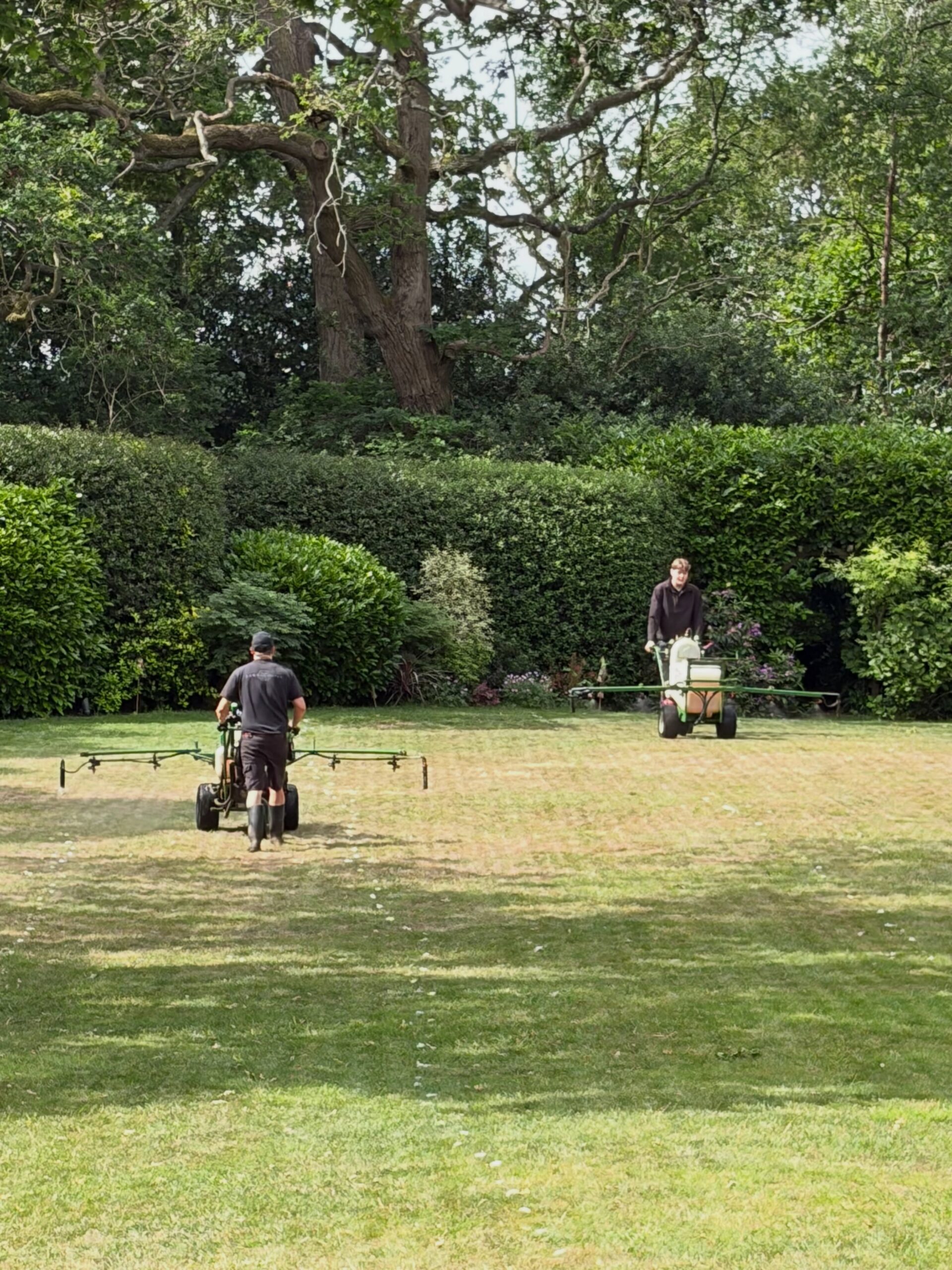
Three active bylaws with real enforcement implications. Here’s how I integrate all of them into the way I manage properties across Greater Sudbury.
On watering: For properties I manage with irrigation systems, I check every controller at the start of June to confirm it’s programmed for the correct odd or even days based on the property address. I document the check. For properties without irrigation where the homeowner is managing their own watering, I confirm the schedule in our spring kickoff conversation and mention the bylaw. I don’t assume they know — experience tells me a significant number don’t.
The full watering bylaw details and the practical approach I recommend for getting the best lawn results within the schedule are in the article on Sudbury lawn care 2026 — watering bylaw and pricing. That article has the specific fine amounts, the exception for new plantings, and the deep-watering approach that works best under the odd-even schedule.
On fertilizing: Every fertilizer product I use on Sudbury residential lawns has a zero in the middle number. I check before purchasing. The only exception is the starter fertilizer used immediately after sod installation or overseeding in the first growing season — which is permitted under the bylaw. I explain the phosphorus rule to clients who ask about doing their own fertilizing, because walking into a garden centre without knowing this rule is how you end up with a product you can’t legally use.
On grass height: Regular weekly or near-weekly cutting keeps any maintained property well below the 20-centimetre threshold throughout the season. The height bylaw is not a practical concern on properties receiving consistent maintenance. Where it becomes relevant is on properties going through ownership transitions, extended vacation absences, or situations where regular service has been interrupted. For clients travelling for three weeks or more in summer, I recommend a mid-vacation cut specifically to prevent the grass from approaching the bylaw threshold during the absence — in addition to the lawn health benefits I described in the article on what happens to a Sudbury lawn during a three-week vacation.
The broader principle: Knowing the bylaws that apply to your property isn’t just about avoiding fines. It shapes the products you buy, the schedule you maintain, and the decisions you make when something interrupts your normal routine. A homeowner who knows the phosphorus ban checks the middle number before buying. A homeowner who knows the odd-even schedule sets the controller correctly in June. A homeowner who knows the height bylaw books a mid-vacation cut rather than coming home to a notice on the door.
The full seasonal framework I follow — incorporating all of these bylaw requirements alongside the agronomic principles that produce good lawn results in this climate — is laid out in the article on the complete 2026 Sudbury lawn care homeowner reference. That article is the one I’d point any homeowner to who wants the full picture in one place.
If you have questions about how any of these bylaws apply to your specific property — or if you want someone managing your lawn who already knows the rules and follows them — give me a call.
📞 705-507-6787 | Get a free quote online
— Ryan Lingenfelter
Owner, Cutting Edge Lawn & Landscaping
Garson, Ontario · 705-507-6787
