

By Ryan Lingenfelter · Cutting Edge Lawn & Landscaping, Garson, Ontario · June 2026
Every summer I get a version of the same call. A homeowner is back from vacation. They’ve been gone two or three weeks. They knew the lawn would need attention when they returned, but they weren’t expecting what they came home to. The grass is long — much longer than they’d imagined. There are brown patches that weren’t there before they left. The edges have disappeared. In a bad case, there are yellow sections that are going to take weeks to recover from.
Three weeks in a Greater Sudbury summer does more to a lawn than most homeowners anticipate. Not because anything dramatic happens — it’s just the accumulation of ordinary things. Growth, heat, drought, the absence of the care that was keeping things in check. Done during the right stretch of July, those three weeks can set a lawn back by most of a season.
Here’s exactly what happens, week by week, and what you can do before you leave to make sure you come home to a manageable lawn rather than a recovery project.
Week one — what’s actually happening while everything still looks fine

In the first week of your absence, the lawn looks fine. Maybe it’s a bit long by day five or six if the growing conditions are good — consistent warmth, some rain — but nothing that would concern a neighbour glancing over the fence. This is the week where the problems are forming invisibly.
The grass is growing. In June and early July, a healthy Sudbury lawn grows roughly half an inch to three quarters of an inch per week under normal conditions. In a warm wet stretch it can grow faster. By day seven, a lawn cut to three inches before you left is sitting at three and a half to four inches. That’s still acceptable. But the trajectory matters.
If you left without arranging watering, the soil moisture situation depends entirely on what the weather does while you’re gone. A week with regular rain in your absence — which happens often in early summer in Greater Sudbury — means the lawn is fine. A week of heat and no rain in mid-July while your irrigation system sits idle means the lawn is already under stress by the time week two begins. The shallow-rooted lawns I described in the article on the Sudbury lawn that looked fine in May and was dead by August — the ones with roots at one to two inches — will show stress within four to five days without water in a July heat stretch. Lawns with proper root depth from annual aeration can handle a week without supplemental watering in most conditions.
Week one is also when the thatch situation starts to matter. A lawn with a significant thatch layer is less able to hold moisture between watering events. If you left on a lawn that had problematic thatch — the over-half-inch layer that I found on 38 of 52 Sudbury properties this spring, as I described in the article on what I found on 52 Sudbury lawns this spring — the first week of heat without watering is where that thatch starts working against the grass visibly. Water repels off the dry thatch surface rather than soaking through to the roots, and the lawn starts running a moisture deficit even before anything looks obviously wrong.
Week two — where the real damage begins
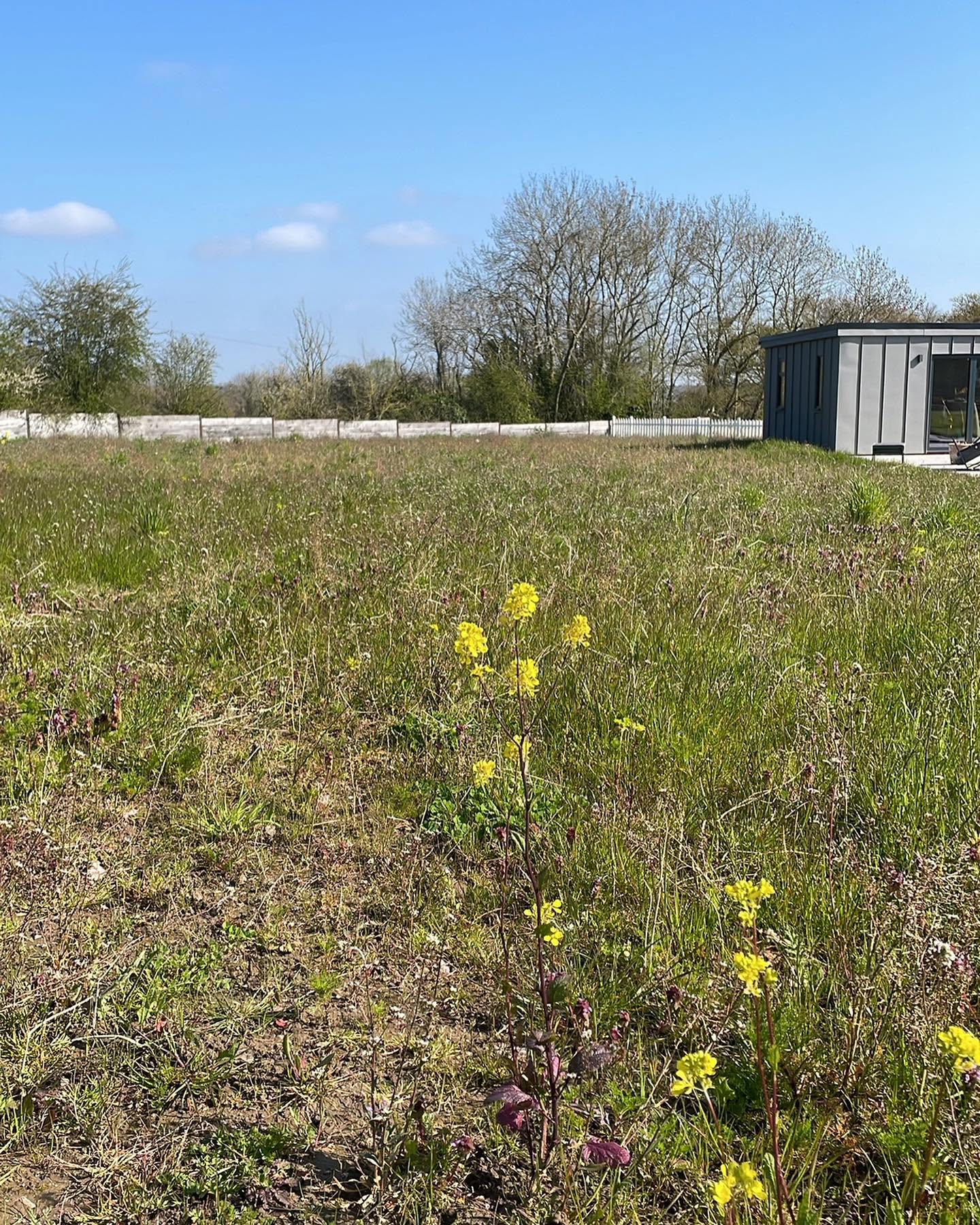
By the end of week two, the lawn is showing it. The grass height is the most visible issue — at three and a half to four weeks of growth from your last cut before leaving, you’re looking at five to six inches in a well-growing lawn, potentially more in a warm wet stretch. That height itself isn’t the damage. The damage is what it means for the cut that has to happen when you return.
The one-third rule in turf management — never remove more than a third of the blade length in a single cut — becomes impossible to follow on a five-inch lawn if you want to get back to three inches. Taking it from five inches to three in one cut means removing forty percent of the blade. That shocks the plant, stresses the root system, and produces the yellowing you’ll see for several days after a severe cut. On a lawn that’s already been under heat and drought stress for two weeks, that cut can tip some sections past the recovery threshold.
Week two is also when the weeds establish. Dandelion, plantain, creeping charlie — all of them were there before you left, held in check by a dense healthy turf. Two weeks of unchecked growth means the weed plants are bigger, their root systems are stronger, and they’ve started spreading laterally into spaces that were previously closed. A well-maintained lawn can tolerate this and bounce back when cutting resumes. A lawn that was already thin before you left — with gaps in the turf that weeds were already exploiting — has given the weeds two weeks to consolidate those positions.
Watering is the pivotal variable in week two. Under Greater Sudbury’s odd-even watering bylaw — which I covered in detail in the article on Sudbury lawn care news and the 2026 watering bylaw — your irrigation system can run on your permitted days even while you’re away, provided it was set correctly before you left. If you have an automated system and it’s running on schedule, week two is manageable. If you have no automated system and no one is watering, week two in a dry stretch is when shallow-rooted sections start to die rather than just go dormant.
The distinction between dormancy and death matters. Grass that goes dormant in drought — turns brown, stops growing, but retains a living crown — recovers when water and cooler temperatures return. Grass that dies — crown cooked by sustained heat without moisture — doesn’t come back. Shallow roots reach the death threshold faster than deep roots. A three-inch deep root system in a July heat stretch without water might go dormant. A one-inch deep root system in the same conditions might die. The root depth question is why annual aeration matters so much as preparation for exactly this scenario — I covered the full case for spring aeration timing in the article on the best time to aerate a Sudbury lawn.
Week three — what you come home to
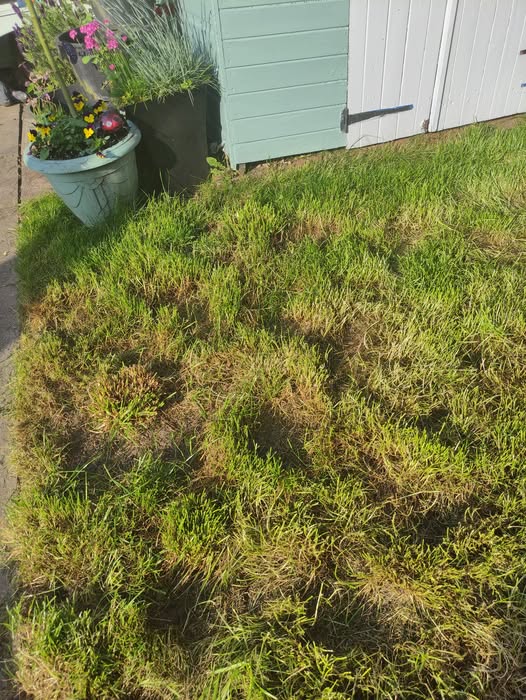
Three weeks of growth and heat in a Greater Sudbury summer produces a lawn that is genuinely difficult to recover in a single visit. Here’s what I typically find when I come to a property that’s been unattended for twenty to twenty-one days in summer.
Grass height of six to eight inches in good-growing sections. Sometimes more. A particularly warm and wet stretch in late June or early July can push a well-fertilized lawn to eight or nine inches in three weeks. At that height, the grass has been shading its own lower sections — the base of the plant has been in shade for two to three weeks, which weakens the crown and produces the yellow-white base that you see when you part very long grass. Cutting this lawn back to three inches cannot happen in a single visit. It needs to come down in two cuts — first to four and a half or five inches, then to three inches three to four days later — to avoid the shock of removing more than a third of the blade at once.
Brown or dead sections in sunny exposed areas. On a lawn with shallow roots or thick thatch, the south and west-facing sections will have had the hardest time without water. These sections may be dormant — they’ll recover with consistent watering over two to three weeks — or in a bad case, dead in the crown. The pull test tells you which: if the brown grass pulls up easily without root resistance, it’s dead. If it holds, it’s dormant and will recover. The same diagnostic I described in the article on how to check whether sod is alive or dead applies equally to dormant versus dead lawn sections.
Weeds that have grown and spread significantly. Three weeks of uncontrolled growth means weed plants are larger, deeper-rooted, and in some cases have gone to seed — which means next season’s weed problem is worse regardless of what you do now. Spot treatment at this point is still worth doing but the timing is less ideal than treating earlier in the season when the plants were smaller.
Edges that have completely lost definition. Three weeks of growth along the driveway and fence line perimeter means the edges have softened or disappeared. Re-establishing a clean edge after three weeks of growth takes meaningfully more time than the maintenance edging that keeps an existing clean line clean. It’s not a crisis — but it’s work that didn’t need to happen if the property had been maintained during the absence.
In dry years: irrigation system violations. If an automated system was running on the wrong days while you were away — which happens when controllers aren’t updated for the June 1 bylaw start — the city’s bylaw enforcement officers will have been active. A violation notice may be waiting. The $300 first-offence fine arrives regardless of whether you were home when it happened.
How to leave for three weeks without coming home to a problem

The good news is that most of what I described above is preventable with straightforward preparation. Here’s exactly what I tell my clients before they leave for an extended vacation in summer.
Cut the lawn the day before you leave — at a slightly higher height than usual. If you normally maintain at three inches, cut at three and a half before your departure. The extra half inch of blade height means the grass enters the absence period with more reserve. It shades the root zone better in heat. And your three-week growth lands at a height — six to seven inches — that’s aggressive but manageable to bring down in two cuts rather than requiring three visits to step down correctly.
Set your irrigation controller for the bylaw schedule before you leave. Check your address number — odd or even — and make sure the controller is programmed to water only on your permitted days. Set it for deep watering on those permitted days rather than light watering daily. One session per permitted day that runs long enough to wet the soil to four to five inches is far better for the lawn during an absence than short sessions on every permitted day. If you don’t have an automated system, ask a neighbour or hire someone to water twice a week while you’re gone. The cost of two watering visits is a fraction of the cost of the recovery work on a lawn that went through three weeks of summer without moisture.
Book a mid-vacation cut. If you’re going to be away for three weeks, one cut at the ten to fourteen day mark is the single most effective thing you can do. It keeps the grass at a height that doesn’t require a multi-step recovery cut when you return. It reduces weed pressure by removing growth before anything goes to seed. It keeps the edges defined. And it means you come home to a lawn that looks maintained rather than abandoned. I offer mid-vacation cuts as a standalone service — call before you leave and book the visit for while you’re away.
If you’re leaving in late June or July, make sure aeration happened in late May. A lawn that was properly aerated six to eight weeks before your vacation has root depth that’s meaningfully better than a lawn that hasn’t been aerated. Those deeper roots are what make the difference between a lawn that goes dormant during a dry stretch and recovers when watering resumes, versus a lawn that dies in the sections with the least root depth. Preparation work done before the vacation window is what determines how resilient the lawn is during it. The full case for why the spring aeration window matters for summer resilience is in the article on spring vs fall aeration in Sudbury.
If you come home to a lawn that’s over five inches: Don’t cut it to three in one pass. Cut to four and a half or five inches on day one. Water deeply that evening. Come back three to four days later and take it to three. Skipping the intermediate step and cutting to three in one pass on a six-inch lawn stresses the plant significantly — the yellowing that follows is the plant recovering from the shock of losing too much blade at once, not from disease or drought. Give it the extra step. The lawn will look better two weeks after a gradual step-down than two weeks after a single severe cut.
If you’re planning a summer vacation and want a mid-vacation cut or a return-from-vacation recovery visit booked in advance — give me a call before you leave. Booking in advance means your property is on the schedule. Calling from the airport hoping for next-day availability is a different conversation.
📞 705-507-6787 | Get a free quote online
— Ryan Lingenfelter
Owner, Cutting Edge Lawn & Landscaping
Garson, Ontario · 705-507-6787
